
How fiber optic perimeter security detects and locates intruders, where it beats microwave sensors, and how to pilot it on a Singapore site.
Fiber Optic Perimeter Security: How It Works and When to Use It

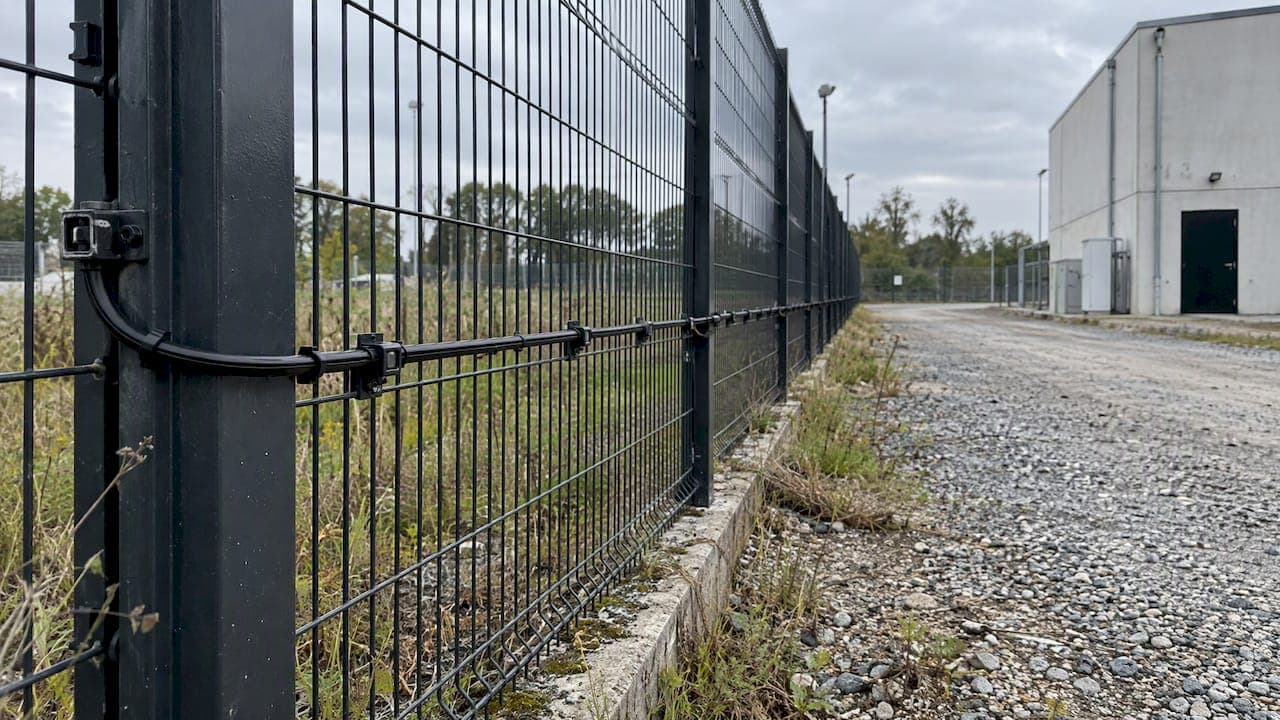
Fiber optic perimeter security turns a cable on a fence, wall or buried trench into a continuous sensor. It detects climbing, cutting, digging and tampering, and it reports roughly where along the line the event happened. For security directors in Singapore, the real question is not whether the technology works. It is where it fits next to microwave barriers, LiDAR and cameras, and how to prove it on your own site before you commit.
This guide covers the detection principle, the components, what the Singapore field research says about performance and nuisance alarms, how microwave sensors differ, and how to run a pilot that produces evidence rather than a demo.
TL;DR
- Fiber optic sensing detects vibration or strain along a cable and locates it, so one cable covers a long fence line with no powered devices in the field.
- Singapore field trials show the main weakness: heavy rain and wind raise nuisance alarms, and raising thresholds can hide weak intrusions. Reference fiber sections help manage this.
- Microwave barriers are line-of-sight volumetric sensors suited to open, level ground. Fiber suits fences, walls and buried routes. Most serious sites layer both with video verification.
- Choose by threat model, terrain and verification workflow, not by brochure range. Pilot with measurable KPIs first.
Table of Contents
- How fiber optic intrusion detection works
- What fiber can detect on a fence
- Where fiber performs well, and where it struggles
- How microwave perimeter sensors differ
- Choosing by site, not by technology
- Layering: the design most sites end up with
- Perspective: what we see in the field
- How to pilot fiber optic perimeter security
- Working with BeyondSensor
- FAQ
- Sources
How fiber optic intrusion detection works
The cable is the sensor. Light travels through a glass fiber, and any vibration, strain or pressure on the cable changes how that light behaves. Electronics at one end read those changes and work out what happened and where.
Two families dominate the research and the market:
- Distributed sensing (phase-sensitive OTDR, or φ-OTDR). An interrogator sends short optical pulses down the fiber and analyzes the backscattered light. A disturbance at any point alters the backscatter from that point, and the arrival time of the signal gives the position. In a 2023 Singapore field study, the interrogator used a 100 ns pulse width, which corresponds to 10 m spatial resolution, with a 10 kHz repetition rate and a 2–4.5 kHz band-pass filter on the signal (Zhang et al., 2023).
- Fiber Bragg grating (FBG) arrays. Gratings inscribed at set points along the fiber reflect a specific wavelength, which shifts when the fiber is strained. Research in Singapore on armored-cable FBG arrays confirmed they can detect aided and unaided climbs, fence tampering and cutting, with resistance to crush damage and rodents in local conditions (Foo, 2012).
The practical difference: distributed systems treat the whole cable as a continuous sensor with zones defined in software. FBG systems sense at discrete, engineered points. Both avoid powered electronics along the fence line.
The main system components
- Sensing cable. Standard telecom-grade or armored fiber, clipped to a fence, fixed to a wall, laid on a roof edge or buried.
- Lead cable. Plain fiber that carries light between the interrogator and the protected section. It does not sense intrusions on purpose, and it can be long. In the Singapore trial, 1250 m of fiber was installed in total, with only 90 m mounted on the fence for detection and 645 m serving as lead cable (Zhang et al., 2023).
- Interrogator or processing unit. Sends the light, reads the return, and runs the detection algorithms.
- Classification software. Separates intrusion signatures from background. A 2015 peer-reviewed study used statistical signal features, principal component analysis and a K-nearest-neighbor classifier to distinguish intrusion behaviors, reporting 96.52% recognition across eight field-tested signal types (Springer, 2015).
- Integration layer. Relay outputs, an API or a unified dashboard, so an alarm on zone 14 brings up the right camera and the right response procedure.
That fifth item decides whether the system is useful at 3 a.m. A detector that raises an alarm no one can verify becomes noise within weeks.
What fiber can detect on a fence
On a fence-mounted cable, typical detectable events are:
- Climbing, with or without a ladder
- Cutting of the mesh or panel
- Lifting or pushing the fence fabric
- Tampering with fixings, gates or the cable itself
Buried or wall-mounted configurations extend this to digging, crawling and walking, and some vendors classify vehicle approach. The Singapore FBG research supports the fence-specific claims above. Anything beyond that, such as classifying a specific tool or distinguishing a person from an animal, depends on the algorithm and must be demonstrated on your site, not accepted from a datasheet.
Where fiber performs well, and where it struggles
Strengths
- Continuous coverage with location. Zones are defined in software, and you can resize them without touching the cable.
- No active electronics along the line. The cable itself is passive, which suits long, remote or electrically noisy perimeters.
- Fits the fence you already have. It follows curves, slopes and corners that line-of-sight sensors cannot.
- Immunity to electromagnetic interference. Useful near power infrastructure.
Limitations you should plan for
The Singapore field work is candid about the main one. Heavy rain or strong wind can trigger nuisance alarms in φ-OTDR fence systems, and raising the alarm threshold to suppress them can prevent detection of intrusions that cause only weak vibrations (Zhang et al., 2023). In a tropical city with sudden downpours and monsoon winds, that is not a footnote. It is the central tuning problem.
The same study proposes a mitigation: dedicate a section of sensing fiber as a self-contained reference sensor that is isolated from the fence. It monitors ambient vibration, including rain, so the processor can adjust thresholds dynamically instead of treating weather as an intrusion. The reference section must be longer than the system's spatial resolution, so that fence activity does not leak into it (Zhang et al., 2023).
Other points to weigh:
- Fence condition matters. A loose, rattling fence produces a noisy baseline. Repair and tension work often pays back more than software tuning.
- Cable routing and fixing quality. Clip spacing and cable tension change sensitivity along the line.
- Fiber is a detector, not a verifier. It tells you where, not who. Pair it with cameras or analytics.
- Cable damage is a single point of failure for a run. Loop or dual-ended designs and routine integrity checks reduce the risk.
How microwave perimeter sensors differ
Readers comparing technologies often ask about microwave intrusion sensors and barriers, so here is the contrast in plain terms.
A microwave barrier uses a transmitter and a receiver facing each other across the protected strip. The pair creates an invisible volumetric beam. When a person or object disturbs the field between them, the receiver sees the change and raises an alarm. Some units combine microwave with passive infrared to help distinguish real movement from vegetation. Manufacturer documentation describes zones of up to a couple of hundred meters per pair, but actual usable range depends on the model and the ground.
| Factor | Fiber optic (fence or buried) | Microwave barrier |
|---|---|---|
| Sensing principle | Vibration or strain on a cable | Disturbance of a beam between two units |
| Location accuracy | Meter-level position along the cable, set by system resolution | Per zone, defined by the pair |
| Terrain | Follows curves, slopes, corners | Prefers flat, clear, straight line of sight |
| Mounting | On the fence, wall or in the ground | Free-standing posts or poles |
| Powered devices in the field | None along the sensing cable | Active transmitter and receiver at each zone |
| Typical weakness | Rain and wind on fences, fence condition | Vegetation, standing water, uneven ground, small gaps |
| Best use | Existing fences and walls, long runs | Open yards, gaps in fencing, rooftop or gate approaches |
The ranges and tuning behaviors above come from general industry practice and manufacturer documentation, so treat them as a starting hypothesis for your pilot.
Positioning and tuning a microwave barrier
Most microwave false alarms trace to site preparation rather than the sensor. Good practice, which any qualified installer will confirm for the specific model, includes:
- Level the strip. The beam widens in the middle of its run. Grass, puddles and uneven ground there are the common cause of nuisance alarms.
- Keep the zone clear. Cut back vegetation and remove debris. Keep fences and metal objects away from the beam path.
- Align carefully. Aim both units precisely and confirm signal strength at the receiver.
- Set sensitivity in stages. Start conservative, then walk, crawl and run the zone at different times of day and in rain, and adjust until detection holds without alarms from small animals or blown vegetation.
- Overlap zones. Overlap the ends of adjacent zones or stagger the units so that nobody can walk through the dead area near a post.
- Re-test after weather and landscaping. Tuning drifts when plants grow.
Follow the manufacturer's manual for the exact settings and test procedure, as they vary by model.
Choosing by site, not by technology
Singapore's own guidance starts from risk, not from the product. SS ISO 22341:2023 sets out how to apply crime prevention through environmental design (CPTED), with a balanced, evidence-based process that includes risk assessment and risk treatment, then countermeasures tailored to the site (Singapore Standards eShop). That is the right order of thinking for sensor selection too.
Use these questions to narrow the choice:
- What is the threat? Opportunistic climbers, organized cutting, tunneling, vehicle ramming and insider tampering need different detection layers.
- What does the perimeter look like? Existing chain-link or welded mesh favors fiber. A long open strip with no fence may favor microwave or LiDAR.
- How noisy is the environment? Near highways, rail, heavy machinery or exposed coastal wind, test fiber thresholds carefully. Near dense vegetation, test microwave carefully.
- Who responds, and how fast? If response is by an on-site guard, you need an alarm tied to a camera view. If response is remote, you need video verification and clear escalation.
- What must integrate? Existing VMS, access control, and a unified operations dashboard.
Our guide to standards-led sensor placement goes deeper on placement logic, and our overview of physical security best practices covers the layers around the fence line.
Layering: the design most sites end up with
No single sensor wins everywhere. A common, defensible architecture looks like this:
- Deter and delay with the fence, lighting and landscaping.
- Detect with a fence-mounted or buried fiber line along the boundary, plus microwave, photobeam or LiDAR across open gaps, gates and rooftops.
- Verify with cameras and video analytics that pull up the alarmed zone automatically.
- Assess and respond through one operations view, with defined procedures per alarm type.
The point of layering is that each technology covers the others' blind spots. Fiber catches the climb that a camera misses at night. Video confirms that the fiber alarm was a person and not a branch. For more on this approach, see our piece on integrated physical security ecosystems and why integrated systems pay off for facilities.
Perspective: what we see in the field
We work with system integrators and facility owners across Singapore, Malaysia and the Philippines, and the same pattern repeats. Teams buy detection and discover, months later, that the hard part is operations: too many alarms, no consistent way to verify them, and thresholds that someone tuned once in dry weather.

Our view is simple. Treat every perimeter sensor as an input to an exception-based workflow. The sensor should only interrupt a human when something meaningful happens, and the operator should arrive at that alarm already looking at the right video. That is why we focus on unified dashboards, AI-assisted verification and multi-vendor integration rather than on any single sensing technology. Fiber, microwave, LiDAR and photobeam each have a place, and the site decides.
We also push for evidence before contracts. A short, scoped pilot with agreed KPIs, run in the wettest and windiest conditions you can get, tells you more than any datasheet. Our article on three pilot KPIs for perimeter intrusion detection sets out what to measure.
— Eumir
How to pilot fiber optic perimeter security
A pilot should answer one question: will this work on our fence, in our weather, with our operators? A sound structure:
- Pick a representative section. Include a straight run, a corner, a gate and a known noisy spot, such as a tree line or a road-facing stretch.
- Define the test events. Climb, cut, lift, lean, and walk-by. Add a rain period and a windy period. Log every event and every alarm.
- Set KPIs before you start. Detection rate by event type, nuisance alarm rate per day per zone, location accuracy, time from alarm to verified video, and operator workload.
- Test the reference or compensation logic. Ask how the system distinguishes weather from intrusion, and test weak-vibration intrusions during heavy rain, since that is the documented trade-off.
- Test integration. Does an alarm bring up the correct camera, create an incident record and notify the right person?
- Review and decide. Compare results against your risk assessment, not against the vendor's claims.
Singapore procurement teams are already running this kind of live evaluation. See how we approached a live pilot for intrusion detection analytics, and the short LiDAR proof of concept for an example of a time-boxed test on open ground.
Working with BeyondSensor
We do not ask you to pick a sensing technology first. For integrators and facility owners, our Solution Integration service brings sensors from multiple vendors into one operating picture, and Ecosystem Matchmaking helps you find and validate the right technology partners for a given perimeter. BeyondWatch adds AI-powered video analytics for verifying alarms, and BeyondPatrol supports virtual guard tours with vision language models. If you are an integrator planning a perimeter project, start at our system integrators page or contact us through the main site.

FAQ
How secure is fiber optic perimeter detection?
It is effective at detecting and locating climbing, cutting and tampering on a fence, as Singapore research on both φ-OTDR and FBG systems shows. It is not a complete solution on its own. Rain and wind can cause nuisance alarms, and tuning to suppress them can mask weak intrusions, so pair it with video verification and test it in your own weather.
What are the downsides of fiber optic perimeter systems?
The main ones are weather-related nuisance alarms on fences, sensitivity to fence condition and installation quality, and the fact that the system detects disturbances without identifying who caused them. A damaged cable can also disable a run unless the design includes redundancy or integrity monitoring.
Is fiber optic better than a microwave barrier?
Neither is better in general. Fiber follows fences, walls and uneven ground and gives location along the line. Microwave barriers suit flat, open, clear strips and gaps in fencing. Many sites combine them, then add cameras for verification.
How accurately can fiber optic sensing locate an intrusion?
It depends on the system. In a published Singapore field trial, the interrogator settings corresponded to 10 m spatial resolution. Commercial systems vary, so ask for location accuracy to be measured during your pilot.
Can fiber optic sensing work with existing cameras and access control?
Yes, if the system offers relay outputs or an API and your operations platform can receive them. A unified dashboard that links each fiber zone to the nearest cameras is what turns an alarm into a verified, actionable event.
Sources
- Self-Contained Reference Sensors to Reduce Nuisance Alarm in φ-OTDR fence systems (MDPI, 2023)
- Intelligent detection and identification in fiber-optical perimeter intrusion monitoring system (Springer, 2015)
- An armored-cable-based fiber Bragg grating sensor array for perimeter fence intrusion detection (SPIE, 2012)
- SS ISO 22341:2023 Security and resilience, Protective security, Guidelines (Singapore Standards eShop)
Recommended
Read More Articles
Line of Sight Survey: Methods, Tools and Site Checks
What a line of sight survey is, how surveyors and GIS analysts run one, and how to record results for CCTV, wireless and sensor deployments in Singapore.

Single Sign-On Security: Risks, Controls and a Checklist
Is single sign-on secure? See how SSO works, where it fails, and the MFA, key protection and monitoring controls Singapore security teams should require.

Visitor Pre-Registration: A Practical Guide for Singapore Sites
How visitor pre-registration works at Singapore offices and industrial sites: what to collect, PDPA limits on NRIC and retention, QR check-in, and exception handling.
Heatmap Analytics for Physical Security and Facilities
How heatmap analytics and footfall heatmaps work in buildings, how to read them, what limits their accuracy, and what Singapore's PDPA means for deployment.
Let's Build YourSecurity Ecosystem.
Whether you're a System Integrator, Solution Provider, or an End-User looking for trusted advisory, our team is ready to help you navigate the BeyondSensor landscape.
Direct Advisory
Connect with our regional experts for tailored solutioning.