
Standards led guidance for industrial perimeter security sensor placement. Covers PIDS and VSS siting, LiDAR/thermal/radar choices, and pilot validated...
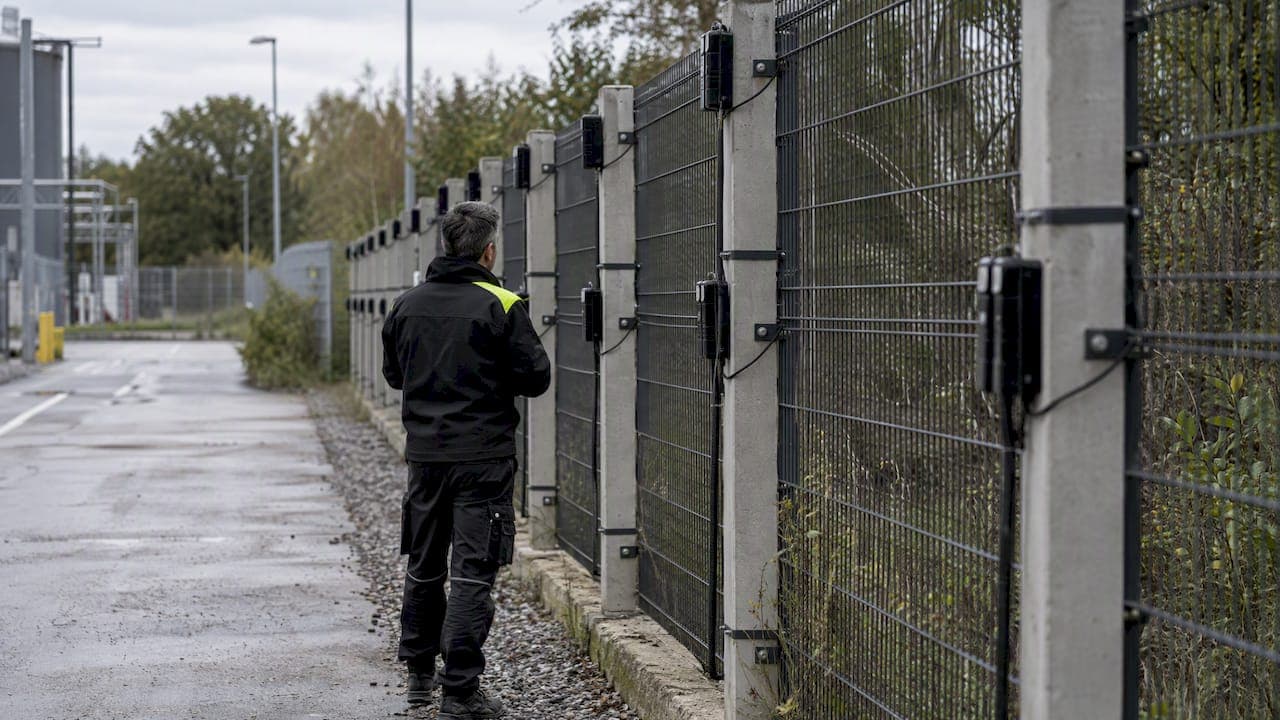
Standards Led Industrial Security Sensor Placement, Pilot Proven

For professional perimeters, design layered detection: PIDS on the outer line, overlapping camera coverage for verification, and interior red zone sensors tied to automated alarm checks. Match the technology to the terrain: fence sensors for physical breach detection, thermal or LiDAR for long sightlines. Every alarm must map to a camera, and commissioning tests belong in the contract, not as an afterthought.
TL;DR:
- Sensors should be placed to create short, localized detection zones that enable precise alarm verification and faster response times.
- Overlap between sensor zones and camera fields of view is essential to eliminate blind spots and facilitate clear identification of intrusions.
- Proper commissioning, including environmental testing and documented acceptance criteria, is crucial to ensure long-term system reliability and avoid false alarms.
- Advanced sensors like LiDAR, thermal, and radar are most effective in long sightline environments, weather extremes, or where visible sensors need support.
- Regular maintenance and site reviews are necessary to adapt to changing terrain, vegetation, or lighting, preventing undetected gaps and increasing alarm accuracy.
Table of Contents
- Core placement principles and a quick checklist for design teams
- Perimeter sensor placement (PIDS): types, siting rules, and anti-tamper practices
- Camera placement and VSS-aligned coverage: heel-to-toe overlap and image height
- Advanced sensor siting: LiDAR, thermal imaging, and radar
- Integration, commissioning, and operational verification
- Privacy and notification where video or audio capture collects personal data
- Common pitfalls and mistakes in sensor placement
- Best practices for integrating multiple sensor technologies
- Maintenance and periodic review protocols for sensor placement effectiveness
- What integrators get wrong about sensor placement
- How BeyondSensor supports integrators planning sensor layouts
- FAQ
- Sources
Core placement principles and a quick checklist for design teams
Before anyone picks a sensor model, the design team needs to agree on what counts as a threat, what counts as noise, and how much nuisance alarm activity the site will tolerate. Skipping this step is the single biggest reason perimeter projects underperform once they go live.
Security-in-depth is the starting principle: multiple, complementary detection lines so that defeating one sensor type does not defeat the whole system, a concept reinforced in CISA's layered detection guidance. Early in the site survey, map both the physical security perimeter (PSP) and the electronic security perimeter (ESP), since the two boundaries rarely line up and the gap between them is often where vulnerabilities hide.
From there, the checklist for any serious layout includes:
- Record sightline obstructions, terrain changes, standing water, and vegetation that could block or trigger sensors.
- Note conducting bodies near fence lines, since metal structures and chain-link mesh affect certain PIDS technologies.
- Plan camera overlap so each field of view picks up where the previous one ends, with no coverage gap.
- Keep detection zone lengths short enough that an alarm can be localized to a specific, walkable segment.
Pro Tip: Walk the perimeter at the time of day the site is least staffed. Nuisance triggers from shadows, wildlife, or glare are easiest to spot when nobody is there to explain them away.
Perimeter sensor placement (PIDS): types, siting rules, and anti-tamper practices
Match the PIDS category to the barrier you already have, not the other way around. Retrofitting a fence to suit a sensor usually costs more than choosing a sensor suited to the fence.
The CPNI guide to Perimeter Intrusion Detection Systems classifies PIDS into four groups, and siting decisions follow directly from the category:
- Barrier-mounted sensors (fiber-optic or vibration cable) attach to existing fencing and suit sites with chain-link or welded mesh in reasonable condition; loose or rusted fencing generates false triggers regardless of sensor quality.
- Ground-based sensors (buried cable, seismic, or pressure) work where the fence itself cannot carry a sensor or where a covert line is preferred, but they demand stable, well-drained soil to avoid drift.
- Freestanding sensors (microwave, infrared beams) suit open corridors without a fence at all, such as a cleared strip along a property line.
- Rapidly deployable sensors cover temporary sites, construction perimeters, or event security where permanent infrastructure is not justified.
Overlap is non-negotiable: adjacent sensor runs should share a few meters of coverage so a gap at a joint does not become a blind spot, and each zone's field should line up with a camera's field of view for verification. Mount receivers on the secure side of the barrier, house processor electronics indoors or in hardened enclosures, label every cable run, and wire tamper circuits into the alarm panel so a cut or disconnected sensor reports as an event, not as silence.
Commissioning should include environmental walk-tests and simulated attacker-mode crossings, with documented acceptance criteria the owner can use to reject an installation that underperforms, following best practices like those outlined in Make Geofencing a Trigger, Not Proof: Installer Check In for Ops & IT, a standard the CPNI guide treats as mandatory rather than optional. For a closer look at the metrics worth tracking during a pilot, BeyondSensor's piece on PIDS pilot KPIs breaks down what a clean acceptance report looks like.
One figure worth knowing: PIDS commissioning protocols call for documented acceptance testing before handover, a step integrators skip at their own risk when the owner later disputes alarm performance.
Camera placement and VSS-aligned coverage: heel-to-toe overlap and image height
Cameras exist to confirm what a PIDS or interior sensor flags, and that only works if coverage is continuous and image quality meets the task. The VSS Standard for Buildings sets out the rules most industrial and infrastructure projects now follow.
- Use heel-to-toe overlap along perimeters so one camera's field of view begins where the previous one ends, removing gaps a person could exploit.
- Mount cameras high enough to resist tampering but low enough to preserve the image height needed for the task, since observation and identification call for different pixel densities on target.
- Apply visible-band lighting minimums for color identification at night, and switch to infrared or thermal where lighting cannot reach or where lighting itself would alert an intruder.
- Confirm ONVIF or equivalent interoperability before procurement, and route camera cabling and power through conduit or tamper-resistant pathways rather than exposed runs.
Observation tasks, like confirming a person is present in a zone, need far less resolution on target than identification tasks, like reading a face or a license plate, so specify image height separately for each.
Advanced sensor siting: LiDAR, thermal imaging, and radar
LiDAR, thermal, and radar earn their keep when a site has long sightlines, harsh lighting, or equipment that cannot tolerate nuisance alarms. None of them replace cameras; they feed cameras better targets to verify.
LiDAR provides 3D spatial awareness that reduces nuisance alarms when paired with AI perception, and it supports precise exclusion zones around critical equipment inside the outer perimeter, a use case BeyondSensor has detailed in its two-week LiDAR proof-of-concept notes.
- Mount LiDAR units high enough to cover the full yard without foreground obstruction, and set exclusion zone boundaries in software rather than relying on physical masking.
- Orient thermal camera fields of view parallel to the perimeter line and perpendicular to likely intruder movement, the configuration NPSA's CCTV guidance recommends for maximizing detection while limiting false alarms; thermal also holds up in weather and darkness that defeat visible-band cameras.
- Pair thermal detection with an optical camera nearby so operators get identification-grade imagery once thermal confirms movement.
- Place radar where cluttered industrial activity, forklifts, stacked materials, intermittent machinery, is likely to generate false cueing, and treat radar hits as a cue for camera verification rather than a standalone alarm.
Pro Tip: Run a short pilot before committing to advanced sensors across a whole site. A week or two of real weather and real operational traffic tells you more about false alarm rates than any spec sheet.
Integration, commissioning, and operational verification
A sensor layout is only as good as the workflow that turns an alarm into a verified response. Every zone should map to a specific camera footprint, so operators never have to guess which feed to check.
- Run functional tests on every sensor and camera pair before go-live, confirming each alarm zone displays the correct camera feed automatically.
- Walk the perimeter under different conditions, rain, wind, low light, to profile nuisance alarms before the system goes live rather than after.
- Document false-alarm rates per zone and compare them against the acceptance criteria agreed with the owner.
- Sign off formally, with the owner's representative present, so underperforming zones are flagged while the integrator is still on site.
Multi-line detection and documentation that matches IDS zones to camera fields substantially increase the chance of early detection and delay.
That principle, drawn from CISA's guidance on layered detection, is also why serviceability matters as much as initial placement. Confirm backup power runtime, tamper detection on every enclosure, and physical access for maintenance crews before the system is called complete. Where sensors connect into operational technology networks, behavioral anomaly detection, network-, agent-, or historian-based, deserves a place in the design, since NIST's guidance on ICS environments treats sensor-to-OT connections as a monitored attack surface, not a trusted one.
Privacy and notification where video or audio capture collects personal data
Any camera or microphone that captures identifiable people triggers notification obligations, not just a technical siting decision. Reasonable signage, clear statements of purpose, and placement that limits capture to what the security objective requires are the baseline expectations under most data protection frameworks, including Singapore's PDPC advisory guidance on CCTV and personal data.
Placement decisions carry privacy weight. A camera aimed at a public walkway captures different data than one aimed strictly at a loading dock, and the design should document that distinction zone by zone. Audio capture raises a higher bar still, since recording conversations without clear purpose and notice tends to attract more scrutiny than video alone.
For integrators, the practical steps are straightforward: post signage at entry points rather than only at the camera itself, limit field of view to the area the security objective actually requires, and keep a record of why each camera or audio-capable sensor was placed where it was. That documentation becomes useful twice, once during commissioning sign-off and again if a privacy inquiry ever asks why a particular zone was covered.
Common pitfalls and mistakes in sensor placement
The most expensive mistakes in perimeter design are rarely about the sensor itself. They are about the gaps between sensors, and the gaps between the plan and the as-built site.
Long, unbroken detection zones are a recurring problem: when a zone stretches too far, an alarm tells the operator something happened somewhere along a stretch of fence, not where, which slows response and encourages operators to ignore alarms altogether. Splitting zones and supporting them with overlapping cameras fixes this but gets skipped when budgets tighten late in a project.
Other recurring errors include mounting cameras without accounting for seasonal foliage growth, placing fence sensors on barriers in poor physical condition and then blaming the technology for false alarms, and failing to record the ESP alongside the PSP, which leaves network-connected sensors exposed to vectors the physical survey never considered, a gap ASIS has flagged as a common blind spot in perimeter design. A final, avoidable mistake: treating commissioning as a formality rather than a contracted deliverable, which leaves the owner with no leverage when a zone underperforms after handover.
Best practices for integrating multiple sensor technologies
The goal of combining sensor types is not redundancy for its own sake. It is giving each technology a job it is actually good at, so the system as a whole produces fewer false alarms than any single layer would alone.
PIDS on the outer line detects the physical breach attempt. Cameras verify it. Interior sensors, whether motion, LiDAR, or radar, catch anyone who gets past the outer line before they reach a critical asset. Advanced optimization approaches now support this layering with data: adversarial path planning research models likely intrusion paths and weights sensor placement to maximize detection probability, which can improve coverage while reducing the number of cameras needed overall.

The integration work that makes this pay off is mostly about alarm logic. Configure the system so a PIDS alarm automatically pulls up the matching camera feed, so a LiDAR exclusion-zone breach cross-references against recent personnel access logs, and so no single sensor type can trigger a dispatch without at least one corroborating signal where that is operationally practical. BeyondSensor's sensor deployment guide walks through survey templates that make this cross-referencing easier to plan from day one.
Maintenance and periodic review protocols for sensor placement effectiveness
A perimeter that passed commissioning two years ago is not guaranteed to still perform today. Vegetation grows, fences settle, lighting fixtures fail, and operational traffic patterns shift, all of which quietly erode a layout's effectiveness.
Scheduled review should include a physical walk of every zone to check for new obstructions, a review of false-alarm logs to spot sensors trending worse over time, and a tamper-circuit test on enclosures that have not reported in a while. Fence-mounted sensors in particular benefit from a periodic check on cable tension and mounting hardware, since the mechanical condition of the barrier drives the sensor's accuracy as much as the electronics do, a point covered in BeyondSensor's specifier's guide to fence vibration sensors.
Review frequency should match risk: critical infrastructure sites typically warrant a formal review every few months, while lower-risk commercial perimeters can extend that interval, provided alarm logs are monitored continuously in between. Any time a zone's false-alarm rate climbs or a real intrusion exposes a gap, that zone should be re-surveyed rather than patched, since the original siting assumptions, terrain, lighting, traffic, may no longer hold.

What integrators get wrong about sensor placement
The industry default is to buy the best sensor on the spec sheet and place it where the fence happens to run. That approach treats placement as an installation detail instead of the design decision that determines whether the system works at all.
The uncomfortable trade-off nobody likes to say out loud: more detection range almost always means more nuisance alarms unless someone invests in tuning, exclusion zones, and verification workflows. A thermal camera that sees a kilometer down a fence line will also see every stray dog and blowing tarp in that distance unless its field of view and alarm logic are set up deliberately. Integrators who treat commissioning as a checkbox rather than a profiling exercise are the ones who get called back six months later to explain why operators have started ignoring the alarm panel.
The fix is not more technology. It is a disciplined, short proof-of-concept, long enough to capture a real range of weather and operational conditions, with documented acceptance metrics before anyone commits to full-site rollout. Scale only after that data says the layout holds up.
— Eumir
How BeyondSensor supports integrators planning sensor layouts
BeyondSensor works with integrators and facility teams on the parts of this process that are hardest to get right alone: survey-to-commissioning integration, pilot validation before full rollout, and automated verification through BeyondWatch and BeyondPatrol.

- Solution Integration support for mapping sensor zones to camera footprints and running commissioning tests end to end.
- Pilot validation so a layout is proven under real site conditions before a full-scale contract is signed.
- BeyondWatch and BeyondPatrol verification tools that tie alarm events to camera feeds automatically, cutting manual review time.
If your next project needs a second opinion on placement before you commit budget to it, reach out through Ask Beyond to scope a pilot.
FAQ
What is the ideal spacing between perimeter sensors?
Spacing depends on the PIDS category and the site's detection zone requirements, but the CPNI guide to PIDS stresses keeping zones short enough to localize an alarm to a walkable segment rather than a long, ambiguous stretch of fence. Overlap between adjacent sensors and cameras at zone boundaries prevents gaps where a breach could go undetected.
How high should perimeter cameras be mounted?
Mounting height needs to balance tamper resistance against the image height required for the task, since observation and identification call for different resolution on target, a distinction set out in the VSS Standard for Buildings. There is no single universal height; the correct mounting point follows from the camera's job in that specific zone.
When should a site use thermal cameras instead of visible-band cameras?
Thermal suits perimeters with poor lighting, long sightlines, or weather conditions that defeat visible-band cameras, and NPSA guidance recommends orienting thermal fields of view parallel to the perimeter and perpendicular to likely intruder movement. Pairing thermal with an optical camera nearby gives operators identification-grade imagery once thermal confirms movement.
Does BeyondSensor help with commissioning and acceptance testing?
Yes, BeyondSensor's Solution Integration service supports commissioning work, including mapping sensor zones to camera coverage and running the walk-tests needed for formal acceptance sign-off. Details on the service are available on the Solution Integration page.
How do I reduce false alarms from perimeter sensors?
False alarms usually drop when sensor technology is matched correctly to ground conditions, zones are kept short enough to localize alarms, and every alarm is cross-referenced against a camera feed before dispatch. LiDAR paired with AI perception has shown measurable reductions in nuisance alarms compared with camera-only detection in yard and perimeter settings.
Sources
- Guide to Perimeter Intrusion Detection Systems (PIDS) — CAST / CPNI (NPSA document)
- Video Surveillance System (VSS) Standard for Buildings (Singapore Police / SPF)
- Why intelligent LiDAR solutions are the next frontier in security and safety (ASIS, 2026)
- NISTIR 8219: Behavioral anomaly detection for industrial control environments (NIST, 2020)
Recommended
Read More Articles
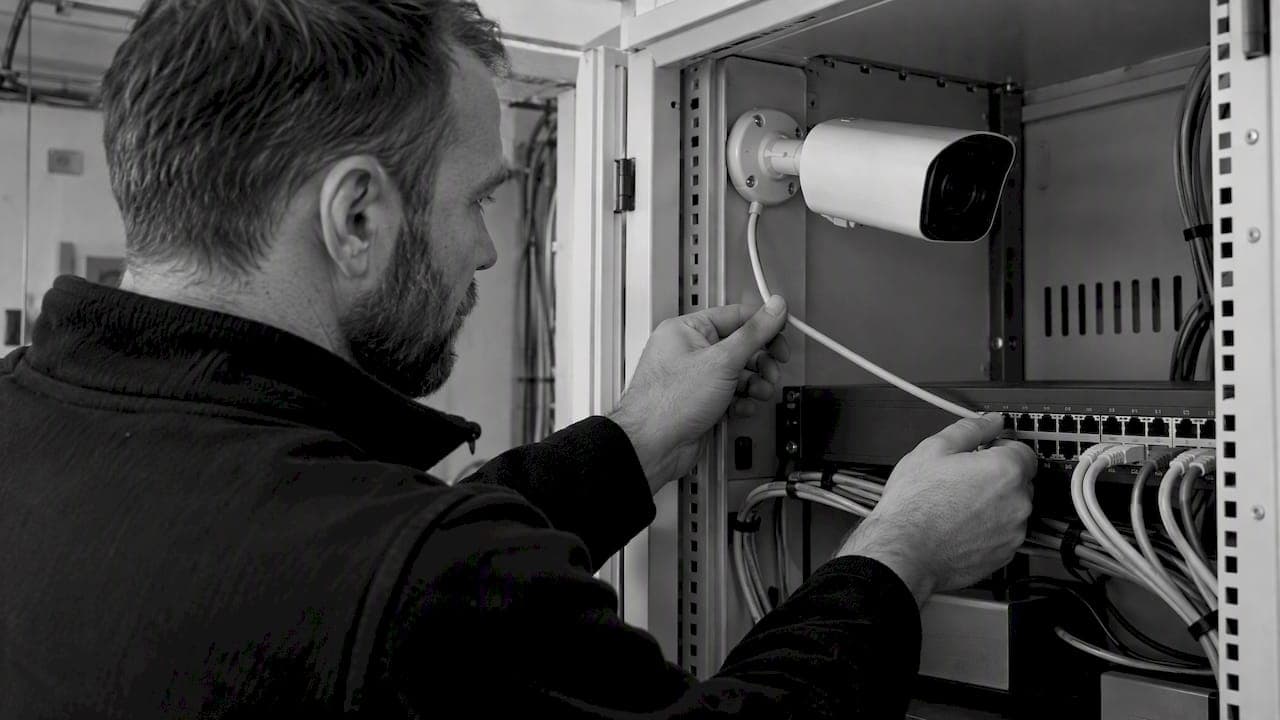
RTSP Security Risks: Integrators Must Block Exposed Ports 554 and 8554
See how integrators can reduce RTSP security risks: close exposed ports 554 and 8554, secure camera access, and verify each deployment with practical checks.
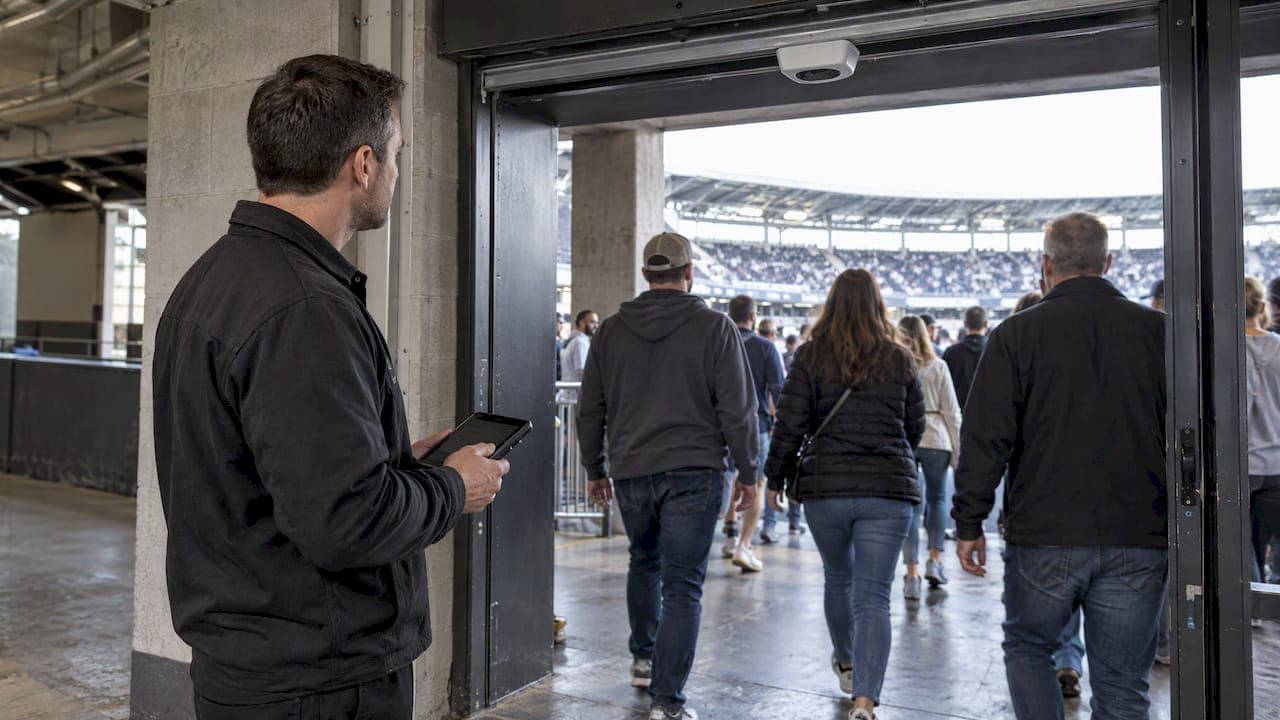
Require MAEpp and X Accuracy Before You Buy People Counting Systems
Verify people counting accuracy by demanding MAEpp, X Accuracy, and directional-bias reports. Validate on-site with at least 100 events per direction...
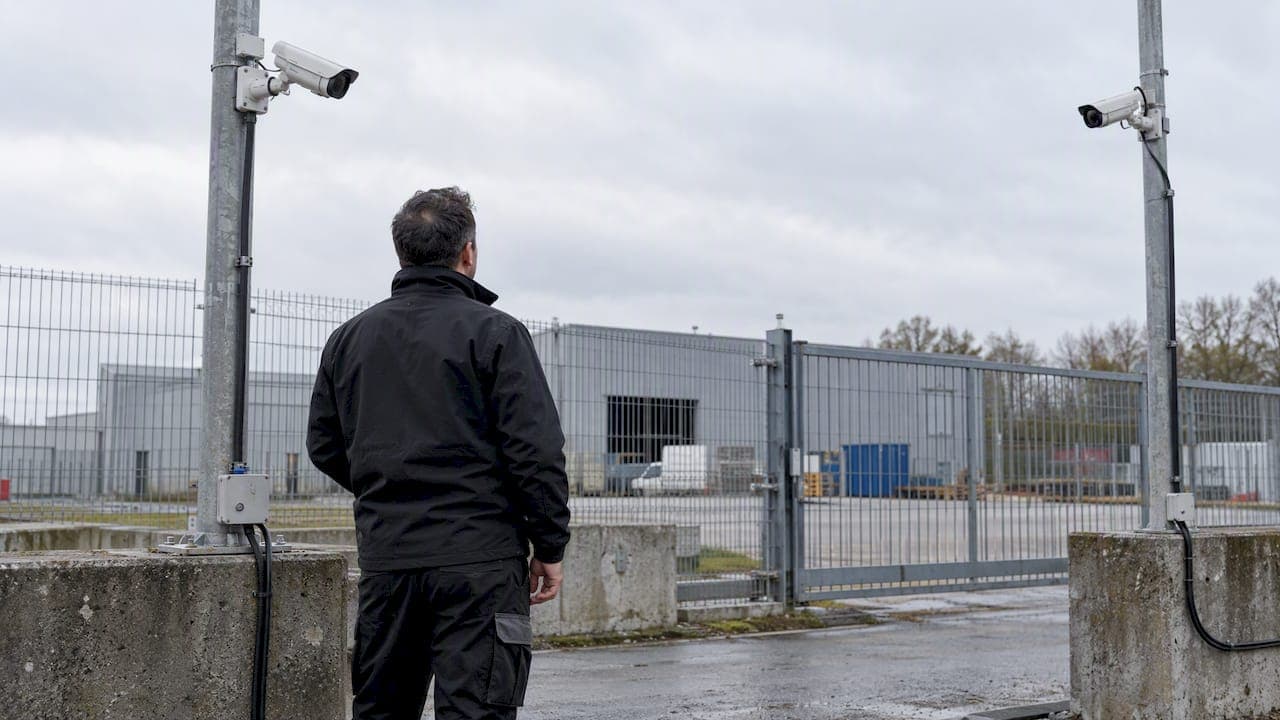
30–90 Day Pilot Validates Redundant Camera Networks for Engineers
Standards led, practical steps for engineers to deploy redundant camera networks: MRP, dual homing, and aggregation patterns, commissioning checks, and...
30 Day Pilot Proves Video Analytics Accuracy for Security Teams
Validate video analytics accuracy with scenario tests, camera tuning, transfer learning and a 30 day edge first pilot for security teams.
Let's Build YourSecurity Ecosystem.
Whether you're a System Integrator, Solution Provider, or an End-User looking for trusted advisory, our team is ready to help you navigate the BeyondSensor landscape.
Direct Advisory
Connect with our regional experts for tailored solutioning.