
Procurement-first checklist for Singapore teams: require live pilots, add PDPA checks to RFPs, and judge intrusion detection analytics by pilot results...
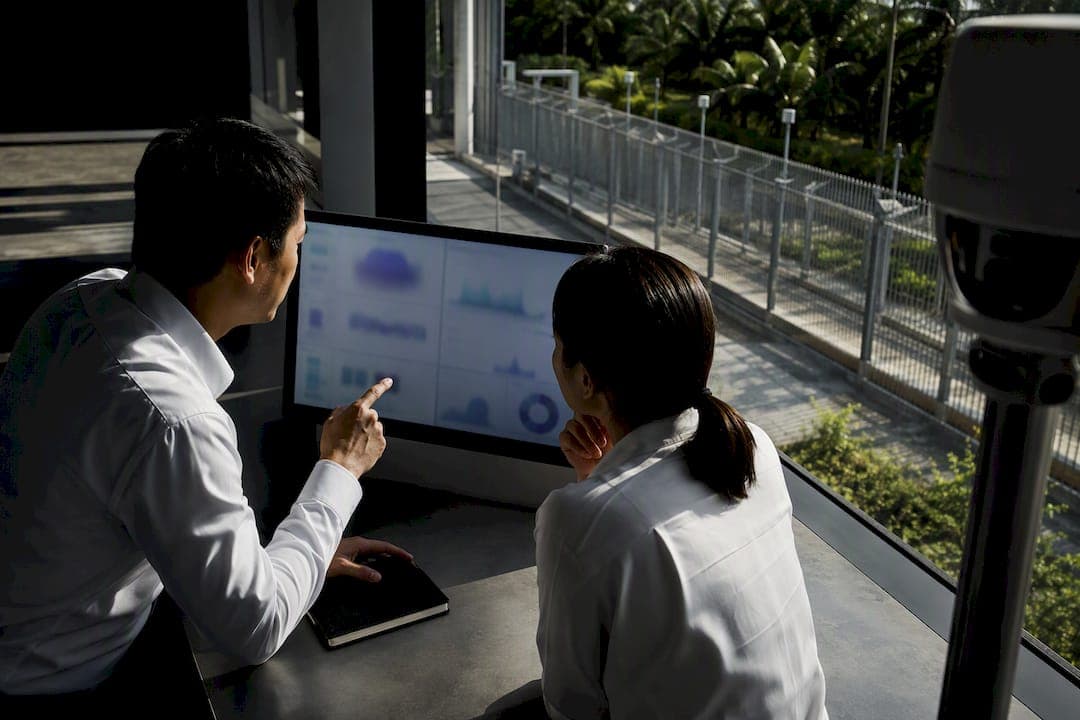
Singapore Procurement: Live Pilot for Intrusion Detection Analytics

Intrusion detection analytics analyze data from physical sensors, video cameras, radar, fence sensors, and PIR detectors to spot trespassers, classify what triggered an alert, and route verified events to a response team. Properly scoped systems paired with documented vendor SOPs turn raw sensor noise into faster, verifiable alerts. For procurement teams, that combination, not any single sensor, is what separates a system that protects a facility from one that just generates alarms.
TL;DR:
- Vendors must demonstrate sensor fusion and corroboration across modalities to effectively reduce false alarms in intrusion detection systems.
- Post-deployment, ongoing calibration, environment-specific tuning, and testing are crucial to maintain detection accuracy and prevent model drift.
- Real-world testing under site-specific conditions, including a live pilot and verification of SLA metrics, is more valuable than lab demonstrations for accurate evaluation.
- Vendor SOPs, retention policies, and documented workflows are critical components to ensure PDPA compliance and operational efficiency.
- Advances in machine learning, edge processing, and exception-based monitoring will shape future systems to deliver more reliable, context-aware intrusion detection.
Table of Contents
- What counts as intrusion detection analytics in your specification
- The technical building blocks procurement teams need to know
- From detection to dispatch: how the event pipeline actually runs
- Building an RFP that lets you score vendors fairly
- What PDPA compliance actually requires from your vendor
- Algorithms behind the alert: pattern recognition and behavior analysis
- Where intrusion analytics struggle in real deployments
- What effective deployments have in common
- Where the technology is heading next
- The gap between what vendors promise and what procurement actually needs
- Get procurement support and pilot testing from BeyondSensor
- Where to verify the regulations and standards cited here
- Sources
- FAQ
What counts as intrusion detection analytics in your specification
When you write a specification, define exactly which sensors and outputs you expect the analytics platform to cover. Vagueness here is where vendor proposals diverge most, and where evaluation later becomes difficult.
The category includes several sensor families, each contributing a different signal:
- Video analytics (VA): camera-based detection that classifies moving objects and flags rule violations.
- Fence intrusion detection systems (FIDS): vibration or strain sensors mounted on fencing that detect climbing or cutting.
- Radar: wide-area detection that tracks movement through darkness, fog, or foliage.
- Passive infrared (PIR): motion sensors tuned to heat signatures, common for building perimeters.
- Magnetic switches and tripwires: contact-based triggers for doors, gates, and defined lines.
- Access control events: badge and credential logs that corroborate or contradict a sensor alert.
Analytics turn these raw signals into decisions: classifying a target as human or vehicle, drawing a virtual tripwire across a monitored zone, flagging loitering, detecting direction of travel, or clustering repeated events into a single incident. This scope excludes network or cyber intrusion detection systems entirely, a separate discipline with its own tools and audience. Biometric overlays, such as facial matching at access points, fall within scope only when paired with the privacy controls described in PDPC's guidance on biometric data, including liveness detection and access restrictions.
The technical building blocks procurement teams need to know
Vendor proposals will use terms interchangeably that actually describe distinct engineering choices. Knowing the difference lets you ask sharper questions during evaluation.
Rule-based classifiers flag events against fixed logic, such as "object crosses this line." Machine learning classifiers instead learn to distinguish humans, vehicles, and animals from labeled examples, which generally improves accuracy in cluttered scenes but requires retraining as conditions change. Anomaly detection approaches, layered pattern-recognition and behavior-based analysis, look for what deviates from a learned baseline rather than matching a predefined rule.
Sensor fusion, combining radar with video or fence sensors with video verification, reduces false alarms by requiring corroboration across modalities before an event escalates. SPF's building security guidance recommends pairing intrusion detection with video analytics as part of an integrated design rather than relying on a single sensor type.
Edge processing runs analytics on-device, which lowers latency and limits bandwidth use. Cloud processing centralizes analytics and simplifies model updates across a large estate. Verification features matter most at the moment of alarm: video pop-ups tied to the triggering sensor, snapshot metadata, and multi-sensor corroboration all shorten the time an operator needs to confirm a real event.
- Ask vendors whether classification runs at the edge or in the cloud, and what happens to detection during a network outage.
- Request a false-alarm-rate figure from a live pilot, not a lab demo.
Pro Tip: Ask for a side-by-side clip showing a real nuisance event (a blowing tarp, a stray animal) alongside a genuine intrusion, and see how the analytics distinguish them.
From detection to dispatch: how the event pipeline actually runs
An intrusion event moves through a defined pipeline, and each stage has its own latency budget worth specifying in a contract.
- Sensing: the physical sensor (camera, radar, fence cable) captures raw data continuously.
- Preprocessing: the system filters noise, such as lighting flicker or wind-driven vegetation, before analysis.
- Detection: the algorithm evaluates the filtered data against classification or anomaly models.
- Alarm generation: a qualifying event triggers an alert, typically within a sub-second to a few seconds of detection.
- Operator verification: the alert reaches an operator console, generally within seconds to low tens of seconds, depending on network load and video pop-up configuration.
- Response dispatch: verified events route to a patrol team or a response force.
These timelines depend heavily on bandwidth, edge versus cloud processing, and how many cameras share a network segment, so a vendor's advertised speed should always be tested under your own site conditions rather than accepted from a data sheet.
Retention of footage and metadata should follow both investigative needs and PDPA obligations. Our guidance on CCTV data retention covers practical retrieval, masking, and disclosure steps. Analytics also reshape patrol patterns. Instead of officers checking every zone on a fixed schedule, verified events prioritize where a human response actually goes next.
Building an RFP that lets you score vendors fairly
A specification that lists only sensor types will draw vague proposals. The stronger approach is to require measurable commitments in specific clauses.
- Supported sensors and integration APIs: which sensor types the platform ingests natively, and which require middleware.
- Event schema: the data fields attached to every alert (timestamp, sensor ID, classification, confidence score).
- Acceptance test plans: a defined factory acceptance test (FAT) and site acceptance test (SAT) before final sign-off.
- SLA metrics: false alarm rate, detection probability, and mean time to respond (MTTR), each with a numeric target.
One of the most reliable ways to compare bids objectively is to require every vendor to run the same live pilot metrics under identical site conditions, according to PDPC's advisory guidelines on the PDPA, which also frames documented risk assessment as part of responsible analytics deployment. A lab demo tells you little about how a system performs against your own fence line, lighting, and foliage.
Operational demands deserve their own line items: installation calibration, environmental tuning for your specific site, a maintenance schedule, and operator training. Contractual and compliance items round out the checklist: a named data protection officer (DPO) responsibility, written SOPs for footage access, admin credential handling, and documented vendor staff training. Skipping these clauses is the single most common gap procurement teams regret after deployment.
What PDPA compliance actually requires from your vendor
Data protection obligations do not stop at buying compliant hardware. They extend into how footage is stored, who can access it, and what documentation exists to prove it.
PDPC's advisory guidance recommends anonymization where feasible and a documented legitimate-interest assessment for CCTV and biometric analytics, rather than treating personal data collection as automatically justified by a security purpose. A 2025 PDPC commission decision found an organization liable after CCTV footage was overwritten and access controls were inadequate, and directed it to implement written retention policies and vendor SOPs within a set timeframe. That case is a clear signal that retention gaps and missing vendor documentation are treated as compliance failures, not technicalities.
Build these controls directly into your contract:
- Written SOPs for footage retrieval and disclosure, held by the vendor and reviewed on a set cycle.
- Access logs for every instance of footage review, with encryption for stored data.
- A named DPO responsible for surveillance analytics decisions.
Pro Tip: Ask vendors for their SOP template before signing, not after installation. A vendor without one already documented is a warning sign.
Algorithms behind the alert: pattern recognition and behavior analysis
Underneath the sensor layer, intrusion detection analytics rely on a handful of recurring algorithmic approaches, and knowing their tradeoffs helps you read a vendor's technical proposal with more confidence.
Pattern recognition matches incoming sensor data against known shapes or motion signatures, such as the gait pattern of a walking person versus a swaying tree branch. Behavior analysis goes a step further, tracking an object over time to flag actions like loitering near a gate or approaching a fence line repeatedly, rather than judging a single frame in isolation. Anomaly detection takes a different route: it builds a baseline of normal activity for a zone (traffic patterns, typical dwell times) and flags deviations from that baseline, which is useful in areas where a fixed rule would miss unusual but not overtly rule-breaking behavior.
Clustering algorithms group related detections into a single incident, so a person walking along a fence line and then climbing it generates one escalated alert instead of five disconnected ones. Confidence scoring, attaching a numeric likelihood to each classification, lets operators triage alerts by priority rather than treating every trigger equally.
None of these techniques work well in isolation. A system that pairs behavior analysis with sensor fusion, corroborating a camera's loitering flag with a radar track, produces fewer nuisance alerts than either method running alone. Procurement teams evaluating proposals should ask which of these techniques a vendor's platform actually uses, not just whether it claims to be AI powered.
Where intrusion analytics struggle in real deployments
No analytics platform performs identically across every site, and understanding the common failure points helps set realistic expectations before signing a contract.
Environmental factors cause a large share of nuisance alerts. Wind-driven vegetation, shifting shadows as the sun moves, rain or fog reducing camera contrast, and reflective surfaces at night all challenge video analytics in particular. Radar handles fog and darkness better but can register false tracks from birds or dense foliage moving in wind. Fence sensors face their own interference: vehicle vibration near a fence line, maintenance activity, or even heavy rainfall can trigger false positives if sensitivity is not tuned to the specific installation.
Sensor placement and calibration matter more than most buyers expect. A camera angled too low will misclassify a crouching person as an animal. A radar unit installed without accounting for nearby metal structures may generate reflection artifacts. SPF's guidance on integrated security design recommends comprehensive perimeter coverage and dual-technology pairing precisely because no single sensor type handles every condition well.
Network and bandwidth constraints also limit performance. Analytics running in the cloud depend on a stable connection, and a site with intermittent connectivity may need edge processing to avoid gaps in coverage during outages. Finally, model drift is a quieter problem: a classifier trained on one season's lighting and foliage can lose accuracy months later as conditions change, which is why ongoing tuning, not a one-time calibration, belongs in any maintenance contract.

What effective deployments have in common
Deployments that perform well over time tend to share a few practical traits, regardless of sector or site size.
Facilities that pair analytics with a clear detect-delay-respond structure see better outcomes than those relying on detection alone. The Guide for Responsible Person frames intrusion detection as one layer among physical barriers and a trained response force, not a standalone solution. A perimeter with well-tuned radar and video fusion still needs delay measures, such as fencing height and lighting, and a response plan that specifies who acts on a verified alert.
Sites that run a proper pilot before full rollout also fare better. Testing analytics against local conditions, actual weather, actual foliage, actual traffic patterns, for a defined period surfaces false-alarm sources that a vendor demo never reveals. Facilities that skip this step often find themselves retuning sensitivity thresholds for months after go-live.
Integration with existing systems matters as much as the sensor technology itself. The VSS technical guidance recommends that an intrusion alarm automatically trigger the relevant camera view at identification quality, so an operator can verify without hunting for the right feed. Sites that configure this linkage from day one report faster verification than those bolting it on afterward.
Documentation discipline separates smooth operations from reactive ones. Facilities that maintain written SOPs for footage access, retention schedules, and escalation procedures handle incidents, and audits, with far less friction than those improvising in the moment.

Where the technology is heading next
Sensor fusion is moving from a competitive differentiator to an expected baseline. As radar, video, and fence sensors become more affordable to combine, procurement specifications increasingly ask for multi-modal corroboration by default rather than treating it as a premium feature.
Machine learning classifiers continue to improve at distinguishing humans, vehicles, and animals in cluttered or low-light scenes, which directly reduces the nuisance-alert burden on operators. Vision language models, a newer class of AI capable of interpreting a scene in more descriptive terms rather than a fixed label, are starting to appear in patrol and monitoring tools, letting systems flag context (a person carrying a ladder near a fence at night) rather than just a generic motion event.
Edge computing is also expanding, pushing more classification work onto the camera or sensor itself rather than a central server. This shift reduces bandwidth demand and keeps detection running during network interruptions, a meaningful advantage for larger perimeters with inconsistent connectivity.
Exception-based monitoring, where operators only review flagged, high-confidence events instead of watching every feed, is becoming the standard workflow rather than the exception. As classifiers grow more reliable, this shift reduces manual oversight without cutting coverage, letting a smaller team manage a larger sensor estate. Procurement teams evaluating platforms today should ask not just what a system detects now, but how its models get updated as these capabilities mature.
The gap between what vendors promise and what procurement actually needs
The industry conversation around intrusion detection analytics leans heavily on accuracy percentages and AI capability lists, and that framing misses the actual point of failure. Most underperforming deployments do not fail because the classifier was weak. They fail because nobody tested it against the site's real conditions before signing the contract, and nobody wrote down who is responsible for footage access afterward.
Procurement teams that treat this as a technology purchase alone are solving the wrong problem. The stronger approach treats it as a systems and governance purchase: a vendor's SOPs, acceptance test rigor, and willingness to run a live pilot under your own weather and foliage tell you more than any spec sheet. Conventional advice tends to prioritize sensor specifications first and compliance paperwork last, when the PDPC enforcement record suggests the reverse ordering protects a facility better.
If you take one thing from this guide, prioritize the pilot. Run it long enough to see your actual nuisance sources, not the vendor's cleanest demo conditions, and require the SOP documentation before the contract closes, not after an incident forces the issue.
— Eumir
Get procurement support and pilot testing from BeyondSensor
Choosing the right combination of sensors, analytics, and SOPs takes more than reading a spec sheet, and that is where a systems integration partner earns its place. BeyondSensor's Solution Integration service handles the technical site survey, pilot deployment, and acceptance testing that a proper RFP process calls for, so your team is not testing five vendors' worth of hardware in isolation.

For teams building out perimeter or facility coverage, BeyondWatch provides the surveillance analytics and event management layer, while BeyondPatrol supports verification and response workflows once an alert is confirmed. Organizations sourcing validated hardware at scale can work through Strategic Distribution rather than vetting individual sensor manufacturers on their own.
Next steps that fit most procurement timelines:
- Request a technical site survey to identify sensor placement and environmental factors specific to your facility.
- Run a proof-of-concept pilot before committing to a full rollout.
- Build acceptance testing and a compliance checklist into the contract from the start.
Start a conversation with our team to scope a pilot or integration plan.
Where to verify the regulations and standards cited here
For the regulatory and technical details referenced throughout this guide, consult PDPC's advisory guidelines on the PDPA, the 2025 commission decision on CCTV retention, SPF's GEBSS guidance, and Singapore Standard SS 558 for intruder alarm systems. Our own breakdown of surveillance analytics covers related operational checklists.
This article is general information, not a substitute for advice from a qualified lawyer. Consult a qualified legal professional about your own circumstances before acting on anything here.
FAQ
What is the difference between intrusion detection and video analytics?
Intrusion detection is the broader category, covering any sensor, video, radar, fence, or PIR, used to spot a perimeter breach. Video analytics is one component within that category, specifically the software that interprets camera footage to classify and flag events.
How fast should an intrusion alert reach an operator?
Detection typically triggers an alarm within a sub-second to a few seconds, with the alert reaching an operator's screen within seconds to low tens of seconds depending on network conditions and video pop-up configuration. These timelines depend on whether processing happens at the edge or in the cloud, so they should be tested on-site rather than taken from a data sheet.
Does PDPA apply to CCTV and intrusion detection analytics?
Yes, when analytics process personal data such as identifiable footage, PDPC's advisory guidelines apply, and the agency recommends anonymization and a documented legitimate-interest assessment. Organizations remain responsible for retention policies and vendor SOPs even when a third-party system handles the footage.
What should a false alarm rate target look like in an RFP?
Rather than accepting a vendor's lab-tested figure, request a false alarm rate measured during a live pilot on your own site under real environmental conditions. This single change in testing approach is often what separates a system that performs as advertised from one that generates nuisance alerts once installed.
Can BeyondSensor help with PDPA-compliant intrusion detection procurement?
A solution integration service that includes site surveys, pilot testing, and acceptance testing can support PDPA-aligned documentation and vendor SOP requirements. Local validation of analytics performance before full deployment is important for regional markets.
Recommended
Read More Articles
97% Takeover Success Demoed: Sensor Fusion Security for Practitioners
For security teams and system integrators: harden sensor fusion security with ETSI hardware controls, documented attack evidence, and a practical...

Stop False Dispatches: 5 SOP Steps for Singapore Alarm Triage
SOP first, verification led alarm triage workflow for Singapore facilities. Five SOP steps aligned to PDPC, SGPolice and ABS guidance.

Avoid Outages: IMDA/JST Camera Firmware Management for Administrators
Practical operations-first guidance for security administrators to run staged, auditable firmware updates across multi-site camera fleets, aligned to IMDA...

Avoid 90 Second Chaos: Visitor Watchlist Screening for Singapore Teams
Practical, compliance-first playbook for visitor watchlist screening: SOPs, vendor requirements, PDPA and IMDA guidance, and BeyondSensor integration tips...
Let's Build YourSecurity Ecosystem.
Whether you're a System Integrator, Solution Provider, or an End-User looking for trusted advisory, our team is ready to help you navigate the BeyondSensor landscape.
Direct Advisory
Connect with our regional experts for tailored solutioning.