
Practical PIDS guidance for security teams: demand three pilot KPIs, 15–30 second verification SLAs, and vendor questions that cut false alarms.
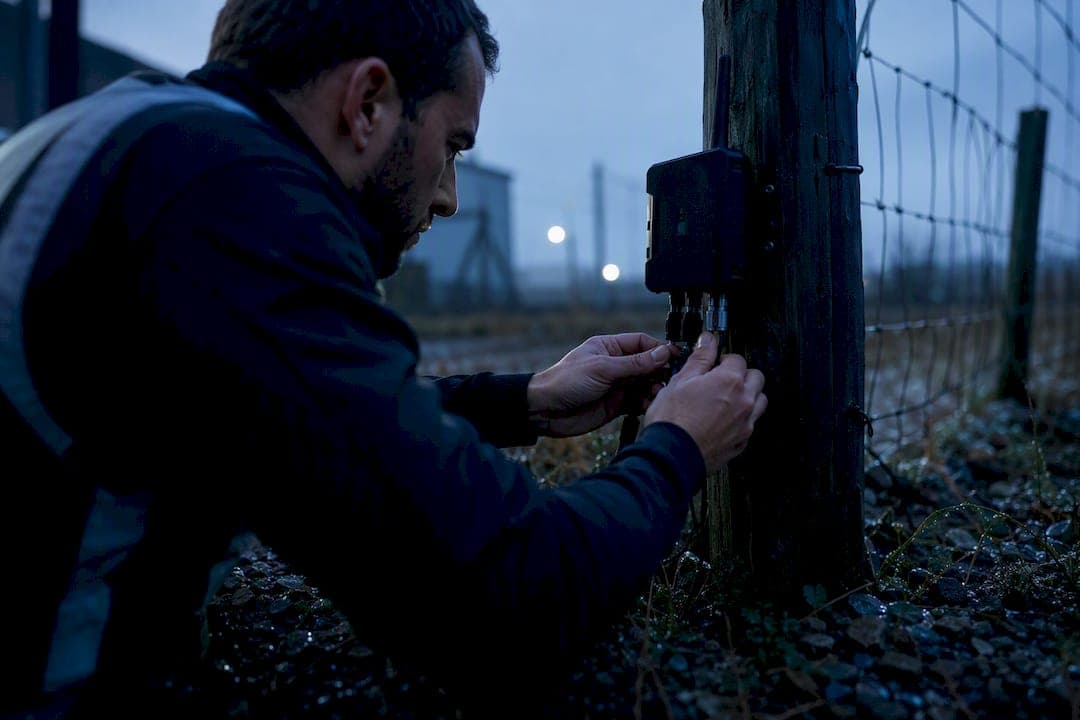
3 Pilot KPIs Security Teams Need for Perimeter Intrusion Detection
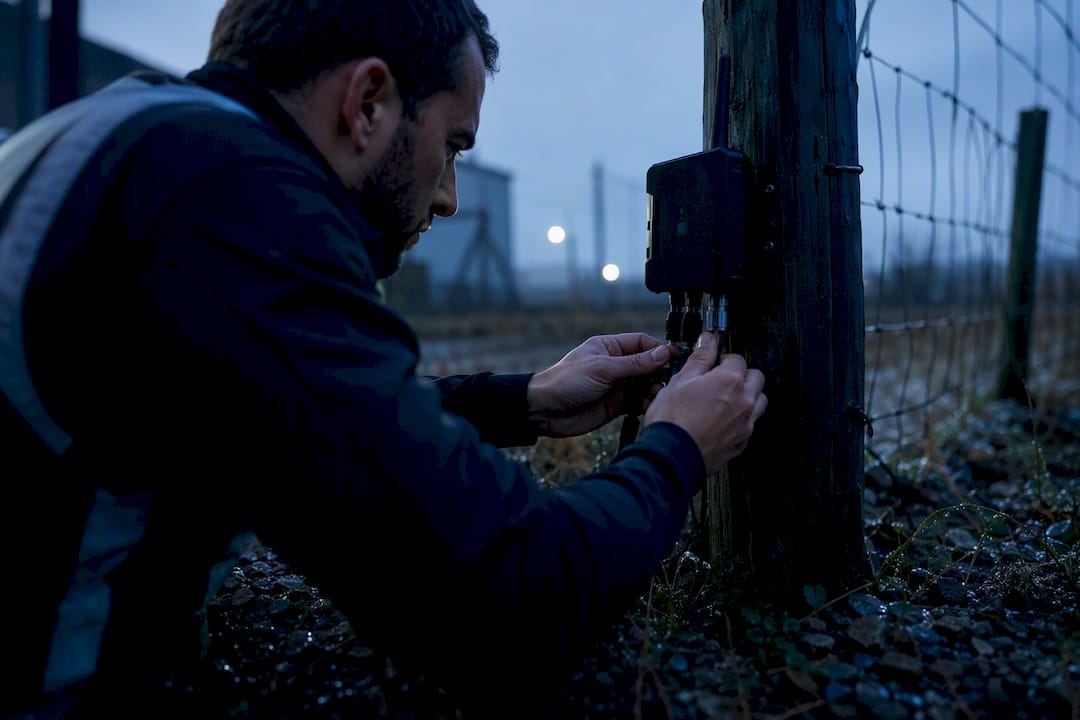
A perimeter intrusion detection system (PIDS) is a network of sensors deployed along a site boundary to detect intruders before they reach a building or asset, giving a control room time to verify the threat and respond. PIDS work as an early-warning layer, not a replacement for fencing, lighting, or CCTV. Used alone, a sensor only tells you something happened at the fence line. Integrated with video verification and a trained control room, it tells you what to do about it.
TL;DR:
- Matching sensor modality to site conditions is crucial, with barrier-mounted, ground-based, and wide-area systems suited to different terrains and security needs.
- Vegetation control, secure mounting on the fence's inner side, and proper sterile zone setup significantly reduce false alarms and improve detection reliability.
- Verification workflows pairing sensors with cameras and multi-sensor correlation are essential for minimizing nuisance alarms and confirming genuine threats.
- Procurement should demand specific, site-representative detection probability, localization accuracy, and nuisance alarm rates, rather than relying on marketing claims alone.
- Effective lifecycle management includes regular calibration, ground checks, spare parts stockpiling, and system updates to maintain detection performance over time.
Table of Contents
- What Is Perimeter Intrusion Detection and Why Does It Matter?
- What Are the Main Types of Perimeter Intrusion Detection Systems?
- How Do PIDS Sensor Technologies Actually Detect Intruders?
- Where Should PIDS Sensors Be Placed on a Perimeter?
- How Do You Verify PIDS Alerts and Reduce False Alarms?
- What Should You Ask Vendors Before Buying a PIDS?
- What Are Common PIDS Deployment Mistakes and How Do You Avoid Them?
- What Regulatory Standards Apply to Perimeter Intrusion Detection?
- How Do You Maintain a PIDS System Over Its Lifecycle?
- How Do Weather and Wildlife Affect PIDS Performance?
- Where Is Perimeter Security Technology Headed Next?
- How Beyondsensor Supports Perimeter Intrusion Detection Projects
- Where to Find Authoritative Guidance on Perimeter Security Standards
- Sources
What Is Perimeter Intrusion Detection and Why Does It Matter?
Every serious perimeter security program rests on the same principle: detect, verify, respond. PIDS handles the first job. It cannot delay an intruder physically the way a wall or a ditch does, and it cannot confirm intent the way a human operator watching a camera feed can. What it does is buy time, often the only resource a security team actually controls.
NPSA guidance frames PIDS as a force multiplier that extends the reach of a security control room. A single guard patrolling a two-mile fence line covers a fraction of that distance at any given moment. Sensors covering the same line report continuously, day and night, and hand the verification job to cameras and operators only when something crosses a threshold worth checking.
This matters because the alternative, relying on patrols or CCTV alone, tends to fail quietly. A camera pointed at an empty fence line for eight hours generates no alerts and no action; an intruder who studies patrol timing can exploit the gaps. PIDS closes that gap by generating a signal the instant a boundary is disturbed, whether that disturbance is a hand on the fence, a footstep near buried cable, or a body breaking an infrared beam.
The term "PIDS" itself is the recognized industry designation, used across NPSA guidance, DHS technical reports, and manufacturer documentation. You will also see "perimeter detection sensors," "outdoor intrusion detection sensors," and "perimeter security solutions" used more loosely in vendor marketing. They describe the same category of technology; PIDS is the term that shows up in procurement documents and compliance frameworks, so it's worth anchoring on them early.
What Are the Main Types of Perimeter Intrusion Detection Systems?
Choosing the right PIDS modality starts with matching the physical form factor to the site's constraints, not the other way around. NPSA categorizes PIDS into five broad types, and each one solves a different combination of budget, terrain, and threat profile.
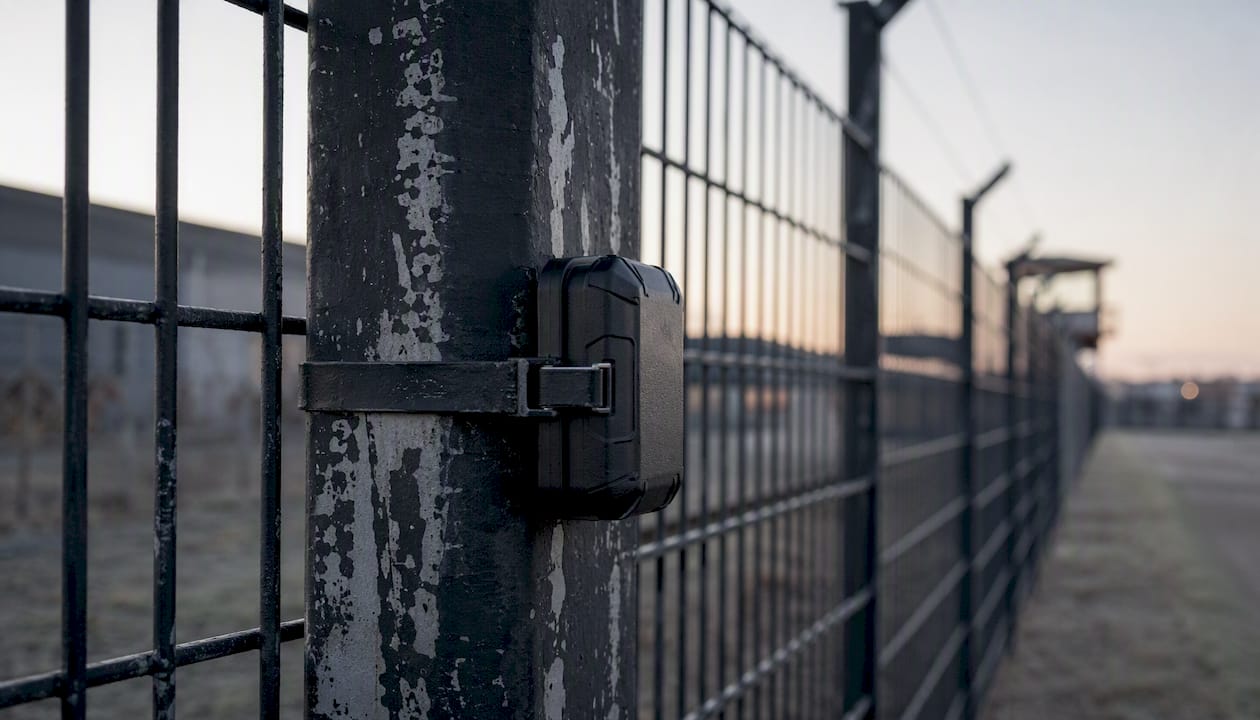
Barrier-mounted systems attach directly to an existing fence or wall. Fiber-optic sensors, accelerometer strips, and taut wire assemblies fall into this category. They're the most cost-effective option when a fence already exists, since installation piggybacks on infrastructure that's already in place. Detection ranges can vary per processing zone, and the sensors are largely invisible from outside the fence line, which limits an intruder's ability to plan around them.
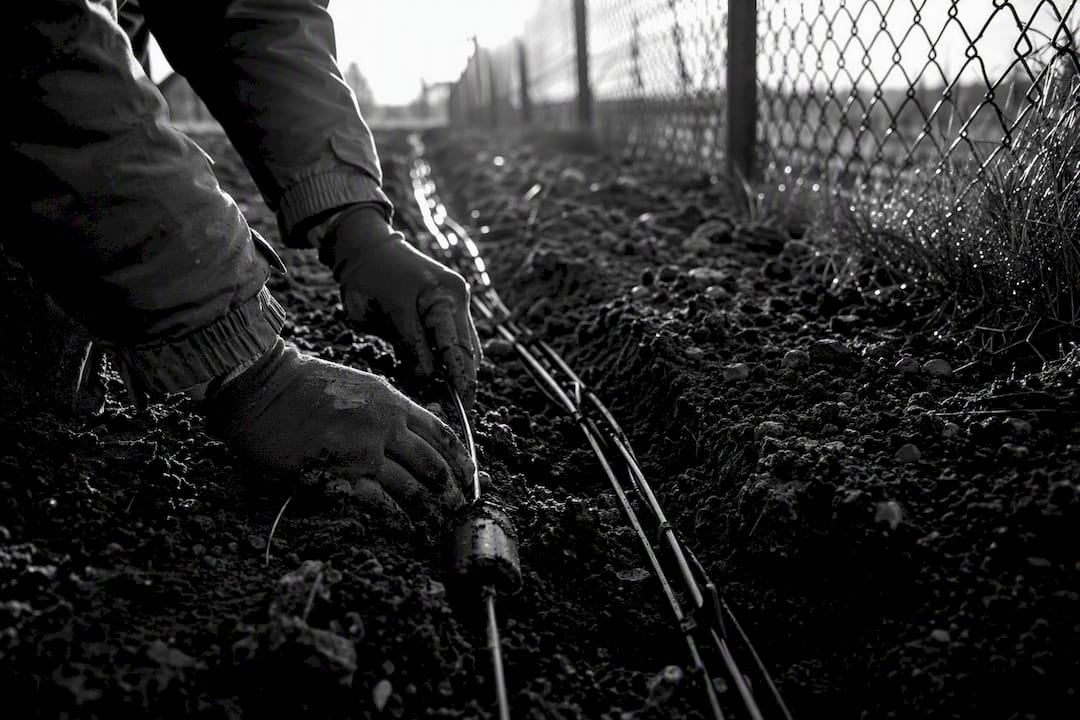
Ground-based systems bury cable or seismic sensors beneath the perimeter surface, detecting footsteps or vehicle movement through pressure or vibration in the soil. They work where a fence doesn't exist or isn't wanted, such as around a heritage building or an open campus with aesthetic restrictions. Buried sensors are essentially invisible and hard to detect or avoid, but installation requires trenching and careful routing around utilities, which drives up both cost and lead time.
Free-standing systems use independent poles or masts to mount microwave, infrared, or radar sensors that project a detection field across open ground without needing a fence at all. These suit wide, unobstructed perimeters like airport runway buffers or industrial tank farms, where a continuous physical barrier isn't practical or necessary.
Rapidly deployable systems are portable, battery-powered units designed for temporary sites, event security, or emergency response. A construction site, a disaster relief camp, or a temporary VIP perimeter can be secured in hours rather than weeks. The trade-off is shorter battery life, more frequent maintenance visits, and generally lower detection ranges than permanent installations.
Wide-area systems combine radar, long-range thermal cameras, and sometimes LiDAR to monitor large, open perimeters, such as border sections or large industrial complexes, from a small number of elevated sensor points rather than a dense line of ground sensors.
Matching modality to context usually comes down to three questions:
- Does a physical fence already exist, and is it in good repair?
- Is the perimeter open terrain, dense vegetation, or a mix?
- Is the deployment permanent infrastructure or a temporary operational need?
A correctional facility with a chain-link perimeter and a 20-year planning horizon is a natural fit for barrier-mounted fiber-optic sensors layered with buried cable in the sterile zone. A temporary logistics yard supporting a six-month project is better served by rapidly deployable units that can move with the operation.
How Do PIDS Sensor Technologies Actually Detect Intruders?
Every PIDS technology ultimately measures one of three physical disturbances: mechanical vibration, a broken energy field, or a change in an electromagnetic pattern. Understanding which disturbance a sensor measures explains both its strengths and its failure modes.
Fiber-optic fence sensors run a length of optical fiber along the fence fabric or top rail. Vibration from climbing, cutting, or lifting the fence disturbs light traveling through the fiber, and processing software localizes the disturbance to within a few meters. They resist electromagnetic interference and lightning, which makes them a strong choice near industrial equipment or high-voltage infrastructure.
Vibration and accelerometer sensors clip onto fence posts or fabric and detect the same mechanical disturbance through electromechanical transducers rather than optics. They're cheaper to install than fiber-optic systems but generally offer coarser localization, reporting activity by zone rather than by meter.
Ported coax cable sensors run two coaxial cables parallel along or buried near the fence line, creating an electromagnetic field between them. An intruder's body mass disturbs that field as they pass through it. Ported coax works well for detecting crawling or low-profile movement that beam-based sensors might miss.
Buried cable and seismic sensors sit underground and detect footstep pressure or ground vibration through geophones or fiber-optic strain sensors. Because they're concealed, they're difficult for an intruder to locate and defeat, but frost heave, heavy rain, and nearby vehicle traffic can all generate false triggers if the site isn't calibrated carefully.
Passive infrared and active near-IR beam systems detect either a body's heat signature crossing a fixed field of view or the interruption of an invisible infrared beam between a transmitter and receiver. Beam systems are precise and cheap per linear meter but require clear line of sight, meaning vegetation, fog, or heavy snow can degrade performance.
Microwave sensors transmit a radio frequency field between a transmitter and receiver and detect the Doppler shift caused by a moving body. They tolerate rain and fog better than optical beams but can generate nuisance alarms from tall grass or vehicle traffic just outside the intended detection zone.
Electrostatic field sensors create a low-voltage field around a wire array; an intruder's body capacitance disturbs the field before physical contact occurs, giving a small but useful margin of warning ahead of a climb attempt.
Taut wire systems use tensioned wires with sensors that detect the mechanical deflection caused by climbing or cutting. They generate very few false alarms because pure wind or wildlife rarely produces enough deflection to trigger them, but they're among the more labor-intensive systems to install correctly.
| Modality | Detection principle | Localization accuracy | Common false-alarm sources |
|---|---|---|---|
| Fiber-optic fence | Light disturbance from vibration | High (meter-level) | Severe wind, hail |
| Accelerometer | Mechanical vibration | Moderate (zone-level) | Wind, loose fence fabric |
| Ported coax | Electromagnetic field disturbance | Moderate to high | Standing water, dense vegetation |
| Buried cable/seismic | Ground vibration or pressure | Moderate | Frost heave, heavy vehicles nearby |
| IR beam | Beam interruption | High | Fog, snow, birds |
| Microwave | Doppler shift | Moderate | Tall grass, small animals |
| Electrostatic | Field capacitance change | High | Rare; sensitive to icing |
| Taut wire | Mechanical deflection | High | Rare; very low nuisance rate |
Pro Tip: Never rely on a single modality's manufacturer-quoted detection range without asking how that figure was measured. A "300-meter zone" tested on flat, dry ground in a lab bears little resemblance to a 300-meter zone running through mixed brush after a week of rain. Ask for site-specific pilot data before committing to a spec.
Where Should PIDS Sensors Be Placed on a Perimeter?
Placement decisions determine whether a technically sound sensor performs well in practice, and this is where a surprising number of otherwise competent installations fail.
The starting concept is the sterile zone: a clear strip of ground running along the inside or outside of the perimeter line, kept free of vegetation, debris, and stored materials. A sterile zone reduces false alarms from blowing leaves or animal traffic and gives buried and ground-based sensors room to function without interference. Most guidance recommends a minimum sterile zone width and regular vegetation control as a baseline maintenance task, not an optional extra.
Mounting side matters more than most procurement teams realize. Sensors should generally sit on the secure, inside face of the fence rather than the exposed outer face. NPSA advises mounting on the secure side specifically because an intruder who can reach the sensor from outside the fence can potentially tamper with or defeat it before triggering an alarm.
Design decisions that follow from that principle include:
- Set sensor zone lengths to match localization requirements. Shorter zones give the control room a tighter fix on where an intrusion occurred, which speeds camera cueing.
- Overlap adjacent zones slightly at corners and gates, where detection gaps are most likely to occur and most likely to be exploited.
- Route power and communications separately from the sensor cable path where possible, so a single cut doesn't take down both detection and reporting.
- Use Power over Ethernet or fiber backhaul for fixed installations, and solar-plus-battery redundancy for remote or rapidly deployable sensor nodes that lack easy grid access.
- Install physical test points at intervals so technicians can verify sensor function without disturbing live zones during scheduled testing.
- Restrict physical access to sensor cabinets and junction boxes, treating them as part of the secured asset, not incidental infrastructure.
Maintainability deserves the same design attention as detection performance. A system that requires a technician to walk the entire fence line to diagnose a fault will get maintained less often than one with remote diagnostics and zone-level status reporting. Build that into the specification before signing a contract, not after the first outage.
How Do You Verify PIDS Alerts and Reduce False Alarms?
A raw sensor alert is a hypothesis, not a fact. Turning that hypothesis into a confirmed incident, or dismissing it as noise, is the job of the verification workflow, and it's where a lot of otherwise well-designed systems either earn their budget or get quietly ignored by operators.
The standard workflow ties each PIDS zone alarm to a camera preset. When a zone trips, the system automatically slews the nearest PTZ camera to that section of fence line and displays the live feed to the operator, often alongside a short buffered clip of the seconds just before the alarm fired. This closes the biggest gap in unverified sensor deployments: by the time a human notices an alert on a log screen, the moment that mattered has already passed.
A workable control room SLA usually targets initial visual verification within 15 to 30 seconds of an alarm, with a documented decision (dispatch, monitor, or dismiss as nuisance) logged within two minutes. Sites without that level of urgency tend to see alert fatigue set in within weeks, where operators start dismissing alarms reflexively because false positives have trained them to.
False-alarm management deserves its own line item in any deployment plan. DHS technical guidance points to multi-sensor correlation as the most effective mitigation, pairing fence vibration data with radar or video analytics so an alarm only escalates when two independent modalities agree. Practical mitigation steps include:
- Correlating alerts across at least two sensor types before auto-escalating to dispatch.
- Applying environmental masks that suppress known nuisance zones (a tree branch that brushes the fence in high wind, for instance) without disabling the zone entirely.
- Running scheduled self-tests on each sensor segment, logging drift in sensitivity over time.
- Capturing and archiving video evidence tied to every verified alarm for post-incident review and for refining detection thresholds.
Every verified incident should feed back into the system. Reviewing a month of alarm logs against actual outcomes, real intrusions versus nuisance triggers, is the single most useful maintenance habit a security team can build, and it costs nothing but time.
What Should You Ask Vendors Before Buying a PIDS?
Procurement conversations go wrong most often because buyers accept marketing specifications instead of demanding testable ones. A detection range quoted without a stated probability of detection is a marketing number, not an engineering spec.
Push vendors and integrators to quote three figures specifically: probability of detection at a stated range, localization accuracy in meters, and expected nuisance alarm rate per zone per week under local conditions. DHS evaluation frameworks recommend requiring these figures under site-representative testing rather than lab conditions, because a sensor's real-world performance in coastal fog or desert heat can differ sharply from its datasheet rating.
Beyond the technical specs, the commercial questions matter just as much:
- What is the service-level agreement for fault response, and is it measured in hours or business days?
- What spare parts are stocked locally versus shipped from overseas, and what's the typical replacement lead time?
- Who trains control room operators, and is refresher training included after year one?
- What does the acceptance test look like, and does the vendor commit to a written detection probability and false-alarm threshold before final payment?
Red flags tend to repeat across bad proposals: a refusal to commit to a written acceptance test, detection ranges quoted without environmental caveats, and pricing that bundles hardware and installation without breaking out ongoing maintenance costs separately.
Budget for both CAPEX and OPEX from the start. Hardware, trenching or fence-mounting labor, and initial commissioning make up the capital cost. Ongoing costs include scheduled calibration visits, spare sensor modules, software licensing for analytics platforms, and control room staffing time spent on verification. A system that looks affordable on a CAPEX line item can become expensive quickly if the false-alarm rate drives up staffing costs, which is exactly why the nuisance alarm figure belongs in the contract, not just the sales deck.
Pro Tip: Ask for the vendor's nuisance alarm rate from a comparable climate and terrain, not their best-case reference site. A system tuned for a dry inland facility will behave differently on a coastal perimeter with salt spray and higher humidity.
What Are Common PIDS Deployment Mistakes and How Do You Avoid Them?
The most persistent failure Beyondsensor sees in the field isn't a bad sensor choice, it's a mismatch between the sensor's designed sensitivity and the physical reality of the site. Cabling runs sized for a lab bench get pushed past their rated distance and start dropping signal integrity. Sterile zones get specified on paper and then never maintained once landscaping crews take over. Sensor density gets set to hit a budget number rather than the actual localization requirement the site needs.
Pilot deployments exist precisely to catch these mismatches before a full-scale rollout locks them in. A well-designed pilot runs for at least a full seasonal cycle where possible, capturing performance across the conditions that actually stress a system: rain, wind, and normal wildlife movement.
A pilot should measure three numbers before anything else: probability of detection tested at fixed intervals along the fence line, nuisance alarms per week under real local conditions, and localization error in meters between the reported zone and the actual crossing point. If a vendor can't produce these three figures from a pilot, the acceptance test isn't finished yet.
Operational handover is where many otherwise successful pilots quietly fail after go-live. A system handed to a control room without structured training, a documented spare-parts plan, and a fixed maintenance calendar tends to degrade within a year, not because the technology failed but because nobody owned its upkeep. Building that handover plan into the contract, alongside the acceptance test criteria, is what separates a pilot that scales cleanly from one that gets quietly abandoned after the first false-alarm complaint from the client's operations team.
What Regulatory Standards Apply to Perimeter Intrusion Detection?
Compliance requirements for PIDS vary significantly depending on the sector and the sensitivity of the site being protected, so there's no single universal standard that governs every deployment. Critical infrastructure, correctional facilities, airports, and government sites each tend to fall under sector-specific security frameworks that specify minimum detection performance, response times, and system redundancy.
NPSA publishes guidance that many UK-regulated sites reference when specifying PIDS categories and integration requirements with CCTV and control rooms, and similar national security agencies in other jurisdictions publish comparable frameworks for critical national infrastructure. In the United States, DHS technical reports provide evaluation criteria that inform procurement standards for government and critical infrastructure sites, even where they don't carry the force of a binding regulation.
For most commercial and industrial deployments, compliance obligations come less from a single PIDS-specific law and more from broader security, safety, and data-protection frameworks: fire and life-safety codes that govern power and cabling near evacuation routes, data protection rules that apply once video verification captures footage of individuals, and site-specific insurance or regulatory requirements tied to the industry (energy, ports, aviation). Procurement teams should confirm which sector framework applies to their specific site type before finalizing a specification, rather than assuming a generic security standard covers every requirement.
How Do You Maintain a PIDS System Over Its Lifecycle?
A PIDS installed and never recalibrated degrades quietly, and by the time performance drops noticeably, the gap between paper spec and real detection capability can be substantial.
Lifecycle management starts with a maintenance calendar built around the sensor technology deployed. Fiber-optic and electronic sensors typically need periodic sensitivity recalibration, since fence tension changes with temperature swings and can drift a system's baseline over months. Buried cable and seismic sensors need periodic ground checks after heavy rain or frost cycles, when soil settling can shift detection thresholds without any visible sign at the surface.
Scheduled self-tests, run automatically at set intervals, catch degraded sensor segments before they fail silently. Pairing automated self-tests with a quarterly physical walk of the sterile zone, checking for vegetation encroachment, fence damage, or cabinet tampering, covers the gap that automation alone can't close.
Spare-parts planning matters as much as the testing schedule itself. A sensor module failure that takes three weeks to resolve because a replacement part has to ship from overseas leaves a real gap in coverage. Sites with critical exposure should stock at least one spare module per sensor type locally, sized to the number of zones deployed.
Lifecycle planning should also account for software and firmware updates on analytics platforms tied to the PIDS, since detection algorithms improve over time and outdated firmware can miss vendor-issued fixes for known false-alarm patterns. Treat the system as living infrastructure with a maintenance budget line, not a one-time capital purchase.
How Do Weather and Wildlife Affect PIDS Performance?
Environmental conditions are the single biggest source of false alarms across almost every PIDS modality, and the mitigation strategy differs by sensor type rather than following one universal fix.
High wind shakes fence fabric enough to trigger vibration-based sensors like accelerometers and, to a lesser degree, fiber-optic systems, particularly on loosely tensioned chain-link. Tightening fence fabric and adjusting sensitivity thresholds for known wind patterns at a given site reduces this without sacrificing genuine detection capability. Heavy rain and fog degrade infrared beam sensors by scattering the beam, while microwave sensors tolerate precipitation better but can pick up ground reflections off standing water.
Wildlife triggers are persistent and site-specific. Birds landing on fence lines, deer brushing against fabric, and burrowing animals disturbing buried cable all generate nuisance alarms that vary by region and season. Sites in rural or wooded settings should expect a higher baseline nuisance rate than urban industrial perimeters, and vendors should be asked to quote nuisance rates from a comparable environment rather than a controlled test site.
Terrain complicates ground-based and buried sensors most directly. Frost heave in colder climates shifts soil and can alter detection thresholds seasonally, while sloped or uneven terrain can create dead zones for line-of-sight sensors like infrared beams. The practical mitigation across nearly all of these factors is the same: sensor fusion. Correlating a fence vibration alert with a radar or camera analytic confirmation filters out the single-modality noise that weather and wildlife generate, without requiring the site to relocate sensors or clear every tree within a hundred meters of the fence line.
Where Is Perimeter Security Technology Headed Next?
Sensor fusion is doing more of the false-alarm reduction work than any single sensor upgrade could, correlating fence vibration, radar returns, and video analytics so a control room only escalates alarms that multiple independent systems agree on. AI-driven video analytics adds real classification value here, distinguishing a person from a deer or a blowing tarp, but it works best as a confirmation layer on top of a dedicated PIDS sensor, not as a replacement for one.
LiDAR is genuinely useful for wide-area, open-terrain sites where fence-mounted sensors don't apply, but it comes with real trade-offs: higher cost per linear meter of coverage and more sensitivity to dense fog than most buyers expect from the marketing material. For most fenced sites, traditional barrier-mounted sensors still deliver better cost-per-meter performance.
For teams weighing upgrades to existing installations, the priority order should be integration and verification workflows first, sensor replacement second. A well-integrated older sensor with solid camera cueing and a trained control room consistently outperforms a newer sensor bolted onto a workflow nobody trusts.
— Eumir
How Beyondsensor Supports Perimeter Intrusion Detection Projects
Choosing the right sensor modality is only half the job. The harder half, integrating that sensor with cameras, control room workflows, and a maintenance plan that actually gets followed, is where most projects either deliver or quietly disappoint. Beyondsensor works with system integrators and facility teams on exactly that gap: matching sensor selection to site conditions, running pilot deployments that generate real detection and nuisance-alarm data, and building the analytics layer that turns a raw alarm into a verified, actionable event.

Beyondsensor's core services cover the full path from first site survey to long-term maintenance: sensor and modality selection based on terrain and threat profile, pilot testing against measurable detection and false-alarm KPIs, integration with existing CCTV and control room platforms, and ongoing calibration support once the system is live. Facility teams working with system integrators can review Beyondsensor's integration solutions for system integrators to see how a pilot project gets structured from survey to acceptance test, and reach out to scope a site-specific assessment before committing to a full-scale deployment.
Where to Find Authoritative Guidance on Perimeter Security Standards
Procurement decisions benefit from cross-referencing the technical guidance that shaped much of this article's framework.
- NPSA's PIDS guidance defines the five core PIDS categories and lays out CCTV verification requirements for control rooms, useful when drafting a specification document.
- DHS's perimeter intrusion detection sensor reports cover evaluation methodology, pilot testing frameworks, and acceptance criteria worth reviewing before writing an RFP.
- Wikipedia's perimeter intrusion detection systems overview offers a concise technical summary of sensor modalities, a useful starting reference when briefing a team new to the category.
Sources
- Perimeter Intrusion Detection PIDS
- Perimeter intrusion detection systems — Wikipedia
- Perimeter Intrusion Detection Sensors | Homeland Security
Recommended
Read More Articles

Open Standards, Edge Resilient Access Control: 5 Steps for Integrators
Five practical steps for security integrators to build open standards, edge resilient access control systems and avoid costly rework.
Dual Path and Warm Standby: Redundant CCTV Comms for Integrators
For integrators: redundant CCTV comms with dual path links, warm standby NVRs, 15–30 minute UPS sizing and failover tests.

10 Step Camera Cybersecurity Hardening Checklist for Security Teams
A prioritized 10 step camera cybersecurity checklist for security teams: inventory devices, patch firmware fast, segment networks, enforce unique...
Make License Plate Recognition Work: Camera Geometry, IR Lighting
Deployment-first advice to make license plate recognition work: camera geometry, IR lighting, site tests, and a practical acceptance checklist to raise...
Let's Build YourSecurity Ecosystem.
Whether you're a System Integrator, Solution Provider, or an End-User looking for trusted advisory, our team is ready to help you navigate the BeyondSensor landscape.
Direct Advisory
Connect with our regional experts for tailored solutioning.