
How thermal camera calibration works, how often to do it, how to read a certificate, and what to check with Singapore labs before you rely on the readings.
Thermal Camera Calibration: Methods, Intervals and Singapore Checks

Thermal camera calibration is the process that ties what a camera's detector sees to a real temperature, using a traceable reference source such as a blackbody. For a security or facilities team in Singapore, the practical answer has three parts. Calibrate against a traceable reference, repeat it on the manufacturer's schedule, and keep a certificate from a lab whose accreditation covers the temperature range you use. Everything below explains how each part works and what to check.
The term also covers a second job, geometric calibration, which corrects lens distortion and aligns images. We separate the two, because they solve different problems and are bought, tested and documented differently.
TL;DR
- Radiometric calibration links detector signal to temperature. Geometric calibration maps pixels to positions in space. Most security users need the first, and analytics and fusion projects need both.
- Reference-based calibration uses a blackbody source with a traceable temperature, not a quick point-and-shoot comparison.
- Follow the manufacturer's interval, typically annual or every two years depending on the model, and add quick field checks between lab visits.
- In Singapore, ask for a SAC-SINGLAS accredited ISO/IEC 17025 certificate with reported uncertainty and SI traceability for your exact temperature range.
- Drift beyond your tolerance, odd image uniformity, or an expired interval are all reasons to recalibrate now.
Table of Contents
- What thermal camera calibration actually means
- How a thermal camera is calibrated
- How often to calibrate
- Signs a camera needs recalibration now
- Reading a calibration certificate
- Arranging calibration in Singapore
- Calibration in a security deployment
- Our perspective
- Where BeyondSensor fits
- A practical calibration plan
- FAQ
- Sources
What thermal camera calibration actually means
A thermal camera does not measure temperature directly. Its detector produces an electrical signal in response to incoming radiation, and calibration establishes the relationship between that signal and the temperature of the target. The Copernicus-published study of uncooled thermal infrared cameras describes the sequence for microbolometer cameras: correct pixel non-uniformity with a two-point correction, compensate for the sensor's own temperature dependence, then build the radiometric relationship between pixel signals and target temperatures.

That sequence explains why a calibrated camera is more than a camera with a stored number. If any step is off, the image can look sharp and still report the wrong temperature.
Radiometric versus geometric calibration
The two terms get mixed up, so here is the split.
| Radiometric calibration | Geometric calibration | |
|---|---|---|
| Question answered | How hot is the target? | Where is the target in the image and in space? |
| Reference used | Blackbody or traceable temperature source | Calibration target with known pattern |
| Typical need | Fever screening, electrical inspection, process monitoring, heat alerts | Photogrammetry, multi-camera alignment, thermal and visible image fusion |
| Output | Temperature accuracy, certificate with uncertainty | Lens and orientation parameters |
Researchers writing in MDPI note that geometric calibration determines interior and relative orientation parameters and is critical for photogrammetric data fusion. The same paper points out that the common 2D board method struggles because thermal sensors have low resolution and it is hard to build targets with strong enough emissivity contrast. An earlier ScienceDirect paper observed that geometric calibration and verification of thermographic cameras are scarcely covered compared with metric calibration of visible cameras.
If you run thermal cameras only to detect people, heat sources or intrusions, geometric calibration matters mainly when you overlay thermal on visible video or fuse several views. If you rely on a temperature threshold, radiometric calibration is the one that protects your decisions.
How a thermal camera is calibrated
The reference method is simple in principle: show the camera a source whose temperature you know with low uncertainty, record the response, and fit the relationship.
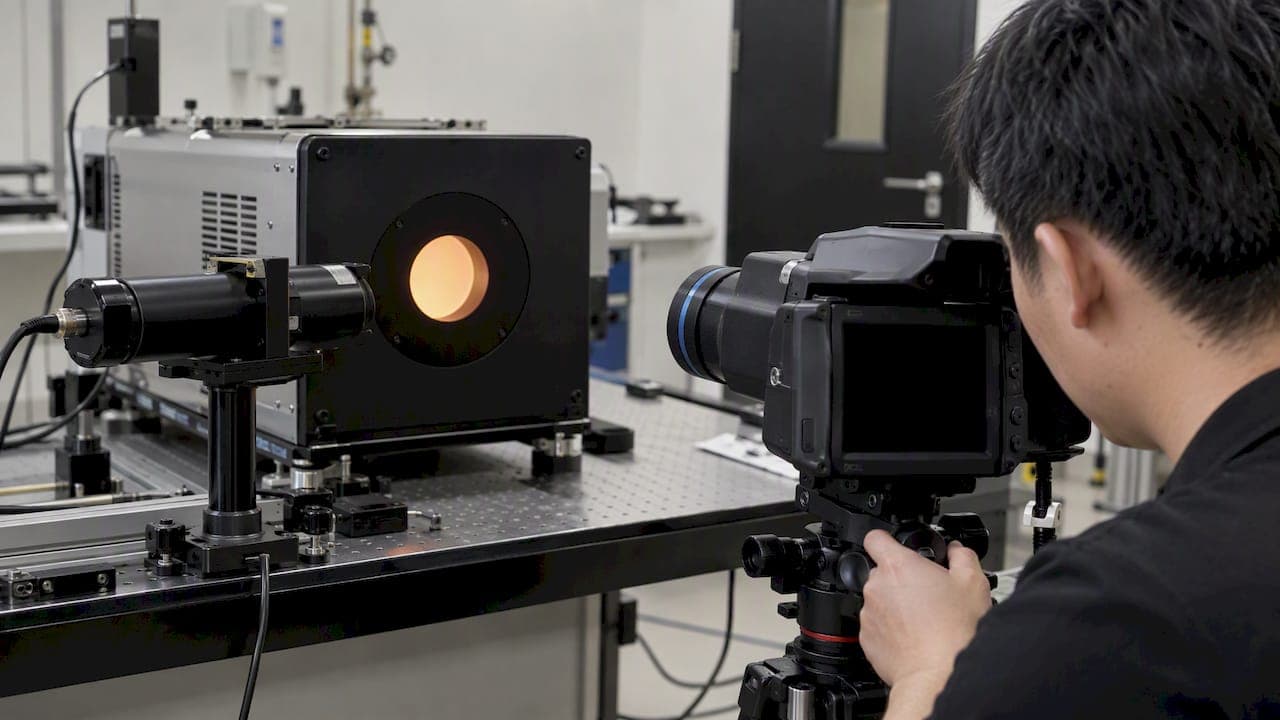
The US National Institute of Standards and Technology describes a procedure where the camera images a variable-temperature spherical-cavity blackbody, and the blackbody's temperature is corrected using a transfer radiometer traceable to the gold point at 1064.18 °C. That chain of comparisons is what traceability means in practice: every temperature value links back, step by step, to a primary standard.
What a good procedure controls
Pointing a camera at a blackbody is not enough. The radiance reaching the detector depends on several factors, and a valid protocol fixes them:
- Distance between camera and blackbody
- Size of the blackbody cavity relative to the camera's field of view
- Optical alignment and focus
- Ambient and housing temperature, since the detector responds to its own surroundings
- Warm-up time, so the camera has stabilized before readings are taken
The NPL conference paper on calibration and validation of thermal imagers makes the related point that accreditation gives an objective way to review a laboratory's competence, procedures, equipment and staff training. That is why the lab matters as much as the method.
Multi-point calibration
A single-point check tells you little about accuracy across the range. Laboratory calibration usually samples several temperature points across the working range, for example low, middle and high, so the fit holds where you actually measure. If your use case sits in a narrow band, such as detecting heat above ambient on equipment, ask the lab to weight the points toward that band and to state it on the certificate.
How often to calibrate
The honest answer is: as often as the manufacturer of your specific model says, then more often if the consequences of a wrong reading are high. Published guidance differs by model and by vendor, so read your datasheet and service terms. Some manufacturers specify annual calibration, others a longer cycle for particular models.
What drives the interval:
- Detector and electronics ageing. Components shift slowly, and the shift is invisible in the picture.
- Operating environment. Outdoor mounts in Singapore's heat and humidity, and cameras exposed to vibration or dust, deserve shorter cycles than a camera in a controlled room.
- Consequence of error. A camera that triggers a heat-stress alert or an access decision needs tighter control than one used for general situational awareness.
- Contractual or audit requirements. Some clients and insurers specify a documented interval.
Between lab visits, run quick checks. A common field approach is to compare the camera against a calibrated contact probe or reference source at a few temperatures and log the deviation. Treat that as a trend indicator, not a replacement for lab calibration. The result tells you whether to bring the date forward, not whether the camera is certified.
Signs a camera needs recalibration now
Do not wait for the date if you see any of these:
- Readings drift from a reference by more than your stated tolerance. Many field protocols use around ±2 °C as a trigger, but set the number from your own process needs.
- Image uniformity changes, such as visible banding, patterns or spots that were not there before.
- The camera has been dropped, repaired, or had its lens or window replaced.
- Two cameras viewing the same scene disagree consistently.
- The manufacturer's recommended interval has passed.
A useful habit is to record a reference check on the same day each quarter and chart it. A slow slope is easier to catch on a chart than in a one-off reading.
Reading a calibration certificate
A certificate is only as useful as the claims it can support. Four items decide that.
Accreditation scope. The lab should hold accreditation under ISO/IEC 17025 for the measurand and temperature range you need. Having accreditation for something else does not cover your camera.
Measurement uncertainty and coverage factor. Under ISO/IEC 17025 clause 7.8.4, laboratories include uncertainty on certificates when it affects the validity of results. A Singapore calibration provider notes that SAC-SINGLAS assessors enforce this requirement strictly. Look for the uncertainty value and the coverage factor (usually k=2, about 95% confidence).
Traceability. The certificate should state traceability to SI units.
Test uncertainty ratio (TUR). Compare the reference's uncertainty to your process tolerance. The same Singapore source states that a 4:1 ratio is generally the minimum, with 10:1 increasingly expected in some regulated industries. If your tolerance is ±2 °C, the calibration's uncertainty should be well inside it.
For a deeper walk through how uncertainty is built up and reported, the measurement uncertainty basics workflow lays out the steps quality engineers follow.

Calibration versus verification
Some service providers issue a verification result, which confirms the camera meets a stated specification, rather than adjusting it. Both are legitimate, but they are not the same thing. Ask which one you are buying, and whether the camera is adjusted when it falls outside tolerance or only reported as out of tolerance.
Accuracy claims on the datasheet
Manufacturer accuracy figures, often quoted as a fixed number of degrees or a percentage of reading, assume a calibrated camera, correctly set emissivity, a properly mounted lens and ambient conditions inside the rated range. If your site sits outside those assumptions, your real accuracy is worse than the datasheet figure, and calibration alone will not fix it.
Arranging calibration in Singapore
For Singapore-based teams, the checklist is short:
- Confirm SAC-SINGLAS accreditation for your range. Accredited labs list their scope. Match the temperature range and instrument type to what you need.
- Check the certificate carries the accreditation mark. It should show the mark, reported uncertainty and SI traceability. International acceptance comes through the ILAC mutual recognition arrangement, so a certificate from an accredited lab is recognized by many overseas clients and auditors.
- Ask about the instrument type. One Singapore provider's accredited service lists temperature instruments including thermal cameras for spot measurement, thermocouples and RTD indicators, with a standard turnaround of 5 to 7 working days. Confirm whether your camera model and any imaging-mode requirements are covered.
- Plan downtime. A week out of service matters for fixed-mount cameras in a live security system. Stagger removals, or rotate spares so coverage continues.
- Log everything. Keep certificates with the asset record, with serial number, date, interval and the next due date.
For entry-level handhelds, the cost of calibration is a small line item. For networks of fixed cameras, the real cost is the labor of removal, reinstall and re-aiming, so budget for that.
Calibration in a security deployment
Thermal cameras in security are often used for detection rather than precise measurement: spotting a person at night, a vehicle in a restricted area, or a hot spot in a plant room. Detection does not depend on tight temperature accuracy, so a small drift may not break it. Temperature thresholds do depend on it. If a rule fires when a surface exceeds a set temperature, or when body or equipment heat crosses a limit, calibration directly affects false alarms and missed events.
Three practical points:
- Separate detection cameras from measurement cameras. Put the strict calibration schedule on the cameras whose temperature values drive alerts or records.
- Monitor camera health continuously. Image-quality and stream checks catch fogged windows, blocked views and failing feeds between calibrations. Our write-up on a 30 to 90 day camera health monitoring pilot shows how to set that up.
- Tie thresholds to documented accuracy. For heat-related alerting, such as the approach in our guide to heat stress monitoring for Singapore safety managers, the threshold is only as trustworthy as the measurement behind it.
Teams that want fewer false alarms from thermal feeds can also look at edge AI thermal analytics for security teams, which pairs well with a disciplined calibration routine: analytics can filter noise, but it cannot correct a camera that reads wrong.
Our perspective
We see the same pattern across security and facility projects in Southeast Asia. Teams buy capable thermal hardware, commission it carefully, and then lose track of it. Nobody owns the calibration date, the certificate sits with the installer, and the first sign of trouble is a string of alerts nobody trusts.
Our view is that calibration belongs inside the operating model, not beside it. Every camera whose temperature reading drives an action should have an owner, an interval, a reference check routine and a certificate on file. Cameras that only support detection should be monitored for health, so a blocked or degraded view is flagged automatically instead of discovered during an incident.
This is why we build around exception-based monitoring. When the platform watches camera health and thermal events together, operators spend their time on exceptions instead of staring at feeds, and the maintenance team knows which devices need attention first. Regional validation matters too: a deployment in Singapore, Malaysia or the Philippines should be tested under local conditions, with accredited calibration where the reading carries weight.
Eumir
Where BeyondSensor fits
Calibration protects the data. The next question is what you do with it. BeyondWatch is our AI-powered surveillance and video analytics product line, built for teams that want exception-based monitoring across their cameras instead of manual oversight of every feed. If you are planning a multi-vendor deployment that mixes thermal and visible cameras, our Solution Integration service covers planning and regional validation with you.
To talk through a thermal deployment in Singapore, start from the BeyondSensor home page or ask us directly.
A practical calibration plan
For a team starting from scratch, this sequence works:
- Inventory. List every thermal camera, model, serial number, location and purpose (detection or measurement).
- Classify. Mark cameras whose temperature values trigger actions as critical.
- Set intervals. Use the manufacturer's guidance as the baseline, shortened for harsh sites and critical roles.
- Define tolerance. Decide the maximum acceptable error for each critical use, then pick a lab whose uncertainty is comfortably inside it.
- Schedule field checks. Quarterly reference comparisons, logged and charted.
- File documents. Certificates with accreditation mark, uncertainty and traceability, linked to the asset record.
- Review after events. Re-check after impacts, repairs, lens changes or unexplained drift.
If cameras work alongside other sensors and rules, such as alarm triage, it helps to keep the procedure aligned with your response steps. Our guide to alarm triage SOP steps for Singapore covers how verified alerts feed the response chain.
FAQ
How often should a thermal camera be calibrated?
Follow the manufacturer's stated interval for your model, which is commonly once a year or once every two years. Shorten it for outdoor, high-vibration or high-consequence use. Add quick reference checks between lab calibrations to catch drift early.
Can I calibrate a thermal camera myself?
You can run field checks against a calibrated contact probe or a reference source to see whether the camera is drifting. That tells you when to act, but it does not give you a traceable certificate. For audit or contractual needs, use an accredited laboratory.
What should a calibration certificate include?
Look for the lab's accreditation mark and scope, the measured results at each temperature point, the reported measurement uncertainty with its coverage factor, and traceability to SI units. In Singapore, that means a SAC-SINGLAS accredited ISO/IEC 17025 laboratory covering your temperature range.
What is the difference between calibration and geometric calibration?
Radiometric calibration relates the detector signal to temperature. Geometric calibration determines lens and orientation parameters so image positions map to real-world positions. Fusion with visible cameras or photogrammetry needs the second; temperature thresholds need the first.
How do I know my camera has drifted?
Compare it against a reference at several temperatures. If the deviation exceeds your tolerance, or if image uniformity changes, send it for recalibration. A quarterly logged check makes slow drift visible as a trend.
Sources
- Calibration of uncooled thermal infrared cameras (Copernicus, J. Sens. Sens. Syst.)
- Geometric Calibration of Thermal Infrared Cameras (MDPI)
- Calibration and verification of thermographic cameras (ScienceDirect)
- Calibration and Measurement Procedures (NIST IR 8098)
- Calibration and validation of thermal imagers (NPL, QIRT 2008)
- Measurement Uncertainty in Calibration Certificates (Singapore)
- Calibration for the Instruments You Buy (Singapore)
- Measurement uncertainty basics workflow
Recommended
Read More Articles
Line of Sight Survey: Methods, Tools and Site Checks
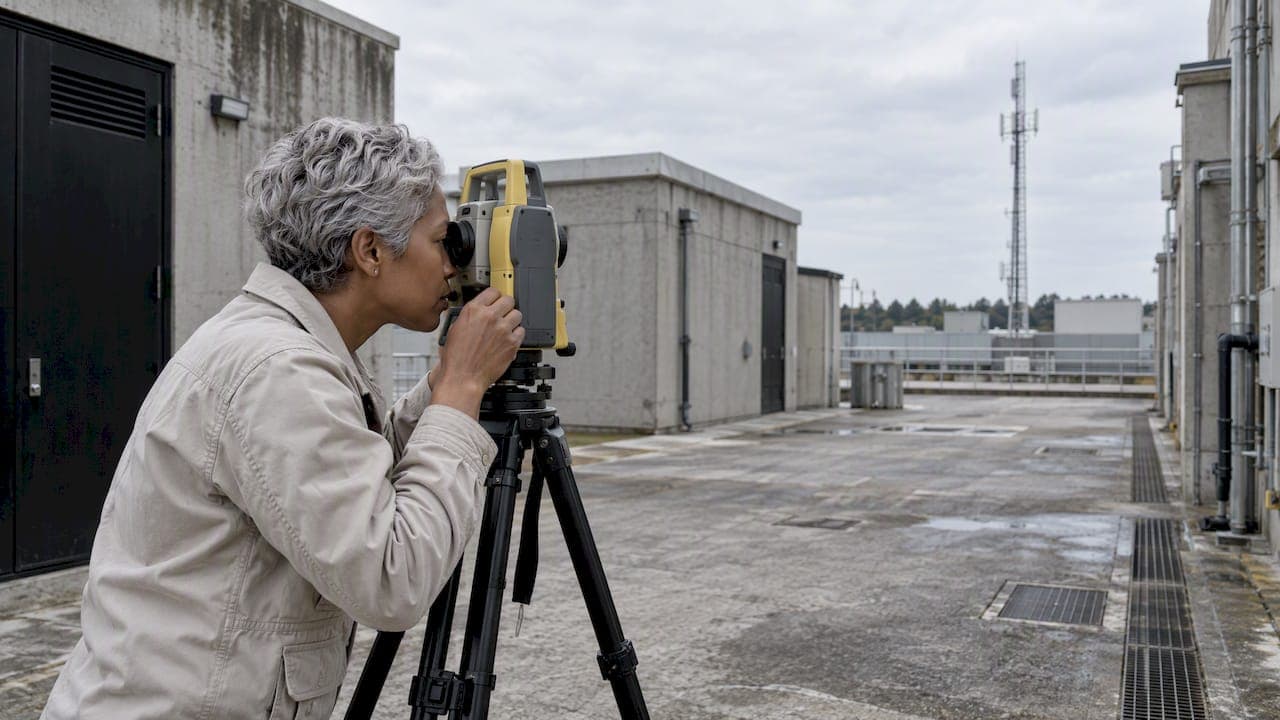
What a line of sight survey is, how surveyors and GIS analysts run one, and how to record results for CCTV, wireless and sensor deployments in Singapore.
Single Sign-On Security: Risks, Controls and a Checklist
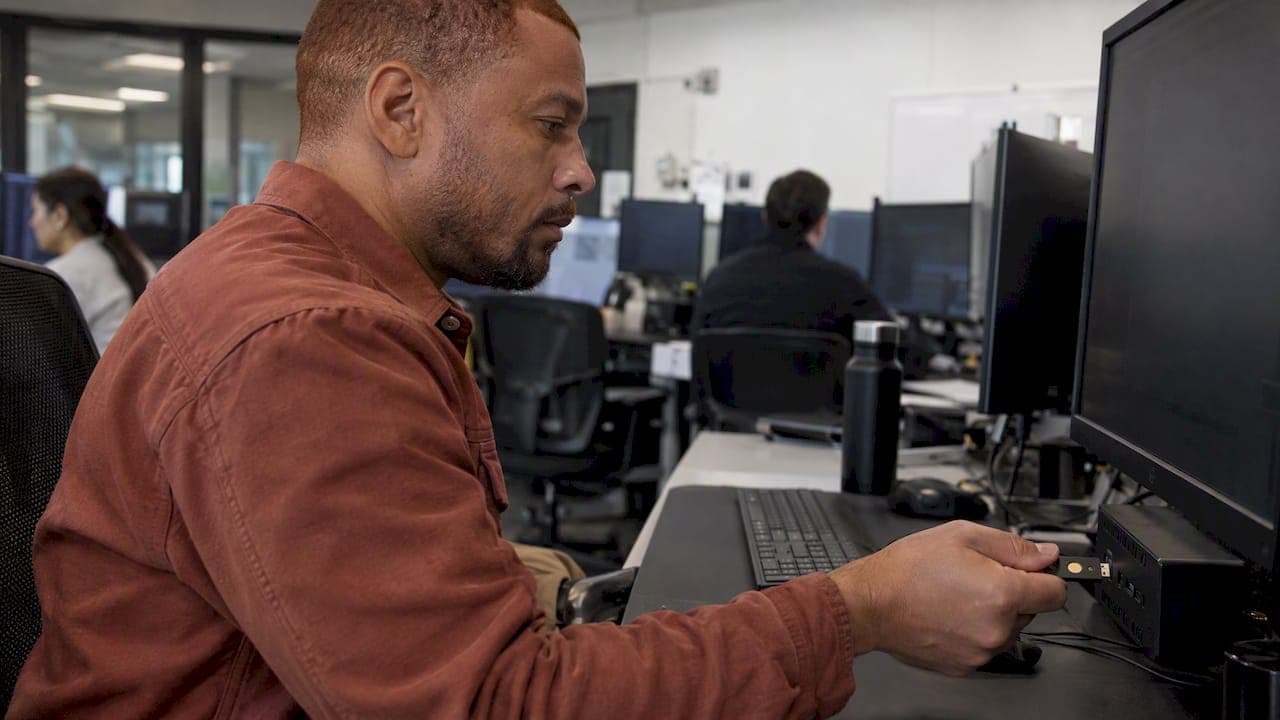
Is single sign-on secure? See how SSO works, where it fails, and the MFA, key protection and monitoring controls Singapore security teams should require.
Visitor Pre-Registration: A Practical Guide for Singapore Sites
How visitor pre-registration works at Singapore offices and industrial sites: what to collect, PDPA limits on NRIC and retention, QR check-in, and exception handling.
Fiber Optic Perimeter Security: How It Works and When to Use It
How fiber optic perimeter security detects and locates intruders, where it beats microwave sensors, and how to pilot it on a Singapore site.
Let's Build YourSecurity Ecosystem.
Whether you're a System Integrator, Solution Provider, or an End-User looking for trusted advisory, our team is ready to help you navigate the BeyondSensor landscape.
Direct Advisory
Connect with our regional experts for tailored solutioning.