
Discover why context-aware security is essential for modern teams. Learn how it mitigates risks and enhances protection in today's dynamic environments.

Why Context-Aware Security Matters for Modern Teams

TL;DR:
- Identity alone no longer guarantees security because compromised accounts or session hijacking can bypass static credentials.
- Context-aware security evaluates real-time signals like location, device, and behavior to make dynamic access decisions, enhancing threat detection and operational efficiency.
- Implementing continuous session monitoring and middleware-level evaluations is essential for securing AI-driven environments and supporting zero trust architectures effectively.
Identity alone no longer secures a system. A verified username and a valid password can still belong to a compromised account, an insider threat, or a session hijacked after login. Understanding why context-aware security has moved from optional enhancement to operational necessity requires looking at what traditional models consistently miss: the full situational picture surrounding every access request. This article covers how context-aware security works at a technical level, the concrete benefits it delivers across industries, the unique challenges it introduces in AI-driven environments, and the implementation practices that separate successful deployments from failed ones.
Table of Contents
- Key takeaways
- Why context-aware security works differently
- Benefits for operations, risk, and zero trust
- Context-aware security in AI-driven environments
- Implementation best practices
- My take on where this is really heading
- How Beyondsensor approaches context-aware security
- FAQ
Key takeaways
| Point | Details |
|---|---|
| Identity is not enough | Static permissions miss dynamic risk signals like location shifts, device changes, and behavioral anomalies. |
| Real-time signals drive decisions | Context-aware systems evaluate location, device, time, network, and behavior for every single request. |
| AI-agentic risk is real | Traditional RBAC fails in AI workflows; middleware-level context evaluation prevents privilege escalation and intent drift. |
| Standards exist for compliance | ISO/IEC 27002 and ISO/IEC 27701 provide frameworks for securing and auditing context-aware deployments. |
| Hybrid models work best | Layering context-aware controls on top of RBAC delivers both structural consistency and adaptive precision. |
Why context-aware security works differently
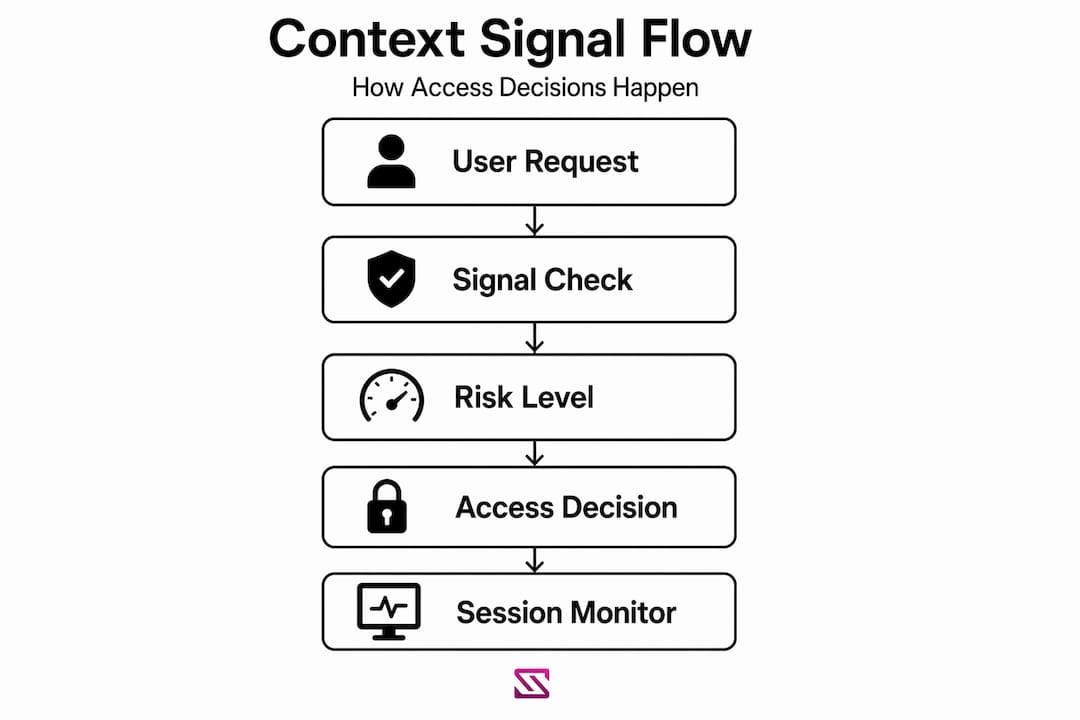
Context-aware security is a model that evaluates access decisions based on real-time situational signals rather than static permissions assigned at setup. Where Role-Based Access Control (RBAC) asks "who is this user?" and Attribute-Based Access Control (ABAC) asks "what attributes does this user have?", context-aware security asks a harder question: "given everything happening right now, should this request proceed?"
The signals feeding that question include location, device health, time of access, network type, and user behavior patterns. A clinician accessing patient records from a hospital workstation during a scheduled shift generates a very different risk profile than the same credentials accessing the same records from an unrecognized device at 2:00 a.m. through a public network. Context-aware systems evaluate all of those factors simultaneously for each request, not just at login.
The decision flow works in three stages:
- Signal collection. The system gathers real-time context data from the requesting entity, including device posture, geolocation, authentication method used, and recent behavioral history.
- Risk scoring. An AI or rules engine weights those signals against baseline norms to assign a risk score to the request.
- Adaptive response. Low-risk requests proceed without friction. Elevated-risk requests trigger step-up authentication, such as a biometric prompt or a hardware token. High-risk requests are blocked or quarantined pending review.
What makes this model materially different from its predecessors is continuous session monitoring. Context-aware access control does not stop evaluating after login. It monitors the entire session and responds dynamically if signals change mid-session. A user who authenticates cleanly but then begins downloading unusually large volumes of data triggers an automated response without waiting for the next login cycle.
Pro Tip: Start with three to five high-confidence context signals rather than attempting to integrate every available data source at once. Too many signals too early creates noise that overwhelms the risk-scoring model and increases false positives before the system has had time to calibrate.
AI and machine learning make this model significantly more precise over time. AI learns normal behavior per individual user, so the baseline for a field technician who routinely accesses systems from multiple regional offices looks completely different from the baseline for an office-based analyst. That personalization reduces false alarms substantially.
Benefits for operations, risk, and zero trust
The business case for context-aware security is not abstract. Organizations that deploy it see measurable gains across three distinct areas: operational efficiency, threat detection accuracy, and zero trust compliance.

On the efficiency side, security friction drops significantly for low-risk access scenarios. A remote employee working from their registered home device on a known network does not face repeated MFA prompts throughout the day. That frictionless experience is not a security compromise. It is the system correctly reading the context and responding proportionally. The result is measurable productivity gains, particularly in hybrid work environments where constant re-authentication becomes a serious burden on operational tempo. Read more on how security operational efficiency directly connects to reducing access friction.
The impact on threat detection is equally concrete:
- Credential theft detection. Stolen credentials used from unfamiliar locations or devices immediately trigger elevated scrutiny, even when the username and password are valid.
- Insider threat mitigation. Context-aware security reduces false positives and detects anomalies in data access behavior, minimizing lateral movement before damage escalates.
- Session-level awareness. Threats that emerge after a clean login, such as session hijacking or privilege abuse, are caught through continuous monitoring rather than missed entirely.
- Reduced security fatigue. Fewer unnecessary alerts mean analysts focus on genuine incidents, not alert noise from over-triggered RBAC policies.
The connection to zero trust architecture is direct and significant. Zero trust operates on the principle of "never trust, always verify." Context-aware security is the operational engine that makes continuous verification practical at scale. Without it, zero trust becomes a policy statement with no technical enforcement mechanism behind it.
Industry adoption reflects this reality. In banking, context signals prevent account takeover fraud without blocking legitimate customers. In healthcare, they protect sensitive records without slowing down clinician workflows. In SaaS environments and hybrid enterprise settings, they enable consistent access policy enforcement regardless of where or how users connect.
Context-aware security in AI-driven environments
This is where the conversation gets both more complex and more critical. As organizations deploy AI agents to automate workflows, approve transactions, query databases, and interact with APIs, the security problem shifts in a fundamental way. AI agents act on behalf of users, but they are not users. They operate at machine speed across multiple systems, and their "identity" is far more ambiguous than a human login.
Traditional RBAC cannot handle this adequately. An AI agent granted access to a data retrieval tool does not inherently understand the boundary between fetching a record and exfiltrating a dataset. Context-aware security for AI gateways now requires enforcement at the proxy level, evaluating tool use and workload context in addition to session-level identity signals.
The risk goes deeper than misconfigured permissions:
- Identity collapse. When multiple AI agents share capability tokens or API keys, the concept of individual identity erodes. A compromised token can be weaponized across the entire agentic workflow.
- Prompt injection attacks. Adversaries can manipulate the context an AI agent sees through carefully crafted inputs, causing it to take actions that fall outside its intended authorization scope. Context can be weaponized through linguistic framing in ways that RBAC checks will never catch.
- Intent drift. An agent authorized for one task gradually takes actions that were never explicitly prohibited but were also never intended to be permitted.
"Security is an architectural property, not just a model property. Explicit identity binding, scoped capability, and enforced execution boundaries are what prevent adversarial exploitation." — Corgi Corp Research
The solution is middleware-level context evaluation that goes beyond simple permission checks. Middleware that combines context-awareness with RBAC caught 89% of unsafe AI workflows that traditional RBAC alone missed, with minimal false positives. In practice, this means deploying a middleware layer that checks for intent drift, validates that each tool call matches the declared scope of the agent's task, and terminates sessions where behavior deviates from expected patterns. Adaptive security mechanisms that reduce noise while enforcing scope boundaries are well-suited for exactly this challenge.
For security teams managing agentic deployments, the practical controls include binding each AI agent to a unique identity token with a limited lifespan, constraining capability grants to the minimum required for each specific task, and enforcing execution boundaries at the infrastructure level rather than relying on the agent's behavioral alignment alone.
Implementation best practices
Knowing why context-aware security matters is one thing. Deploying it effectively requires navigating real complexity in signal selection, system integration, and compliance alignment.
Choosing and managing context signals
Not all context signals carry equal weight, and more is not always better. Location and device posture are high-confidence signals with low spoofing risk when properly validated. Network type and time-of-access are useful secondary signals. Behavioral biometrics, such as typing patterns or navigation behavior, add depth but require longer calibration periods and more processing overhead. The goal is a signal stack that gives the risk engine enough data to make accurate decisions without introducing so much complexity that the system becomes unmanageable.
Integrating with existing access control models
Layering real-time context checks on top of RBAC is the most practical path for most organizations. Replacing RBAC entirely is rarely necessary and often counterproductive. RBAC provides structural consistency and auditability. Context-aware controls add the adaptive layer that RBAC alone cannot provide.
| Access model | Strengths | Limitations |
|---|---|---|
| RBAC | Simple to manage, auditable, role-based clarity | Static; misses real-time risk signals |
| ABAC | More granular than RBAC, attribute-driven | Complex to configure; still lacks session-level awareness |
| Context-aware | Real-time adaptive, session-monitoring, risk-scored | Requires mature data infrastructure and AI calibration |
| Hybrid (RBAC + context) | Balances structure with adaptability | Needs careful integration design |
Compliance and privacy alignment
ISO/IEC 27002 and ISO/IEC 27701 provide comprehensive frameworks for securing and ensuring privacy in context-aware systems, covering organizational, people, physical, and technological controls alongside privacy risk assessment and data governance. GDPR compliance adds a critical layer: collecting behavioral and location context signals constitutes personal data processing in most jurisdictions, which means your context-aware system needs a lawful basis, data minimization controls, and documented retention limits.
Pro Tip: Run a privacy impact assessment before finalizing your signal architecture. Identifying data minimization opportunities early saves significant rework when compliance reviews happen later.
Continuous auditing is not optional. Context-aware systems are adaptive by design, which means their behavior evolves. Regular risk assessments, quarterly signal calibration reviews, and anomaly audits against known attack patterns keep the system accurate and compliant as the threat environment changes.
My take on where this is really heading
I've watched organizations implement context-aware security controls and then treat the deployment as a completed project. That is exactly the wrong mental model. In my experience, the organizations that get the most out of these systems are the ones that treat them as living infrastructure, something that requires continuous calibration, policy updates, and cross-functional ownership between security, IT, and privacy teams.
The biggest misconception I encounter is that context-aware security is purely a technology problem. The technology is genuinely impressive. But the policy decisions behind it, what counts as high-risk, when to step up versus block, how long to retain behavioral data, those are organizational decisions that no vendor can make for you. Teams that skip that work find themselves with a system that either over-fires and creates alert fatigue or under-fires and misses real threats.
What I find most promising right now is the direction of session-level continuous context evaluation applied not just to human users but to the full range of agentic systems operating in enterprise environments. AI agents that act autonomously across high-value data systems represent the next major attack surface. The organizations investing in context-aware authorization at the middleware level today are building the infrastructure that will matter most in the next three to five years. That is where I would focus attention and budget.
— Eumir
How Beyondsensor approaches context-aware security

Beyondsensor builds context-aware security capabilities into its AI-powered sensing and access control architecture, designed specifically for the complexity that system integrators and enterprise security teams face in real deployments. The platform applies continuous, session-level risk evaluation across physical and digital access points, incorporating device posture, behavioral signals, and environmental sensor data to create a risk scoring model that adapts in real time.
For system integrators deploying security infrastructure across industrial, smart infrastructure, and government environments, Beyondsensor provides the integration depth and regional validation that generic security platforms cannot match. The BeyondSecure innovation framework extends these capabilities with fine-grained access controls and AI-driven anomaly detection that maps directly to zero trust principles. For organizations across Southeast Asia looking for a security partner that understands both the technical architecture and the regional compliance environment, Beyondsensor is built to meet that need.
FAQ
What is context-aware security?
Context-aware security is an access control approach that evaluates real-time signals including location, device health, time, and user behavior to make dynamic, risk-scored decisions on every access request rather than relying on static permissions alone.
Why use context-aware security over traditional RBAC?
RBAC assigns permissions based on roles and does not adapt to changing risk conditions mid-session. Context-aware security continuously monitors sessions and responds to anomalies, catching threats that emerge after a clean login that RBAC would miss entirely.
How does context-aware security help with AI agent risks?
AI agents operating autonomously across systems need authorization controls that go beyond identity tokens. Context-aware middleware checks intent, scope, and behavioral drift at the proxy level, catching unsafe AI workflows that standard permission models overlook.
What compliance frameworks apply to context-aware security systems?
ISO/IEC 27002 and ISO/IEC 27701 are the primary frameworks, covering technical controls, privacy risk assessment, and data governance. GDPR requirements also apply in most deployments where behavioral and location data is collected as part of the context signal stack.
How many context signals should an organization start with?
Start with three to five high-confidence signals such as device posture, location, and network type. Adding too many signals before the system has calibrated against your baseline user behavior increases false positives and reduces analyst trust in the output.
Recommended
Read More Articles
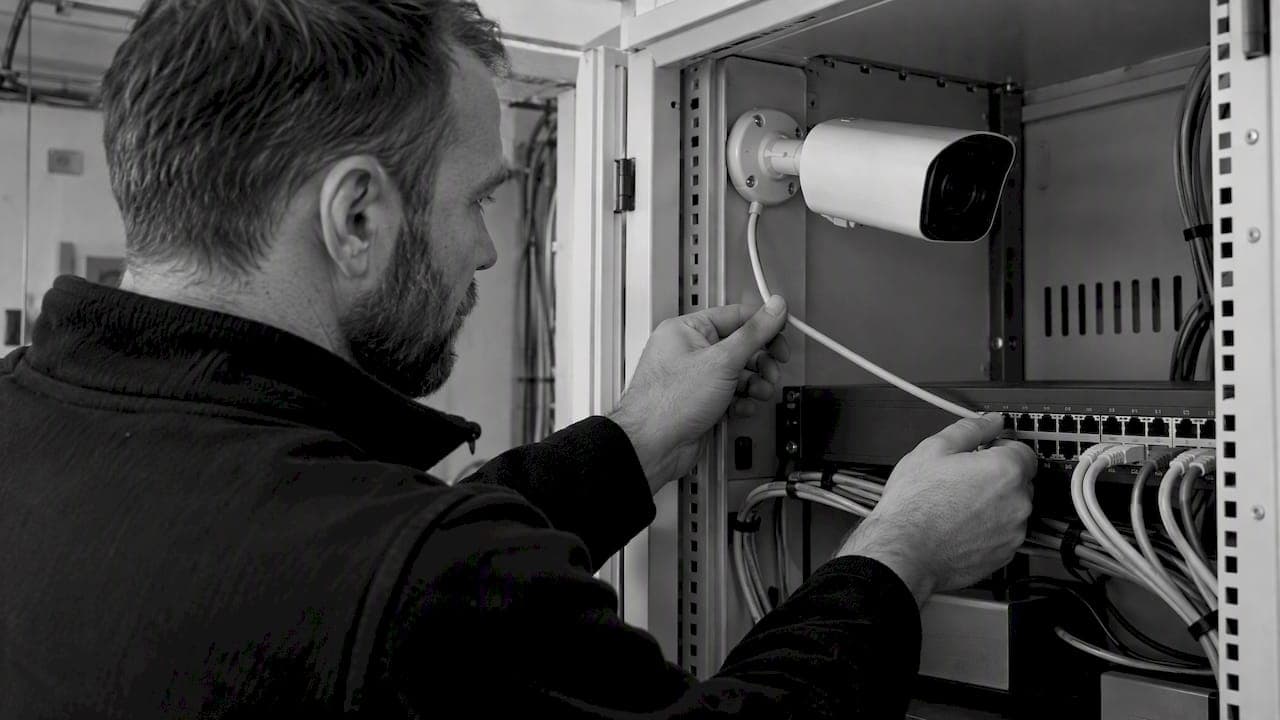
RTSP Security Risks: Integrators Must Block Exposed Ports 554 and 8554
See how integrators can reduce RTSP security risks: close exposed ports 554 and 8554, secure camera access, and verify each deployment with practical checks.

Require MAEpp and X Accuracy Before You Buy People Counting Systems
Verify people counting accuracy by demanding MAEpp, X Accuracy, and directional-bias reports. Validate on-site with at least 100 events per direction...

30–90 Day Pilot Validates Redundant Camera Networks for Engineers
Standards led, practical steps for engineers to deploy redundant camera networks: MRP, dual homing, and aggregation patterns, commissioning checks, and...
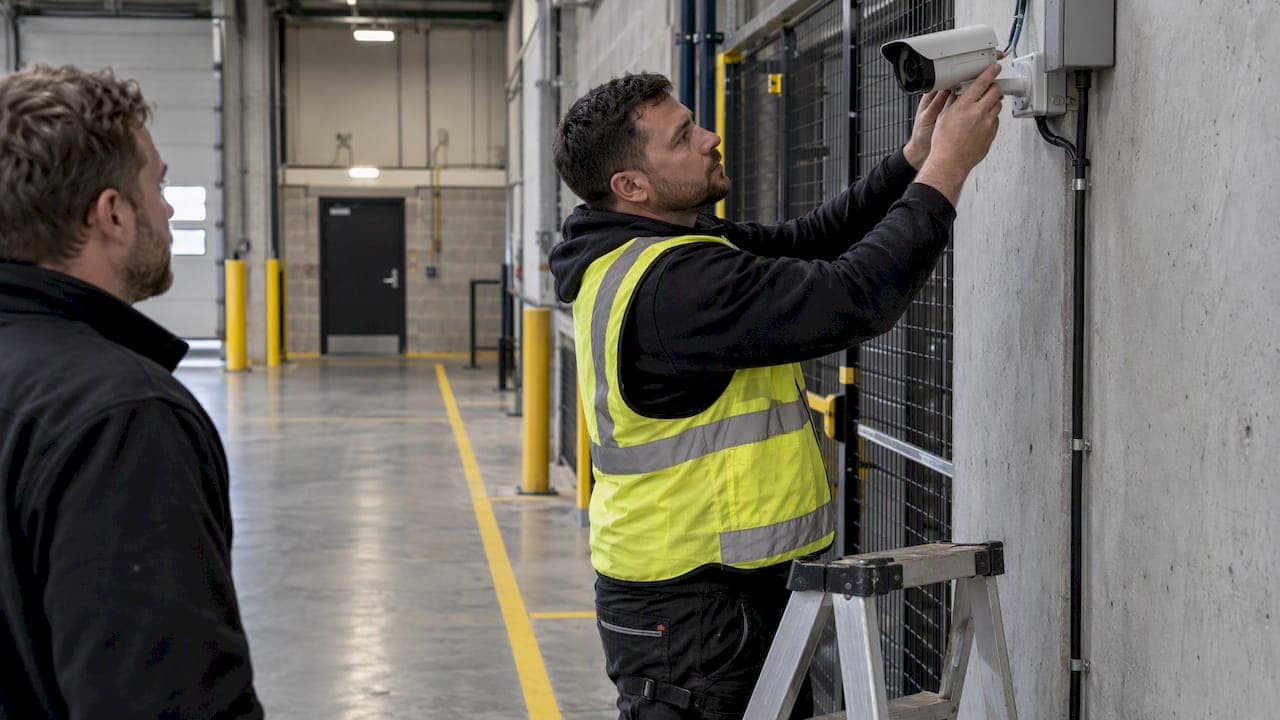
30 Day Pilot Proves Video Analytics Accuracy for Security Teams
Validate video analytics accuracy with scenario tests, camera tuning, transfer learning and a 30 day edge first pilot for security teams.
Let's Build YourSecurity Ecosystem.
Whether you're a System Integrator, Solution Provider, or an End-User looking for trusted advisory, our team is ready to help you navigate the BeyondSensor landscape.
Direct Advisory
Connect with our regional experts for tailored solutioning.