
Discover the emerging sensing innovations guide for security leaders. Make informed decisions to enhance security with cutting-edge technologies.

Emerging sensing innovations guide for security leaders

TL;DR:
- Selecting the right emerging sensor technology is crucial to prevent missed intrusions, false alarms, and costly rework in critical facilities. Combining multi-modal sensing and integrated architecture enhances accuracy, reduces false positives, and improves security. Proper evaluation, protocol compatibility, and vendor cooperation are essential for effective deployment and operational success.
Choosing the wrong sensor for a critical facility is not a minor procurement mistake. It can mean missed intrusions, runaway false alarms, and months of costly rework. This emerging sensing innovations guide cuts through the noise for security managers and directors at industrial and government sites who need to make high-stakes decisions fast. The field has moved well beyond basic motion detection. Dual-band infrared arrays, coherent 4D LiDAR, and thin-film photonic sensors now offer detection precision that was simply not achievable three years ago. Here is how to evaluate them, compare them, and deploy them effectively.
Table of Contents
- Key criteria for evaluating emerging sensing technologies
- Dual-band infrared sensors with superior resolution
- Large-scale coherent 4D imaging sensors for perimeter security
- Thin-film photonic sensors powering Industry 4.0 monitoring
- Comparing emerging sensing options: performance and integration factors
- Why integrated, multi-modal sensing is the future of facility security
- Unlock advanced sensor integration with BeyondSensor solutions
- Frequently asked questions
Key Takeaways
| Point | Details |
|---|---|
| Critical selection criteria | Define sensor specifications, protocol compatibility, and integration needs before procurement to ensure successful deployments. |
| Advanced infrared sensing | Dual-band T2SL infrared sensors offer high resolution and sensitivity for precise thermal detection in security applications. |
| 4D LiDAR benefits | Coherent 4D imaging sensors provide real-time 3D mapping with velocity data, ideal for dynamic perimeter security. |
| Thin-film sensor versatility | Photonic thin-film sensors deliver flexible, interference-immune monitoring for harsh industrial environments with IoT integration. |
| Multi-modal integration | Combining diverse sensor types with AI-driven analytics reduces false positives and improves operational security. |
Key criteria for evaluating emerging sensing technologies
Every facility has a different threat profile, infrastructure reality, and budget ceiling. Before you explore the latest sensing innovations on the market, establish the criteria your evaluation must satisfy. A sensor that performs brilliantly in an open-air petrochemical perimeter may be the wrong choice entirely for a government data center corridor.
Start with the non-negotiables:
- Detection accuracy and resolution: Define what constitutes a true positive versus a nuisance alarm in your environment. A thermal camera with 640 × 512 pixel resolution performs very differently from a 1-megapixel array when tracking a person through dense vegetation.
- Communication protocol compatibility: Your sensor must speak the same language as your infrastructure. Choosing sensing technology based on protocol fit alone can determine whether deployment takes weeks or months. LoRaWAN suits low-bandwidth, long-range telemetry. OPC-UA serves OT environments. 5G enables real-time video in high-density zones.
- Multi-modal sensing: Single-modality sensors have blind spots. Pairing thermal with radar, or LiDAR with video, reduces false positives significantly and improves situational context.
- Integration with existing OT and IT systems: Data that cannot flow into your SIEM (Security Information and Event Management) or SCADA platform is security theater. Map your integration path before procurement, not after.
- Power requirements and environmental durability: Outdoor perimeter sensors at a government facility in a tropical climate face very different stresses than sensors inside a climate-controlled data hall.
The cost of getting this wrong is not theoretical. Selecting the correct protocol avoids 80% of IIoT deployment failures, which means the majority of failed deployments trace back to specification errors you can prevent upstream.
Pro Tip: Build a scoring matrix before you speak with any vendor. Weight each criterion by its operational priority at your specific facility. This forces every vendor to answer the same questions and makes side-by-side evaluation objective rather than relationship-driven.
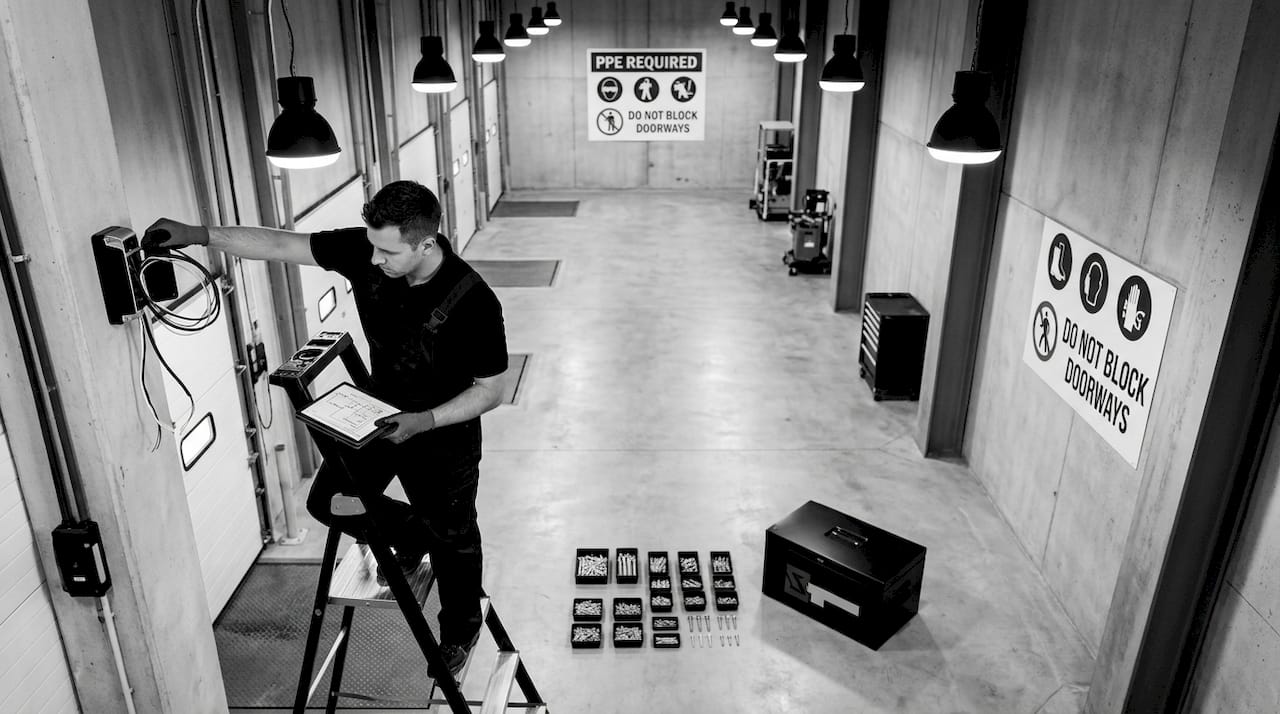
When you evaluate emerging sensor technologies as a structured framework rather than a feature checklist, procurement decisions get faster and deployment outcomes get more predictable.
Dual-band infrared sensors with superior resolution
Standard thermal cameras detect heat. Dual-band infrared sensors do something more powerful: they detect the spectral signature of heat, distinguishing between background thermal clutter and genuine threats with far greater precision.
The key enabling technology here is Type-II Superlattice (T2SL) material structures. T2SL allows engineers to tune the exact infrared wavelength bands a sensor responds to at the nanoscale level. This means a sensor can simultaneously capture mid-wavelength infrared (MWIR, roughly 3 to 5 micrometers) and long-wavelength infrared (LWIR, 8 to 12 micrometers), which is how a single device identifies a gas leak, a warm vehicle engine, or a human body against a hot industrial background without ambiguity.
Key operational advantages for security and monitoring:
- Simultaneous dual-band capture eliminates false readings caused by reflected solar radiation or industrial heat sources
- Nanoscale wavelength control enables target discrimination in thermally complex backgrounds like foundries, refineries, or tarmac surfaces
- High pixel counts allow operators to identify and classify threats at greater standoff distances, reducing the need for secondary confirmation sensors
- Applicable across perimeter security, environmental monitoring, disaster prevention, and defense early warning systems
The resolution improvements here are not incremental. Fujitsu's dual-band infrared sensor detects temperature differences of 0.05°C or less with over 1 million pixels for high-resolution monitoring. That level of thermal discrimination means you can detect an anomalous heat signature in a transformer bank before it becomes a fire, not after.
"For perimeter security at industrial facilities, the difference between a 320-pixel and a 1-megapixel thermal sensor is the difference between knowing something is there and knowing exactly what it is."
Pro Tip: When specifying infrared sensors for government or defense perimeters, request dual-band performance data under both day and night conditions at your expected standoff distance. Vendors typically present best-case figures under controlled lab conditions. Demand field-measured sensitivity data.
Explore how advanced sensing technologies like these dual-band arrays are being applied in security manager contexts for further deployment guidance.
Large-scale coherent 4D imaging sensors for perimeter security
LiDAR (Light Detection and Ranging) has been used in autonomous vehicles for years, but the version arriving in facility security deployments is fundamentally different. Coherent FMCW (Frequency-Modulated Continuous Wave) LiDAR does not just build a 3D point cloud of an environment. It adds a fourth dimension: radial velocity. Every point in the scan tells you not only where an object is, but how fast it is moving and in which direction.
For perimeter security at a large industrial or government site, this is transformative. A stationary intruder hiding behind equipment registers differently than a moving one. Blowing debris is filtered out. A vehicle traveling at an unusual speed toward a restricted zone triggers an alert that a static 3D scan would miss entirely.
Performance and design characteristics:
- Focal-plane arrays integrate millions of photonic components on a single chip, producing sensors compact enough for pole-mounted or drone-carried deployment
- Real-time 4D output enables velocity-discriminating threat detection, sharply reducing the clutter-rejection burden on downstream AI systems
- Eye-safe optical output and low power consumption meet safety requirements for populated industrial and government sites
- Modular optics allow configuration for short-range, high-density coverage or long-range perimeter surveillance
| Feature | Coherent 4D FMCW LiDAR | Standard 3D ToF LiDAR |
|---|---|---|
| Velocity detection | Yes (per-point radial velocity) | No |
| Angular resolution | 0.06° or better | Typically 0.1° to 0.3° |
| Range | Up to 65 m (surveillance config) | 30 to 50 m typical |
| False positive rate | Low (velocity filtering) | Higher (clutter-sensitive) |
| Power consumption | Low | Moderate to high |
| Integration complexity | Moderate | Low to moderate |
A 352 × 176 pixel 4D LiDAR sensor achieves 65 m range with 0.06° angular resolution at low energy per point, making it well matched for surveillance applications where power budgets and detection precision both matter. For secure facilities sensor technology deployments, this combination of range and velocity data represents a significant capability step.
Thin-film photonic sensors powering Industry 4.0 monitoring
Perimeter security accounts for one layer of a facility's sensing architecture. The interior layer, monitoring equipment health, chemical environment, and structural integrity, demands a different class of sensor entirely. Thin-film photonic sensors fill that role in ways traditional hardware cannot.
These sensors use light interaction within ultra-thin functional films to detect temperature, strain, chemical composition, and more. They are flexible. Printable. Deployable on curved pipeline surfaces, turbine housings, or pressure vessels where a rigid sensor would never fit.
Why they matter for industrial and government security:
- Thin-film photonic sensors provide EMI (electromagnetic interference) immunity and remote interrogation, essential for real-time monitoring in electrically noisy industrial environments
- Flexible film deposition means sensors conform to any surface geometry, including aging infrastructure where retrofitting traditional hardware is impractical
- AI-driven signal processing interprets complex spectral shifts, enabling predictive maintenance alerts before equipment failure occurs
- Protective coatings rated for corrosive atmospheres and wide thermal ranges ensure sensor integrity in chemical plants, power stations, and offshore facilities
- IoT network integration feeds sensor data into centralized monitoring platforms for real-time anomaly flagging
Pro Tip: When deploying thin-film sensors in environments with high vibration or thermal cycling, specify sensors with validated fatigue testing certifications. Film adhesion failure under mechanical stress is the leading cause of early-stage sensor drift in these applications.
The combination of EMI immunity and remote interrogation is particularly relevant for government facilities where RF (radio frequency) noise from communications equipment can degrade conventional sensor signals. Explore how sensing technology for industrial security deployments are integrating photonic approaches into broader security architectures.
Comparing emerging sensing options: performance and integration factors
Having explored each technology individually, a direct comparison clarifies which innovations fit which operational requirements. The industrial IoT sensor market surpassed $22 billion in 2026, meaning the selection pressure on security managers is higher than ever. More options at higher cost make the consequences of a wrong choice more significant.
| Sensor type | Detection capability | Effective range | Environmental suitability | Integration complexity | Best use case |
|---|---|---|---|---|---|
| Dual-band infrared (T2SL) | Thermal, spectral discrimination | 100 m to 1+ km | Outdoor/indoor, all weather | Moderate | Perimeter, fire/gas detection |
| Coherent 4D FMCW LiDAR | Distance + radial velocity | Up to 65 m (surveill.) | Outdoor, structured environments | Moderate to high | Perimeter, vehicle tracking |
| Thin-film photonic | Temperature, strain, chemical | Contact to 10 m | Harsh industrial, curved surfaces | Low to moderate | Equipment health, leak detection |
Dual-band infrared sensors and coherent 4D FMCW LiDARs represent leading-edge capability in detection sensitivity and range. For facilities that need both perimeter coverage and interior monitoring, the answer is not choosing one technology but architecting a layered system that deploys each where it performs best.
Factors that tip the decision:
- Budget allocation: Dual-band IR sensors carry a premium price tied to T2SL fabrication. 4D LiDAR is maturing in cost as photonic integration scales. Thin-film sensors remain the most cost-effective per deployment point.
- Communication infrastructure: Verify protocol support before finalizing vendor selection. A high-performing sensor on an incompatible protocol creates integration debt that compounds over time.
- Scalability: Government facilities with long perimeters need sensors that can be networked across large arrays without exponential management overhead.
For further guidance on comparing sensing technology options specific to your facility type, review the evaluation criteria before engaging vendors.
Why integrated, multi-modal sensing is the future of facility security
Here is the uncomfortable reality most sensor procurement conversations ignore: no single sensor technology, regardless of how impressive its specifications are, will deliver the security outcomes your facility needs on its own.
The organizations that consistently outperform on security effectiveness are not the ones with the newest hardware. They are the ones that layer sensor modalities intelligently and process the combined data at the edge, close to the source, before it reaches a central platform.
We have seen this validated in high-stakes industrial contexts. Combining gas, thermal, and vision sensors reduces false positives significantly and speeds leak localization in chemical plants to minutes. A single thermal sensor in the same environment would generate constant nuisance alarms from normal process heat. The combination creates a cross-verified signal that a human operator, or an AI model, can act on with confidence.
Edge AI matters enormously here. Waiting for raw sensor data to travel to a central server for analysis introduces latency that can be the difference between early intervention and a security incident that has already escalated. Miniaturized AI processors embedded in or near the sensor node can run anomaly detection models locally, sending alerts rather than raw data streams. This also reduces bandwidth load on facility networks, which matters in environments with constrained connectivity.
The facilities that will lead on security over the next five years are the ones investing now in sensor technology applications that treat sensing as a system, not a collection of individual devices.
The practical implication: build your sensor procurement process around integration architecture, not individual device specifications. Define the data flows, the alert logic, and the response workflows first. Then select sensors that fit that architecture. Most facilities do it in reverse and pay for it in integration costs.
Unlock advanced sensor integration with BeyondSensor solutions
Translating the technologies in this guide into a working, compliant, operationally reliable sensing architecture requires more than purchasing the right hardware. It requires engineering judgment, regional regulatory knowledge, and integration experience across both IT and OT environments.
BeyondSensor partners with system integrators, facility owners, and security agencies across Singapore, Malaysia, the Philippines, and the broader Southeast Asian region to design and deploy multi-modal sensing architectures purpose-built for industrial and government environments. From sensor selection and protocol validation to AI-powered alerting and ongoing maintenance support, BeyondSensor brings practical engineering to every deployment, not just product catalogs. If you are ready to move from evaluation to implementation, the team is built for exactly this challenge.
Frequently asked questions
What are the key advantages of dual-band infrared sensors for industrial security?
Dual-band infrared sensors detect multiple infrared wavelengths simultaneously, improving target identification in complex environments by filtering background noise and detecting subtle temperature changes. A dual-band infrared sensor can detect temperature differences of 0.05°C or less with over 1 million pixels, enabling anomaly detection at a precision standard sensors cannot match.
How does 4D coherent imaging enhance perimeter surveillance effectiveness?
4D coherent imaging provides high-resolution 3D mapping combined with real-time radial velocity detection, allowing security systems to distinguish moving threats from environmental clutter. A 4D LiDAR sensor achieves 65 m range with 0.06° angular resolution at low energy per point, making it well suited for surveillance at industrial and government perimeters.
Why are thin-film photonic sensors suited for harsh industrial settings?
Thin-film photonic sensors deliver electromagnetic interference immunity and support remote interrogation, making them reliable for real-time monitoring where electrical noise would degrade conventional sensors. Thin-film photonic sensors also conform to curved or irregular surfaces, enabling deployment on assets where rigid sensor hardware simply cannot be installed.
How can integrating multiple sensing technologies reduce false positives?
Combining sensor modalities, such as gas, thermal, and vision sensors, creates cross-verified anomaly signals that reduce the likelihood of dispatching personnel for non-events. Robotic leak localization using multiple sensors reduces false positives from 67% to less than 5%, demonstrating the measurable operational value of multi-modal architectures.
What should security managers prioritize when selecting emerging sensing technologies?
Security managers should prioritize sensor accuracy, multi-modal detection capability, communication protocol compatibility, environmental durability, and integration ease with existing systems. Wrong sensor selection causes most IIoT deployment failures, and defining clear specifications upfront avoids 80% of those failures before procurement begins.
Recommended
- Advanced sensing technologies: A practical guide for security managers | News | BeyondSensor
- Top Sensor-Powered Security Innovations Leaders Should Know | News | BeyondSensor
- Understanding advanced sensing: boost security and efficiency | News | BeyondSensor
- Explore emerging security technology trends for 2026 | News | BeyondSensor
Read More Articles
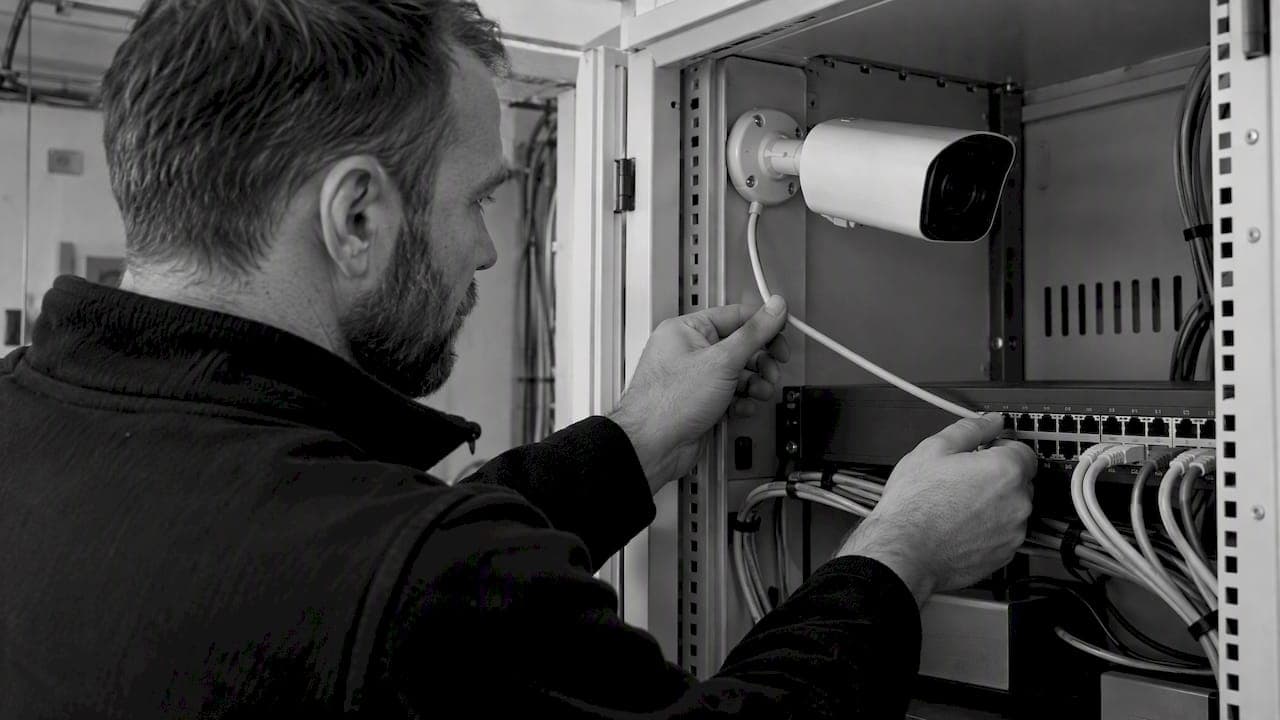
RTSP Security Risks: Integrators Must Block Exposed Ports 554 and 8554
See how integrators can reduce RTSP security risks: close exposed ports 554 and 8554, secure camera access, and verify each deployment with practical checks.
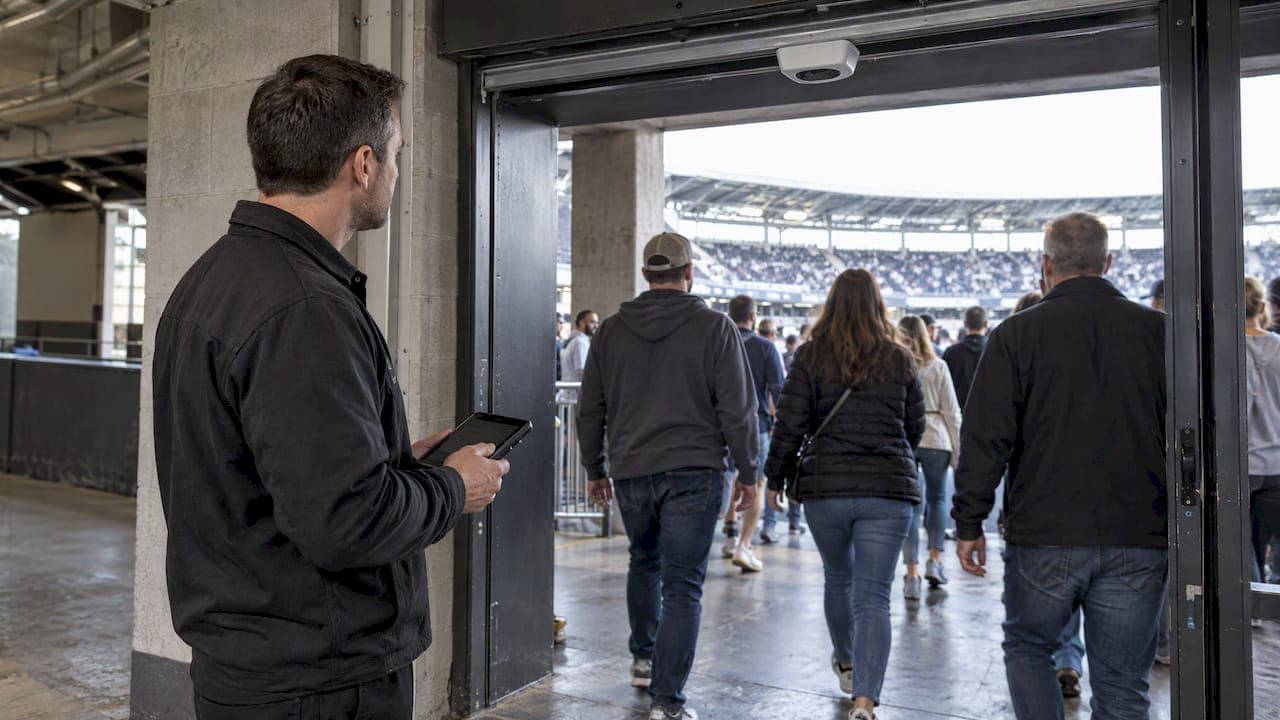
Require MAEpp and X Accuracy Before You Buy People Counting Systems
Verify people counting accuracy by demanding MAEpp, X Accuracy, and directional-bias reports. Validate on-site with at least 100 events per direction...
30–90 Day Pilot Validates Redundant Camera Networks for Engineers
Standards led, practical steps for engineers to deploy redundant camera networks: MRP, dual homing, and aggregation patterns, commissioning checks, and...
30 Day Pilot Proves Video Analytics Accuracy for Security Teams
Validate video analytics accuracy with scenario tests, camera tuning, transfer learning and a 30 day edge first pilot for security teams.
Let's Build YourSecurity Ecosystem.
Whether you're a System Integrator, Solution Provider, or an End-User looking for trusted advisory, our team is ready to help you navigate the BeyondSensor landscape.
Direct Advisory
Connect with our regional experts for tailored solutioning.