
Unlock the secrets of the intelligent sensing deployment process to boost success in tech projects. Improve efficiency and performance today!

Intelligent sensing deployment process: A guide for tech leaders

TL;DR:
- Most sensor deployments fail silently due to poor execution rather than procurement issues. A structured, gated deployment lifecycle ensures sensors deliver continuous security and efficiency benefits. Rigorous validation, calibration, and ongoing monitoring are essential for long-term sensing system success.
Sensor projects fail quietly. Budgets get approved, hardware gets installed, dashboards go live, and then, six months later, nobody is looking at them. The intelligent sensing deployment process is where most government agencies and corporations in Southeast Asia lose their investment, not at procurement, but in execution. A gated, phased deployment lifecycle changes that outcome. It turns sensor rollouts from one-time hardware exercises into continuously verified, operationally embedded systems that actually deliver security and efficiency gains. This guide covers what to prepare, how to execute each phase, and how to confirm your system is performing as promised.
Table of Contents
- Understanding the prerequisites for successful intelligent sensing deployments
- Executing a phased, gated deployment process for intelligent sensors
- Verifying, securing, and maintaining intelligent sensing systems post-deployment
- Common mistakes and expert tips for intelligent sensing deployments
- Why structured, gated deployment processes transform sensing success
- How BeyondSensor supports your intelligent sensing deployment journey
- Frequently asked questions
Key Takeaways
| Point | Details |
|---|---|
| Structured phases | Following a gated, seven-phase deployment process ensures each step is validated before moving forward. |
| Phased rollout | Using canary deployments with limited exposure helps detect issues early, reducing risk. |
| Security first | Attesting device identity and posture before network onboarding protects against unauthorized access. |
| Operational integration | Connecting sensor data directly to action pipelines like CMMS is essential for realizing ROI. |
| Continuous monitoring | Ongoing telemetry on performance and drift sustains system reliability after deployment. |
Understanding the prerequisites for successful intelligent sensing deployments
The perception system implementation lifecycle begins with requirements definition and architecture design, two phases that determine everything downstream, including performance thresholds, sensor placement geometry, and processing architecture. Skip these, and you are engineering toward an unknown target.
Start by documenting three categories of requirements precisely:
- Functional requirements: What must the system detect, classify, or measure? A perimeter intrusion detection system has fundamentally different functional requirements than an air quality monitoring network in an industrial facility.
- Performance requirements: What are the acceptable latency, accuracy, and false-positive thresholds? Define these numerically, not descriptively. "High accuracy" is not a specification.
- Safety and compliance requirements: What regulatory frameworks apply? In Singapore and Malaysia, government deployments must align with data protection and critical information infrastructure mandates.
Next, define your Operational Design Domain (ODD). The ODD specifies the environmental conditions under which the sensing system is expected to perform reliably, covering lighting conditions, temperature ranges, vibration levels, and electromagnetic interference. A thermal camera mounted near an industrial furnace operates in a radically different ODD than a visible-light camera monitoring a corporate lobby.
Sensor modality selection follows from your failure modes and security objectives. When choosing sensing technology, match the sensor type to the specific gap you are closing. Millimeter-wave radar detects motion through fog and heavy rain; LiDAR provides centimeter-level spatial mapping; acoustic sensors catch anomalies invisible to optical systems.
| Decision area | Key question | Common mistake |
|---|---|---|
| Edge vs. cloud processing | What is the tolerable latency for a response action? | Defaulting to cloud without accounting for connectivity outages |
| Sensor placement geometry | What are the coverage overlaps and blind spots? | Installing without a sight-line simulation or physical walkthrough |
| Network protocol | Does the RF environment support the chosen wireless standard? | Selecting Wi-Fi without conducting a spectrum survey first |
| Security posture | How are devices onboarded and authenticated? | Treating network access as a post-installation problem |
Pro Tip: Before any hardware purchase order is signed, run a tabletop exercise with your security operations and IT teams together. Walk through three failure scenarios: a sensor goes offline, a false positive triggers an alert at 2 AM, and a firmware update breaks a device. If your team cannot answer how they would respond, your deployment plan has gaps.
With clear prerequisites established, the next step is executing the deployment through a structured, gated process.
Executing a phased, gated deployment process for intelligent sensors
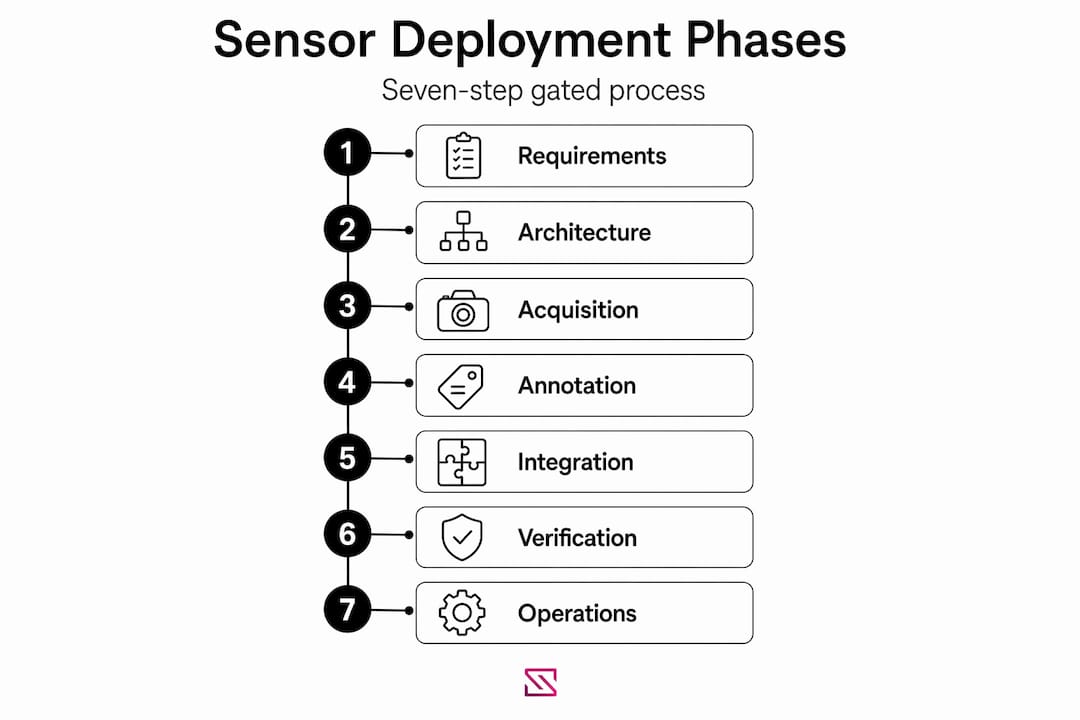
The smart sensing implementation lifecycle is not a waterfall project where you hand off from one team to another. It is a gated process where each phase produces specific artifacts, and those artifacts authorize entry into the next phase. Seven discrete phases govern this lifecycle, each with mandatory deliverables.
- Requirements and architecture gate: Sensor types, quantities, placement coordinates, and processing architecture are locked. No hardware procurement without a signed-off architecture document.
- Data acquisition and annotation: Collect representative sensor data from the actual deployment environment, not a lab. Annotate ground-truth labels for model training. This phase often takes longer than teams expect, especially for rare-event security scenarios.
- Model development and training: Train detection or classification models against annotated datasets. Validate on held-out data that reflects real-world distribution, including edge cases and adversarial conditions.
- Integration: Connect sensing hardware to the processing layer, whether edge device, gateway, or cloud inference endpoint. This is where secure sensing deployments require encrypted communication channels and authenticated API endpoints from day one.
- Calibration and synchronization: Multi-sensor systems require time synchronization and spatial calibration. A 50-millisecond timestamp mismatch between a radar and a camera feed will produce unreliable fusion outputs.
- Testing and validation: Run performance tests against defined thresholds. Include edge cases: sensor occlusion, environmental interference, high-load scenarios. Then test adversarial scenarios, deliberate obstruction or signal jamming, before signing off. Follow sensor security tips for adversarial robustness at this stage.
- Staged deployment and ongoing operations: Do not push to full production immediately. Canary deployments expose 1 to 5% of production traffic to new model versions, allowing you to detect performance issues before they affect the entire estate.
| Deployment approach | Risk level | Time to full coverage | Best suited for |
|---|---|---|---|
| Big-bang full rollout | High | Immediate but fragile | Small, uniform, low-stakes environments |
| Phased by zone | Medium | Weeks to months | Large campuses, multi-building facilities |
| Canary staged rollout | Low | Gradual, data-driven | Mission-critical or high-sensitivity deployments |
| Shadow mode validation | Very low | Extended, no live impact | New AI model versions being evaluated in parallel |
Rollback strategy deserves explicit engineering attention. In distributed edge deployments, you cannot assume reliable connectivity when a rollback command is issued. Build local fallback logic into each edge device so that if a firmware update or model push fails mid-deployment, the device reverts to a known good state automatically.
Pro Tip: Treat calibration and synchronization as mandatory integration deliverables with sign-off signatures, not optional finishing steps. The number of automated sensing deployment failures that trace back to uncalibrated multi-sensor fusion is consistently underreported because teams diagnose the symptom, a false positive, rather than the root cause, a timestamp skew.
Having executed deployment phases carefully, you now need to verify performance and secure ongoing operations.

Verifying, securing, and maintaining intelligent sensing systems post-deployment
Deployment is not the finish line. It is the starting point of operations. The gap between a sensor system that performs well on launch day and one that sustains that performance for three years comes down to three practices: secure onboarding, continuous telemetry monitoring, and disciplined update governance.
Start with device identity. Device attestation and posture verification before network onboarding are critical controls that prevent unauthorized access and device takeover in IoT sensing deployments. The NIST SP 1800-36 framework for trusted IoT device network-layer onboarding specifies that each device must present a verified identity credential, and its security posture must be confirmed before it receives network credentials. This is not optional for government deployments in Southeast Asia. It is the baseline.
Once devices are live, monitor these four telemetry signals continuously:
- Confidence scores: If a model's average detection confidence drops without a corresponding drop in actual event frequency, the model may be experiencing data distribution drift.
- Latency: End-to-end inference latency above your defined threshold means the system cannot respond within the operational window you specified in requirements.
- Error rates: Track false positive and false negative rates separately. A spike in false positives degrades operator trust; a spike in false negatives creates undetected security gaps.
- Distribution drift indicators: Monitoring confidence, latency, and error rates continuously enables detection of model drift and operation anomalies. Seasonal changes, new equipment in a monitored zone, or gradual lighting shifts from construction can all cause drift.
For firmware and model updates, enforce digital signing on every update package. Over-the-air (OTA) update pipelines must verify the cryptographic signature of each package before installation. An unsigned update, even if benign, represents a supply chain vulnerability. Pair this with advanced sensor security controls at the device and network layers to maintain end-to-end trust.
"Security in intelligent sensing is not a configuration you complete at installation. It is an ongoing operational discipline that must be embedded into every update cycle, every network change, and every new device enrolled in the estate."
Pro Tip: Define your maintenance contract terms and incident reporting timelines before deployment, not after. Contracts that specify response times for sensor outages, model retraining triggers, and firmware update cadences protect you operationally and create clear vendor accountability.
Having ensured secure and effective operations, consider common pitfalls and expert insights to optimize your deployment.
Common mistakes and expert tips for intelligent sensing deployments
The most expensive errors in sensing technology deployment are not technical. They are structural. Teams make decisions at procurement speed that require engineering precision, and the resulting gaps surface weeks or months into operations.
Here are the most frequent mistakes we see, and what to do instead:
- Under-sizing edge compute: Intelligent sensor integration at the edge processes raw sensor streams locally. A camera running a real-time object detection model at 30 frames per second generates gigabytes of data per hour. Edge hardware must be sized for sustained inference load, not peak burst capacity on a spec sheet.
- Deploying plant-wide without a pilot: Intelligent sensing ROI depends on connecting sensor anomalies directly to operational work order pipelines. Piloting on two or three critical assets first lets you validate that connection before scaling. A plant-wide rollout of disconnected dashboards is an expensive mistake.
- Dashboards without actions: If a sensor anomaly cannot trigger a work order, a ticket, or an alert to a responsible person within a defined timeframe, the dashboard is decorative. Build the operational response workflow before you build the visualization layer.
- Skipping RF surveys: Selecting a wireless protocol based on vendor recommendations without conducting a radio frequency survey of the actual physical environment leads to connectivity dead zones. Concrete walls, metal shelving, and competing wireless systems all degrade signal. Survey first, select second.
- Treating calibration as optional: Calibration is not a nice-to-have. It is the step that makes sensor readings trustworthy. Uncalibrated sensors produce confident-looking outputs that are wrong, which is more dangerous than no output at all.
Pro Tip: When evaluating sensor tech for security use cases, require vendors to demonstrate performance on data collected from your actual environment, not benchmark datasets. Environmental specificity is where real-world performance diverges sharply from published specs.
With these best practices in mind, here is a unique perspective on why structured deployments matter beyond theory.
Why structured, gated deployment processes transform sensing success
Most organizations treat their sensor deployment like a construction project: plan it, build it, hand it over, and move on. That mental model is the root cause of most intelligent sensing failures.
Intelligent sensing systems are not static infrastructure. They are living systems whose performance depends on a continuous relationship between sensor data, model behavior, and the operational environment. Staged rollouts and continuous risk assessment manage emergent behavior not only from code changes but from sensor data distribution shifts, which makes gating essential. The environment changes, and so does the ground truth the model was trained on.
What we advocate is treating the deployment process as a formal contract. Each phase gate is a signed deliverable. Calibration is not complete until a calibration certificate exists. Testing is not done until adversarial test results are documented. This is not bureaucracy. It is the mechanism that protects your organization from discovering six months post-deployment that a critical detection capability was never actually validated.
The organizations that adopt a practical sensing guide framework and enforce gate discipline report measurable predictive maintenance and security wins within weeks of production launch, not months. The reason is straightforward: they enter operations with verified baselines. When telemetry shows a deviation, they know exactly what normal looks like, and they act on it.
The alternative is familiar. A sensor network with no baseline, no verified calibration record, and no telemetry monitoring will degrade silently. Operators will begin to distrust alerts. Dashboards will be ignored. And eventually, someone will question what the investment achieved. The answer to that question is determined by how rigorously you managed the phases that came before.
How BeyondSensor supports your intelligent sensing deployment journey
To maximize your intelligent sensing investment, BeyondSensor offers the tools and expertise to guide you from planning through secure, monitored deployment.

BeyondSensor delivers AI-powered sensing platforms built specifically for government agencies and corporate security operations across Southeast Asia. Whether you need AI solutions for security agencies or are working through a system integration partner, the platform covers the full deployment lifecycle: gated architecture design, calibration management, NIST-aligned secure onboarding, firmware signing, OTA update governance, and continuous operational telemetry. For system integrators managing multi-site rollouts, solutions for system integrators provide the technical infrastructure to deploy, monitor, and maintain intelligent sensor estates at scale. Explore BeyondSensor's sensor deployment tools to accelerate your path from pilot to verified production.
Frequently asked questions
What are the key phases of the intelligent sensing deployment process?
The deployment lifecycle consists of 7 phases: requirements definition, architecture design, data acquisition and annotation, model development and training, integration and calibration, testing and validation, and deployment with ongoing operations. Each phase produces mandatory artifacts that gate entry to the next.
Why is a phased rollout important for intelligent sensing systems?
A phased rollout allows organizations to detect performance issues and model drift before full-scale exposure. Canary deployments exposing 1 to 5% of production traffic to new model versions let you monitor real-world behavior under controlled risk.
How does security onboarding work for IoT sensing devices?
Network-layer onboarding involves attesting each device's identity and verifying its security posture before it receives network credentials, preventing unauthorized access and device takeover.
What common mistakes should be avoided during sensor deployments?
The most damaging mistakes are under-sizing edge compute, skipping pilot phases before full rollout, and failing to connect sensor anomalies to operational workflows. Treating intelligent sensing as data collection without linking anomalies to work orders typically results in dashboards that maintenance teams ignore.
Recommended
- Advanced sensing technologies: A practical guide for security managers | News | BeyondSensor
- Step-by-Step Security Integration: Advanced Sensor Guide | News | BeyondSensor
- Secure Sensing Explained: Defend Industrial & Environmental Ops | News | BeyondSensor
- Sensing tools guide: Types, accuracy, and security uses | News | BeyondSensor
Read More Articles

Event Correlation for Physical Security: Verify Alarms Before Dispatch
Learn how security teams combine cameras, access control, and sensors to verify alarms, reduce false alarms, and deploy event correlation with edge analytics.
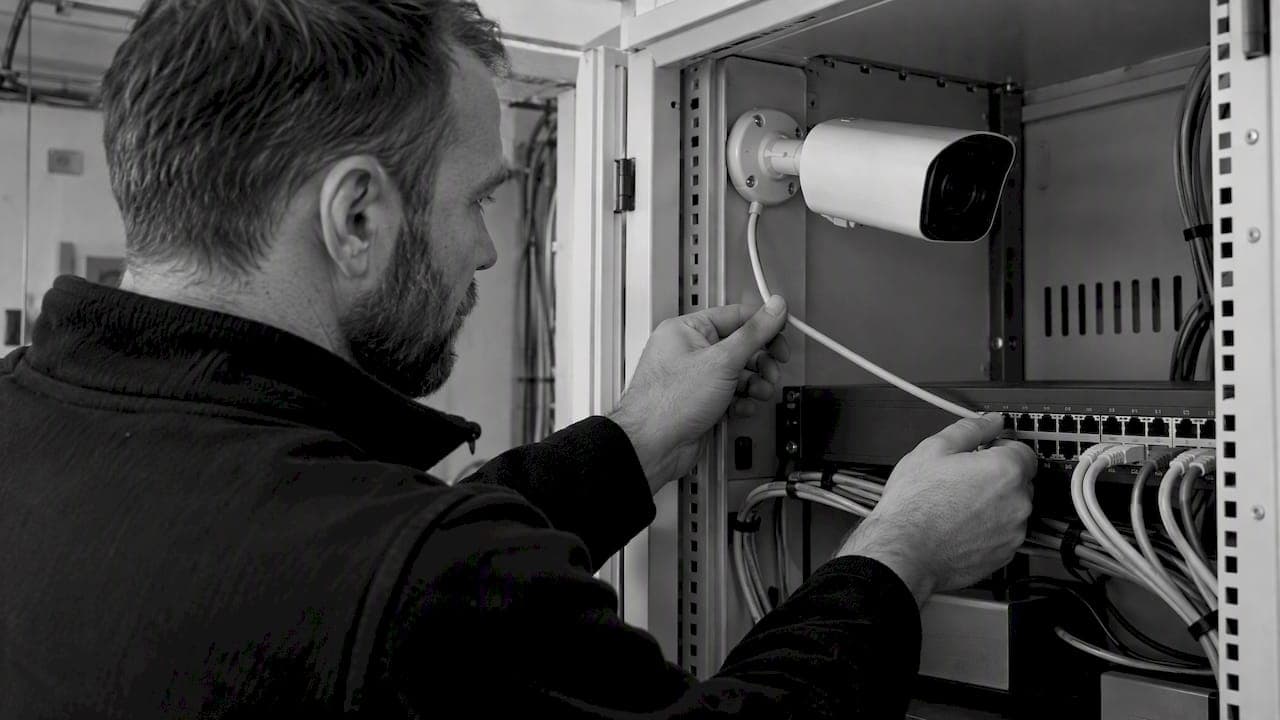
RTSP Security Risks: Integrators Must Block Exposed Ports 554 and 8554
See how integrators can reduce RTSP security risks: close exposed ports 554 and 8554, secure camera access, and verify each deployment with practical checks.

Require MAEpp and X Accuracy Before You Buy People Counting Systems
Verify people counting accuracy by demanding MAEpp, X Accuracy, and directional-bias reports. Validate on-site with at least 100 events per direction...
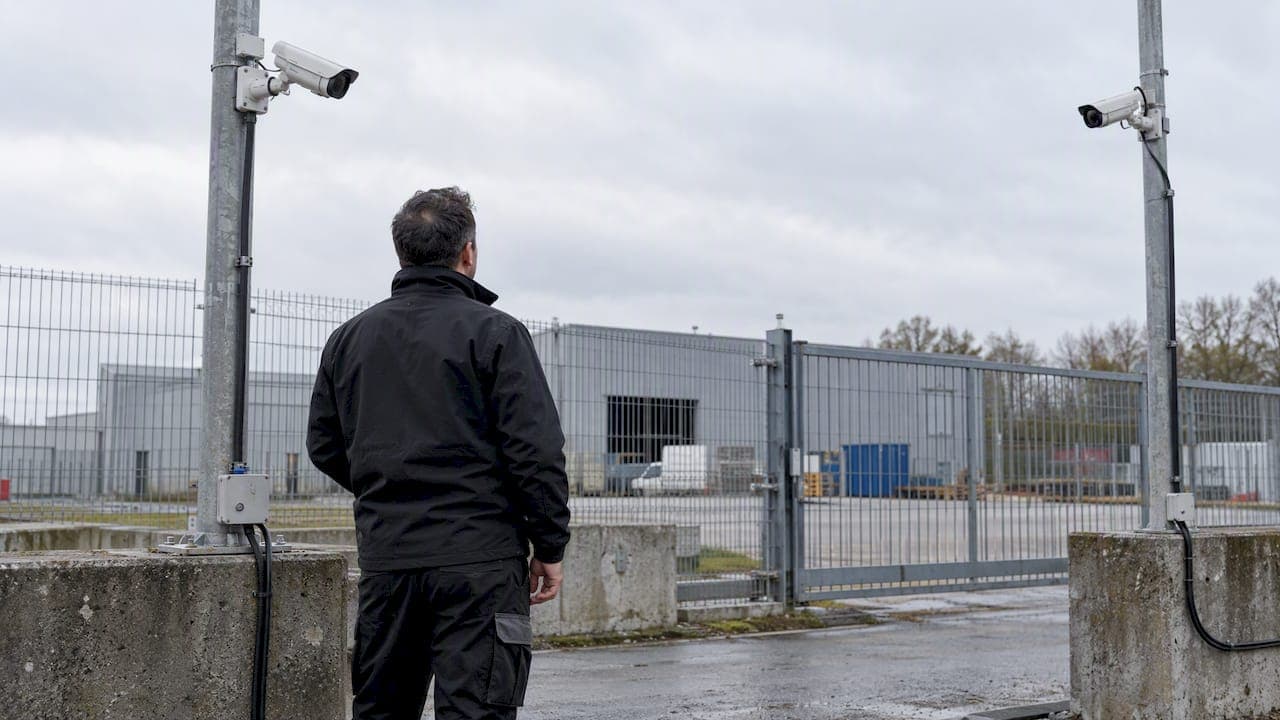
30–90 Day Pilot Validates Redundant Camera Networks for Engineers
Standards led, practical steps for engineers to deploy redundant camera networks: MRP, dual homing, and aggregation patterns, commissioning checks, and...
Let's Build YourSecurity Ecosystem.
Whether you're a System Integrator, Solution Provider, or an End-User looking for trusted advisory, our team is ready to help you navigate the BeyondSensor landscape.
Direct Advisory
Connect with our regional experts for tailored solutioning.