
Discover what real-time monitoring is and how it can enhance security and facility operations. Prevent incidents before they escalate!
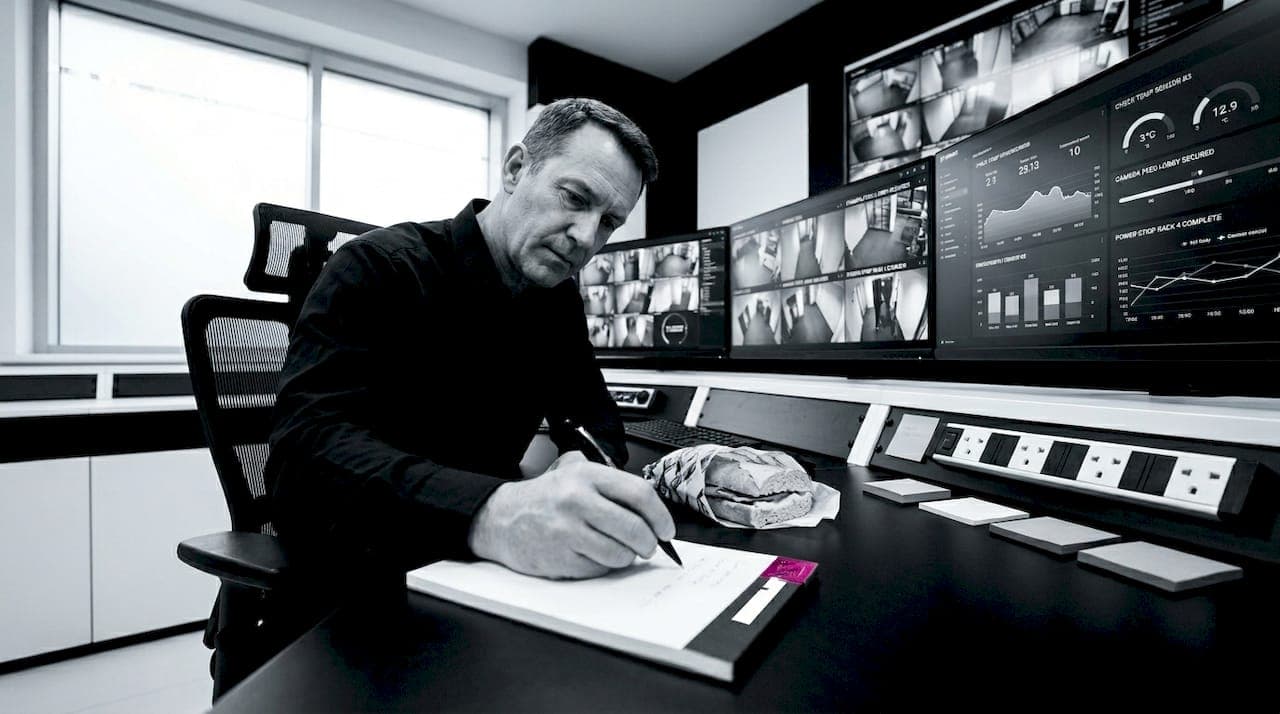
Real-time monitoring: Boost security and facility operations
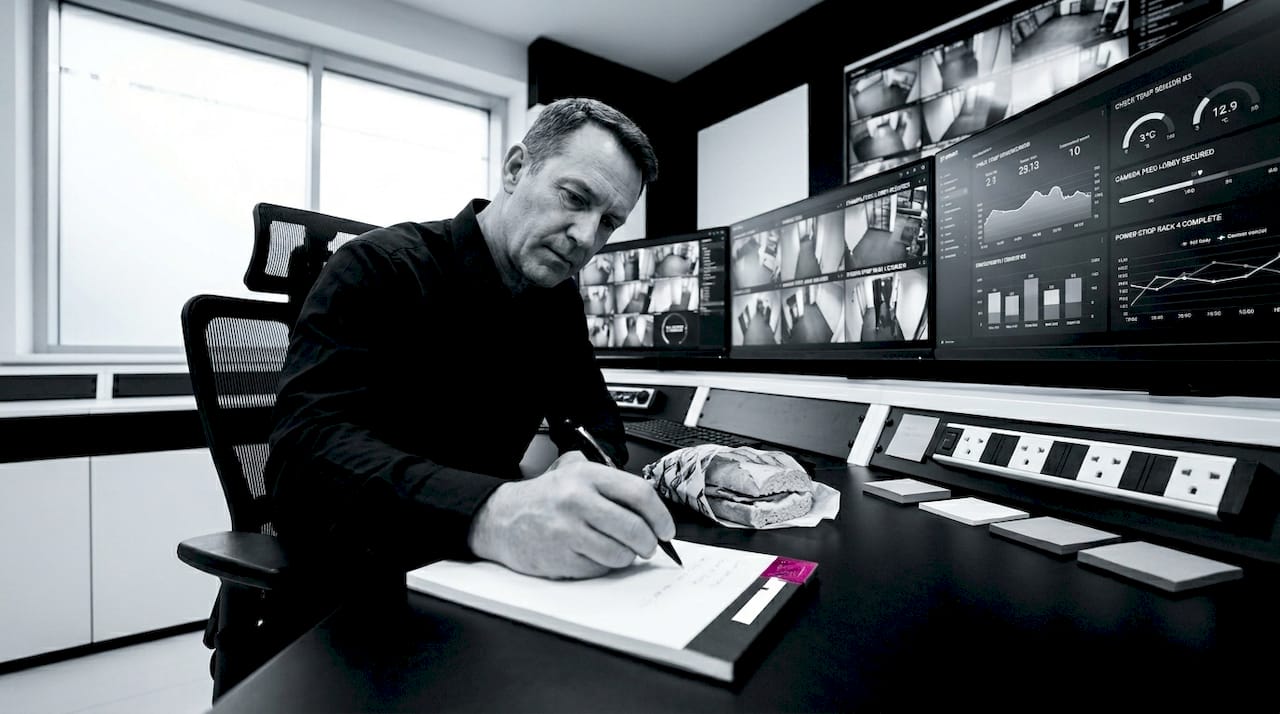
TL;DR:
- Many security and facility teams rely on periodic checks, but incidents can escalate before detection.
- Real-time monitoring involves continuous observation with instant alerts, enabling proactive responses.
- Designing systems for resilience, appropriate latency, and alert relevance is crucial to operational success.
Many security and facility teams still treat monitoring as something that happens in scheduled windows, a periodic check-in that feels thorough enough. But security incidents don't wait for your next report cycle. A door held open for 30 seconds, a temperature spike in a server room, or an access attempt outside business hours can escalate into a serious loss event before a periodic system even flags it. This article breaks down what real-time monitoring actually means in security and facility contexts, the technologies that power it, how it applies across operational environments, and the practical design constraints every facility operator and security manager needs to understand before deploying or upgrading a system.
Table of Contents
- What is real-time monitoring?
- Key technologies powering real-time monitoring
- Applications in operational technology (OT) and physical environments
- System design: Practical constraints and considerations
- Perspective: What most security and facility professionals miss about real-time monitoring
- Explore advanced real-time monitoring solutions for your facility
- Frequently asked questions
Key Takeaways
| Point | Details |
|---|---|
| Immediate detection matters | Real-time monitoring lets you spot and respond to issues as they arise, not after the fact. |
| Sensor streams enable alerts | Streaming sensor data powers fast rule-based and AI-driven alerts for improved security and facility management. |
| System design is context-driven | Always tailor monitoring architecture to your facility’s action timelines and operational needs for best results. |
| Edge/hybrid setups have limitations | Edge computing boosts speed but still requires human oversight and tolerance for imperfect data. |
| Practical applications abound | Building management, access control, and environmental sensors are examples where real-time monitoring drives efficiency and safety. |
What is real-time monitoring?
Real-time monitoring means continuously observing systems, devices, and environments and triggering alerts or automated responses the moment a defined condition is met. It stands in sharp contrast to periodic monitoring, where data is collected and reviewed at intervals, whether hourly, daily, or weekly. In high-stakes environments, that gap between intervals is where incidents grow.
Continuous monitoring is ongoing rather than periodic and is implemented through components including data collection, detection logic, baselines, response workflows, and reporting. Each of these components has to work together without significant lag. Remove any one piece, and the system becomes reactive rather than proactive.
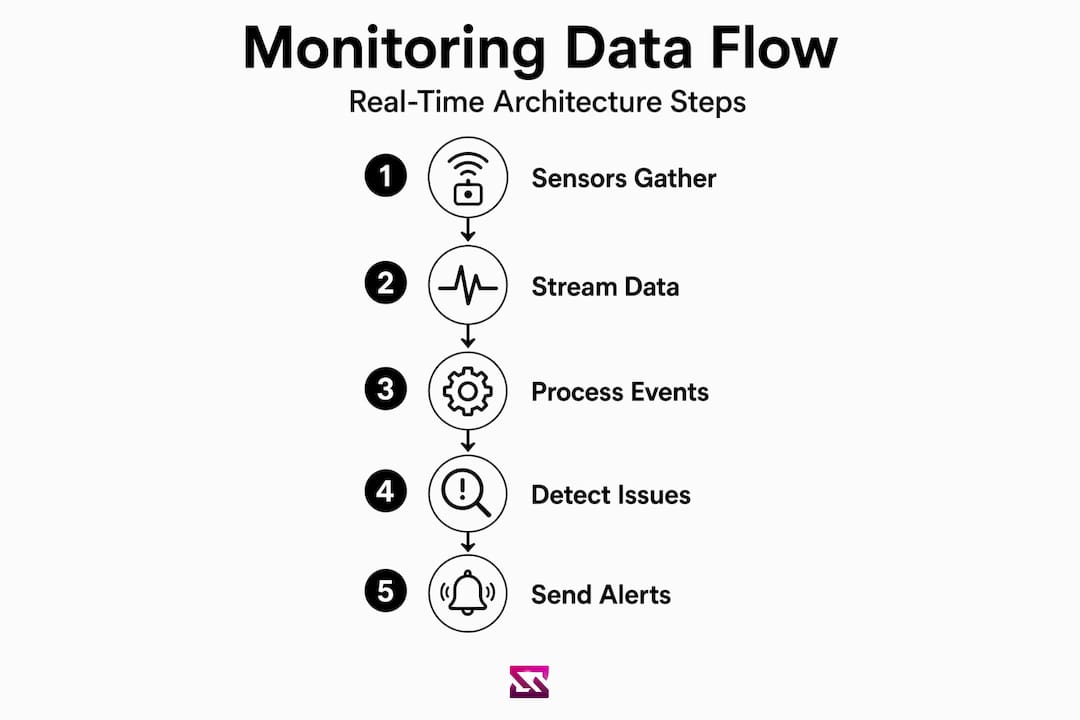
In security and facility contexts, real-time monitoring typically involves four layers working in unison:
- Sensors and data sources: Cameras, access control readers, environmental monitors, and IoT devices generate a continuous stream of telemetry.
- Data pipelines: These streams flow into processing systems that can handle high-velocity, time-stamped data without bottlenecks.
- Detection logic: Rules, thresholds, or machine learning models evaluate incoming data against expected patterns.
- Alert and response workflows: When a threshold is crossed or an anomaly is detected, the system routes the alert to the right team or triggers an automated action.
The speed of this loop is what separates real-time from everything else. Advanced sensor integration across a facility creates the data density needed to detect subtle changes before they escalate. When properly configured, security monitoring solutions built on this architecture can also play a significant role in reducing false alarms by up to 97%, because detection logic filters signal from noise rather than depending on manual review.
"The gap between detection and response is where incidents become crises. Real-time monitoring exists to close that gap before it costs you."
| Feature | Periodic monitoring | Real-time monitoring |
|---|---|---|
| Detection speed | Hours to days | Seconds to minutes |
| Alert mechanism | Manual review | Automated, rule-based |
| Data freshness | Stale at review time | Current at all times |
| Incident response | Reactive | Proactive or concurrent |
| Resource overhead | Lower (scheduled) | Higher (continuous) |
The table above makes the operational case clear. For facilities where safety, compliance, or asset protection is a priority, periodic monitoring introduces unacceptable risk windows.
Key technologies powering real-time monitoring
Now that you know what real-time monitoring is, it's vital to understand the technologies behind it. The architecture is more layered than most teams realize, and choosing the wrong components at any stage creates bottlenecks that undermine the entire system.
A common engineering pattern for real-time monitoring is streaming data from sensors and agents into a processing layer, applying rules (static thresholds or dynamic baselines), and alerting incident workflows to reduce detection and response delays. This pattern applies whether you're monitoring a single building or a multi-site campus.
The core technology categories include:
Sensor and data collection layer
Facility safety sensor tech now spans a wide range of device types. IoT environmental monitors track temperature, humidity, air quality, and water intrusion. Access control systems log every credential event. IP cameras capture continuous video. Industrial sensors on HVAC, electrical, and mechanical systems add operational context. Each device type produces different data formats and update frequencies, which means your pipeline has to handle heterogeneous inputs gracefully.

Streaming and time-series data infrastructure
Raw sensor data needs to move fast and stay ordered. Streaming platforms process event data as it arrives rather than batching it. Time-series databases store timestamped readings efficiently for querying and anomaly comparison. These two components together form the backbone of any real-time architecture. Without them, even the best sensors produce data that arrives too slowly or in the wrong order to be actionable.
Detection logic: Static rules vs. dynamic baselines
Static rules are simple: if temperature exceeds 85°F, send an alert. They're fast to configure and easy to audit. Dynamic baselines use historical data to define what "normal" looks like for a given sensor, time of day, or usage pattern. Intelligent sensing technologies increasingly use machine learning anomaly detection to shift from threshold-based alerts to context-aware detection. This matters because a server room at 80°F at 2 AM is very different from the same reading at 2 PM during peak operations.
Incident response and workflow integration
Detection is only valuable if alerts reach the right people through the right channels. Modern incident response tools integrate with ticketing systems, communication platforms, and automated control systems. Security workflow optimization through proper integration ensures that an alert generated at 3 AM doesn't sit unread until morning. Live camera feeds that support essential remote access features allow operators to verify events without being on-site, significantly improving response quality.
| Technology layer | Primary function | Example devices/tools |
|---|---|---|
| Sensors | Data generation | IoT monitors, IP cameras, readers |
| Streaming platform | Data transport | Event brokers, message queues |
| Processing engine | Detection logic | Rule engines, ML models |
| Incident tools | Alert routing | Ticketing, automation, comms |
Pro Tip: Before selecting any monitoring platform, verify that your sensor protocols and incident management tools are natively compatible. Protocol mismatches between sensor outputs and processing layers are the most common cause of response delays in newly deployed systems.
Applications in operational technology (OT) and physical environments
Having covered the enabling tech, let's look at how real-time monitoring is applied in actual environments and systems. Operational technology (OT) refers to hardware and software that detects or controls physical processes, and it sits at the core of most modern facility operations.
OT examples include building management systems and physical environment monitoring systems, all monitored and controlled via detection and events. This means the same monitoring principles that apply to cybersecurity extend directly into the physical world of HVAC systems, power distribution, lighting controls, access gates, and fire suppression.
Typical workflow steps in an OT or physical security monitoring environment follow a consistent pattern:
- Sensor activation: A physical event occurs, such as a door contact opening, motion detection, or a temperature threshold breach.
- Data transmission: The sensor sends an event record or continuous telemetry to the data pipeline.
- Baseline comparison: The processing engine checks the event against expected patterns for that location and time window.
- Rule evaluation: Static or dynamic rules determine whether the event warrants an alert.
- Alert generation: If thresholds are met, an alert is created and routed to the appropriate team or automated system.
- Operator verification: A security operator reviews the alert, optionally pulling live camera feeds for context.
- Response execution: The operator or automated system executes a response, from locking a door to dispatching personnel.
- Logging and audit: Every event and action is timestamped and stored for compliance and post-incident review.
This workflow applies directly to video surveillance in office buildings, where camera feeds, access events, and visitor management data all need to converge into a single operational picture. Integrated physical security ecosystems make this convergence manageable at scale.
The operational benefits of applying this workflow consistently include:
- Safety: Environmental hazards and unauthorized access are detected before they create risk to personnel.
- Compliance: Continuous logging satisfies audit requirements for regulated environments including healthcare, finance, and critical infrastructure.
- Efficiency: Automated responses reduce the need for manual patrols and intervention, freeing staff for higher-value tasks.
- Loss prevention: Real-time asset tracking and access monitoring reduce theft and misuse in large facilities.
- Evidence quality: Timestamped, correlated event records provide clean evidence trails for investigations.
Following physical security best practices for facilities means building each of these benefits into the system design from the start, not bolting them on after deployment.
System design: Practical constraints and considerations
Putting monitoring into practice requires understanding the limits and design questions faced by security and facility teams. The phrase "real-time" is used loosely in the industry, and that imprecision creates costly misalignments between what teams expect and what systems actually deliver.
Edge AI deployments are often described as hybrid and still depend on human oversight even when processing happens close to the sensor source. True real-time processing at the millisecond level is technically possible but rarely necessary in physical security contexts. Most meaningful responses, locking a door, alerting a guard, or triggering an alarm, happen at the second or minute level. Designing for millisecond latency when your response workflow operates in minutes wastes engineering budget.
Key practical design considerations include:
- Latency tolerance: Define the acceptable delay between event and alert for each use case before choosing your architecture.
- Event ordering: Sensors and networks occasionally deliver events out of sequence. Your processing layer must handle this without generating false alerts.
- Buffering: Network outages create data gaps. Systems need local buffering to avoid losing events during connectivity interruptions.
- State management: Some detections require context across multiple events, not just a single reading. Your system must track state over time.
- Network constraints: High-bandwidth video streams may compete with sensor telemetry on shared network infrastructure. Prioritize accordingly.
- Human oversight integration: Automation handles scale, but human judgment remains essential for nuanced situations. Design escalation paths that are fast but not bypassed entirely.
Security compliance guidance for sensing systems consistently highlights that audit requirements shape architecture decisions. If your system must log every event for regulatory purposes, storage and retrieval design becomes as critical as detection speed.
Understanding operational efficiency insights also means recognizing that over-instrumentation creates its own problems. Too many sensors without a coherent detection strategy generates alert fatigue, where operators begin ignoring notifications because the signal-to-noise ratio is too low. A well-designed system generates fewer, higher-quality alerts. This is a foundational principle in the advanced sensing guide for security managers and one that shapes every architecture decision.
Explore security system essentials for 2026 to benchmark your current architecture against current industry standards.
Pro Tip: Scope your monitoring architecture based on the action timeline for each use case. If a response must happen in seconds (automated door lock), design for low latency. If a response happens in minutes or hours (compliance reporting, shift supervisor review), near-real-time processing is sufficient and significantly cheaper to build and maintain.
Perspective: What most security and facility professionals miss about real-time monitoring
Here is the uncomfortable truth: most teams that invest in real-time monitoring don't actually need the "real" part. They need timely monitoring, which is a fundamentally different design problem.
The word "real-time" carries a technical implication of sub-second processing that drives teams toward expensive, complex infrastructure. In practice, the vast majority of physical security and facility responses operate on timelines measured in minutes, not milliseconds. A guard response takes time regardless of how fast the alert fires. An automated door lock triggered within two seconds of an intrusion detection event is operationally equivalent to one triggered within 200 milliseconds.
This matters because over-engineering for speed that serves no operational purpose is one of the most consistent budget failures we see in facility security deployments. Teams spend on high-throughput streaming infrastructure when a well-designed near-real-time pipeline would deliver identical outcomes. The decision to go truly real-time should be driven by the action that follows the alert, not by the alert itself.
The second thing most professionals miss is that imperfect data is acceptable and expected. Sensors drop packets. Networks have outages. Events arrive out of order. A monitoring architecture that can't tolerate these conditions will generate false alarms and erode operator trust faster than any technical failure. Designing for resilience, with buffering, deduplication, and state recovery, matters more than raw processing speed.
The third overlooked factor is alert fatigue. A system that generates 500 alerts per shift trains operators to ignore them. Operational efficiency best practices consistently show that reducing alert volume through smarter detection logic improves response quality more than any hardware upgrade. Real monitoring excellence is about generating the right alerts, not all the alerts.
The practical framework is simple: define the action first, then work backward to the detection requirement. If you can't describe what a human or system will do with an alert within 30 seconds of receiving it, the alert isn't ready to be in production.
Explore advanced real-time monitoring solutions for your facility
Both the theory and the practice of real-time monitoring point to one clear conclusion: architecture decisions must be driven by operational context, not technology trends. BeyondSensor delivers exactly that kind of grounded, precision-engineered approach across the full monitoring stack.

Whether you're a security agency looking for scalable detection infrastructure, a system integrator building out multi-site deployments, or a facility operator modernizing an aging monitoring setup, BeyondSensor has tailored solutions for each role. Explore security agency solutions built for high-demand operational environments, review system integrator tools designed for seamless deployment and ecosystem compatibility, or discover facility owner options that align monitoring investment with actual operational risk. BeyondSensor's regional expertise across Singapore, Malaysia, and the Philippines ensures that solutions are validated for local regulatory and infrastructure environments, not just adapted from generic global platforms.
Frequently asked questions
What is the difference between real-time and near-real-time monitoring?
Real-time monitoring means immediate detection and response with minimal processing delay, while near-real-time allows for slight delays due to pipeline processing, network constraints, or buffering. For most physical security and facility use cases, near-real-time is operationally sufficient and significantly simpler to design and maintain.
What types of data can be monitored in real-time?
Common data types include sensor readings (temperature, motion, environmental), access and credential events, system logs, video streams, and configuration changes. Continuous monitoring sources span logs, performance metrics, authentication events, and configuration changes, all of which apply directly to facility and security contexts.
How does real-time monitoring improve response times?
By streaming data continuously and applying automated detection logic, teams reduce the delay between an event occurring and a response being triggered. The goal is to minimize both mean time to detect (MTTD) and mean time to respond (MTTR) by deploying alert rules and baselines that route incidents to the right workflows immediately.
What are common challenges in real-time monitoring architecture?
The most frequent challenges include data latency, network reliability, out-of-order event delivery, and alert fatigue from excessive false positives. Systems must be designed to tolerate imperfect data delivery through buffering and deduplication to avoid missing real events or overwhelming operators with noise.
What are practical examples of real-time monitoring in facilities?
Practical applications include access control event monitoring, environmental hazard detection, live video surveillance, building management system integration, and perimeter intrusion detection. OT building management systems and physical environment monitors represent the core use cases where real-time monitoring delivers measurable operational value.
Recommended
- Sensor tech applications: Boost facility safety and efficiency | News | BeyondSensor
- How to Secure Facilities with Advanced Sensor Technology | News | BeyondSensor
- AI in facility management: Boosting efficiency and security | News | BeyondSensor
- Optimize physical security workflows with advanced sensors | News | BeyondSensor
Read More Articles
Event Correlation for Physical Security: Verify Alarms Before Dispatch
Learn how security teams combine cameras, access control, and sensors to verify alarms, reduce false alarms, and deploy event correlation with edge analytics.
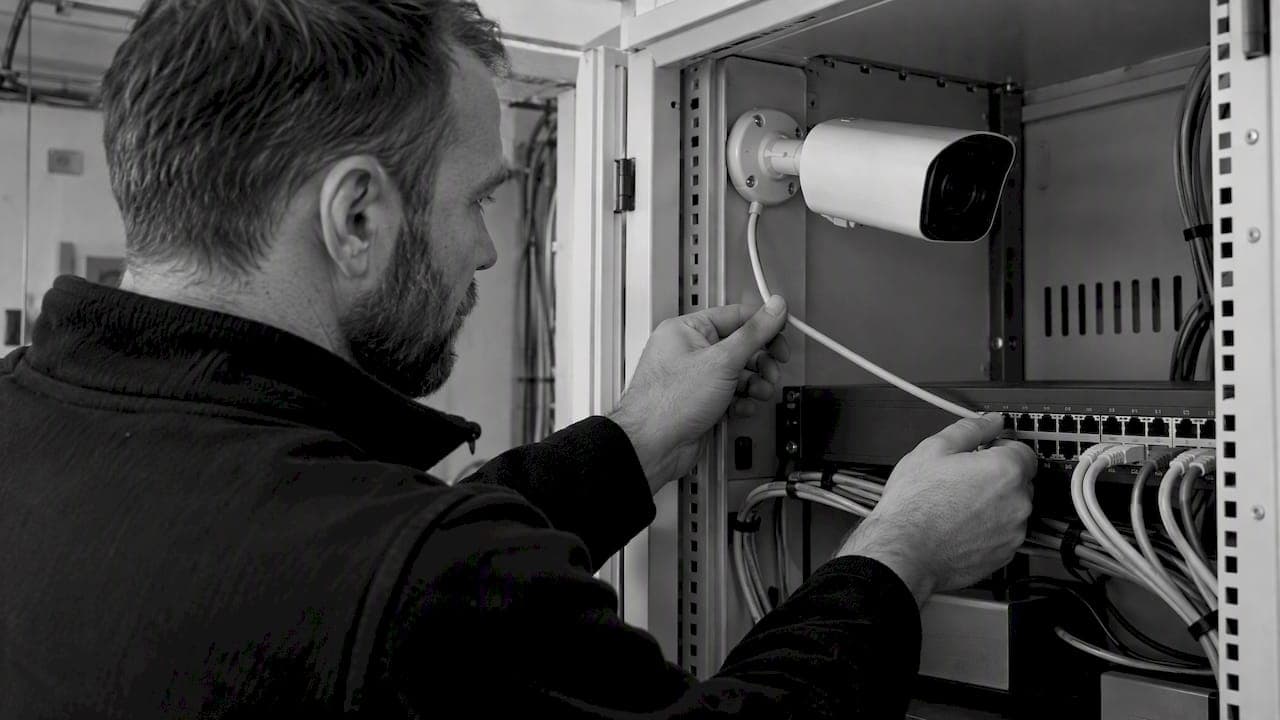
RTSP Security Risks: Integrators Must Block Exposed Ports 554 and 8554
See how integrators can reduce RTSP security risks: close exposed ports 554 and 8554, secure camera access, and verify each deployment with practical checks.
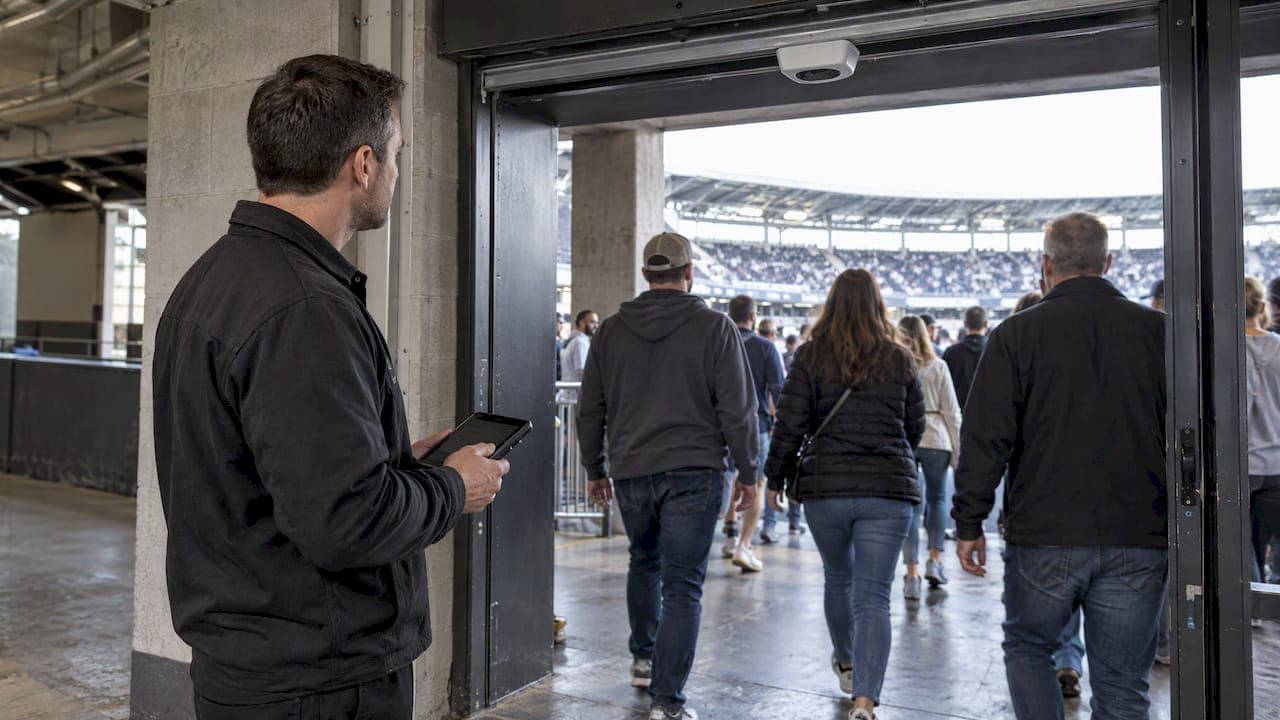
Require MAEpp and X Accuracy Before You Buy People Counting Systems
Verify people counting accuracy by demanding MAEpp, X Accuracy, and directional-bias reports. Validate on-site with at least 100 events per direction...
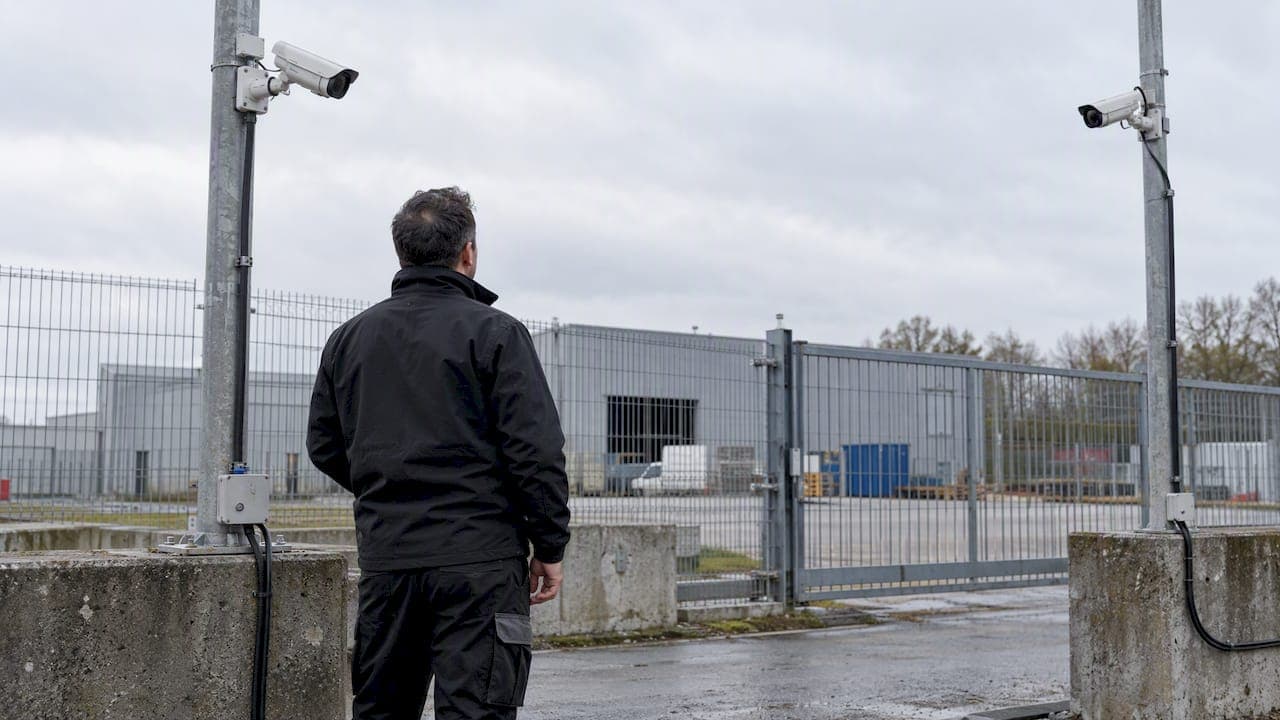
30–90 Day Pilot Validates Redundant Camera Networks for Engineers
Standards led, practical steps for engineers to deploy redundant camera networks: MRP, dual homing, and aggregation patterns, commissioning checks, and...
Let's Build YourSecurity Ecosystem.
Whether you're a System Integrator, Solution Provider, or an End-User looking for trusted advisory, our team is ready to help you navigate the BeyondSensor landscape.
Direct Advisory
Connect with our regional experts for tailored solutioning.