
Discover why adopt smart monitoring for industrial security. Enhance safety and boost profits with AI-driven insights for reliable operations.
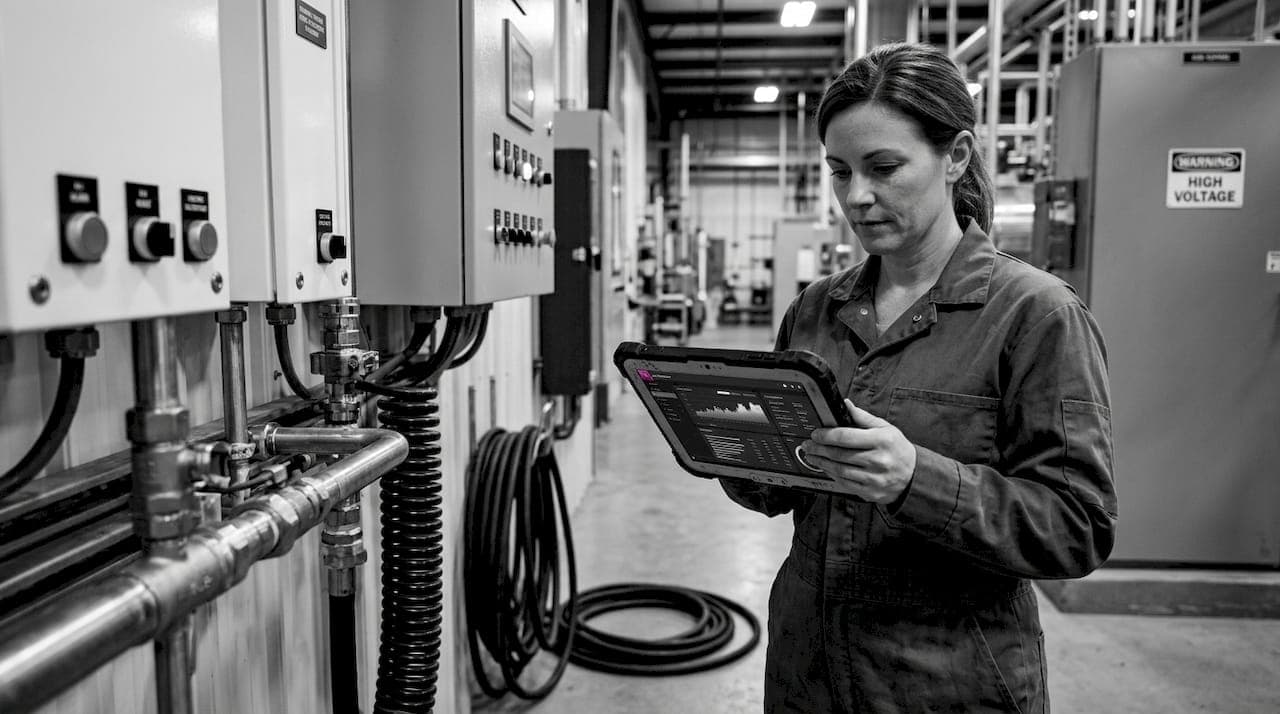
Why adopt smart monitoring: industrial security guide
TL;DR:
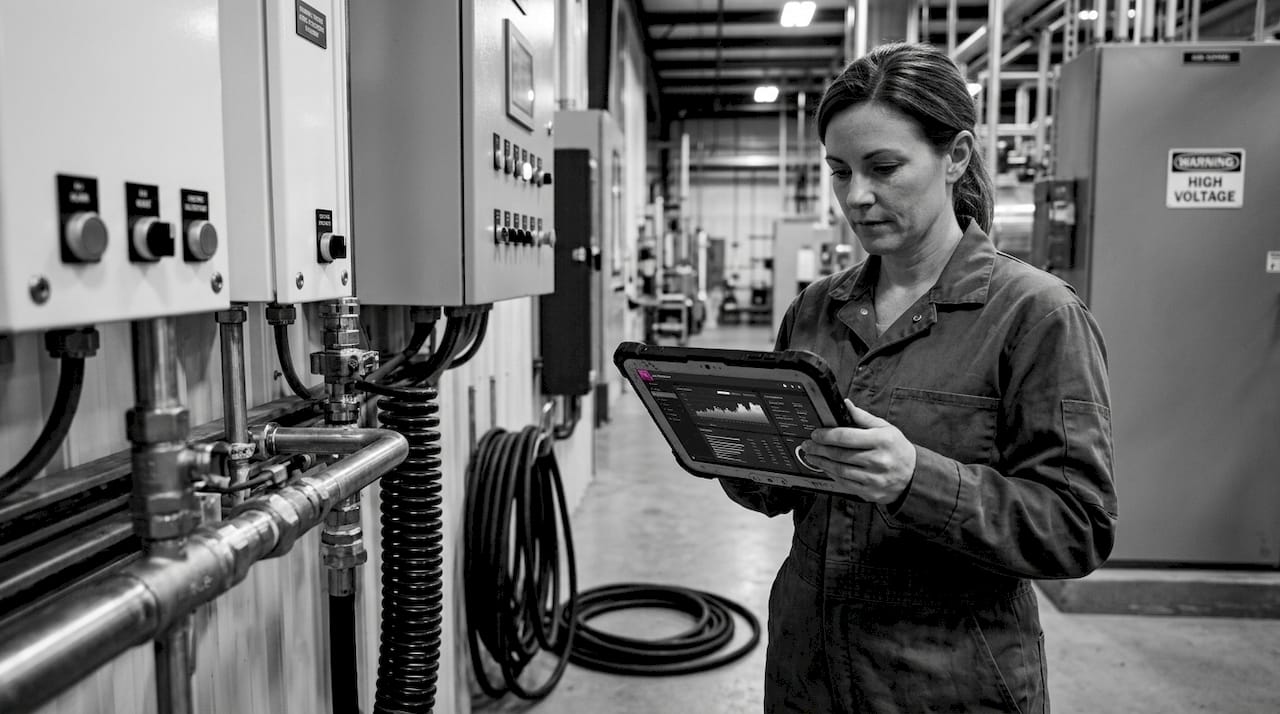
- Smart monitoring leverages IoT sensors and AI analytics to provide real-time asset health insights, reducing unplanned downtime and operational costs. Regional deployments in Southeast Asia demonstrate significant improvements, including up to 45% downtime reduction and rapid ROI. Effective integration of automated workflows and localized sensor strategies is essential for overcoming environmental challenges and maximizing safety and regulatory compliance.
Unplanned equipment failure costs industrial operations an average of $250,000 per hour in lost production. In Southeast Asia's cement, oil and gas, and chemical sectors, that number climbs fast. Yet the bigger problem is not the failure itself; it is that most facilities receive no warning before it happens. Traditional monitoring methods, scheduled inspections and manual rounds, were designed for a simpler era of industrial operations. Why adopt smart monitoring now? Because the gap between what you can see with manual oversight and what AI-enabled sensors can detect in real time is no longer acceptable when both safety and profitability are on the line.
Table of Contents
- Understanding smart monitoring and its core benefits
- Real-world impacts of smart monitoring: case studies from Southeast Asia industry
- Overcoming deployment challenges in Southeast Asian industrial environments
- How smart monitoring enhances industrial safety and regulatory compliance
- Comparing smart monitoring architectures and sensor technologies
- The critical factor most overlook when adopting smart monitoring
- Explore BeyondSensor's AI-powered solutions for your smart monitoring needs
- Frequently asked questions
Key Takeaways
| Point | Details |
|---|---|
| Significant downtime reduction | Smart monitoring can cut unplanned downtime by up to 45%, drastically improving plant productivity. |
| Rapid payback | Deployments often pay for themselves within 6 to 12 months through maintenance cost savings. |
| Predictive safety benefits | Real-time sensing enables early hazard detection, reducing risk to personnel and environment. |
| Regional deployment challenges | Southeast Asian climate needs adaptive sensor networks to maintain data quality year-round. |
| Integration drives success | Linking sensors directly to maintenance systems unlocks the full value of smart monitoring. |
Understanding smart monitoring and its core benefits
Smart monitoring in industrial contexts means integrating Industrial Internet of Things (IIoT) sensors, AI analytics, and connected asset management systems into a single operational intelligence layer. Every critical asset generates continuous data. That data feeds algorithms that detect anomalies, predict failures, and trigger maintenance actions automatically. This is fundamentally different from scheduled inspections, which only capture equipment status at the moment of the visit.
Two concepts are central to why smart monitoring matters. The first is predictive maintenance, where sensor data identifies early signs of wear, vibration, heat, or pressure deviation before a fault becomes a failure. The second is condition-based monitoring, where maintenance actions are triggered by actual asset health rather than fixed time intervals. Together, these approaches eliminate both the cost of premature maintenance and the catastrophic expense of reactive repair.
IIoT deployments yield up to 30% energy savings and 40% efficiency improvements, which makes the business case for adoption clear. Beyond those numbers, facilities gain real-time situational awareness that simply cannot be replicated with spreadsheets and manual logs.
Key benefits of smart monitoring for industrial decision-makers include:
- Downtime reduction through early fault detection on rotating and static assets
- Energy efficiency by identifying waste in compressed air, steam, and electrical systems
- Safety assurance via continuous monitoring of hazardous zones, temperature limits, and gas levels
- Regulatory compliance through automated data logging and audit-ready reporting
- Asset life extension by operating equipment within optimal condition envelopes
For a deeper foundation, understanding advanced sensing technologies and essential sensing technology for industrial security are both worth reviewing before your next procurement cycle.
Real-world impacts of smart monitoring: case studies from Southeast Asia industry
With the foundations clear, these case studies demonstrate the tangible operational and financial impact of smart monitoring across the region's most demanding environments.
The numbers coming out of regional deployments are hard to ignore. An Indonesian cement plant reduced downtime 45%, saving $1.9 million annually with a payback period of just 6.4 months. That result was not from a total infrastructure overhaul. It came from deploying IIoT sensors on critical rotating equipment and connecting alerts directly to a Computerized Maintenance Management System (CMMS) for automatic work order generation.

Oil and gas operations across the region show equally compelling results. Wireless sensor networks predict failures five to fourteen days ahead of occurrence, reducing downtime by 65 to 80 percent and unlocking between $2.8 million and $8.2 million in annual operational value per facility. For dispersed field assets across Sumatra, Borneo, or the Philippine archipelago, wireless sensor mesh networks make monitoring economically viable where running cable would not be.
Pipeline integrity monitoring adds another dimension. Real-time pipeline monitoring detects leaks within 90 seconds with 96 percent accuracy, preventing incident costs ranging from $180 million to $420 million per event. At that scale, the ROI conversation becomes straightforward.
| Operation type | Downtime reduction | Annual value unlocked | Payback period |
|---|---|---|---|
| Cement plant (Indonesia) | 45% | $1.9M | 6.4 months |
| Oil & gas field assets | 65–80% | $2.8M–$8.2M | Under 12 months |
| Pipeline leak detection | N/A (incident prevention) | $180M–$420M per incident | Immediate |
These results reflect what sensor technology for smarter automation delivers when deployed with clear operational goals. Reviewing advanced sensing for security managers can help your team frame the business case internally.
Pro Tip: Focus your initial sensor deployment on your top 20 most critical assets. This typically represents 80 percent of your unplanned downtime risk and delivers the fastest measurable ROI before scaling across the facility.
Overcoming deployment challenges in Southeast Asian industrial environments
Understanding impact is critical, but deploying smart monitoring effectively in demanding environments requires overcoming unique regional challenges that many technology vendors underestimate.
Southeast Asia presents conditions that stress sensors harder than most environments on earth. Tropical humidity, monsoon rainfall, corrosive coastal air, and remote locations with limited connectivity all affect data reliability. Humidity-driven sensor drift at Southeast Asian plants is a well-documented problem, but hybrid mesh networks have proven capable of maintaining 100 percent data fidelity even during peak monsoon conditions. The key is selecting sensors rated for tropical operating ranges and validating them locally before full deployment.
Common deployment challenges and their proven solutions:
- Sensor drift from humidity and temperature cycles — Use sensors with IP67 or higher ingress protection and implement automated drift compensation algorithms calibrated to your site's ambient range.
- Data latency in remote or underground locations — Deploy low-power wireless mesh networks (LoRaWAN or ISA100) that relay data through intermediate nodes rather than depending on single-point cellular links.
- OPC-UA integration with legacy control systems — Most modern IIoT gateways support OPC-UA bridging, allowing new sensor data to flow into existing SCADA or DCS environments without full system replacement.
- Mobile data access for field technicians — Cloud-based CMMS platforms with offline sync capability ensure field teams in remote areas receive work orders and sensor alerts even during connectivity interruptions.
- Alarm fatigue from untuned thresholds — Establish asset-specific alert thresholds during a baseline period of 30 to 60 days before activating automated notifications.
IIoT sensors on critical assets deliver payback under 12 months, but only when the data connects to clear response plans. Technology without defined action pathways simply generates noise that operations teams will eventually ignore.
Pro Tip: Before deploying any new sensor network, document exactly what alert level triggers which response, who is responsible, and what the escalation path looks like. A well-structured response plan often determines whether a deployment delivers ROI or becomes shelf hardware.
For further deployment guidance, securing industrial and environmental operations and the smart infrastructure security guide offer practical frameworks for Southeast Asian site conditions.
How smart monitoring enhances industrial safety and regulatory compliance
Beyond operational gains, smart monitoring is transformative for safety assurance and regulatory adherence in industrial sectors where the consequences of a missed signal extend far beyond equipment damage.
Safety benefits that smart monitoring delivers to industrial facilities include:
- Early leak detection in chemical pipelines and storage systems, reducing exposure risk for workers and surrounding communities
- Hazardous area monitoring with continuous gas sensor arrays replacing manual entry into confined or high-risk spaces
- Equipment failure prevention through vibration and thermal anomaly detection before mechanical breakdown
- Real-time emissions monitoring that feeds directly into environmental compliance reporting systems
- Structural health monitoring on critical infrastructure including tanks, bridges, and processing towers
Regulatory environments across ASEAN are tightening. Facilities in Malaysia, Indonesia, and the Philippines increasingly face mandatory environmental data reporting and operational safety audits. Smart monitoring does not just help pass those audits; it generates the timestamped, traceable data that regulators require. The alternative, manual logs and periodic spot checks, creates gaps that become liabilities.
"Smart city and industrial monitoring systems enable predictive maintenance, prevent costly shutdowns, and enhance public safety by providing continuous real-time visibility into infrastructure health." — Verizon Business
This applies equally to advanced sensing for safety management and to essential sensing safety applications across industrial verticals. The data produced by smart monitoring systems is both an operational tool and a regulatory asset.
Comparing smart monitoring architectures and sensor technologies
With deployment challenges addressed, let's clarify how various architectures and key sensor technologies compare for your facility needs, because the right architecture for a refinery in Johor looks very different from the right setup for a cement plant in Central Java.
Common sensor types used in industrial smart monitoring:
- Vibration sensors for rotating equipment including motors, pumps, compressors, and fans
- Temperature sensors for heat exchangers, electrical panels, and process lines
- Chemical and gas sensors for leak detection and air quality monitoring in hazardous zones
- Acoustic sensors for ultrasonic leak detection and bearing fault identification
- Radar level sensors for storage tanks and silos, offering drift-free measurement ideal for predictive AI
Radar level sensors provide consistent, drift-free data that feeds reliably into AI-driven maintenance models, making them particularly valuable for facilities where measurement accuracy directly affects process safety decisions.
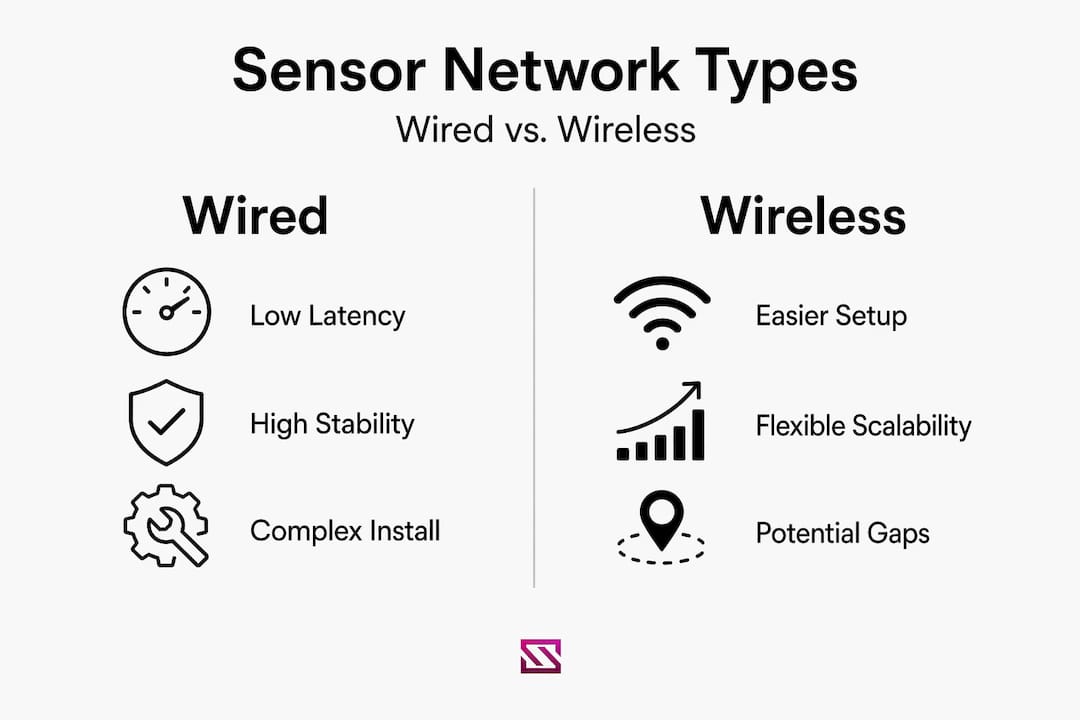
| Architecture | Data quality | Latency | Installation complexity | Best for |
|---|---|---|---|---|
| Wired sensor network | Very high | Very low | High (cable runs required) | Fixed critical assets in accessible areas |
| Wireless sensor network | High | Low to medium | Low (battery or energy harvest) | Dispersed or remote assets |
| Hybrid architecture | Very high | Low | Medium | Facilities mixing legacy and new infrastructure |
Integration with CMMS platforms, cloud analytics dashboards, and mobile alert systems is what converts raw sensor data into maintenance actions. Without that integration, even the most accurate sensor array produces data that no one acts on consistently. Reviewing intelligent sensing technologies and the sensor technology overview will help your team evaluate specific technology fits.
The critical factor most overlook when adopting smart monitoring
Every discussion about smart monitoring eventually focuses on which sensors to buy, which connectivity protocol to use, and how to handle the data pipeline. Those are important questions. But in our experience, the single biggest predictor of whether a deployment delivers results is not the hardware selection. It is whether the organization embeds monitoring data into its operational workflows automatically.
Technology that generates alerts nobody acts on consistently does not prevent failures. It creates the illusion of preparedness while reactive costs continue. The Indonesian cement plant that eliminated $319,000 in annual reactive repair costs did not achieve that outcome because their sensors were superior. They achieved it by connecting sensor thresholds directly to automatic work order generation in their CMMS, so every alert became a documented, assigned, time-bound maintenance task. The sensor was just the trigger. The workflow was the solution.
Keys to embedding smart monitoring into operational culture:
- Automatic work order generation tied to specific sensor thresholds, removing manual transcription and delay
- Mobile field access so technicians receive and close work orders at the asset, not back at a desk
- Threshold tuning reviews every 90 days, adjusting alert levels as equipment ages or operating conditions shift
- Cross-team collaboration between maintenance, operations, and safety teams around shared sensor data rather than siloed reports
- Executive visibility into downtime trends and maintenance KPIs to sustain organizational commitment past the first year
The cultural and process change required alongside the technology is consistently the hardest part. Organizations that treat smart monitoring as a data collection exercise get data. Organizations that treat it as a new operational protocol get results.
If you are evaluating your readiness beyond hardware selection, the smart infrastructure security guide addresses the process integration questions that most vendor conversations skip.
Explore BeyondSensor's AI-powered solutions for your smart monitoring needs
Having explored why and how to adopt smart monitoring, the next step is finding an implementation partner with proven regional experience. Deploying in Southeast Asia's industrial environments requires more than a product catalog. It requires localized validation, tropical environment testing, and integration expertise with the SCADA, CMMS, and safety systems already running in your facilities.

BeyondSensor brings AI analytics, wireless sensor integration, and mobile CMMS connectivity to industrial operators across Singapore, Malaysia, and the Philippines, with expansion underway in Thailand and Vietnam. Whether you are a facility end-user building your first predictive maintenance program or a system integrator deploying across multiple client sites, BeyondSensor offers tailored solutions matched to your operational scale. End-user solutions are designed to accelerate time-to-value, while BeyondSecure AI innovation delivers the analytical intelligence that turns sensor data into actionable security and maintenance decisions.
Pro Tip: Before scheduling a vendor demo, prepare a list of your three highest-downtime assets and their current maintenance cost baseline. That data lets any serious vendor build a credible ROI projection specific to your operations rather than relying on generic industry averages.
Frequently asked questions
What is smart monitoring in an industrial context?
Smart monitoring integrates IoT sensors, AI analytics, and connected asset management systems to continuously assess equipment health and predict failures before they occur. IIoT deployments yield efficiency improvements of up to 40 percent, making it a foundational capability for modern industrial operations.
How soon can smart monitoring reduce unplanned downtime?
Industrial case studies show reductions of up to 45 percent within the first year, with payback periods as short as 6 months from early fault detection and automated maintenance workflows. The Indonesian cement plant case study recorded a 6.4-month payback on a $1.9 million annual saving.
What challenges does Southeast Asia's climate pose to smart monitoring?
Humidity-driven sensor drift and monsoon-season connectivity gaps can affect data quality, but hybrid mesh networks for Southeast Asian plants and tropical-rated sensor profiles have proven reliable countermeasures in regional deployments.
How does smart monitoring improve industrial safety?
It enables real-time hazard detection, early leak identification, and predictive maintenance that prevent equipment failures before they threaten employees or surrounding communities. Advanced sensing for public safety is now recognized as critical infrastructure across industrial and municipal contexts.
What types of sensors are commonly used in smart monitoring?
Vibration, temperature, chemical, acoustic, and radar level sensors each serve distinct detection roles in industrial smart monitoring systems. Radar level sensors in particular deliver consistent, drift-free data well-suited to AI-driven predictive maintenance algorithms.
Recommended
- Streamline smart infrastructure security: a step-by-step guide | News | BeyondSensor
- Essential sensing technology features for industrial security | News | BeyondSensor
- How automation strengthens industrial security operations | News | BeyondSensor
- How sensor technology drives smarter industrial automation | News | BeyondSensor
Read More Articles
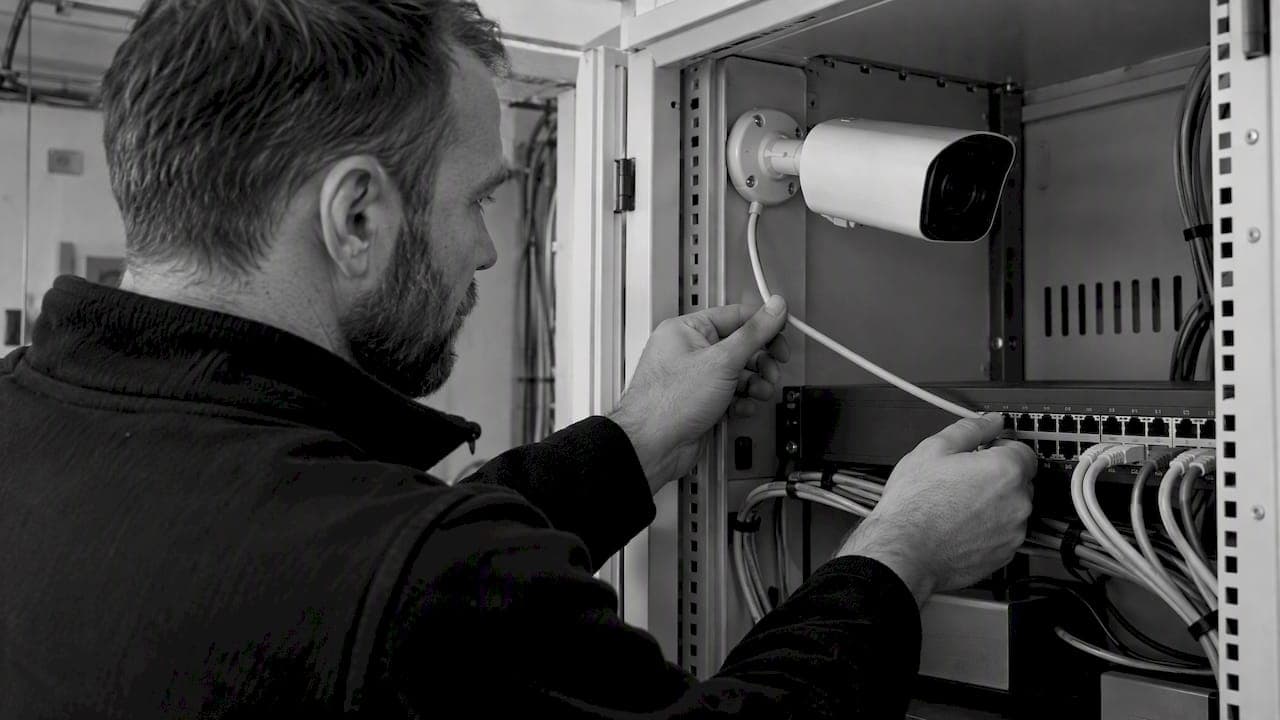
RTSP Security Risks: Integrators Must Block Exposed Ports 554 and 8554
See how integrators can reduce RTSP security risks: close exposed ports 554 and 8554, secure camera access, and verify each deployment with practical checks.

Require MAEpp and X Accuracy Before You Buy People Counting Systems
Verify people counting accuracy by demanding MAEpp, X Accuracy, and directional-bias reports. Validate on-site with at least 100 events per direction...
30–90 Day Pilot Validates Redundant Camera Networks for Engineers
Standards led, practical steps for engineers to deploy redundant camera networks: MRP, dual homing, and aggregation patterns, commissioning checks, and...
30 Day Pilot Proves Video Analytics Accuracy for Security Teams
Validate video analytics accuracy with scenario tests, camera tuning, transfer learning and a 30 day edge first pilot for security teams.
Let's Build YourSecurity Ecosystem.
Whether you're a System Integrator, Solution Provider, or an End-User looking for trusted advisory, our team is ready to help you navigate the BeyondSensor landscape.
Direct Advisory
Connect with our regional experts for tailored solutioning.