
Discover why advanced threat detection is crucial for security teams. Learn how it transforms breach detection and strengthens your defense.

Why Advanced Threat Detection Matters for Security Teams

TL;DR:
- Traditional security tools miss sophisticated, fileless, and polymorphic threats that have no known signatures. Advanced threat detection combines AI, behavioral analytics, and multi-method approaches to proactively identify and contain threats in complex environments. Proper deployment relies on continuous tuning, operational integration, and leveraging frameworks like MITRE ATT&CK to effectively reduce risk and response time.
Traditional security tools were built for a different era. Signature-based systems catch what they already know, but today's attackers specialize in what those systems have never seen. Understanding why advanced threat detection belongs at the center of your security program is not an academic exercise. It is the difference between catching a breach in hours and discovering it months later. This article breaks down how advanced threat detection works, the specific benefits it delivers, the methods behind it, and what real-world deployment actually requires.
Table of Contents
- Key takeaways
- Why advanced threat detection is a strategic necessity
- What advanced threat detection is and how it works
- Key benefits for organizations that get this right
- Advanced threat detection methods explained
- Operational challenges in deploying advanced threat detection
- Strategic frameworks, tools, and what is coming next
- My take on where detection programs actually fail
- How Beyondsensor strengthens your detection posture
- FAQ
Key takeaways
| Point | Details |
|---|---|
| Signatures alone leave gaps | Traditional detection misses novel, fileless, and polymorphic threats that have no known signature. |
| AI accelerates detection cycles | Machine learning and behavioral analytics compress detection-to-containment timelines significantly. |
| Multiple methods outperform any single one | Combining signature, anomaly, heuristic, and threat intelligence detection creates layered, depth-in-defense coverage. |
| Tuning is not optional | Out-of-the-box detection rules generate noise; continuous tuning against your environment's normal is what makes detection accurate. |
| Human judgment remains irreplaceable | Automation surfaces signals, but skilled analysts provide the context and judgment that contain real threats effectively. |
Why advanced threat detection is a strategic necessity
Most organizations believe they are protected because they have a firewall and an endpoint agent. That belief is increasingly dangerous. Signature-based security is reactive and limited by design. It can only flag what was cataloged from a previous attack. Polymorphic malware, fileless attacks, and living-off-the-land techniques exploit this gap deliberately.
The importance of threat detection has grown proportionally with attacker sophistication. Modern adversaries move laterally through environments for weeks before triggering any alert. By the time a traditional tool flags something, the attacker has already established persistence, exfiltrated data, or positioned ransomware. Advanced threat detection addresses this by asking a fundamentally different question: not "does this match a known bad pattern?" but "does this behavior belong here at all?"
That shift in logic is what separates reactive defense from proactive defense. And for security teams managing complex, distributed environments, proactive is the only posture that scales.
What advanced threat detection is and how it works
Advanced threat detection (ATD) is a set of technologies and processes designed to identify threats that evade conventional security controls. Where legacy tools rely on known indicators of compromise, ATD builds a continuous picture of normal behavior across your environment and flags deviations from it.
The core technologies involved include:
- AI and machine learning: Models trained on large datasets identify subtle patterns in user behavior, network traffic, and process activity that precede attacks.
- Behavioral analytics: Establishes baselines for users, devices, and applications, then surfaces anomalies that deviate from those baselines.
- Anomaly detection: Flags statistical outliers in activity, such as a service account suddenly performing lateral movement at 2 a.m.
- Heuristic analysis: Evaluates the intent behind code or actions rather than matching against a signature catalog.
- Continuous monitoring: Covers endpoints, network traffic, cloud workloads, identity systems, and user behavior simultaneously.
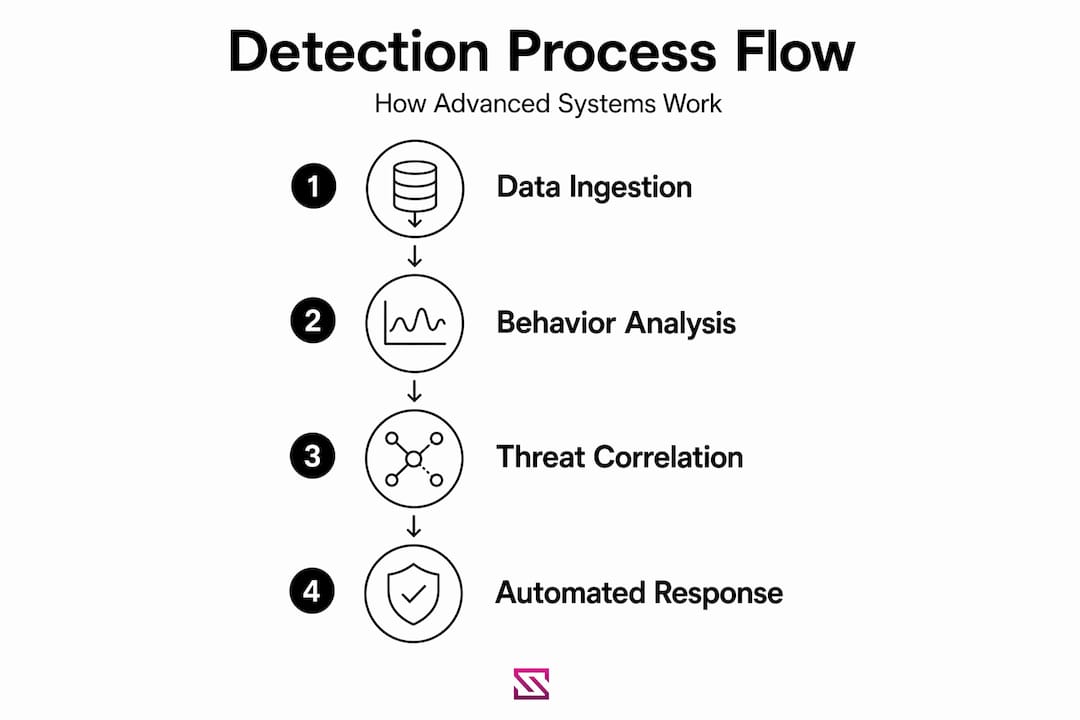
How does threat detection work at the integration level? ATD platforms ingest telemetry from across these domains and correlate signals that individually look benign. A single failed login attempt means nothing. Fifty failed attempts across thirty accounts in twenty minutes, followed by one successful login and a file download, is a very specific story.
Pro Tip: Deploy behavioral baselining before you go live with anomaly detection. A system that does not know what normal looks like will generate alerts that bury your analysts from day one.
For a deeper look at how AI identifies complex threats, Beyondsensor has documented the practical mechanics in detail.
Key benefits for organizations that get this right
The benefits of advanced detection extend well beyond catching more threats. They reshape how security teams operate.
-
Proactive identification before escalation. ATD catches early-stage attack behavior such as reconnaissance, credential abuse, and privilege escalation before they become full breaches. This compresses the window attackers have to cause damage.
-
Reduced alert fatigue. AI and ML reduce alert fatigue by prioritizing signals based on context and severity. Analysts stop wading through thousands of low-quality alerts and focus on the handful that actually require investigation.
-
Faster detection-to-containment timelines. Speed matters enormously in incident response. Every hour of dwell time increases breach scope and cost. ATD systems with automated response capabilities can contain a compromised endpoint or block a suspicious account in seconds, not hours.
-
Detection of unknown and fileless threats. Fileless attacks run entirely in memory and leave no file artifacts for signature scanners to find. Behavioral analytics detects the process behavior itself, regardless of whether a file was written to disk.
-
Compliance and risk visibility. Regulators increasingly expect demonstrable detection capability, not just perimeter controls. ATD provides the audit trails, behavioral logs, and incident documentation that compliance frameworks require.
-
Threat intelligence integration. When external intelligence feeds connect to your internal detection logic, every alert gains context. You stop investigating in isolation and start understanding where a threat fits in the broader attacker ecosystem.
"Embedding threat intelligence directly into SOC workflows creates a business survival layer that reduces the time between compromise and response." — Modern SOC threat intelligence
Advanced threat detection methods explained
Understanding the methods is what allows you to make smart decisions about which combination your environment needs.
| Detection method | How it works | Strength | Limitation |
|---|---|---|---|
| Signature-based | Matches known malware hashes, IP blocklists, rule patterns | Fast, low false positives on known threats | Blind to zero-days and novel variants |
| Anomaly detection | Baselines behavior, flags statistical deviations | Catches unknown threats, lateral movement | Requires tuning; new environments generate noise |
| Heuristic analysis | Evaluates code/action intent rather than identity | Detects obfuscated and polymorphic threats | Can produce false positives on legitimate tools |
| Threat intelligence-driven | External data contextualizes internal signals | Adds attacker attribution and campaign context | Quality depends on feed relevance and freshness |
| AI/ML-based | Pattern recognition across massive event volumes | Scales to high-volume telemetry, adapts over time | Requires quality training data and ongoing validation |
Combining detection methods covers the gaps that any single approach leaves open. Signature detection handles known threats quickly. Anomaly detection catches behavioral outliers. Heuristics identify intent. Threat intelligence provides attacker context. AI ties them together at scale.
A recent demonstration showed that a multi-model agentic AI system achieved an 88.45% score detecting real-world vulnerabilities and 96% recall across five years of confirmed security cases. That level of coverage is not achievable with signatures alone.
Pro Tip: Do not deploy anomaly detection on a raw, uncleaned environment. Normalize your data sources first. Garbage telemetry trains garbage models, and your detection accuracy suffers accordingly.
Operational challenges in deploying advanced threat detection
Deployment is where good theory meets hard reality. The biggest operational challenge is not technology. It is tuning.

83% of security analysts are overwhelmed by alert volume, false positives, and lack of context. Out-of-the-box detection rules are written for generic environments. Your environment is not generic. It has specific applications, user behaviors, scheduled tasks, and administrative workflows that will trigger generic rules constantly. Detection tuning requires mapping your organization's unique normal before detection logic can distinguish real signals from noise.
Key best practices for effective deployment include:
- Build a detection engineering function. Treat detection rules as code. Version them, test them, and review them on a regular cycle.
- Integrate SOAR for response orchestration. Security Orchestration, Automation and Response platforms connect detection alerts to pre-approved playbooks, removing manual steps from high-confidence incident responses.
- Baseline before alerting. Run behavioral analytics in observation mode for at least two to four weeks before enabling alerts, allowing models to learn your environment's actual patterns.
- Prioritize orchestration between detection and response. Detection that does not connect to containment actions just creates more work. The goal is not visibility alone but response speed.
- Maintain feedback loops. Analyst investigations should feed back into detection logic, improving model accuracy over time.
The adaptive security approach that Beyondsensor advocates connects these practices into a continuous improvement cycle rather than a one-time deployment.
Effective adaptive security integrates automation with human oversight, operational design, and pre-approved playbooks to unify response across distributed environments. Automation handles volume. Humans handle ambiguity.
Strategic frameworks, tools, and what is coming next
Effective cyber threat detection does not happen in a vacuum. It needs a strategic framework to direct detection coverage toward the threats most relevant to your organization.
MITRE ATT&CK provides a structured map of attacker tactics, techniques, and procedures. Security teams that align detection rules to ATT&CK coverage can identify gaps in their detection posture systematically, rather than discovering them after a breach.
XDR (Extended Detection and Response) unifies telemetry from endpoint, network, identity, cloud, and email into a single detection and response platform. XDR benefits include dramatically reduced investigation time because analysts correlate signals from a single interface instead of pivoting between five consoles.
| Strategic tool | Primary function | Key benefit |
|---|---|---|
| MITRE ATT&CK framework | Maps detection coverage to attacker behaviors | Identifies coverage gaps before attackers exploit them |
| XDR platforms | Unifies multi-domain telemetry | Reduces investigation time and alert context gaps |
| SOAR | Automates response to confirmed threats | Accelerates containment without analyst bottlenecks |
| Threat hunting programs | Proactive search for hidden threats using analytics | Catches threats that automated detection missed |
Agentic AI systems represent the next significant shift in detection capability. These are not simple rule-engines. They reason across multiple data sources simultaneously, adjust their investigation approach based on findings, and surface attribution-quality context without human prompting. AI handles massive event volumes at a scale no analyst team can match, freeing skilled professionals to focus on threat validation and judgment calls.
Staying ahead of these shifts requires tracking emerging security technology trends, particularly as AI-driven detection begins to displace older rule-based platforms across the industry.
Pro Tip: Map your current detection rules to MITRE ATT&CK before your next security review. You will almost certainly find entire tactic categories with zero coverage. Fix those gaps before attackers find them.
My take on where detection programs actually fail
I have seen more detection programs fail at the operational layer than at the technology layer. Organizations invest in capable platforms, spend months on deployment, then watch analyst efficiency decline because nobody owned the tuning process after go-live.
The uncomfortable truth is that advanced threat detection is not a product you buy. It is a practice you build. The technology gives you the capability. What you do with it operationally determines whether it actually reduces risk.
From my experience working across complex environments, the organizations that get this right share one characteristic: they treat threat intelligence as a living input, not a periodic report. Embedding threat intelligence as a survival layer shifts SOC teams from reactive to proactive defense in a measurable way. The organizations that fail often have the same tools but use intelligence only for after-the-fact attribution.
I also want to address the automation debate directly. Pure automation risks mistakes without human judgment. AI never blinks, but AI also does not understand business context. An analyst who knows that a privileged account doing unusual activity at 3 a.m. belongs to a finance team running month-end processing will not escalate that alert. An automated system without that context will. Balance matters. The organizations with the best outcomes build AI as a force multiplier for skilled analysts, not a replacement for them.
— Eumir
How Beyondsensor strengthens your detection posture
Beyondsensor's AI-powered security solutions are built for the operational realities security professionals face every day. Their tools reduce false positives through behavioral baselining tuned to your environment, accelerate detection across multi-domain telemetry, and connect detection outputs directly to response workflows. For system integrators and security teams deploying across complex physical and digital infrastructure, Beyondsensor offers solutions designed for real-world scale, not lab conditions. Explore the full suite of advanced detection tools and see how Beyondsensor's security innovations align with the detection and response challenges your organization is solving right now.
FAQ
What is advanced threat detection?
Advanced threat detection uses AI, behavioral analytics, and multi-method detection to identify threats that signature-based tools miss, including fileless attacks, zero-days, and lateral movement.
Why is advanced threat detection better than traditional tools?
Traditional tools only catch known threats. Advanced detection identifies anomalous behavior patterns and intent, catching novel attacks before they escalate into full breaches.
How does threat detection work in practice?
ATD platforms ingest telemetry from endpoints, networks, cloud, and identity systems, correlate behavioral signals across those sources, and surface prioritized alerts with contextual enrichment for analyst review.
What are the biggest challenges in deploying advanced threat detection?
Alert fatigue from poorly tuned detection rules is the primary operational challenge. Continuous detection engineering and behavioral baselining against your environment's specific normal are critical for maintaining signal quality.
How does AI improve advanced threat detection methods?
AI processes event volumes at a scale no analyst team can match, surfaces patterns across disparate data sources, and reduces false positives through contextual enrichment, allowing analysts to focus on genuinely high-risk incidents.
Recommended
- Threat detection AI: Boost security with advanced intelligence | News | BeyondSensor
- Adaptive security: reduce noise and boost protection | News | BeyondSensor
- Advanced sensing technologies: A practical guide for security managers | News | BeyondSensor
- Why advanced sensors are essential for physical security | News | BeyondSensor
Read More Articles
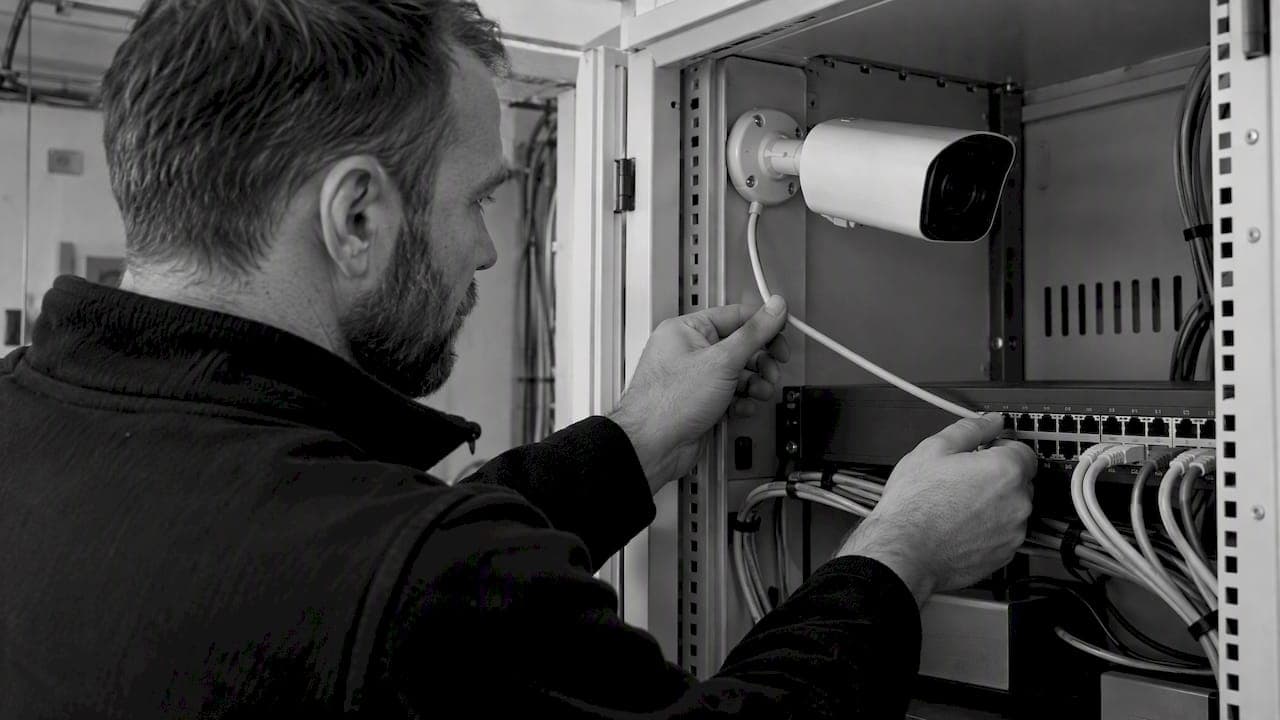
RTSP Security Risks: Integrators Must Block Exposed Ports 554 and 8554
See how integrators can reduce RTSP security risks: close exposed ports 554 and 8554, secure camera access, and verify each deployment with practical checks.

Require MAEpp and X Accuracy Before You Buy People Counting Systems
Verify people counting accuracy by demanding MAEpp, X Accuracy, and directional-bias reports. Validate on-site with at least 100 events per direction...
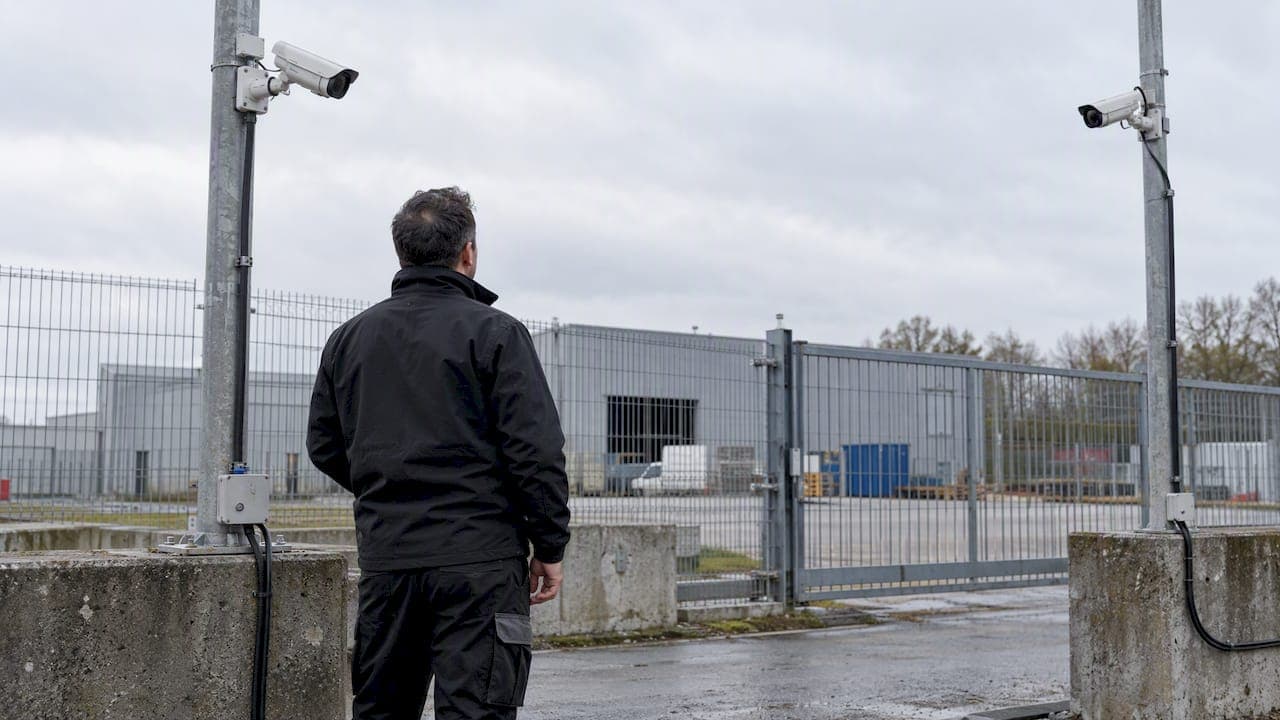
30–90 Day Pilot Validates Redundant Camera Networks for Engineers
Standards led, practical steps for engineers to deploy redundant camera networks: MRP, dual homing, and aggregation patterns, commissioning checks, and...
30 Day Pilot Proves Video Analytics Accuracy for Security Teams
Validate video analytics accuracy with scenario tests, camera tuning, transfer learning and a 30 day edge first pilot for security teams.
Let's Build YourSecurity Ecosystem.
Whether you're a System Integrator, Solution Provider, or an End-User looking for trusted advisory, our team is ready to help you navigate the BeyondSensor landscape.
Direct Advisory
Connect with our regional experts for tailored solutioning.