
How Singapore sites should collect, notify, secure and delete visitor data under the PDPA, and how a digital visitor system makes each duty routine.

Visitor Data Privacy in Singapore: A PDPA Guide for Site Teams

Visitor data privacy at a Singapore site comes down to five duties under the Personal Data Protection Act (PDPA): tell visitors why you collect their details, collect only what the purpose needs, protect it, delete it on time, and report a breach quickly. A paper logbook at the guardhouse struggles with all five. A digital visitor system with set fields, a built-in notice, access controls and automatic retention makes them routine. That is the case for running visitor management on one managed platform such as BeyondVisitor.
This guide is for security managers, facility managers, system integrators and agencies who run or specify visitor systems in Singapore. It covers what counts as visitor personal data, when you may collect it, what the notice must say, how long to keep records, and what to do when something goes wrong.
TL;DR
- Names, NRIC or passport numbers, photos and CCTV images of visitors are personal data under the PDPA. Business contact details are treated differently.
- Notify visitors of the purpose on or before collection, and collect only what the purpose needs.
- Keep visitor records only as long as the purpose or a legal need requires, then delete or de-identify them.
- A notifiable data breach must reach the PDPC no later than 3 calendar days after you assess it as notifiable.
- A digital visitor workflow with fixed fields, a notice at check-in and automated retention is easier to defend than a shared paper logbook.
Table of Contents
- What counts as visitor personal data
- When you may collect visitor data
- What a visitor privacy notice must do
- Protecting, retaining and deleting visitor records
- If visitor data is breached
- Keeping up with rule changes
- Putting this into a visitor system
- Our perspective
- FAQ
- Sources
What counts as visitor personal data
The PDPA defines personal data as data, whether true or not, about an individual who can be identified from that data, or from that data combined with other information the organisation has or is likely to have access to. The PDPC says the definition is not construed narrowly and applies whatever the format, paper or electronic.
At a site gate or lobby, that covers most of what you collect. The PDPC's own list of examples includes full name, NRIC or passport number, a photograph or video image, a mobile number, a personal email address and a thumbprint. Business contact information, such as a name, designation, business phone number, address or email, is not covered by the data protection obligations. In practice, a visitor's work email on a pre-registration form falls outside the rules, while the same person's photo or ID number does not.
A typical Singapore attraction shows the pattern. Singapore Flyer's data protection notice lists contact details, government ID numbers where required by law or needed to verify identity, photographs, CCTV footage and facial images, vehicle numbers and payment data. It ties these to admission, safety and security, incident management and visitor registration. An industrial site or office tower collects a similar set: name, company, host, ID, vehicle plate, photo for the pass, and the camera footage that records the visit.
Two points catch teams out:
- Combined data is personal data. The PDPC notes that a list of email addresses can become personal data if it contains customer IDs that link to records in a CRM system. A visitor log that links to a badge number, a photo and a time stamp does the same.
- Images count. A badge photo and CCTV footage of a visitor are personal data even when no name is attached, because the person can be identified.
When you may collect visitor data
The PDPA is consent-based, with exceptions. For site access, three situations matter.
Enrolment for premises access. The PDPC's guidance on biometric data in security applications says consent may be obtained or deemed given when an individual enrols for a service or premises access and provides a sample for authentication. A visitor who steps up to a check-in kiosk and provides their details for a pass is in this position, provided the purpose was made clear.
Security cameras. The same guidance describes a security exception. Collection, use and disclosure without consent can be allowed in locations open to the public or observable by reasonably expected means, such as security cameras, for security purposes like monitoring or investigations. It also calls it good practice to put up notices that an area is under surveillance and whether recording takes place.

Deemed consent by opt-out. The PDPC's draft guidance on the 2020 amendments says that where you rely on opt-out, you must give a reasonable period to opt out before you proceed, and consent is deemed only after that period lapses. For a visitor standing at a gate, that is rarely practical. Notify at pre-registration or at check-in instead.
What to leave out
The cleanest privacy control is a short form. Ask for what the purpose requires and nothing else. The PDPC's advisory guidelines on NRIC numbers treat the NRIC number as a permanent and irreplaceable identifier that can unlock large amounts of information about a person, and they include visitor badge issuance at secured premises among their examples. Read that section before you decide to capture full ID numbers or copies at a reception desk, and decide per site whether a lower-risk identifier meets the same need.
A practical field list for most sites:
- Name and company, which are needed to issue a pass and to know who is on site.
- Host and purpose of visit, which are needed to route and authorise the visit.
- Time in and out, needed for evacuation and incident review.
- Vehicle plate, only where vehicles enter the premises.
- Photo, only where the pass or access control uses it.
- ID number, only where the site's security level or a legal requirement calls for it.
Our guide to a visitor management policy for Singapore sites shows where to document these choices.
What a visitor privacy notice must do
The Notification Obligation in section 20 of the PDPA requires you to tell the individual the purposes for which you collect, use or disclose their data, on or before the collection. The PDPC's Guide to Notification says a physical-display notice should be prominent before and during collection, state the purposes clearly, and identify any legislative requirement that mandates collection of specific data types.
For a visitor notice, that translates into a short checklist:
- Purposes in plain words. For example: site access, safety and security, emergency roll call, incident investigation.
- What is collected. Name, company, photo, ID details, vehicle plate, CCTV images.
- Legal basis where one applies. If a law requires you to collect a specific data type, say so.
- Who to contact. The data protection officer or a named channel for questions and withdrawal requests.
- Placement. At the gate, at the kiosk and on the pre-registration link, where the visitor sees it before handing over anything.
A sign taped beside a logbook that visitors sign under another person's entry does not do this well. A notice shown on the check-in screen before the first field does. With pre-registration, the notice can reach the visitor before they arrive, so the lobby is not where they first learn what you collect.
Protecting, retaining and deleting visitor records
Three further obligations apply once you hold the data, as the PDPC's Key Concepts guidelines set out:
- Protection (section 24): make reasonable security arrangements to prevent unauthorised access, collection, use, disclosure, copying, modification or disposal, and loss of storage media.
- Retention limitation (section 25): stop retaining the data, or de-identify it, once the purpose is no longer served and retention is no longer necessary for legal or business purposes.
- Notification (section 20): covered above.
The PDPC's guide to data protection practices for ICT systems adds a risk-based view. Keeping personal data for long periods increases cybersecurity risk, so assess necessity against business and legal needs, minimise the volume kept, and consider anonymisation or privacy-enhancing technologies rather than storing indefinitely.
A workable retention schedule
The PDPA sets no single period for visitor logs. You set one that you can justify by purpose, write it down and apply it consistently. A table helps the board or the site owner sign it off:
| Record | Why you keep it | Retention question to answer |
|---|---|---|
| Visitor log (name, host, time in and out) | Roll call, incident review | How long after a visit might you need it for a security or safety review? |
| Badge photo | Pass issue and verification | Can it be deleted when the visit ends? |
| ID details | Identity verification at secured sites | Is retention needed at all once identity is verified? |
| Vehicle plate | Parking and access control | Does the record serve any purpose after the visit? |
| CCTV footage | Security monitoring and investigation | How soon does it overwrite, and what is exported for an incident? |
| Access and audit logs | Accountability for who viewed what | What period do your contracts and policies require? |
The periods are yours to set and defend. Our notes on audit log retention in Singapore cover the logging side, and the article on CCTV video redaction covers why redaction needs planning before auto-overwrite runs. For cameras that capture areas beyond your own boundary or sensitive zones, see privacy masking for CCTV.
Why paper fails the test
A shared logbook shows every previous visitor's name, company and sometimes ID number to the next person who signs. It has no access control, no deletion schedule and no audit trail. A digital record has fixed fields, role-based access, a time-based deletion rule and a log of who opened what. Each of these maps to a duty above.

If visitor data is breached
The PDPA's breach notification regime, in section 26B, treats a breach as notifiable if it results in, or is likely to result in, significant harm to an affected individual, or is of a significant scale. A breach affecting at least a prescribed number of individuals is deemed to be of significant scale. A breach involving only unauthorised access, collection, use, disclosure, copying or modification within an organisation is deemed not notifiable.
Under section 26D, once you assess a breach as notifiable, you must notify the PDPC as soon as practicable and no later than 3 calendar days after that assessment. You must also notify each affected individual in a reasonable manner where significant harm is likely, unless mitigating actions or pre-existing technological measures make significant harm unlikely.
The three-day window starts at your assessment, so a site needs a named person who can assess quickly and a record that shows what was exposed. A system that logs access and holds a bounded set of fields makes that assessment faster. If your visitor data is spread across logbooks, spreadsheets and personal phones, the first job is just finding out what was exposed.
Keeping up with rule changes
The PDPA is amended periodically. Singapore Statutes Online records amendments by Act 19 of 2025 on 5 December 2025 and Act 2 of 2026 on 16 October 2026. The PDPC's Data Protection Obligations page lists the core duties: notify before collection, obtain consent and allow withdrawal with reasonable notice, limit use to reasonable and notified purposes, keep data accurate, secure it, and stop retaining it when it is no longer needed.
Build a review into your visitor policy at least yearly, and check the PDPC site and the statute before each review. Settings that sit in one platform, such as notice wording, field lists and retention timers, can be changed once and apply to every gate.
Putting this into a visitor system
For integrators and facility teams, the aim is a visitor workflow where the compliant path is the default path. BeyondVisitor is our automated visitor management system, and it sits alongside the rest of our unified security operations tooling. It suits teams that want check-in, host notification and records in one place rather than across paper and ad hoc tools. For sites that want a touch-free arrival, see our guide to contactless visitor check-in. For sites that screen arrivals, see visitor watchlist screening.
If you are an integrator scoping a multi-site deployment, our Solution Integration service works with you on the design, and you can reach us through the BeyondSensor site.
Our perspective
Most visitor privacy problems we see discussed in the market are design problems, not intent problems. A gate collects an ID because the form has a field for it. A log is kept because nobody set a deletion date. A notice is missing because the process lives on paper.
Our view is that privacy belongs in the workflow. Set the fields to the purpose. Show the notice before the first field. Control who can open the records. Let retention run on a timer rather than on memory. That is how a security director can answer an auditor, or a visitor, with a straight answer.
This is also why we build BeyondVisitor as part of a unified security operations platform with multi-vendor integration and localized technical validation for Southeast Asian deployments. When visitor records, cameras and audit trails sit in one managed environment, accountability is far easier to demonstrate than when they sit in separate tools.
Eumir
FAQ
Is a visitor's company email address personal data under the PDPA?
Business contact information, such as name, designation, business phone, address or email, is not covered by the data protection obligations, according to the PDPC. A personal email, a photo or an ID number is covered. If you link a business contact to other identifying records, treat the combined record with care.
Do we need consent to record visitors on CCTV?
The PDPC's biometric guidance describes a security exception for areas open to the public or observable by reasonably expected means, for purposes such as monitoring or investigations. It also calls it good practice to display notices that an area is under surveillance and whether recording takes place. Post those notices at entrances and on the pre-registration page.
How long should we keep visitor logs?
The PDPA sets no fixed period. Section 25 requires you to stop retaining data, or de-identify it, once the purpose is served and retention is no longer necessary for legal or business purposes. Set a period per record type, write down the reason, and automate deletion where your system allows it.
What should a visitor privacy notice include?
It should state the purposes of collection clearly, list the data you collect, identify any legal requirement behind a specific data type, and give a contact for questions. The PDPC's Guide to Notification says a physical notice should be prominent before and during collection. Show it at the gate, on the kiosk and in the pre-registration message.
How fast must we report a visitor data breach?
If you assess a breach as notifiable, you must notify the PDPC as soon as practicable and no later than 3 calendar days after the assessment. Where significant harm is likely, you must also notify the affected individuals. Name the person who makes that assessment before an incident happens.
Sources
- Personal Data Protection Act 2012, Singapore Statutes Online
- Personal Data Protection Act 2012, breach notification provisions
- Personal Data Protection Act 2012, amendment history
- PDPC, PDPA for individuals
- PDPC, Advisory Guidelines on Key Concepts in the PDPA
- PDPC, Advisory Guidelines on Key Concepts (obligations)
- PDPC, Responsible use of biometric data in security applications
- PDPC, Advisory Guidelines on NRIC numbers
- PDPC, Guide to Notification
- PDPC, Guide to Data Protection Practices for ICT Systems
- PDPC, Data Protection Obligations
- Singapore Flyer, Data Protection Notice
Recommended
Read More Articles
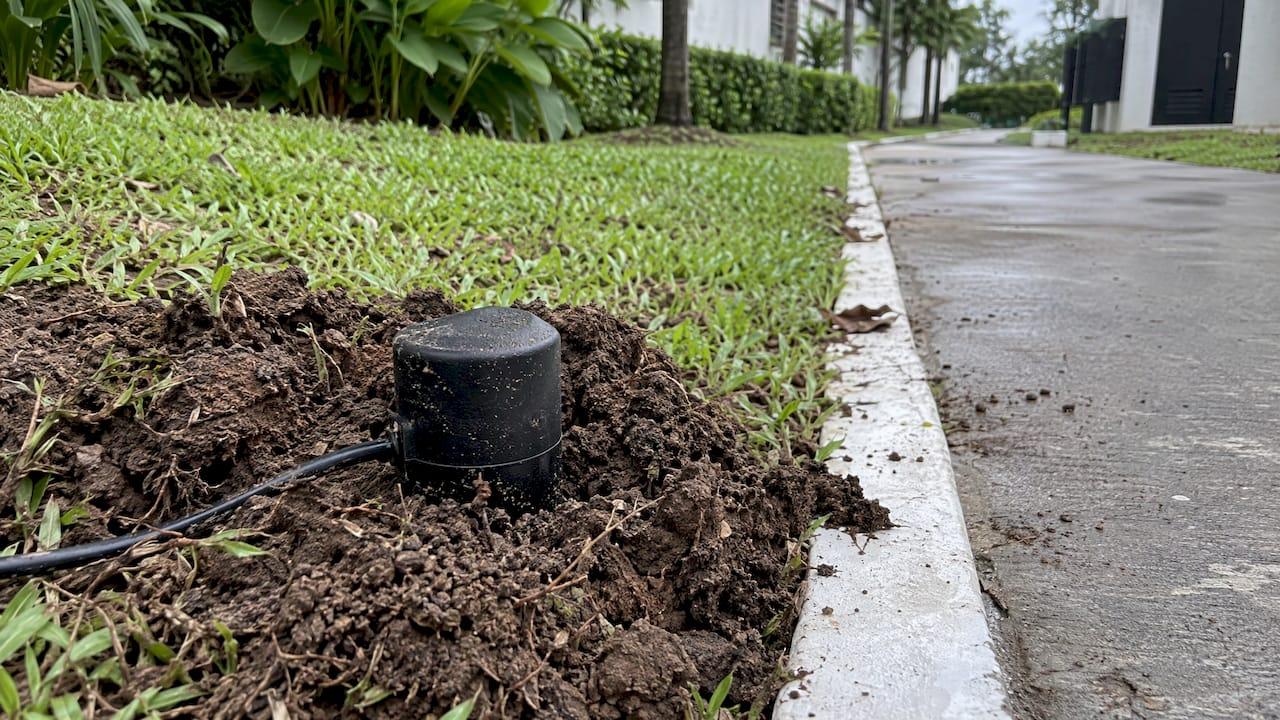
Seismic Intrusion Sensors: How They Work and Where They Fit
How seismic intrusion sensors detect footsteps and tunnelling, how they compare with microwave and infrared, and how to pilot them on a Singapore site.

CCTV Tender Specifications in Singapore: What to Write and Check
How to write or answer a CCTV tender specification in Singapore: camera, retention, network, analytics and acceptance requirements, with SPF, MOM, IMDA and PUB figures.
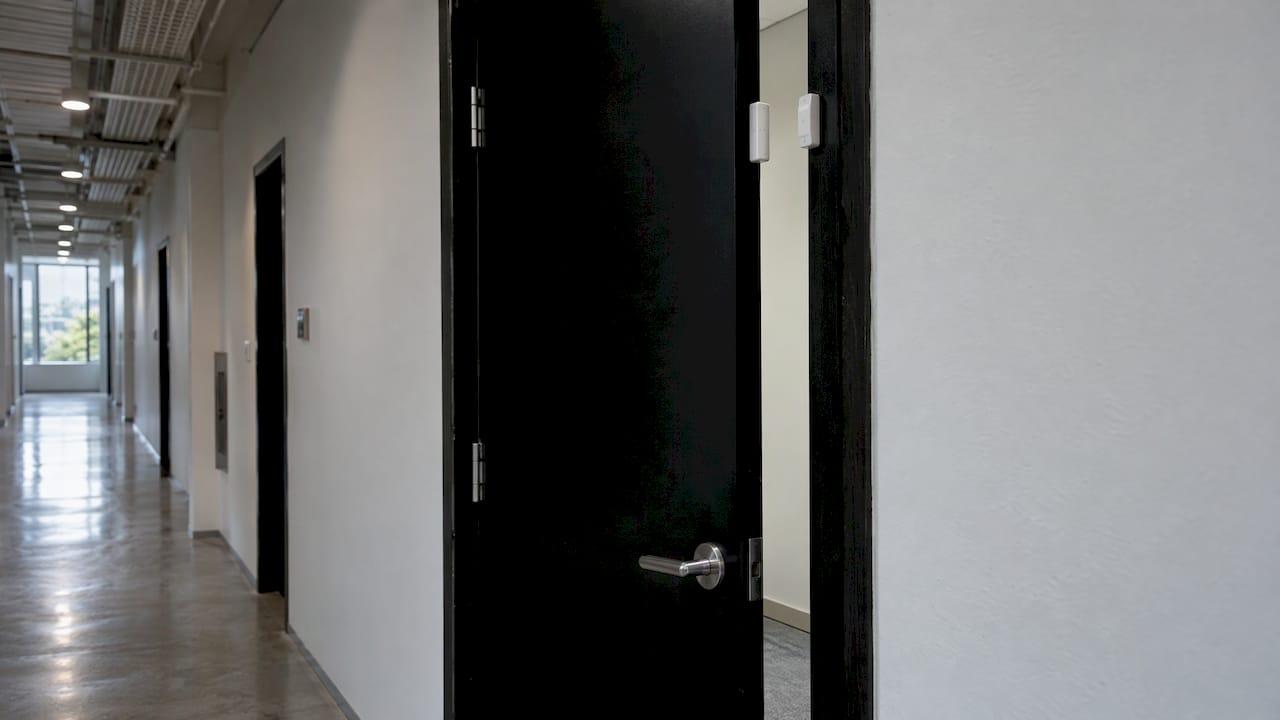
Alarm Deduplication for Security Teams: A Practical Guide
How alarm deduplication, correlation rules, severity mapping and escalation matrices work together to cut duplicate alarms without hiding the ones that matter.
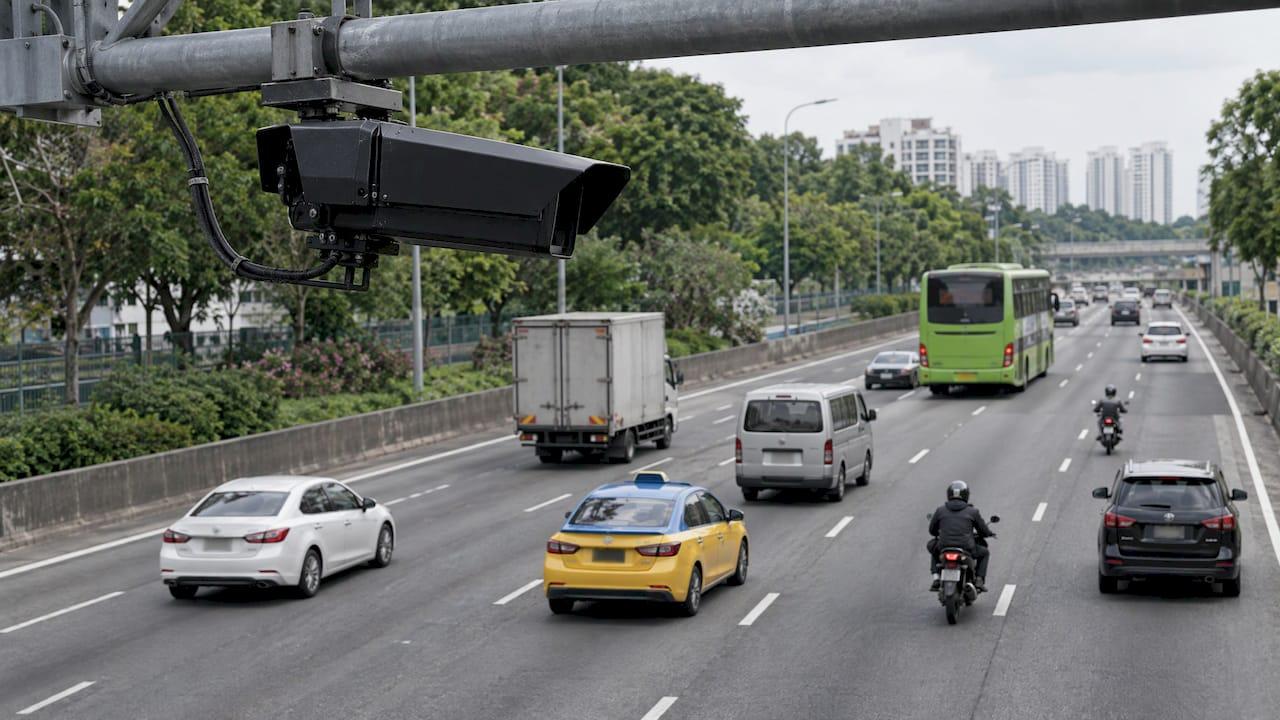
Vehicle Classification Analytics: A Guide for Singapore Sites
How vehicle classification analytics and vehicle type detection work, which classes to use in Singapore, and how to plan camera placement, integration and data.
Let's Build YourSecurity Ecosystem.
Whether you're a System Integrator, Solution Provider, or an End-User looking for trusted advisory, our team is ready to help you navigate the BeyondSensor landscape.
Direct Advisory
Connect with our regional experts for tailored solutioning.