
How alarm deduplication, correlation rules, severity mapping and escalation matrices work together to cut duplicate alarms without hiding the ones that matter.

Alarm Deduplication for Security Teams: A Practical Guide

Alarm deduplication merges repeated signals about the same condition into one alarm with a counter, so operators see one event to act on instead of fifty. It works only when it sits inside a larger design: correlation rules that link related events, a severity scale every subsystem maps to, and an escalation matrix that says who responds and by when. Get those four pieces right and a control room sees fewer, better alarms. Get them wrong and real alarms are buried or, worse, silently merged away. This guide is written for integrators, security managers and facility teams who configure or procure these systems.
TL;DR
- Deduplication collapses identical repeats (same site, source and event) into one alarm. Correlation links different but related events. Suppression hides alarms. These are three separate mechanisms, and each needs its own rules.
- Match on a stable key such as site, device and event type, add a time window, and keep a repeat count so no information is lost.
- Map every subsystem's priorities to one severity scale before you merge anything, so a merged alarm never inherits the wrong urgency.
- Pair severity with an escalation matrix: owner, response time and next level for each severity.
- Test with known duplicates, near-misses and out-of-order events, and retest after every rule change.
Table of Contents
- What alarm deduplication actually does
- Why duplicates happen in physical security systems
- Deduplication, correlation and suppression are not the same thing
- Writing correlation rules that do not hide real alarms
- Severity mapping: one scale for every subsystem
- Building an escalation matrix
- Testing and monitoring so the rules keep working
- Where this fits in a deployment
- How we support this work
- Perspective
- FAQ
- Sources
What alarm deduplication actually does
A duplicate alarm is a new notification about a condition that is already open. A door held open, a camera losing its link or a perimeter sensor chattering in wind can each raise the same alarm dozens of times. Deduplication recognizes the match and, instead of creating a new alarm, updates the existing one.

The open-source alert manager Alerta documents this cleanly. According to its customisation documentation, an incoming alert that matches an existing one on environment, resource and event, with no correlate list, is treated as a duplicate: the duplicate count goes up and the value and text are refreshed. The operator sees one alarm that says it has fired many times.
Three design points follow from that model:
- The match key is a decision, not a default. Site, device and event type is a sensible start. Add too little and unrelated alarms merge. Add too much, such as a timestamp, and nothing ever matches.
- The counter is evidence. A door alarm that has repeated 40 times in ten minutes tells the operator something a single line does not. Keep the count and the first and last occurrence times.
- Closing and reopening must be defined. Decide when a cleared alarm that fires again is a new alarm and when it reopens the old one. Without this rule, a flapping sensor produces a stream of fresh alarms that deduplication was meant to prevent.
Why duplicates happen in physical security systems
Duplicates are rarely a single fault. In multi-vendor deployments they usually come from a handful of causes:
- Chattering devices. Sensors near a threshold switch state repeatedly and each transition raises an alarm.
- Overlapping coverage. Two cameras or a camera and a radar see the same intruder and both report.
- Retries and restarts. A gateway that resends unacknowledged messages, or a server that replays its active alarms after a reboot, creates new entries for old conditions.
- Multiple paths to the operator. The same alarm reaches the console through the video platform, the access control system and an e-mail relay.
- Cascading faults. One failed switch makes ten cameras go offline, and each raises its own alarm.
The first four are deduplication problems: the same fact repeated. The last is a correlation problem: different facts with one cause. Treating a cascade with a duplicate filter either misses it or forces you to loosen the match key until unrelated alarms merge.
Deduplication, correlation and suppression are not the same thing
Teams often use these terms interchangeably, and configuration mistakes follow.
| Mechanism | What it does | Typical trigger | Main risk |
|---|---|---|---|
| Deduplication | Merges identical repeats into one alarm with a count | Same site, device and event | Match key too broad |
| Correlation | Links different events that share a cause or a story | Related events within a window or topology | Wrong grouping hides a distinct alarm |
| Suppression | Withholds an alarm or notification from operators | Maintenance window, known root cause | Real alarm never seen |
| Repeat notification control | Limits how often the same open alarm re-notifies | Time interval | Operator assumes it was handled |
Alerta shows the line between the first two. In its model, correlation uses a list of related event names on the same resource, so that a recovery event such as HttpOk replaces the open HttpError alert rather than adding a second one, according to the same Alerta documentation. Deduplication handles the same event repeating. Correlation handles different events that belong together.
Writing correlation rules that do not hide real alarms
The safest correlation designs keep the underlying alarms and change only what the operator sees first.
Huawei's fault management guide for its NetEngine AR500 series describes the pattern. Alarms are tagged as root or correlative according to predefined relationships. If correlative alarm suppression is switched on, only root alarms reach the management system. If it is not, both are reported. The important point is that suppression is a configurable policy applied on top of tagging, not something that deletes information.
The Broadband Forum's alarm correlation application for CloudCO shows how far the idea can go. It builds rules from network topology and drops any correlation whose devices are a subset of a larger one, so only the highest-level root cause is reported. It also supports sensitivity thresholds, for example raising the parent alarm when 95% of the units in a category report a loss-of-power signal.
The same logic applies to a camera network behind a failed switch or a sensor loop behind a failed controller: one root alarm outranks many symptoms, a principle also seen in edge analytics for CAN bus noise, where downstream symptoms are traced to a single underlying cause.
For physical security, apply these rules of thumb:
- Correlate on topology first. Network and power dependencies are known in advance and give reliable parent-child relationships.
- Correlate on time and place second. A door forced, a camera motion event and a glass-break sensor in the same zone within 30 seconds form one intrusion story. Use a short window and an explicit zone map.
- Never let correlation lower the severity of a life-safety alarm. Fire, panic and duress alarms should bypass grouping logic or be exempt from suppression.
- Show the grouped children. An operator must be able to expand a parent alarm and see every event inside it, and split a wrong grouping.
- Verify before dispatch. Cross-checking an alarm against a second sensor or a video clip before sending a response team is a correlation use case in its own right. Our note on event correlation for physical security covers it in detail.
Severity mapping: one scale for every subsystem
Merging alarms from an access control system, a video platform and environmental sensors is meaningless if each calls its urgent alarm something different. Severity mapping translates every source's priority into one shared scale before alarms reach the correlation engine.
A widely used reference is the four-level classification in ITU X.733, which Huawei's guide applies: critical (services affected, immediate rectification), major (urgent), minor (fault not yet affecting services) and warning (potential fault). Alerta's default model runs from security through critical, major, minor, warning and informational to normal, and lets operators override the map so that lower numbers mean higher severity, for example critical as 1 and low as 4, per its documentation.
A workable mapping exercise looks like this:
- Inventory every alarm source and list its native priority levels.
- Define your scale in operational terms, not labels. For example: Critical means a person or critical asset is at risk now; Major means a security control is down or a breach is probable; Minor means a degraded function; Warning means a condition worth trending.
- Map each native level to your scale and write down the reason. Document unusual cases, such as a tamper alarm on a perimeter device being Major even when the vendor calls it low.
- Decide the merge rule. When alarms of different severity merge, the group takes the highest severity of its members. Never average.
- Review after incidents. Every alarm that was escalated by hand or ignored wrongly is a mapping error to fix.
Building an escalation matrix
Severity tells people how urgent an alarm is. The escalation matrix tells them what to do. Each row should answer four questions: who owns the first response, how long they have, who is next if the time passes, and what ends the escalation.
A simple starting layout for a Singapore site:
| Severity | First owner | Acknowledge within | Escalate to | External contact |
|---|---|---|---|---|
| Critical | Control room operator | Immediately | Duty security manager, then site head | Police 999 or SCDF 995 where life or property is at risk |
| Major | Control room operator | Set by your SOP | Duty security manager | As the incident requires |
| Minor | Facility or security technician | Set by your SOP | Shift supervisor | Vendor or maintenance contractor |
| Warning | Reviewed in daily or weekly trend report | Next review | Maintenance planner | None |
The response times are left for your own SOP because they depend on your risk assessment and contracts. Fixed numbers copied from another site tend to be either ignored or unachievable.
Singapore institutions show the shape of a workable chain. NTU's Campus Security Division describes a duty officer who dispatches officers on receiving an incident report, calls the Police and the Singapore Civil Defence Force (SCDF) for serious emergencies, and escalates to senior management under established procedures. Its hotline runs around the clock, and people on campus may call 999 for Police or 995 for SCDF directly in an emergency while notifying the hotline. The lesson for any site is that the first owner is a named role on duty at all hours, and that calling the authorities is a defined step, not an improvisation.
Two habits make matrices work:
- Tie escalation to the merged alarm, not to each child. If a duplicate counter keeps rising, escalate on the count or duration, so a stuck alarm that nobody acknowledged moves up automatically.
- Write the matrix before you tune the rules. Deduplication and correlation decide what reaches the matrix. If you tune first, you will optimize for fewer alarms rather than for the right response.
For drafting guidance, see our walkthroughs on writing a SOC escalation policy and on alarm triage workflow for Singapore teams.
Testing and monitoring so the rules keep working
A deduplication rule that has never been tested against a bad day is an assumption. Build a test set before go-live and keep it.
Test cases to include
- Confirmed matches: identical alarms that must merge.
- Confirmed non-matches: similar alarms from different devices or zones that must stay separate.
- Known historical duplicates from your own logs.
- Edge cases: missing fields, conflicting fields, events arriving out of order, and a device that restarts mid-alarm.
- Exempt alarms: life-safety and tamper events that must never be grouped away.
Record the expected and actual outcome for each, check that operators can see the grouping context and undo a wrong grouping, and rerun the set after any rule change. This follows the checklist logic in the incident correlation requirements checklist.
What to monitor in operation
- Wrongly merged alarms, found through incident reviews where a missed event was hidden inside a group.
- Missed merges, where operators still see clusters of the same alarm.
- Alarm volume per operator per shift and the share of alarms acknowledged within the target time.
- Data quality. Singapore's Government Technology Agency notes in its StackOps documentation that rule failures can point to misconfiguration or to rules unsuited to a service, and it documents checking for incompatible fields. The same applies to alarm feeds: a renamed field in a firmware update can quietly break a match key.
The broader discipline is lifecycle management. The international alarm management standard IEC 62682, described in its published preview, treats alarm management as a lifecycle process and identifies the alarm system's primary function as notifying operators of abnormal conditions and supporting their response. Deduplication is judged against that function: if the operator responds better, the rules are working.
Where this fits in a deployment
Integrators usually inherit alarms from several vendors, each with its own naming, severity and retry behavior. The practical order of work is:
- Normalize event names and fields across sources.
- Map severities to the shared scale.
- Add deduplication with explicit match keys and windows.
- Add topology and zone correlation.
- Attach the escalation matrix to the merged alarm.
- Run the test set, pilot, and review volumes against false alarm rates. Our false alarm reduction playbook and security monitoring workflow guide cover the operational side.
Steps one and two are where most projects stall, because they require agreement between parties who own different systems. That is a delivery problem as much as a technical one.
How we support this work
We build unified security operation dashboards, video analytics dashboards, AI-powered surveillance software, virtual guard tour systems and automated visitor management, and we integrate technology from multiple vendors. Our Solution Integration service is for integrators and solution providers who need those sources brought into one operating picture, with localized technical validation for Southeast Asian deployments. Our aim is exception-based monitoring: operators handle the alarms that need a person, and the platform handles the repetition. To discuss your alarm landscape, start at BeyondSensor.

Perspective
We approach alarm deduplication as an operating-model question first and a filter second. A filter that reduces alarm counts is easy to build. A filter that operators trust is harder, because it has to keep the evidence, show its grouping and never touch the alarms that protect people.
That is why we favor a unified platform where alarms from different sensors, cameras and subsystems arrive already normalized, and why we design around exception-based monitoring: AI never blinks, so repeated signals can be handled by the system while people focus on the exceptions. Our Patrol Agent, which uses vision language models, is built in that spirit.
For integrators and security teams in Singapore, Malaysia and the Philippines, our view is simple. Agree the severity scale and the escalation matrix first, deploy modular components against them, and validate locally before scaling. Deduplication then becomes a dependable part of the workflow rather than a risk to it.
Eumir
FAQ
What is the difference between alarm deduplication and alarm correlation?
Deduplication merges identical repeats of one alarm, for example the same door alarm firing 30 times, into a single alarm with a count. Correlation links different events that share a cause or belong to one incident, such as a switch failure and the camera-offline alarms behind it. Most systems need both, applied in that order.
How long should a deduplication window be?
There is no universal value. Set it from the behavior of the device: a chattering sensor may need a window of minutes, while a slow-changing environmental reading may need hours. Start short, review wrongly merged and missed merges in incident reviews, and adjust one rule at a time.
Can deduplication cause a real alarm to be missed?
It can if the match key is too broad or if critical alarms are included in grouping. Keep life-safety and tamper alarms exempt, preserve every child event inside the group, take the highest severity when alarms merge, and test non-matches before go-live.
Do I need an escalation matrix if I already have severity mapping?
Yes. Severity ranks urgency, while the matrix assigns an owner, a response time and the next level up for each severity. Without it, a well-ranked alarm still waits for someone to decide who handles it.
Sources
- Customising Alerts, Alerta 9.1 documentation
- Understanding FM, NetEngine AR500 Series, Huawei
- Open Broadband CloudCO Alarm Correlation, Broadband Forum
- Campus Security Division, NTU Singapore
- Review SIEM, StackOps Documentation, GovTech Singapore
- IEC 62682 preview, alarm management
- Incident Correlation Initiative: A Requirements Checklist
Recommended
Read More Articles

CCTV Tender Specifications in Singapore: What to Write and Check
How to write or answer a CCTV tender specification in Singapore: camera, retention, network, analytics and acceptance requirements, with SPF, MOM, IMDA and PUB figures.
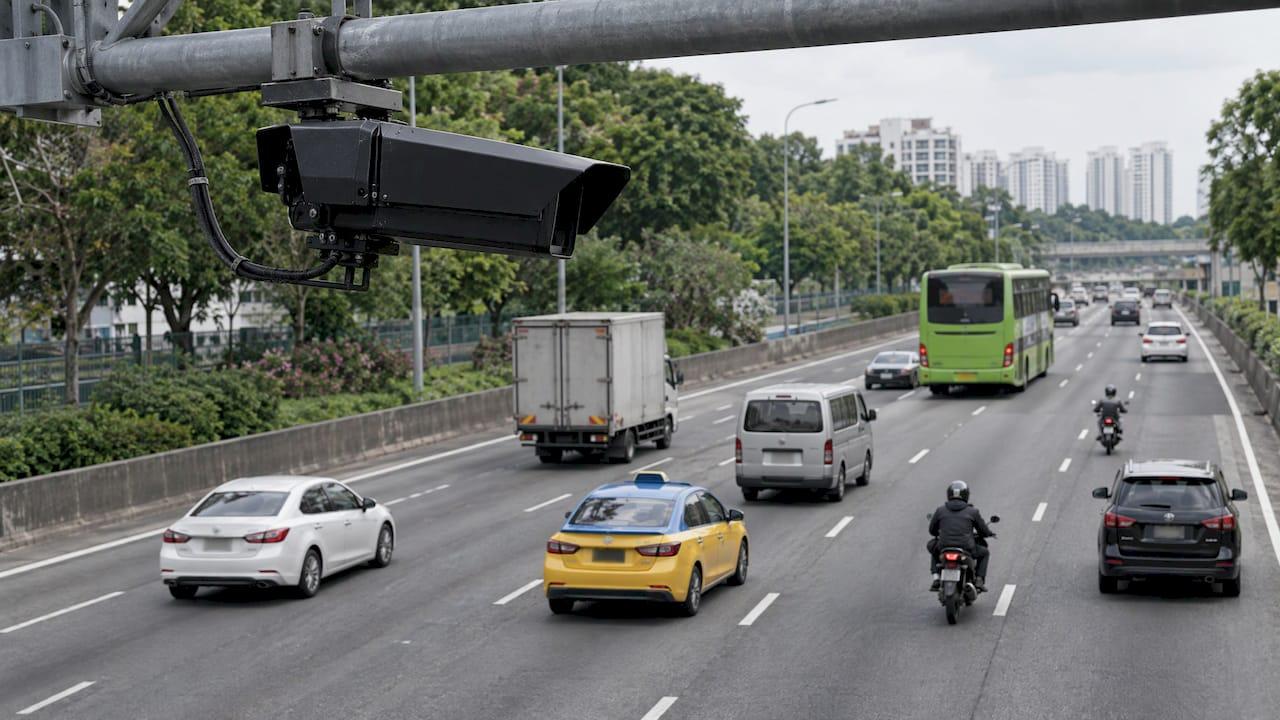
Vehicle Classification Analytics: A Guide for Singapore Sites
How vehicle classification analytics and vehicle type detection work, which classes to use in Singapore, and how to plan camera placement, integration and data.

Evacuation Muster Reporting: Singapore Site Guide
How to run evacuation muster reporting and roll call on Singapore sites: who counts whom, what the report records, SCDF duties, and how to close the gaps.
API Integration Security for Singapore Security Systems
How to secure API integrations between cameras, access control, visitor and analytics platforms in Singapore: threats, controls, PDPA duties and a rollout checklist.
Let's Build YourSecurity Ecosystem.
Whether you're a System Integrator, Solution Provider, or an End-User looking for trusted advisory, our team is ready to help you navigate the BeyondSensor landscape.
Direct Advisory
Connect with our regional experts for tailored solutioning.