
How to secure API integrations between cameras, access control, visitor and analytics platforms in Singapore: threats, controls, PDPA duties and a rollout checklist.
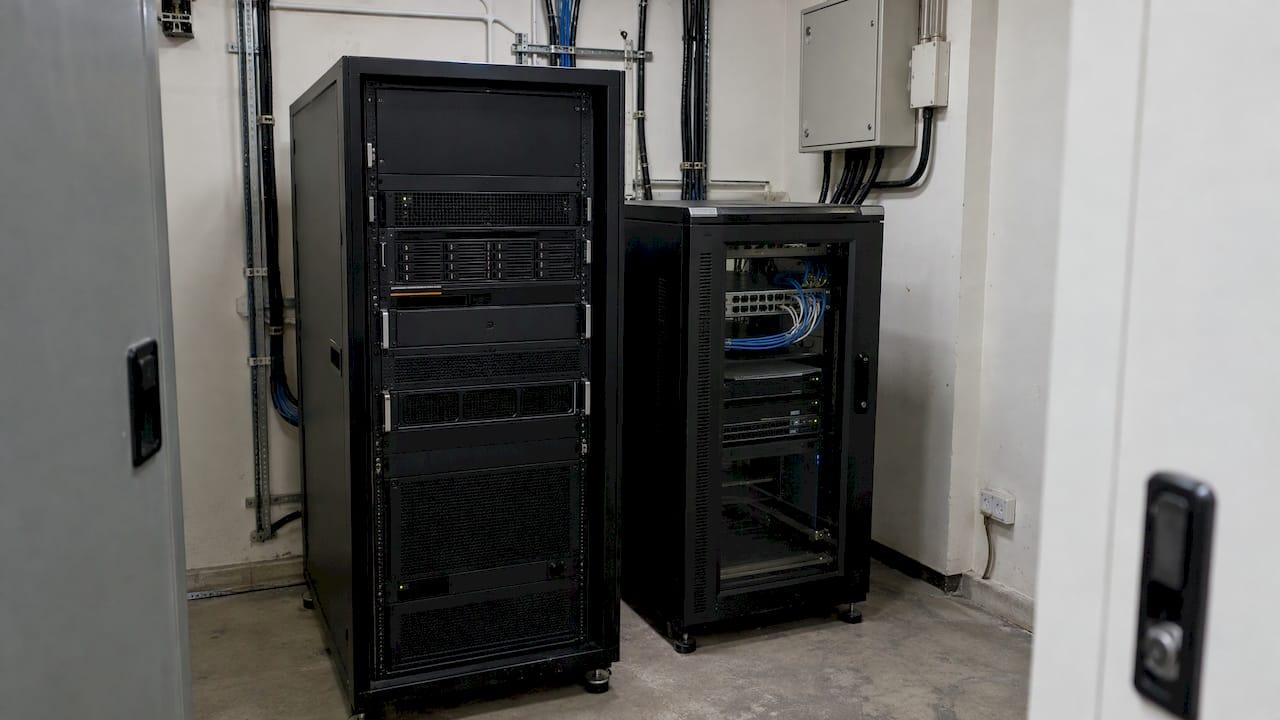
API Integration Security for Singapore Security Systems

API integration security is the discipline of making sure every connection between two software systems only lets the right party do the right thing with the right data. In a physical security estate, that means the links between video platforms, access control, visitor management, analytics dashboards and cloud services. For Singapore integrators and site owners, the practical answer is to treat each integration as a controlled entry point: authenticate every caller, authorize every object they touch, encrypt and validate every request, log everything, and re-test whenever something changes. Where personal data flows through the link, Singapore's regulators expect exactly this.
TL;DR
- APIs are the most commonly exposed component of a system, according to the Cyber Security Agency of Singapore (CSA), so every integration between security systems widens your attack surface.
- Logging in is not enough. The PDPC and CSA stress that APIs must also check authorization, including object-level checks, before returning personal data.
- Baseline controls: HTTPS with TLS, OAuth 2.0 or OpenID Connect, server-side input validation, rate limiting, a gateway or WAF, and centralized logging.
- Test before go-live, on a schedule, and after every migration or vendor change. Keep an inventory of every API you run.
- Fewer, better-validated integrations beat many ad hoc ones. Plan them across vendors from the start.
Table of Contents
- What API integration security means for a security estate
- The threats that actually hit integrations
- Authentication and authorization: two different jobs
- Technical controls and what each one stops
- REST or SOAP: which is more secure?
- Securing the whole lifecycle
- Singapore rules and guidance to anchor on
- A pre-go-live checklist for integrators
- Plan integrations with BeyondSensor
- FAQ
- Sources
What API integration security means for a security estate
An API (application programming interface) is the agreed way one piece of software asks another for data or an action. When your video management system pushes an alarm to a dashboard, or a visitor platform tells an access controller to open a turnstile, an API carries that request.
Integration security covers three things at once:
- Who is calling. A person, a service, a device or a third-party app, proven by credentials or tokens.
- What they may do. Which records, actions and volumes that caller is permitted.
- What travels and what is kept. Encryption in transit, validation of inputs, and logs that help you investigate without leaking secrets.
This matters more in security systems than in most business software. The data inside them includes faces, vehicle plates, visitor identities, patrol records and building layouts. A weak link in a visitor or CCTV integration can expose personal data and also tell an attacker where the blind spots are.
The scale of the problem is rising. Akamai data reported by SecurityBrief counted nearly 65 billion web application and API attacks across Asia-Pacific in 2025, up 23% year on year. It also found that sprawling API estates make visibility harder in markets such as Singapore as endpoint numbers grow.
The threats that actually hit integrations
The CSA's October 2022 advisory (AD-2022-011) names injection attacks, man-in-the-middle (MITM) attacks, denial-of-service and exploits of role-based or attribute-based access control that escalate privileges, all of which can lead to data theft or modification. The joint PDPC-CSA advisory of November 2026 adds the failures that most often expose personal data:
- Default or poorly managed credentials left on an integration account.
- Valid API keys or access tokens obtained through compromised accounts or third-party apps.
- Excessive privileges, so a camera-analytics connector can read far more than it needs.
- Broken Object Level Authorization (BOLA): a caller changes an object identifier in a request and receives someone else's record.
- Security settings silently lost during a migration.
- Unencrypted connections open to MITM, and unvalidated inputs open to SQL injection.
Two further patterns deserve attention from integrators. First, server-side request forgery (SSRF): the OWASP API Top 10 (2023) lists it because an attacker can make your server issue requests on their behalf, for example to reach internal systems. Second, abuse that looks legitimate. Akamai's APAC data, again via SecurityBrief, found that 61% of API attacks in 2025 involved unauthorized workflows and abnormal activity, with bots imitating normal traffic. That is why signature-based filtering alone rarely catches it.
A Singapore example of a quiet failure
A Blackpanda case study describes a late-2025 breach at a MAS-regulated fintech. Internal API endpoints became reachable from the internet after a network perimeter control was removed. Automated scripts from two IP addresses accounted for over 99% of roughly 17 hours of traffic and pulled personal and business data from tens of thousands of accounts. Nobody hacked a password. A single change exposed an endpoint that had relied on the network for protection. Security estates change just as often: a new VMS server, a relocated gateway, a vendor firmware update.

Authentication and authorization: two different jobs
Authentication proves who is calling. Authorization decides what that caller may touch. Integrations fail most often at the second.
The CSA advises proven mechanisms such as OAuth 2.0 and OpenID Connect where feasible, plus zero trust and least privilege: each API gets only the access it needs. In practice for an integration project:
- Give every connector its own identity. One service account per integration, never a shared admin login, so you can revoke one without breaking the rest.
- Prefer short-lived tokens. The OWASP REST Security Cheat Sheet notes that API keys can limit abuse of public services but should not be the only protection for sensitive resources. It recommends centralized authentication through an identity provider that issues access tokens.
- Check authorization on every object. The PDPC and CSA say successful authentication alone may not prevent unauthorized access to personal data, so enforce object-level checks in the service that owns the data, not only at the edge.
- Never reuse personal identifiers as secrets. Under a PDPC-CSA advisory, as reported by CNA, private organizations in Singapore must phase out NRIC numbers, full or partial, as any authentication factor by 31 December 2026, with stepped-up PDPC enforcement from 1 January 2027. If a visitor or access integration still keys on NRIC numbers, redesign it now.
Technical controls and what each one stops
No single control covers an integration. The table maps the controls Singapore's authorities and OWASP recommend to the problems they address.
| Control | What it addresses | Where it is recommended |
|---|---|---|
| HTTPS with TLS on every call | MITM, credential sniffing | CSA advisory, PDPC-CSA advisory |
| OAuth 2.0 / OpenID Connect | Weak or shared credentials | CSA advisory |
| Server-side input validation, parameterized queries | SQL and other injection | PDPC-CSA advisory |
| Rate limiting and payload-size limits | Denial-of-service, scraping, bulk extraction | CSA advisory; OWASP returns HTTP 429 when limits are hit |
| HTTP method allowlist (reject others with 405) | Unexpected verbs reaching handlers | OWASP REST cheat sheet |
| Web application firewall (WAF) | Known malicious request patterns on internet-facing APIs | PDPC-CSA advisory |
| Centralized logging and anomaly alerts | Slow abuse, post-incident investigation | CSA advisory |
| Version retirement and API inventory | Forgotten, unpatched endpoints | OWASP API Top 10 (Improper Inventory Management) |
Three practical points make these controls work.
A gateway does not understand your data. Microsoft's API security whitepaper explains that API management can enforce schema validation, control caching, retire old versions and centralize monitoring. It also argues that rule-based tools alone cannot catch business-logic abuse, so you need to know normal behavior and watch for deviations at runtime. Its examples: a sudden 1000% jump over your baseline requests per hour may signal denial-of-service, and one user submitting many different user IDs may signal a BOLA attempt.
Log carefully. Capture request origin, identity, timestamp and the resource touched. Do not log access tokens, API keys, passwords or full sensitive payloads, or your logs become the next leak.
Remember the inventory. The OWASP API Top 10 lists improper inventory management as a risk in its own right: an incomplete list of APIs leads to unmanaged, unpatched endpoints. For a multi-site security estate, a living register of every integration, its owner, its data and its version is the cheapest control you can add.
REST or SOAP: which is more secure?
Neither is inherently safer. Each moves the work to different places.
- REST relies on HTTPS, token-based authentication such as OAuth 2.0 or JWT, input validation and rate limiting. Typical bugs include BOLA and mass assignment.
- SOAP adds WS-Security for message-level signing and encryption. The OWASP Web Service Security Cheat Sheet requires payloads to be validated against their XML schema and TLS for sensitive traffic with server certificate verification. Typical bugs include XML external entity (XXE) attacks and WSDL leaks.
AWS's comparison suggests REST suits public APIs, while private enterprise interfaces, such as compliance reporting, can benefit from SOAP's stricter message-level security at the cost of extra overhead. Legacy access control and building systems often expose SOAP, newer analytics and cloud services expose REST, so a mixed estate must secure both. Evaluate each interface on its own controls, not on its label.
Securing the whole lifecycle
The PDPC-CSA advisory is explicit that APIs handling personal data must be designed and secured throughout their lifecycle, including when introduced, modified or connected to third-party systems. A workable sequence:
- Design. Map data flows first. Decide which system owns each record and which callers need which fields. Singapore's Government Developer Portal advises secure coding practices and up-to-date documentation for every published API.
- Build and configure. Apply least privilege, TLS and validation by default. Remove default credentials before installation ends.
- Test before deployment. The advisory calls for security testing before deployment, periodically, and after significant changes. Review configurations before and after migrations, since settings are easily lost.
- Monitor. Baseline normal traffic, alert on spikes, unusual identifiers and off-hours bulk calls.
- Respond. Know in advance who revokes tokens, who isolates the connector and who decides on notification.
- Retire. Decommission old versions and unused connectors. Dormant endpoints are the ones nobody patches.
On response, law firm Kennedys notes in its analysis of API-related breaches in Singapore that unauthorized access to personal data through an API is a data breach event. It can trigger mandatory breach notification under the Personal Data Protection Act 2012, plus PDPC investigation and enforcement. The remedial steps it lists organizations taking afterward read as a good prevention list: secret keys on API URLs, tighter server access-key restrictions, rate limiting and alerting, an API gateway for central management, better code review and multifactor authentication.
Singapore rules and guidance to anchor on
- PDPA. Personal data exposed through an API is a data protection issue. Treat every integration carrying faces, plates or visitor details as in scope. Our PDPA guide to privacy masking for CCTV covers the video side.
- CSA guidance. The 2022 API advisory and the 2026 joint advisory are the clearest statements of what regulators expect.
- Cyber Trust and Cyber Essentials marks. In April 2025 CSA expanded these marks to cover cloud, AI and operational technology security, and the Cyber Trust assessment includes a scenario of an attacker exploiting an insecure API in a cloud service. SMEs can access 70% co-funding through the CISO-as-a-Service scheme.
- Government projects. Singapore's ICT&SS control catalogue restricts overseas-hosted generative AI API services to lower data classifications, and requires a legally binding non-logging and non-training agreement from the provider. If an analytics feature calls an external AI service, check where it is hosted and what data it receives.
For wider preparation, our guides on compliance tips for security integrators and security risk assessment for facility owners show how integration risk fits into the overall review.
A pre-go-live checklist for integrators
Use this before any new connection between security systems goes live:
- List every endpoint, its owner, the data it carries and its classification.
- Confirm TLS on every hop, including internal links between servers and edge devices.
- Issue a unique credential per connector, scoped to the minimum actions.
- Verify object-level authorization with test accounts: can user A read user B's record by changing an ID?
- Check validation: unexpected fields, oversized payloads, wrong methods.
- Set rate limits per consumer and tighter limits on sensitive endpoints.
- Confirm logs capture identity, time and resource without storing secrets.
- Remove default accounts, test endpoints and old API versions.
- Document a revoke-and-isolate procedure and who runs it.
- Schedule re-testing after each firmware, version or hosting change.
Open standards help here, because they reduce one-off adapters that nobody maintains. Our five-step piece on open standards and edge-resilient access control goes deeper on integration architecture.
Perspective
Most integration incidents we worry about are not exotic. They come from a connector that was set up quickly, given broad access, and never revisited. In a security estate the cost is higher, because the data on the other side is video, identities and movement patterns.
That is why we build around a unified, automated platform with multi-vendor technology integration and localized technical validation for Southeast Asia. One platform that brings cameras, patrol, visitor and analytics workflows together gives you fewer ad hoc links to inventory, test and retire. Validation against regional requirements, including Singapore's, means the question of what each link may carry is answered during deployment planning, not after an incident.
Our view for integrators and facility owners is simple: design the integration map first, then choose products that fit it. Exception-based monitoring only works when the data feeding it is trustworthy and the connections behind it are controlled.
Eumir
Plan integrations with BeyondSensor
BeyondSensor supplies sensor hardware, AI-powered surveillance software and unified security operation dashboards, delivered through product lines such as BeyondSecure, BeyondWatch, BeyondPatrol and BeyondVisitor. For projects that join several vendors' systems, our Solution Integration service is where integration design starts, with multi-vendor technology integration and localized technical validation for regional deployment.

If you are an integrator scoping a multi-site project, bring your list of systems and data flows. It is the best starting point for a sound integration plan.
FAQ
What does API integration security cover?
It covers how two or more systems authenticate each other, what each may access, how data is encrypted and validated in transit, and how activity is logged and tested over time. It applies to every connector in your stack, not just public-facing APIs.
Does HTTPS alone make an API integration secure?
No. HTTPS with TLS protects data in transit and defeats MITM, but it does nothing about weak credentials, excessive privileges or missing authorization checks. The CSA lists encryption alongside strong authentication, rate limiting, WAFs and logging.
Is a successful login enough to protect personal data?
No. The PDPC and CSA warn that an authenticated caller can still reach records they should not see if the API does not check authorization, including against BOLA. Enforce checks per object, inside the service that owns the data.
How often should API integrations be tested?
The PDPC-CSA advisory recommends security testing before deployment, periodically, and after significant changes such as migrations or new third-party connections. Treat any firmware, hosting or version change on a connected system as a trigger to re-test.
Sources
- CSA advisory AD-2022-011: Importance of Securing Your Application Programming Interfaces
- PDPC and CSA Joint Advisory on Data Protection Risks Arising from Insecure APIs
- SecurityBrief: Akamai warns of rising API attacks across APAC
- OWASP API Security Top 10 (2023)
- Blackpanda: Internal API Exposure, Singapore Fintech Firm Data Breach
- OWASP REST Security Cheat Sheet
- CNA: Can private organisations still use NRIC numbers for authentication
- Microsoft: Building a comprehensive API security strategy
- OWASP Web Service Security Cheat Sheet
- AWS: SOAP vs REST
- Singapore Government Developer Portal: Best Practices for API Security
- Kennedys: API-related data breaches in the Singapore data protection landscape
- CSA: Cyber Essentials and Cyber Trust Marks expanded
- Singapore Government ICT&SS: Generative AI control catalogue
Recommended
Read More Articles

CCTV Tender Specifications in Singapore: What to Write and Check
How to write or answer a CCTV tender specification in Singapore: camera, retention, network, analytics and acceptance requirements, with SPF, MOM, IMDA and PUB figures.

Alarm Deduplication for Security Teams: A Practical Guide
How alarm deduplication, correlation rules, severity mapping and escalation matrices work together to cut duplicate alarms without hiding the ones that matter.
Vehicle Classification Analytics: A Guide for Singapore Sites
How vehicle classification analytics and vehicle type detection work, which classes to use in Singapore, and how to plan camera placement, integration and data.

Evacuation Muster Reporting: Singapore Site Guide
How to run evacuation muster reporting and roll call on Singapore sites: who counts whom, what the report records, SCDF duties, and how to close the gaps.
Let's Build YourSecurity Ecosystem.
Whether you're a System Integrator, Solution Provider, or an End-User looking for trusted advisory, our team is ready to help you navigate the BeyondSensor landscape.
Direct Advisory
Connect with our regional experts for tailored solutioning.