
How to capture, store, export and share CCTV footage so it holds up as evidence in Singapore: retention periods, chain of custody, PDPA duties and system criteria.

Video Evidence Management: A Singapore Guide for Security Teams

Video evidence management is the discipline of keeping footage complete, unaltered, traceable and shareable from the moment a camera records it until an investigator, regulator or court is finished with it. For a Singapore facility owner, security director or integrator, it comes down to four controls: record with trustworthy metadata, retain for the right period, prove nobody changed the file, and release only what the law and your policy allow. We build sensor-based security systems around that routine, and this guide sets out what each control requires and where programs most often fail.
TL;DR
- Evidence value is decided before an incident: camera ID, synchronized date/time, retention length and access rules must be set at design stage, not after a request arrives.
- Singapore guidance sets concrete numbers: the SPF VSS Standard recommends archiving at least 31 days, and the WSH guide recommends at least 30 days, rising to 180 days without overwriting after a reportable WSH incident.
- Integrity (the file is unchanged) and authenticity (the file shows what it claims to) are separate tests. Hashing, write protection and audit logs address the first; correct clocks and documentation address the second.
- Under the PDPA, individuals can request access to personal data in CCTV footage, so export, redaction and a 30-day response clock belong in your procedure.
- Evidence management is a system and a policy together. Cameras, recorders, dashboards and logs should be specified as one chain.
Table of Contents
- What video evidence management covers
- Stage 1: Capture footage that can carry weight
- Stage 2: Store and retain on a defined schedule
- Stage 3: Export and prove integrity
- Stage 4: Control access and keep an audit trail
- Singapore privacy duties that shape the workflow
- Does footage hold up in court?
- Criteria for choosing a video evidence system
- Where we fit
- Our perspective
- FAQ
- Sources
What video evidence management covers
Many teams treat footage as a by-product of surveillance: it records, it overwrites, someone exports a clip when asked. Evidence management reverses that. It treats every recording as something that may one day have to be defended.
A 2022 body-worn camera study describes digital evidence management as the process by which an agency manages, stores and transmits data from cameras and other devices. It stresses that chain of custody, processing, access and storage must all be addressed, and that requests arrive from prosecutors, defense counsel, other agencies, citizens and the media. The same pressures apply to a condominium, a port terminal or a factory, only with fewer lawyers in the room.
The IJIS Institute's law enforcement task force makes the underlying point well: digital evidence is different from physical evidence because it can be copied, altered or corrupted, so it needs its own standards and security measures. It also argues that policy should be in place before technology is deployed. That sequence matters for integrators: the evidence requirements belong in the tender, not in a post-handover patch.
Stage 1: Capture footage that can carry weight
Evidence quality is set at the camera and recorder. Singapore Police Force's VSS Standard for buildings is the clearest local reference. It recommends recording GPS-synchronized camera ID and date/time metadata alongside the video. The 2024 WSH Guide on Video Surveillance Systems similarly expects every recording to carry camera ID, location and synchronized time stamps, and says recordings must not be altered.
Why the clock matters so much: the UK Home Office guide on recovering video evidence separates integrity from authentication. A wrong CCTV clock, it notes, affects authenticity but not integrity. The file may be perfectly intact and still fail to show that an event happened when you say it did.
Where it goes wrong:
- Recorders drift because time sync was never configured, or was configured once and never audited.
- Camera names on the recorder do not match the location names in the incident report.
- Privacy masks and field-of-view changes are made without a record, so a later reviewer cannot tell what the camera could see on the day. Our guide to privacy masking for CCTV in Singapore covers how to set and document them.
- Cameras degrade or lose power, leaving gaps exactly when an incident occurs. Routine upkeep is part of evidence readiness, and the preventive maintenance guide lays out a schedule.
Stage 2: Store and retain on a defined schedule
Retention is where most evidence is lost, quietly, by auto-overwrite. Three Singapore documents give you numbers to design against.
| Source | What it recommends |
|---|---|
| SPF VSS Standard (March 2022) | Capacity for continuous 24-hour recording of all cameras; one full set archived for at least 31 days; at least 20% hot-swappable reserve recording media; RAID 5 support for hard-disk failure |
| WSH Guide on VSS (2024) | Store at least 30 days; at least 180 days without overwriting or deletion where a reportable WSH incident occurred |
| MOM VSS FAQs for construction worksites | For worksites with contract value of $5M and above: cameras only at safety or security locations, clear usage rules, access limited to authorized persons, defined retention durations |
The practical design question is not "how many days" but "what stops the clock". A 31-day loop is fine until an incident is reported on day 29. Your procedure needs a trigger that places a hold on the relevant footage and removes it from the overwrite cycle. The WSH guide's 180-day rule after a reportable incident is exactly that kind of hold. Our piece on CCTV data retention rules walks through setting the base period, and the one on video redaction before auto overwrite shows why redaction work has to be finished while the footage still exists.
Storage sizing follows from the same standard. Continuous 24-hour recording for the full archive period, plus the 20% reserve media and disk-failure protection the SPF standard recommends, should be calculated at design stage. Put those figures in the specification; the CCTV tender specifications guide shows where.

Stage 3: Export and prove integrity
Export is the moment evidence is most likely to be damaged. The SPF standard recommends exporting images without changes to frame quality or frame rate, frame loss or duplication, format conversion or further compression, and using anti-tampering measures such as watermarking, crypto-hashing or read-only media.
Forensic practice adds discipline around the copy. SWGDE's 2025 best practices for forensic video analysis call for write protection, a verified working copy created by hashing both original and copy, labeling per policy, and chain-of-custody procedures throughout. The Home Office guide recommends comparing hash values before and after transfers and keeping robust audit trails.
When footage is pulled from a recorder, SWGDE's guidance on DVR acquisition tells analysts to collect all required video data plus the proprietary playback software or codec, verify playback and the correct dates and times, and restore the recording system to its original state. A clip that only plays on one vendor's player is a clip the other side may not be able to open.
The six questions a defensible procedure answers
WITNESS, citing a practitioner's manual on visual evidence, lists six questions any procedure for preserving digital video should answer, and advises keeping original camera files unaltered and un-transcoded and computing hash values early:
- Who captured the footage, and when?
- Who has had access to it?
- Was the original altered?
- Who enhanced it, and why?
- Is the enhancement repeatable?
- Was the enhanced image altered?
If your export log can answer all six from records rather than memory, you are in good shape.
Stage 4: Control access and keep an audit trail
The WSH guide advises companies to use a Video Management System for storage, management and viewing, with backup and export to external storage. It also states that companies are fully accountable for VSS security and user access. That accountability is the reason role-based access and logging are not optional extras.
The IJIS whitepaper lists what a digital evidence repository must provide: security, privacy, evidence continuity, chain-of-custody logging, case management, redaction, secure storage, secure sharing, and retention, purging and expungement policies. Use it as a checklist when you review a system:
- Every view, export, copy and deletion is logged against a named user.
- Logs cannot be edited by the people they record. See our guide to audit log retention in Singapore for periods and setup.
- Footage tied to an incident is grouped as a case, with notes and holds.
- Redaction produces a new derivative and leaves the original untouched.
- Sharing with the police, regulators, insurers or contractors happens through a controlled channel, not a messaging app.
A second finding from IJIS is relevant to multi-site and multi-agency operators: evidence workflows tend to be siloed and fragmented, with functions repeated between stakeholders. NIST's public safety video analytics roadmap reports similar friction, with data-sharing agreements needing several levels of legal review and a need for policies on data definitions, ownership, access and sharing. Agree who owns footage, who may request it and how fast before the first request arrives.
Singapore privacy duties that shape the workflow
Footage of identifiable people is personal data. The PDPC's advisory guidelines for management corporations state that individuals must be given access to their personal data in CCTV footage on request unless an exception applies, and that access cannot be limited to law enforcement only. The organization must respond as soon as reasonably possible, or notify the individual in writing within 30 days if it cannot, and must retain withheld data for at least 30 calendar days after rejecting a request so the decision can be reviewed. Although written for management corporations, the logic is a useful model for any site operator handling CCTV.
In a 22 September 2025 parliamentary reply, MDDI said organizations must have policies to handle access requests, typically including measures to preserve the requested data while the request is processed. It also pointed to criminal penalties for intentionally concealing or destroying records to avoid an access request, and said the PDPA framework is reviewed regularly. Check the PDPC and MDDI pages for the current position before you finalize policy.
What this means in practice:
- Build a hold function that suspends overwrite for footage under an access request, in the same way you hold footage for an incident.
- Be able to redact or mask third parties in an export.
- Record who decided to release or withhold, and when.
- Limit camera coverage to safety and security locations, as MOM advises for worksites, and never private areas such as restrooms.
If you are a regional operator in Malaysia or the Philippines, apply your own national rules; the Singapore figures above are guidance for Singapore sites and should not be carried over unchecked.
Does footage hold up in court?
Two things are worth knowing. First, the way footage is gathered matters. In a January 2025 reply, Minister K Shanmugam described how police video recording of interviews is handled: recorded on new discs in purpose-built rooms, a copy sealed in the interviewee's presence, a duplicate made for investigation and court viewing, and transcripts checked against the footage. The reply also assessed body-worn camera footage in uncontrolled environments as not offering the same reliability for court use. The lesson for private operators is that a controlled, documented process is what gives footage its standing.
Second, your footage will usually be reviewed by people who were not there. Investigators and lawyers will ask the six questions above. A clean answer depends on process records, not on the clip alone. For legal questions about a specific case, speak with your lawyer; for incident reporting under workplace safety rules, follow the relevant authority's instructions.
Criteria for choosing a video evidence system
Whether you are an end user, a security agency or an integrator preparing a tender, score a system on these points:
| Criterion | What to look for |
|---|---|
| Metadata | Camera ID, location and synchronized date/time on every recording and export |
| Export fidelity | No re-encoding on export; hashing or watermarking; read-only output |
| Retention control | Configurable base period, incident holds, access-request holds |
| Access and audit | Role-based permissions, tamper-resistant logs, named-user accountability |
| Redaction | Masking of third parties on a derivative copy |
| Capacity and resilience | Sizing for the full archive period, reserve media, disk-failure protection |
| Interoperability | Multi-vendor cameras and recorders feeding one review environment |
| Search | Finding the relevant moment without scrubbing hours of video |
The last two rows are where fragmented estates suffer most. Sites that have grown through several procurements often run different recorders and players, which multiplies export steps and chances for error.
Where we fit
Our positioning is a unified, automated platform that combines AI-driven tools, multi-vendor technology integration and localized technical validation, supporting regional compliance and deployment across Southeast Asia. For evidence work, that is relevant in three places.
First, a unified security operations view and video analytics dashboards bring multi-site activity into one place, so the people who review incidents are not hopping between vendor consoles. Second, our Solution Integration service handles value-added integration and consulting for organizations and system integrators who need mixed-vendor estates to behave as one. Third, exception-based monitoring, the approach behind our BeyondPatrol virtual guard tour product, helps teams focus on moments that matter rather than reviewing everything by eye. BeyondPatrol and BeyondWatch are the product lines to look at when you are scoping surveillance and analytics.
If you are specifying evidence-grade retention, export and access controls for a Singapore site, we can work through the requirements with your team and map them to a deployment plan.

Integrators who want to bring evidence-ready designs to clients can start from our system integrators page.
Our perspective
Most evidence failures we hear about in security operations are not technology failures. They are sequencing failures: the retention period was set by whatever the recorder defaulted to, the clock was never audited, and the export procedure lived in one operator's head.
We believe evidence readiness should be designed in, the same way coverage and storage are. That means writing the metadata, retention, hold and access rules into the specification, then choosing a platform that applies them across vendors rather than site by site.
Our approach is to unify the estate, automate what a person should not have to do by hand, and validate deployments against local requirements. In a region where a single operator may run sites in Singapore, Malaysia and the Philippines under different rules, one operating view with local validation is what keeps evidence consistent.
The goal is simple: when someone asks for footage, the answer is a controlled export with a log, not a scramble.
Eumir
FAQ
What is the difference between video evidence management and a video management system?
A video management system records, stores and displays footage. Video evidence management adds the controls around it: holds, hashing, audit logs, redaction, case grouping and controlled sharing. The WSH guide advises using a VMS for storage and viewing, and the evidence layer is what makes exports defensible.
How long should CCTV footage be kept in Singapore?
The SPF VSS Standard recommends archiving at least 31 days, and the WSH guide recommends at least 30 days. After a reportable WSH incident, the WSH guide recommends at least 180 days without overwriting or deletion. Set your own period by risk and apply holds when an incident or access request is open.
What proves that exported footage has not been altered?
Hash values computed on the original and compared after every copy or transfer, together with read-only media, watermarking and an audit trail of who handled the file. Keep the original files unaltered and un-transcoded, and do enhancements on separate working copies.
Can someone ask to see CCTV footage of themselves?
Under PDPC guidance for management corporations, yes, unless an exception applies. The organization must respond as soon as reasonably possible or notify the person in writing within 30 days, and keep any withheld data for at least 30 calendar days after rejecting the request. Mask other people in the footage before release.
Sources
- An Examination of Body-Worn Camera Digital Evidence Management
- IJIS Institute LEITTF Digital Evidence Whitepaper
- SPF VSS Standard for Buildings
- WSH Guide on Video Surveillance Systems 2024
- Recovery and Acquisition of Video Evidence, UK Home Office
- SWGDE Best Practices for Digital Forensic Video Analysis
- SWGDE Best Practices for Data Acquisition from Digital Video Recorders
- WITNESS Archiving: Video as Evidence
- NIST SP 1500-15 Interoperable Public Safety Video Analytics
- PDPC Advisory Guidelines for Management Corporations
- MOM FAQs on VSS for construction worksites
- MDDI response to PQ on CCTV footage storage
- MHA on police video recording of interviews
Recommended
Read More Articles
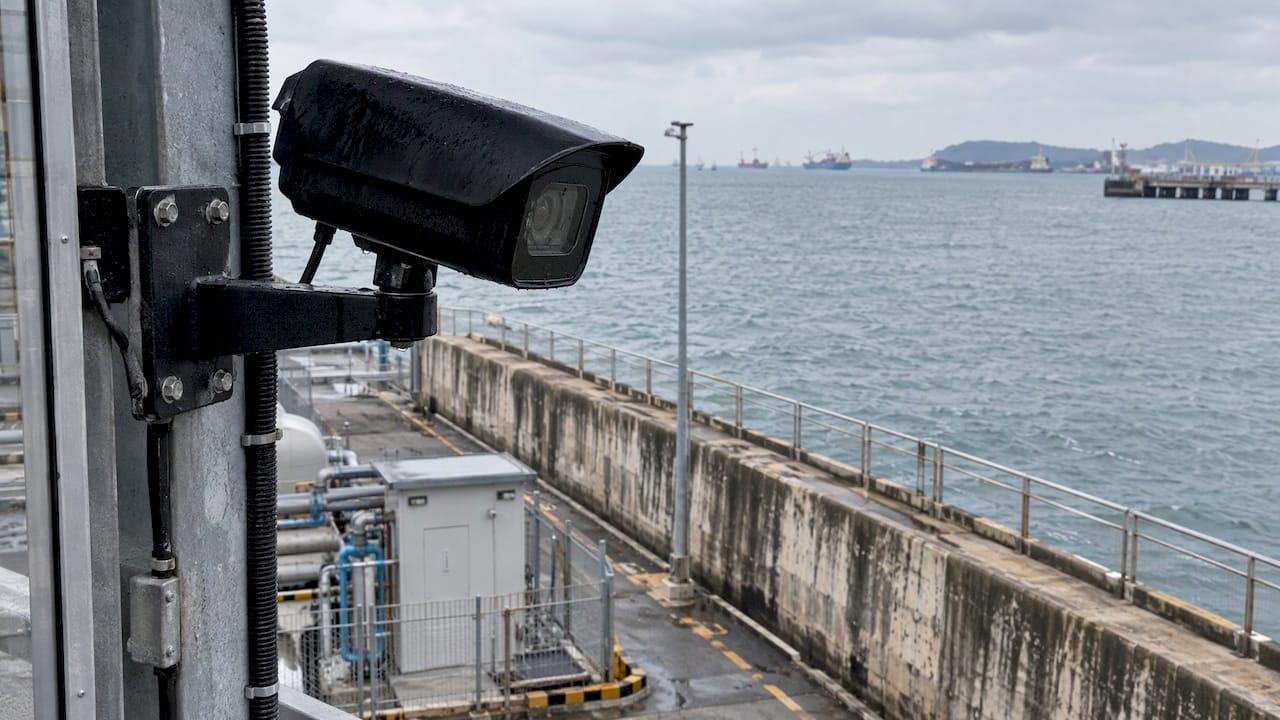
Coastal Camera Installation in Singapore: A Site Guide
How to plan a coastal camera installation in Singapore: site survey, marine housings, power, PDPA rules, ALPR selection, budget and upkeep for security teams.
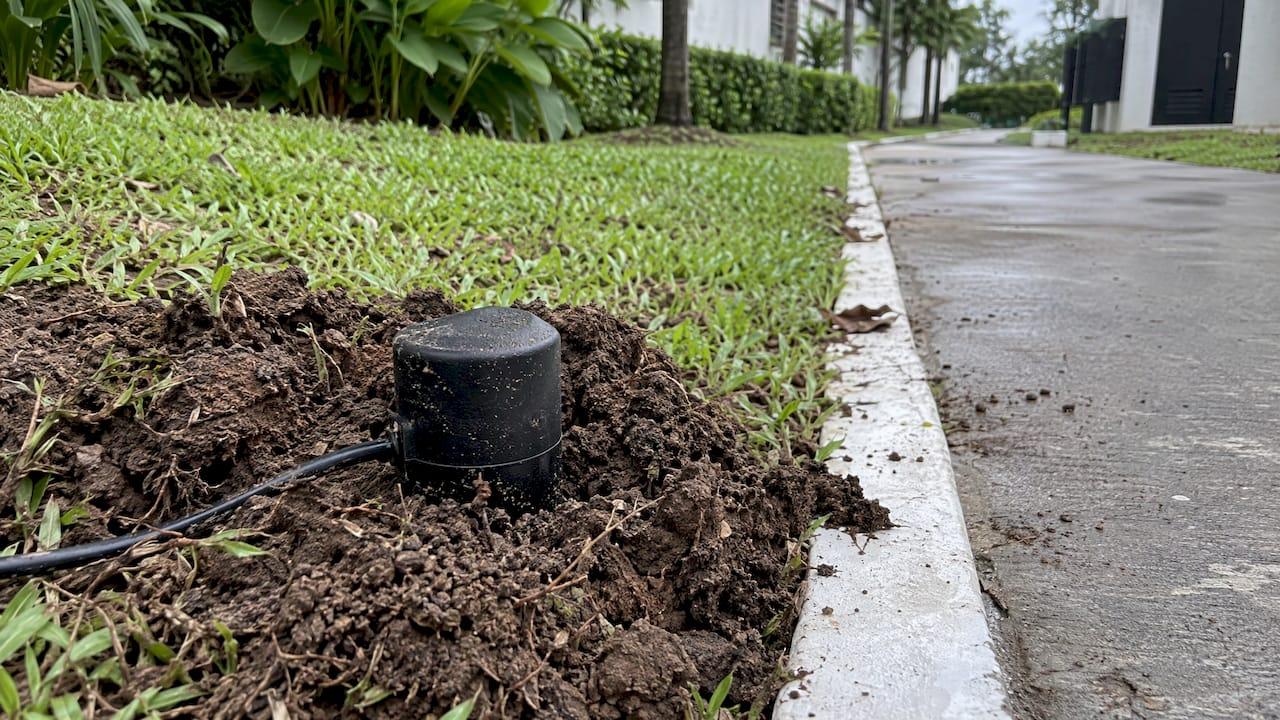
Seismic Intrusion Sensors: How They Work and Where They Fit
How seismic intrusion sensors detect footsteps and tunnelling, how they compare with microwave and infrared, and how to pilot them on a Singapore site.

Visitor Data Privacy in Singapore: A PDPA Guide for Site Teams
How Singapore sites should collect, notify, secure and delete visitor data under the PDPA, and how a digital visitor system makes each duty routine.

CCTV Tender Specifications in Singapore: What to Write and Check
How to write or answer a CCTV tender specification in Singapore: camera, retention, network, analytics and acceptance requirements, with SPF, MOM, IMDA and PUB figures.
Let's Build YourSecurity Ecosystem.
Whether you're a System Integrator, Solution Provider, or an End-User looking for trusted advisory, our team is ready to help you navigate the BeyondSensor landscape.
Direct Advisory
Connect with our regional experts for tailored solutioning.