
How to plan a coastal camera installation in Singapore: site survey, marine housings, power, PDPA rules, ALPR selection, budget and upkeep for security teams.
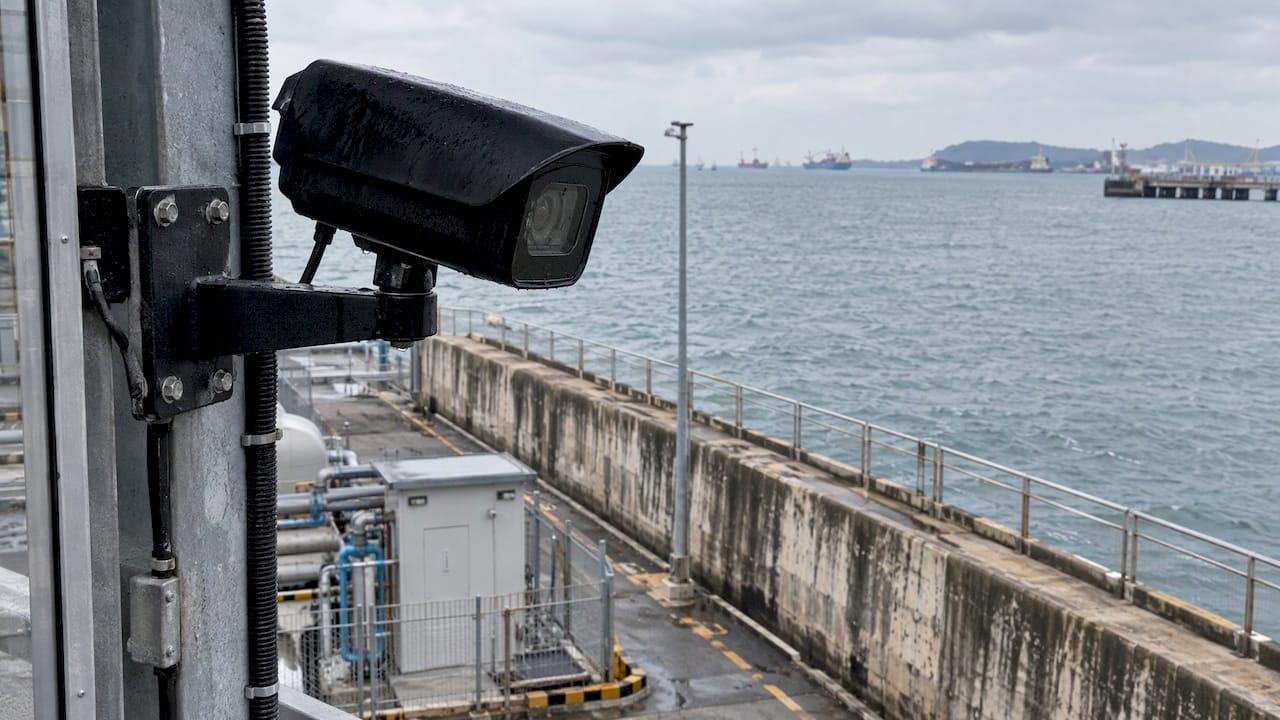
Coastal Camera Installation in Singapore: A Site Guide

A coastal camera installation succeeds or fails before any camera is mounted. Salt, humidity, glare off water, long cable runs and thin power budgets decide whether a site delivers usable footage in year three. The sound approach is a documented site survey, housings and fixings specified for salt exposure, a power and network design that survives outages, and a data-protection plan agreed up front. We build this as a multi-vendor integration with AI-driven analytics, and our Solution Integration service is where such projects start.
This guide is written for security managers, facility owners, system integrators and agencies planning shoreline, port, marina, reclamation or industrial waterfront coverage in Singapore, Malaysia and the Philippines.
TL;DR
- Start with a written site survey: targets, distances, lux levels, obstructions, glare from water and civil-works needs. Design the camera positions from it, not from a catalogue.
- Specify the whole assembly for salt: housing, brackets, screws, cable glands and cable routing, not just the camera body.
- Budget power and connectivity as carefully as optics. Remote coastal nodes are power-budget and event-capture problems first.
- In Singapore, CCTV footage of individuals is personal data under the PDPA, and installers need the right Security Service Provider licence.
- Choose ALPR software for the plate-capture conditions at your gate or jetty, and integrate it into one operations view rather than a separate silo.
Table of Contents
- Why coastal sites are harder than ordinary CCTV sites
- Step 1: Survey the site and document it
- Step 2: Choose marine-grade housings and fixings
- Step 3: Design power, network and surge protection
- Step 4: Plan ALPR if vehicles matter
- Step 5: Meet Singapore's rules on CCTV
- Step 6: Budget a coastal project properly
- Step 7: Inspect and maintain on a schedule
- Where our platform fits
- Perspective
- Plan your coastal deployment with us
- FAQ
- Sources
Why coastal sites are harder than ordinary CCTV sites
An inland car park gives you stable light, short cable runs and a forgiving environment. A coastline gives you the opposite. Surfaces reflect, so exposure swings through the day. Salt-laden air attacks fasteners, brackets and connectors. Wind loads move poles, which blurs long-range views. Tidal and weather cycles change what the camera sees from hour to hour. And the site is often far from a clean power and fibre point.
That is why a standard office-block specification fails on the waterfront. The camera may be rated well enough, but the mounting hardware corrodes, the cable gland lets moisture in, or the field of view is washed out by sun glare on the water for two hours every afternoon. Each of these is a design decision you can make early, on paper, for far less than a retrofit.
Step 1: Survey the site and document it
The UK's NSI code of practice for CCTV design, installation and maintenance is a useful template for what a defensible survey contains, even though it is a British document. It asks for the date, time and location of the survey, drawings or photographs of the proposed location showing target and risk areas, approximate distances to targets for camera and lens selection, candidate component locations, and illumination details with lux levels measured on site using a lux meter.
It also asks for local environmental concerns such as foliage, obstructions and seasonal variation, plus access restrictions and the civil works needed for power, communications and cable routing. The site plan should show each camera's field of view and the distances to risk areas.
For a coastal site, add these to your own checklist:
- Sun path and water glare. The NSI code says glare, reflections from water, foliage and sun position must be assessed in the field-of-view design. Photograph the scene at dawn, midday and dusk, and note where the sun sits relative to each lens.
- Tide and weather exposure. Note which positions take spray, which take direct wave splash, and which sit behind structures.
- Purpose per camera. Detection, observation and identification are different jobs. The NSI code advises placing cameras close to head height for identifying or recognizing individuals, while cameras that observe, detect or monitor can be mounted at whatever height achieves the coverage. A single high pole rarely does both.
- Night conditions. Measure the existing light. Where it is too low for the task, plan lighting as part of the scheme. Our guide to vertical-lux lighting for CCTV shows how to specify it.
- Sensor and camera placement logic. For perimeter layouts that combine cameras with other sensors, see our note on standards-led sensor placement.
The survey document becomes the basis for your tender or scope. If you are writing one, our CCTV tender specifications guide covers what to write and check.
Step 2: Choose marine-grade housings and fixings
Singapore sits on a tropical coast with high humidity year-round, so corrosion protection applies to almost any waterfront position, not only open-sea sites. Treat the camera, housing, bracket, pole, fasteners, glands and junction boxes as one corrosion system. The weakest metal in contact with another in a salt environment fails first.
What to specify and ask suppliers to document:
- Housing material. Marine-grade stainless steel (commonly 316 or 316L grade) or powder-coated marine aluminum are the usual choices for waterfront positions. Ask for the grade in writing rather than accepting a generic "stainless" description.
- Ingress rating. Look for IP66 or IP67 protection for water and dust, and a NEMA 4X rating where the supplier states it, which covers corrosion resistance as well. Add an IK rating where vandalism or impact is a risk.
- Salt-mist testing evidence. Salt-spray testing to the IEC 60068-2-52 method is the reference test for electronic equipment in saline conditions. Request the test report or certificate for the specific model.
- Fixings. Stainless fasteners with isolation between dissimilar metals, so you do not create a galvanic couple at the bracket.
- Cable entry. Marine-rated glands, sealed junction boxes and drip loops. The Furuno FIP-460 installation guide is a good example of practice that applies broadly: it says cables should point downward to prevent water wicking into the camera.
- Wiper, heater and anti-fog options. Where lenses are exposed to spray, plan how the glass will be kept clear, and how technicians reach it safely.
A marine camera housing is also a maintenance item. Specify seals and gaskets that can be replaced, and keep spare sets for each site.
Step 3: Design power, network and surge protection
Power is the quiet constraint on remote coastal cameras. The Furuno guide notes its camera can run from 12 V DC with a suitably rated fuse or circuit breaker, or from PoE, but not both at once. Pick one supply path per camera and label it.
For off-grid positions, the Boston University report on a wireless coastal camera network on Thompson Island is a clear case study. Its solar-powered nodes were designed around a power budget targeting three days of battery capacity. A programmable timer switched nodes on in the morning and off in the afternoon to avoid recording useless dark footage, and nodes linked over point-to-point Wi-Fi with static IP addresses for remote access. The designers also planned a next generation that triggers capture only around high tides and storms.
The lesson for a commercial site is to decide what you need to record and when, then size the battery, solar array and uplink to that, not the other way round. Event-driven capture saves power and storage. It also gives operators far less footage to review.
Two more design points:
- Surge and lightning. Open waterfront poles are exposed. Our surge protection guide for CCTV installers sets out how to protect cameras and switches at both ends of a long run.
- Network hardening. Remote cameras on public or shared links must not become an entry point to your corporate network. Our six operational hardening steps for secure camera networking cover credentials, segmentation and firmware.
Step 4: Plan ALPR if vehicles matter
Where the coastal site has vehicle entry points, such as a port gate, marina car park or jetty access road, automatic license plate recognition (ALPR) turns a camera into an access and audit tool. Selection is driven by capture conditions more than by the software brand.
Compare these points across any ALPR option you shortlist:
| Criterion | What to check |
|---|---|
| Capture geometry | Mounting height, angle to the plate and lane width. A shallow angle and a fast vehicle need a dedicated camera, not a general-view one. |
| Lighting | Plates are read by reflected light. Glare, headlights and sun reflecting off water can defeat recognition, so test at night and at low sun. |
| Plate formats | Confirm the software reads Singapore, Malaysian and Philippine plates if the site handles regional traffic. |
| Integration | Can plate events feed your video management and operations dashboard, with lists and alerts? |
| Deployment model | On-device, on-premises server or cloud, and how that fits your data-protection and network policies. |
| Licensing | Per lane, per camera or per site, and whether updates and support are included. |
A plate read is personal data when linked to an identifiable person, so the same retention and notice discipline applies as for video. Run an on-site pilot in real light before committing to a wide rollout, and put the results into the tender scope.
Step 5: Meet Singapore's rules on CCTV
Three areas matter for coastal projects in Singapore.
Personal data. The PDPC's Advisory Guidelines on the PDPA for Selected Topics, revised in May 2024, cover CCTV. In publicly accessible areas, consent is not required because of the publicly available data exception. In private areas, an organization can rely on the legitimate interests exception after a risk assessment. Notices are good practice. The guidelines also say footage need not be deleted on an individual's request, but retention must stop once the purpose is no longer served and retention is no longer necessary for legal or business purposes.
Registration and notices. According to ICLG's 2026 Singapore data protection chapter, CCTV does not have to be registered or notified to the PDPC beforehand, but the footage is personal data, and the PDPC recommends notices that give people sufficient awareness of the deployment and its purpose, including where audio is also recorded.
Privacy zones. Waterfront cameras often overlook neighboring buildings or public promenades. Mask what you do not need to record. Our privacy masking guide for Singapore covers setup, and our note on video redaction before auto-overwrite covers how to prepare footage for release.
Licensing. In Singapore, installing, maintaining or selling security equipment is regulated under the Private Security Industry Act through the Security Service Provider licence issued by the Singapore Police Force. Confirm your installer's licence status, and the current validity and fee, on the official Police Licensing pages before award.

Step 6: Budget a coastal project properly
No honest single price exists for a coastal camera installation, because the spread between a single pole at a marina gate and a multi-kilometer shoreline scheme is enormous. What you can do is list what the budget must include, so tenders are comparable:
- Survey and design, including lux measurements and a field-of-view plan
- Cameras, marine-grade housings, brackets, poles and corrosion-resistant fixings
- Power: mains connection, UPS, or solar and battery with the capacity target defined
- Connectivity: fibre, point-to-point radio or cellular backhaul, and the surge protection on each
- Lighting where the measured light is inadequate
- Civil works: trenching, ducting, pole foundations, and any marine-side approvals
- Video management, analytics and ALPR licensing, with the licensing model stated
- Storage sized to retention policy and frame rate
- Commissioning, training and handover documentation
- A maintenance contract with inspection intervals and spares
When quotes arrive, compare them line by line against this list. A low price that omits corrosion specification, surge protection or maintenance usually returns as a cost later.
Step 7: Inspect and maintain on a schedule
Salt builds up gradually. A coastal site needs shorter inspection intervals than an inland one, and the inspection should be written into the contract. Typical items: lens and dome cleaning, seal and gasket checks, fastener and bracket corrosion, cable gland condition, drain points, solar panel cleaning, battery health, focus and field-of-view drift after storms, and recording verification. Our preventive maintenance guide for CCTV in Singapore provides a structure you can adapt, and trained operators make the system pay off, which is covered in our CCTV operator training guide.

Where our platform fits
A coastline produces long hours of footage in which nothing happens. Reviewing it manually does not scale. Our unified approach combines sensor hardware, AI-powered surveillance software, video analytics dashboards and virtual guard tour systems so that operators work by exception rather than by watching every feed. We also integrate multi-vendor technology, which matters when a site already runs cameras from several suppliers.
Perspective
On the waterfront, the camera is the cheap part. The expensive failures come from a bracket that corroded, a power budget that was never calculated, or a glare problem nobody photographed at 4 p.m. We approach a coastal project as an integration problem: survey first, specify the whole assembly, then decide what the system should detect so that operators are not left watching empty water.
That is why we pair multi-vendor integration with localized technical validation across Singapore, Malaysia and the Philippines. Our automation, including the Patrol Agent built on vision language models in our virtual guard tour system, is designed to move teams from manual oversight to exception-based monitoring. For integrators and facility owners, that means one operations view across cameras, sensors and visitor flows, rather than a patchwork of separate tools.
Eumir
Plan your coastal deployment with us
If you are an integrator, facility owner or agency scoping a waterfront project, our Solution Integration service brings multi-vendor technology and localized validation into one deployment plan. Our BeyondPatrol virtual guard tour system and BeyondSecure line support the exception-based monitoring described above. Tell us about your site through BeyondSensor.

FAQ
What should a coastal camera site survey include?
Record the date, time and location, photographs or drawings of target and risk areas, distances to targets, lux readings, obstructions, and power and cable-routing needs. Add sun path and water glare, as the NSI code asks for glare and reflections to be assessed in the field of view design. Keep the survey on file as the basis for the tender.
What is a marine camera housing and when do I need one?
It is a camera enclosure built to resist salt, moisture and wind-driven spray, typically in 316-grade stainless steel or marine-coated aluminum with a high IP rating and corrosion-resistant fixings. Any position exposed to sea air or spray should use one. Ask for the material grade and salt-mist test evidence in the quotation.
Do I need to register coastal CCTV with the PDPC in Singapore?
No prior registration or notification is required, according to ICLG's 2026 chapter. However, footage of individuals is personal data, so the PDPA applies. Post notices stating the purpose, and set a retention period that stops when the purpose is served.
How do I choose ALPR software for a port or marina gate?
Start from capture conditions: camera angle, lane speed, night and low-sun glare. Then check supported plate formats, integration with your video management and operations dashboard, the deployment model and the licensing basis. Pilot it at the real gate in real light before rollout.
Sources
- NSI Code of Practice for Design, Installation and Maintenance of CCTV (NCP 104.3)
- Furuno FIP-460 IP Camera installation guide
- Design and Implementation of a Wireless Video Camera Network for Coastal Monitoring, Boston University
- PDPC Advisory Guidelines on the PDPA for Selected Topics (revised May 2024)
- ICLG Data Protection Laws and Regulations 2026: Singapore
Recommended
Read More Articles
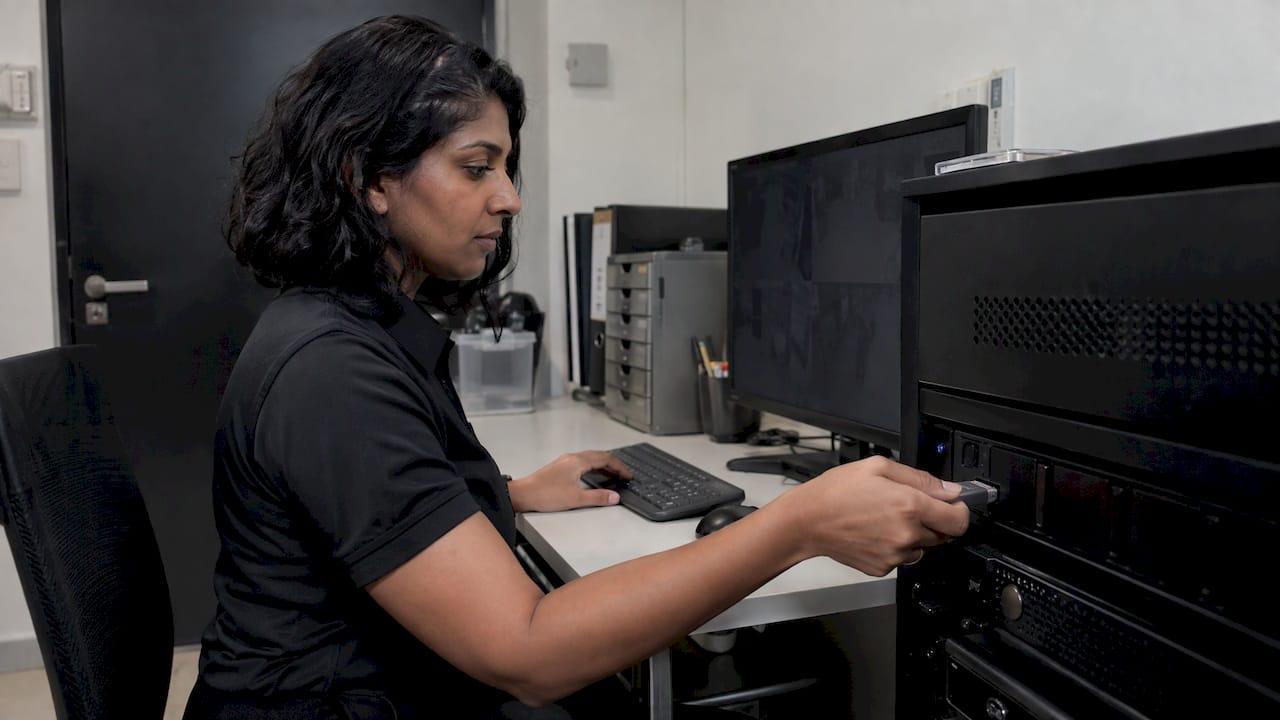
Video Evidence Management: A Singapore Guide for Security Teams
How to capture, store, export and share CCTV footage so it holds up as evidence in Singapore: retention periods, chain of custody, PDPA duties and system criteria.
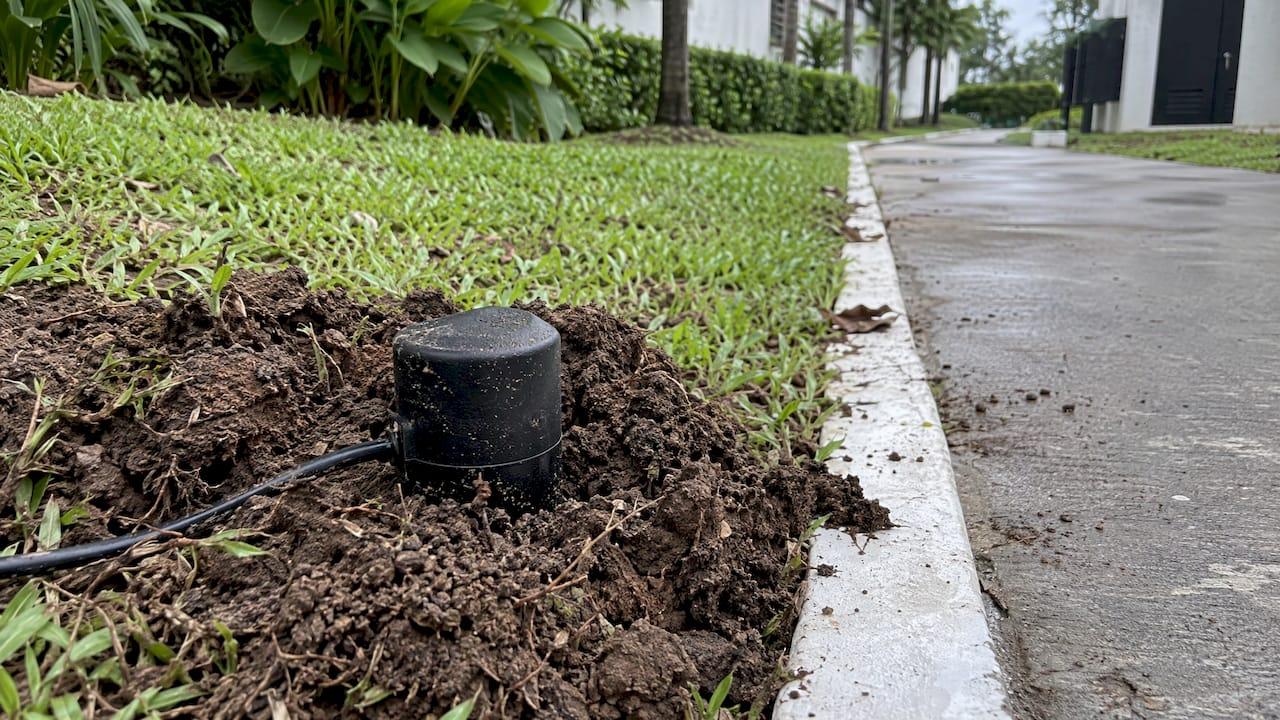
Seismic Intrusion Sensors: How They Work and Where They Fit
How seismic intrusion sensors detect footsteps and tunnelling, how they compare with microwave and infrared, and how to pilot them on a Singapore site.

Visitor Data Privacy in Singapore: A PDPA Guide for Site Teams
How Singapore sites should collect, notify, secure and delete visitor data under the PDPA, and how a digital visitor system makes each duty routine.

CCTV Tender Specifications in Singapore: What to Write and Check
How to write or answer a CCTV tender specification in Singapore: camera, retention, network, analytics and acceptance requirements, with SPF, MOM, IMDA and PUB figures.
Let's Build YourSecurity Ecosystem.
Whether you're a System Integrator, Solution Provider, or an End-User looking for trusted advisory, our team is ready to help you navigate the BeyondSensor landscape.
Direct Advisory
Connect with our regional experts for tailored solutioning.