
Procurement-minded guidance for security teams and facility managers on deploying edge-based thermal analytics: reduce false alarms, verify geospatial...
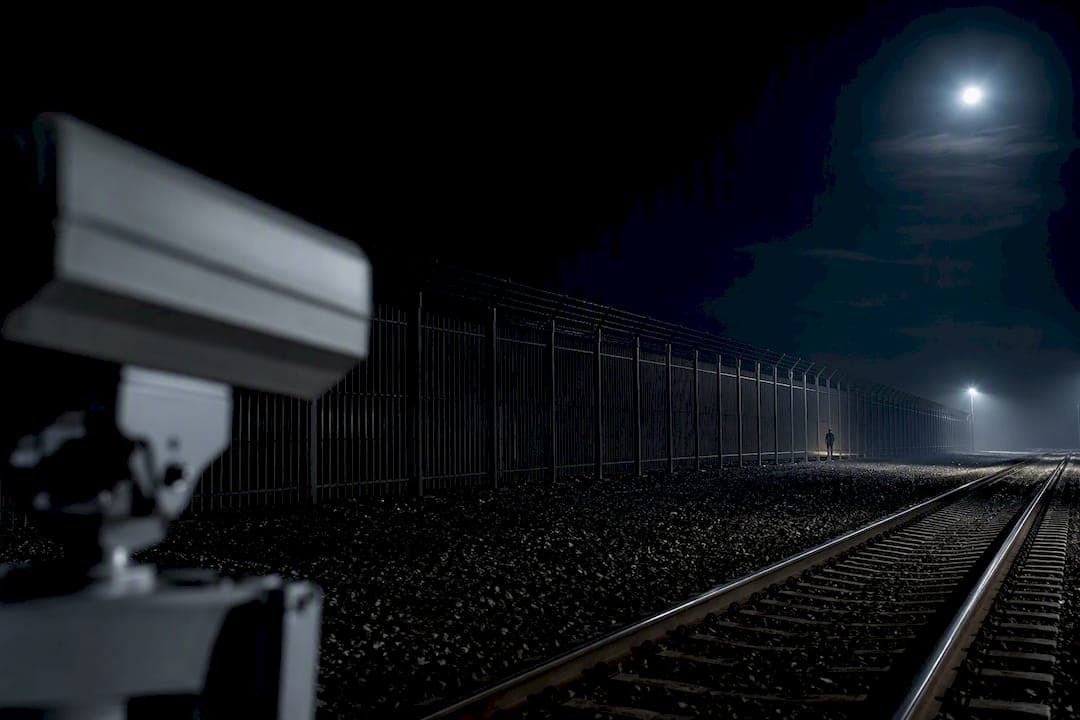
Cut False Alarms with Edge AI Thermal Analytics for Security Teams
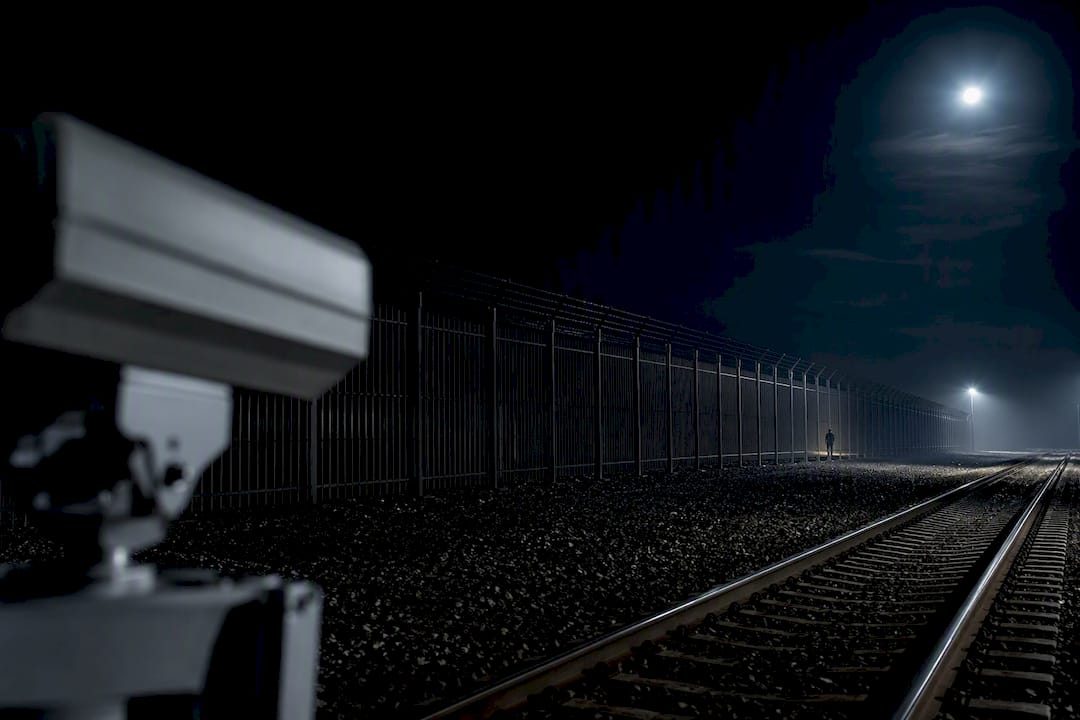
Thermal analytics is the recommended baseline for perimeter protection when reliable long-range detection and low nuisance-alarm rates matter more than raw camera count. The technology pairs thermal imaging with edge AI and geospatial filtering to flag real intrusions while reducing false alarms such as those from blowing leaves, stray cats, and headlight glare. Facility managers should validate any vendor claim with acceptance tests before rollout, and BeyondSensor builds that testing directly into its deployment process.
TL;DR:
- Proper placement and calibration are essential, including mounting height and tilt angle, to ensure accurate distance and detection performance.
- Edge processing of thermal footage yields better detection accuracy than cloud analysis, especially with purpose-trained classifiers tailored to thermal signatures.
- Verification through inbound detection trials across various weather conditions is crucial before full deployment, focusing on real-world site factors.
- Combining thermal sensors with visible-light verification reduces false alarms and privacy risks by activating recording only after thermal alerts.
- Acceptance tests should include geospatial accuracy, false alarm rate, and detection range validation during actual night conditions to ensure system reliability.
Table of Contents
- What Makes Thermal Imaging the Foundation for Perimeter Detection
- How Thermal Analytics Plus AI Cuts False Alarms
- Deployment Best Practices for Perimeter Thermal Analytics
- Sensor Fusion: Thermal Detection With Visible-Light Verification
- Procurement Checklist for Thermal Analytics Systems
- BeyondSensor's Approach to Perimeter Thermal Deployment
- What Switching to Thermal Analytics Actually Feels Like
- How BeyondSensor Helps You Deploy Thermal Analytics Security
- Sources
What Makes Thermal Imaging the Foundation for Perimeter Detection
Thermal sensors read heat, not light. They detect infrared radiation in the 8 to 14 micron band, a range NASA confirms sits well beyond what the human eye or a standard camera sensor can register. That property is why thermal cameras keep working in total darkness, dense fog, and blinding sun glare, conditions that blind visible-light systems and generate the majority of nuisance alarms on unlit fence lines. A comparison of consumer and professional infrared sensors also shows why phone-mounted thermal add-ons fall short for security work: they lack the calibration and resolution long-range detection requires.
Thermal still has one hard limit worth stating plainly. It reads surface heat along a direct line of sight, and it cannot see through walls, fences, or vegetation, a point industry testing has confirmed despite the persistent myth otherwise.
Where thermal earns its place on a perimeter:
- Unlit tree lines and open fields where visible cameras produce black frames at night
- Coastal or industrial sites with recurring fog or heavy dust
- Wide open yards where a single thermal sensor can replace several visible cameras
- Sites with frequent wildlife activity that would otherwise trip motion-only alarms
How Thermal Analytics Plus AI Cuts False Alarms
Raw thermal footage alone still triggers on anything warm that moves. The reduction in nuisance alarms comes from what happens to that footage next, and where it happens matters as much as how.
Edge processing versus compressed streams. Cameras that run analytics on-camera, working from raw thermal data, catch subtle contrast differences that get lost once video is compressed for network transport. SDM Magazine's analysis of perimeter analytics notes this is why edge-based detection consistently outperforms cloud analytics running on downstream, degraded footage.
Purpose-trained thermal classifiers. AI models trained on visible-light footage misread heat blobs. Models trained specifically on thermal signatures distinguish a person from a deer or a delivery truck by shape and gait patterns unique to infrared, a distinction Security Magazine's coverage of thermal AI identifies as the single biggest driver of accuracy at night.
Geospatial calibration. Feeding a camera's tilt, yaw, and mounted height into the analytics engine lets it calculate real-world size, speed, and distance for every detection, not just pixel movement.
The layered flow looks like this in practice:
- Raw thermal sensor captures a heat signature crossing a defined zone.
- Edge AI classifies the object as human, vehicle, or animal.
- Geospatial filtering checks the object's calculated size and speed against the zone's rules.
- Only detections that pass all three layers escalate to an operator alarm.
Pro Tip: Ask any integrator to show you the geospatial calibration inputs for a proposed camera position before signing off. A sensor mounted at the wrong height or tilt angle will misjudge distance no matter how good its AI model is.
Deployment Best Practices for Perimeter Thermal Analytics
Detection-range specs on a spec sheet often describe inbound movement, an object walking directly toward the sensor, which is typically the easiest angle to detect. Cross-field movement, where a target walks parallel to the camera, reduces effective range substantially because less of the thermal signature is visible per frame. It is important to verify which geometry a detection-range number describes.
Placement decisions that make or break performance:
- Mount height should clear ground-level heat clutter from pavement, vehicles, and HVAC exhaust.
- Tilt angle needs to match the geospatial calibration inputs entered into the analytics engine, not just eyeballed in the field.
- Adjacent camera fields of view should overlap slightly at zone boundaries to avoid blind gaps.
- Sightlines need to stay clear of seasonal vegetation growth that will block detection by midsummer.
Two technical specs deserve a place in every RFP: NETD (noise-equivalent temperature difference), which determines how well a sensor distinguishes subtle temperature variations at range, and scheduled flat-field correction cycles, which help maintain detection accuracy over time. Skipping either spec can lead to degradation of system performance after installation.
Acceptance testing should include inbound trials at the required detection range, repeated across weather conditions, plus a check of geospatial accuracy using a known-size target at a known distance. Running analytics at the edge also cuts bandwidth and storage costs, since verified alerts travel the network instead of continuous raw video, a savings, SDM Magazine's technical review ties directly to lower total cost of ownership. Any edge device on the network also needs standard cybersecurity hygiene: firmware update cycles, credential management, and network segmentation from general IT traffic.
Sensor Fusion: Thermal Detection With Visible-Light Verification
Thermal tells you something crossed the fence line. It does not identify a face, read a license plate, or provide court-ready visual evidence on its own. That is where dual-sensor, or bi-spectrum, cameras earn their premium: pairing a thermal detector with a visible-light sensor in the same housing lets teams verify without adding false positives.
The workflow that works best in the field:
- Thermal sensor detects and classifies the object, triggering the alarm.
- Visible sensor activates recording only after the thermal trigger fires, adding forensic detail without running continuously.
- A human operator reviews the visible clip to confirm the alarm before dispatch.
Bi-spectrum cameras built this way limit privacy exposure too. Since the visible sensor only records after a genuine thermal detection, the system avoids capturing continuous footage of every passerby, a meaningfully lighter privacy footprint than always-on visible cameras and a point worth raising with any legal or compliance reviewer signing off on the installation.
Procurement Checklist for Thermal Analytics Systems
Copy this into any RFP or acceptance plan before signing a contract with an integrator:
- Require purpose-trained thermal AI, not a repurposed visible-light model running on thermal input.
- Require documented geospatial calibration for every camera position, including tilt, yaw, and mounted height.
- Require tamper detection that alerts on lens obstruction or camera movement.
- Run inbound-direction detection trials at the contracted range, not just a manufacturer's lab spec.
- Repeat acceptance trials across at least two weather conditions, including night and fog or rain if the site sees them.
- Confirm NETD and flat-field correction schedules in writing.
- Set a false-alarm-rate SLA and a mean-time-to-verify target the integrator is contractually accountable for.
- Confirm local integration support and a firmware update commitment before the contract closes.
Detection probability at range, false-alarm rate, and mean-time-to-verify are the three numbers worth tracking after go-live, not just at the acceptance demo.
BeyondSensor's Approach to Perimeter Thermal Deployment
A specialized technology company builds tailored hardware and software solutions for physical security and industrial sites across Southeast Asia, with offices planned in additional countries. That regional footprint means calibration and acceptance testing happen with local site conditions in mind, not a generic spec sheet.
A typical rollout follows a predictable sequence:
- A site survey maps sightlines, heat clutter sources, and mounting constraints.
- A proof-of-concept deployment validates detection accuracy on a limited zone.
- A pilot expands coverage and runs acceptance tests across weather conditions.
- Full rollout integrates the thermal analytics platform with existing access control and monitoring systems.
Integrators and government agencies working with BeyondSensor get a partner focused on advanced sensing tools built for the operational reality of a fence line, not a lab demo.
What Switching to Thermal Analytics Actually Feels Like
The single biggest shift when a site moves to thermal analytics is not the detection range. It is watching operators stop dismissing alarms out of habit. On a legacy motion-detection system, a raccoon at 2 AM trains staff to ignore every alert. Cut the false-alarm volume with proper classification and geospatial filtering, and operators start trusting the system again.
If there is one acceptance test worth insisting on before final payment, it is an inbound trial at the contracted range during actual night conditions, not a manufacturer demo video. That single test exposes more gaps between spec sheet and reality than any other step in the process.
— Eumir
How BeyondSensor Helps You Deploy Thermal Analytics Security
The direct route to a working thermal analytics deployment can be offered rather than a stack of separate hardware, software, and integration vendors you have to coordinate yourself. Integrated sensor hardware, purpose-trained thermal analytics, and local systems integration can be delivered as one package, sometimes backed by regional presence in Southeast Asia.

For system integrators evaluating a thermal analytics partner, the practical next step is a technical site survey followed by a proof-of-concept deployment on a limited zone, exactly the sequence outlined earlier for acceptance testing. That approach lets you validate detection accuracy and false-alarm rates on your own site before committing to a full rollout. Custom classifier work, similar to the computer vision capabilities gamgi builds for specialized detection tasks, can also be scoped in where a site has unusual heat-signature challenges. Visit the BeyondSensor system integrators page to start a technical survey and set your own acceptance criteria before the first camera goes up.
Sources
- The power of thermal analytics & AI for robust perimeter protection (SDM Magazine blog)
- Can thermal imaging cameras see through walls? (Raythink Tech blog)
- Comparison of iOS smartphone-attached infrared camera and conventional FLIR camera (ResearchGate)
Recommended
Read More Articles

Buy Right: Gunshot Detection for Security Teams, 8 Questions
A specifier's playbook for gunshot detection: procurement and commissioning checklists, 8 vendor questions, verification steps, and a 3–6 month pilot rule.
Remote Site Monitoring: 72 Hour Buffering, Procurement Checks, and ROI
Operator focused technical guide to remote site monitoring. Specify sensors and gateways, sequence pilots, avoid vendor lock-in, and prove ROI.

3–6 Month Pilot: PSIM Driven SOC Setup for Integrators
Integration-first playbook for integrators and facilities teams: inventory devices, write open-API RFPs, run a 3–6 month pilot, measure KPIs, and cut...
Open Standards, Edge Resilient Access Control: 5 Steps for Integrators
Five practical steps for security integrators to build open standards, edge resilient access control systems and avoid costly rework.
Let's Build YourSecurity Ecosystem.
Whether you're a System Integrator, Solution Provider, or an End-User looking for trusted advisory, our team is ready to help you navigate the BeyondSensor landscape.
Direct Advisory
Connect with our regional experts for tailored solutioning.