
Stay secure with our comprehensive security risk assessment checklist. Identify, score, and prioritize risks to protect your facility effectively.

Security Risk Assessment Checklist for Facility Owners

TL;DR:
- A security risk assessment checklist identifies, scores, and prioritizes risks across critical security domains using industry frameworks. It enhances security by covering all core areas, applying quantitative risk scores, and supporting scheduled, repeatable workflows with automation and cross-framework mapping. Continuous, programmatic assessments enable security teams to maintain audit readiness and address emerging threats effectively.
A security risk assessment checklist is a structured tool that identifies, scores, and prioritizes security risks across every critical domain of your facility or organization. Industry frameworks like NIST SP 800-30 and ISO 27001 define the methodology behind these checklists, turning subjective security opinions into consistent, trackable action items. The most effective checklists cover 9–10 core security domains and pair each finding with a quantitative risk score. That combination gives security professionals and facility owners a clear, defensible path from assessment to remediation.
What a security risk assessment checklist must cover
Comprehensive checklists cover 9–10 core domains to achieve full security posture coverage. Skipping even one domain creates blind spots that attackers and auditors will find before you do. Each domain below represents a distinct attack surface that requires dedicated evaluation.
- Network and infrastructure security. Verify firewall rules, network segmentation, intrusion detection systems, and patch levels. Unpatched network devices are among the most commonly exploited entry points in facility environments. Beyondsensor's sensor-based infrastructure tools support continuous monitoring at this layer.
- Identity and access management (IAM). Confirm that multi-factor authentication is enforced, privileged accounts are reviewed quarterly, and terminated employee access is revoked within 24 hours. IAM failures account for a significant share of data breaches across industries.
- Data protection and encryption. Check that data at rest and in transit uses current encryption standards. Classify data by sensitivity and confirm that classification drives access controls.
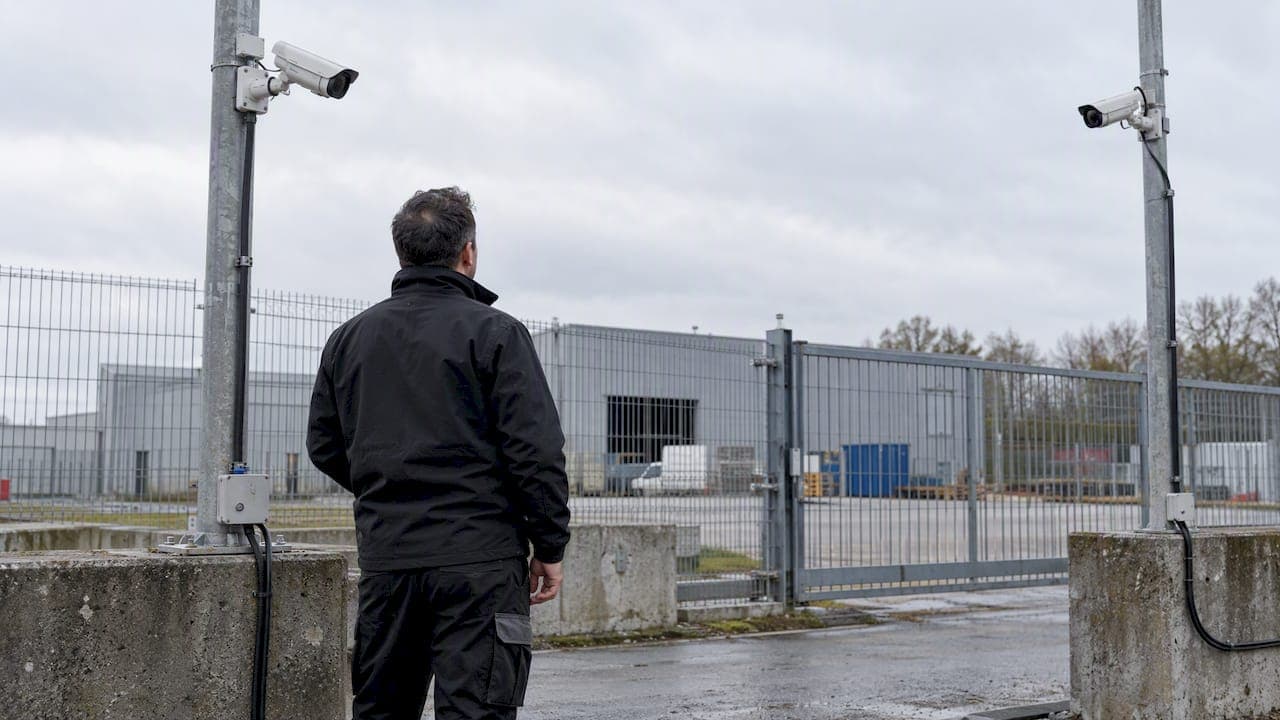
- Physical security. Assess access control systems, surveillance camera coverage, visitor management logs, and perimeter integrity. Physical and cyber risks are not separate problems. They intersect at every facility. For a detailed breakdown, review physical security best practices that align with checklist-driven assessments.
- Third-party and vendor risk. Evaluate vendor contracts for security obligations, review third-party access logs, and confirm that vendors undergo periodic security reviews. Third-party breaches frequently originate from unreviewed vendor access.
- Endpoint security. Confirm that all endpoints run current antivirus software, receive automated patch updates, and are enrolled in a mobile device management program.
- Incident response readiness. Verify that an incident response plan exists, has been tested within the past 12 months, and assigns clear ownership for each response phase.
- Security awareness and training. Confirm that all staff complete annual security training and that phishing simulation results are tracked and acted upon.
- Compliance and regulatory alignment. Map your controls to applicable frameworks such as NIST, ISO 27001, or regional regulations. For facilities operating in Southeast Asia, security compliance frameworks provide region-specific guidance.
- Logging, monitoring, and audit trails. Confirm that logs are centralized, retained for the required period, and reviewed on a defined schedule.
Pro Tip: Tailor your domain list to your environment. A data center prioritizes network segmentation and IAM. A manufacturing facility weights physical security and endpoint controls on operational technology networks more heavily.
How quantitative risk scoring improves security assessments

The likelihood-impact matrix is the industry-standard method for prioritizing risks after identification. It scores each risk on two axes: how likely the threat is to occur, and how severe the impact would be if it did. The resulting score drives a treatment decision: mitigate, accept, transfer, or avoid.
| Matrix size | Best use case | Scoring granularity |
|---|---|---|
| 3x3 | Small facilities, quick assessments | Low / Medium / High |
| 4x4 | Mid-size organizations | Adds a "critical" tier |
| 5x5 | Enterprise and regulated environments | Full spectrum prioritization |
A 5x5 matrix gives enterprise security teams the granularity to separate a high-likelihood, low-impact risk from a low-likelihood, catastrophic-impact risk. That distinction matters when allocating limited remediation budgets. A quantitative risk matrix shifts security discussions from subjective opinions to objective, business-aligned decisions that leadership can act on.
Pro Tip: Embed your risk scores directly into your remediation tracking system. When scores are tied to tickets and deadlines, risk reduction becomes measurable rather than aspirational.
Best practices for executing and maintaining effective assessments
Execution quality determines whether your assessment produces findings you can act on or findings that sit in a report. The process breaks into three phases: preparation, execution, and follow-through.
Preparation. Define the scope before any data collection begins. Skipping pre-assessment scoping produces technically accurate findings that lack business context, making prioritization nearly impossible. Identify stakeholders from IT, operations, legal, and facility management. Select the framework that matches your compliance obligations.
Execution. Work through each domain systematically. Collect evidence for every checklist item: screenshots, configuration exports, policy documents, and access logs. Assign a risk score to each finding before moving to the next domain. Document gaps with enough detail that a remediation owner can act without asking follow-up questions.
Follow-through. Assign every finding to an owner with a deadline. Track remediation progress in a shared system. Schedule a validation review 60–90 days after the assessment to confirm that high-priority items are closed.
Security assessments deliver value only when they are treated as scheduled, repeatable workflows rather than one-time events. Annual assessments with quarterly check-ins on open findings produce measurably better security outcomes than ad hoc reviews.
Maintaining audit readiness year-round means keeping access logs, data classification records, and incident response documentation current at all times. That practice eliminates the scramble that typically precedes a compliance audit and gives your team a live view of security posture. For a step-by-step approach to building this into your operations, the security compliance guide for sensing systems offers a practical framework.
Pro Tip: Automate evidence collection wherever possible. Configuration management tools and security information and event management (SIEM) platforms can pull logs and access reports automatically, cutting manual preparation time significantly.
How cross-framework mapping and automation drive efficiency
Cross-framework mapping connects controls from one standard to equivalent controls in another. Mapping NIST to ISO 27001 reduces audit burden because a single control implementation satisfies requirements in both frameworks simultaneously. That efficiency compounds when you add CIS Controls to the mapping. One assessment cycle can satisfy three regulatory requirements instead of one.
Cross-framework control mapping is particularly valuable for managed security service providers (MSSPs) and system integrators managing multiple client environments with different compliance obligations. A single mapped checklist becomes a reusable template across clients.
Automation amplifies that efficiency further. Automation platforms reduce assessment time by 60–70% and improve result consistency across environments. That time reduction is not just a convenience. It allows security teams to run assessments more frequently and catch emerging risks before they become incidents.
| Assessment method | Time per assessment | Consistency | Scalability |
|---|---|---|---|
| Manual (spreadsheet-based) | High | Variable | Low |
| Platform-based (automated) | 60–70% lower | High | High |
Manual assessment methods introduce human error and inconsistency, especially when different analysts conduct assessments across multiple sites. Platform-based approaches apply the same logic every time, making results comparable across periods and locations. For facility owners managing multiple sites, that comparability is the difference between a security program and a security guess. You can also explore advanced analytic cameras as part of the physical layer that automation platforms can monitor and integrate.
Pro Tip: When selecting an automation platform, confirm it supports your specific compliance frameworks, integrates with your existing ticketing system, and produces audit-ready reports without manual formatting.
Key Takeaways
A security risk assessment checklist is most effective when it covers all 9–10 core domains, applies quantitative risk scoring, and runs as a scheduled, repeatable workflow supported by cross-framework mapping and automation.
| Point | Details |
|---|---|
| Cover all 9–10 domains | Missing even one domain creates exploitable blind spots in your security posture. |
| Use a likelihood-impact matrix | Quantitative scoring turns subjective risk discussions into objective, prioritized decisions. |
| Scope before you assess | Pre-assessment scoping gives findings the business context needed for effective prioritization. |
| Maintain year-round readiness | Current documentation on access, classification, and incident response prevents audit scrambles. |
| Automate for consistency | Automation platforms cut assessment time by 60–70% and produce comparable results across sites. |
What most security teams get wrong about risk assessments
Security assessments fail most often not because of technical gaps, but because of process gaps. I have seen teams produce technically thorough findings that leadership could not act on because the findings were not tied to business impact. A vulnerability scored "critical" in a lab context may be "low priority" in a specific operational environment. That distinction only emerges when scoping is done properly before the assessment begins.
The other pattern I see repeatedly is treating the assessment as an event rather than a program. Teams complete the checklist, file the report, and move on. Twelve months later, they repeat the same assessment and find the same open findings. The checklist did not fail. The follow-through did.
What actually works is building the assessment into your operational calendar the same way you schedule fire drills or equipment maintenance. Quarterly reviews of open findings, annual full assessments, and continuous monitoring between cycles create a security program that compounds over time. Technology helps here. Sensor-based monitoring and AI-driven analytics give you real-time visibility between formal assessment cycles, so you are not flying blind for 11 months out of 12.
The teams that get this right also treat user training as a checklist item, not an afterthought. Security culture is measurable. Phishing simulation click rates, training completion rates, and incident reporting frequency are all data points that belong in your risk assessment. If your checklist does not include them, your assessment is incomplete.
— Eumir
Beyondsensor's AI tools support your assessment program
Beyondsensor builds sensor-based security solutions designed for the operational realities that security professionals and facility owners face every day. Its AI-powered monitoring tools integrate directly with physical security infrastructure, providing the continuous data streams that make year-round audit readiness achievable rather than aspirational.

Where manual assessments leave gaps between cycles, Beyondsensor's analytics layer keeps your security posture visible in real time. The platform supports the physical security and infrastructure domains that checklist-driven assessments identify as high priority. Security teams and system integrators can explore the full range of AI-powered security tools to see how sensor intelligence fits into their assessment workflow. For a broader view of how Beyondsensor supports end-to-end security programs, the Beyondsensor platform covers the full solution set.
FAQ
What is a security risk assessment checklist?
A security risk assessment checklist is a structured document that guides security professionals through the systematic identification, scoring, and prioritization of risks across all critical security domains. It operationalizes frameworks like NIST SP 800-30 and ISO 27001 into consistent, repeatable action items.
How many domains should a security checklist cover?
A comprehensive checklist covers 9–10 core domains, including network security, IAM, data protection, physical security, third-party risk, endpoint security, incident response, training, compliance, and logging. Covering fewer domains leaves measurable gaps in your security posture.
How often should a security risk assessment be conducted?
Security assessments are most effective when run annually as a full review, with quarterly check-ins on open findings. Treating assessments as scheduled, repeatable workflows produces better security outcomes than ad hoc reviews.
What is a likelihood-impact matrix in risk assessment?
A likelihood-impact matrix scores each identified risk on two dimensions: probability of occurrence and severity of impact. The combined score drives a treatment decision, whether to mitigate, accept, transfer, or avoid the risk.
How does automation improve a security risk assessment?
Automation platforms reduce assessment time by 60–70% and apply consistent scoring logic across all environments and assessment cycles. That consistency makes results comparable over time and across multiple sites, which is critical for facility owners managing more than one location.
Recommended
Read More Articles

RTSP Security Risks: Integrators Must Block Exposed Ports 554 and 8554
See how integrators can reduce RTSP security risks: close exposed ports 554 and 8554, secure camera access, and verify each deployment with practical checks.

Require MAEpp and X Accuracy Before You Buy People Counting Systems
Verify people counting accuracy by demanding MAEpp, X Accuracy, and directional-bias reports. Validate on-site with at least 100 events per direction...
30–90 Day Pilot Validates Redundant Camera Networks for Engineers
Standards led, practical steps for engineers to deploy redundant camera networks: MRP, dual homing, and aggregation patterns, commissioning checks, and...

30 Day Pilot Proves Video Analytics Accuracy for Security Teams
Validate video analytics accuracy with scenario tests, camera tuning, transfer learning and a 30 day edge first pilot for security teams.
Let's Build YourSecurity Ecosystem.
Whether you're a System Integrator, Solution Provider, or an End-User looking for trusted advisory, our team is ready to help you navigate the BeyondSensor landscape.
Direct Advisory
Connect with our regional experts for tailored solutioning.