
Learn how to secure your facility with advanced sensor technology. Achieve over 95% detection accuracy using AI-driven, layered sensor security strategies.

How to Secure Facilities with Advanced Sensor Technology

TL;DR:
- Modern sensor-based security provides over 95% detection accuracy, surpassing legacy systems.
- Integration of sensors with building systems enhances rapid detection and coordinated response.
- Regular maintenance and layered detection strategies are vital for sustained security effectiveness.
Modern facilities face a security reality that traditional systems were never designed to handle. Perimeter breaches, insider threats, and cyber-physical attacks are rising across industrial and commercial properties, while aging camera networks and manual patrol schedules leave critical blind spots unaddressed. Sensor-driven security changes that equation. By combining 3D LiDAR, infrared, acoustic, and AI-powered analytics, facility owners can achieve detection accuracy that legacy systems simply cannot match, while simultaneously improving operational efficiency across every zone of their property.
Table of Contents
- Assess current facility security and set objectives
- Select and integrate the right sensor technologies
- Implement layered detection and response strategies
- Monitor, maintain, and verify security effectiveness
- A fresh perspective on facility security: Integration over isolation
- Ready to secure your facility with advanced sensors?
- Frequently asked questions
Key Takeaways
| Point | Details |
|---|---|
| Sensor integration boosts accuracy | Deploying AI-powered sensors dramatically improves intrusion detection and operational safety. |
| Layered approaches reduce risk | Combining perimeter, interior, and process sensors strengthens facility defenses without costly isolation. |
| Ongoing maintenance is essential | Regular calibration and monitoring ensure sensors deliver consistently high security performance. |
| Integrated systems outpace isolation | Integrating sensor data with automation allows faster, smarter incident response and more efficient management. |
Assess current facility security and set objectives
Before deploying a single sensor, you need a clear picture of where your facility stands today. Most facilities have a patchwork of security measures: analog cameras, card-access readers, and periodic guard patrols. These systems work in isolation, creating gaps that threats can exploit. A structured self-assessment changes that.
Start by walking your perimeter and identifying physical vulnerabilities. Look at fence lines, loading docks, utility access points, and emergency exits. Then move inward to map camera coverage and locate blind spots. Pay attention to networked control systems, including HVAC, electrical panels, and process automation equipment, because these are increasingly targeted in cyber-physical attacks.
Here is a quick comparison of what legacy systems deliver versus what modern sensor-based solutions provide:
| Security Dimension | Legacy Systems | Sensor-Based AI Solutions |
|---|---|---|
| Detection accuracy | 60-75% | Over 95% |
| False alarm rate | High | Significantly reduced |
| Coverage continuity | Gaps during shift changes | 24/7 uninterrupted |
| Threat classification | Manual review required | Automated, real-time |
| Integration capability | Limited | Full building automation |
The numbers tell the story. Benchmark research shows advanced AI and sensor-based intrusion detection offers over 95% accuracy, outperforming legacy systems by a wide margin.
When setting your security objectives, make them measurable. Examples include reducing blind spots by 90%, cutting false alarm rates by half, or integrating sensor data with your building automation system within a defined timeline. Vague goals produce vague results.
Key areas to assess during your initial audit:
- Perimeter integrity: Fence condition, gate controls, lighting coverage
- Access point security: Door sensors, credential verification, tailgating detection
- Camera blind spots: Coverage gaps in stairwells, parking areas, and loading zones
- Critical infrastructure exposure: Networked systems with external connectivity
- Response time baselines: How long it currently takes to detect and respond to an incident
For a structured approach to this process, the sensor security tips resource offers practical guidance on compliance-aligned assessments. You can also explore sensing technologies for facility security to understand which solutions map to specific vulnerability types.
Select and integrate the right sensor technologies
Not every sensor fits every threat. Selecting the right technology requires matching sensor capabilities to the specific risks and environmental conditions of your facility.
Here is how key sensor types map to common threat scenarios:
| Sensor Type | Best For | Coverage Range | Key Strength |
|---|---|---|---|
| 3D LiDAR | Perimeter intrusion, object detection | Up to 200m | High precision in low light |
| Infrared (PIR/thermal) | Motion detection, heat signatures | 10-100m | Works in complete darkness |
| Acoustic sensors | Glass break, gunshot, machinery anomalies | Up to 50m | Detects non-visual threats |
| Radar sensors | Wide-area perimeter, through-fog detection | Up to 500m | Weather-independent |
| Video analytics (AI) | Behavior analysis, crowd detection | Camera-dependent | Contextual threat classification |
AI-powered models applied to sensor data deliver remarkable results. In industrial control system environments, ML models like XGBoost achieve 99% binary accuracy on real-world intrusion detection using sensor data, making the case for AI integration compelling.
The integration process follows a logical sequence:
- Plan: Define sensor placement based on your vulnerability map. Account for power, network connectivity, and environmental conditions.
- Pilot: Install sensors in the highest-risk zone first. Validate detection performance and calibrate sensitivity thresholds before expanding.
- Integrate: Connect sensors to your central management platform via secure APIs. Ensure data flows into dashboards and triggers automated alerts.
- Validate: Run controlled test scenarios to confirm detection accuracy, response times, and alert routing are performing to specification.
The sensor integration guide walks through each phase in detail, and the sensor technology automation resource covers how sensor data can feed directly into industrial automation workflows.
Pro Tip: Layer your sensor architecture using IEC 62443-compliant systems. This standard provides a structured framework for securing operational technology networks, giving you strong cyber-physical resilience without the cost and operational friction of full air-gapping.
Implement layered detection and response strategies
A single sensor layer is a single point of failure. Effective facility security uses multiple overlapping detection zones, each with its own alert logic and escalation path.

Think of it in three tiers. The perimeter layer detects threats before they enter your facility. The interior layer monitors movement and behavior inside controlled zones. The process layer watches critical systems for anomalies that indicate tampering or equipment failure. When all three communicate, your response team gets a complete operational picture in real time.
Here is a step-by-step approach to building layered detection:
- Assessment: Map each zone by risk level. Assign critical, moderate, and low classifications to guide sensor density and alert priority.
- Deployment: Install perimeter sensors first, then interior, then process-level monitors. Sequence matters for calibration and baseline learning.
- Integration: Connect all sensor layers to a unified security operations platform. Configure cross-layer rules so that a perimeter alert automatically elevates interior sensor sensitivity.
- Routine testing: Schedule monthly simulation exercises. Test escalation paths, response team reaction times, and system failover behavior.
Pro Tip: Set different detection thresholds for critical versus non-critical zones. A server room or chemical storage area warrants near-zero tolerance for anomalies. A general parking area can tolerate a slightly higher threshold to reduce nuisance alerts without compromising safety.
"Regular incident simulation is not optional. Facilities that drill their response workflows quarterly identify system gaps before adversaries do. The drill is the defense."
Layered IEC 62443 sensor systems reduce risk without the operational cost of physical air-gapping, making them the practical choice for most industrial and commercial environments. Explore how optimizing security workflows with automation can accelerate response times, and review the advantages of sensing solutions for a broader view of operational gains.
Monitor, maintain, and verify security effectiveness
Deployment is not the finish line. Sensor-based security systems degrade in performance without consistent maintenance, and threats evolve faster than most static configurations can handle. Ongoing monitoring and verification are what separate a secure facility from one that only feels secure.
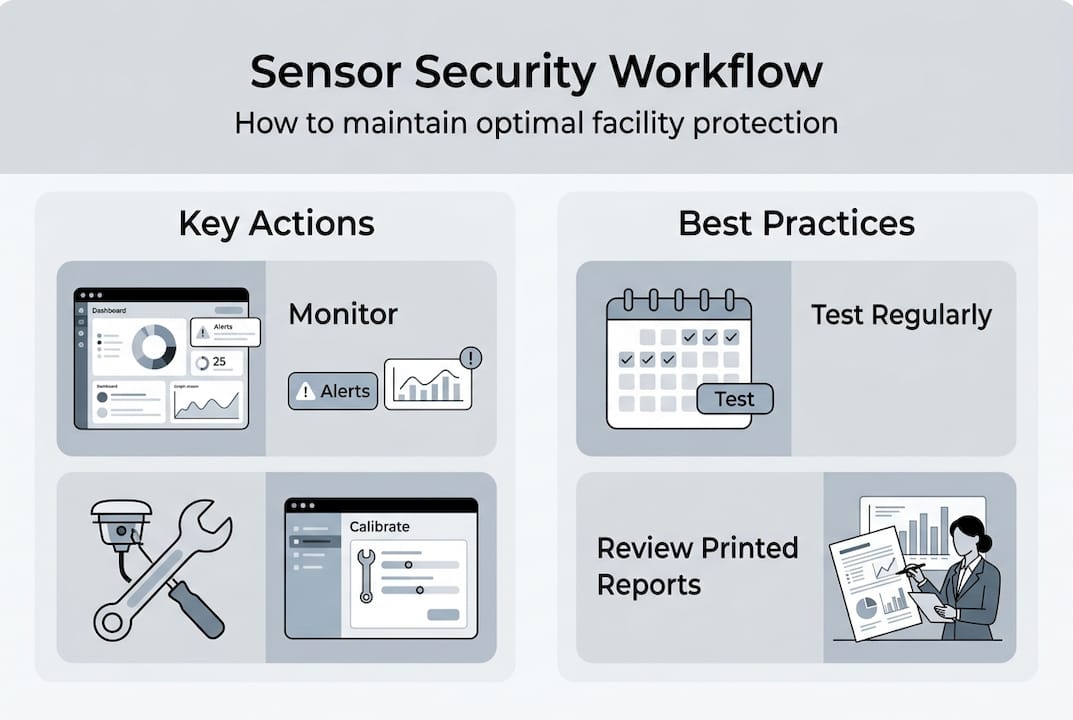
Start with a real-time dashboard that aggregates alerts from all sensor layers. Good dashboards show live status, flag anomalies, and maintain historical logs for incident analysis and compliance audits. Without historical data, you cannot identify patterns or prove system performance to regulators.
Best practices for maintaining peak sensor performance:
- Quarterly calibration checks: Verify sensor sensitivity, field of view, and communication integrity every three months
- Firmware and software updates: Apply patches promptly to close vulnerabilities in sensor firmware and analytics platforms
- Physical inspection: Check for environmental damage, obstructions, and tampering on all exterior sensors
- False alarm analysis: Review alert logs monthly to identify sensors generating excessive noise and recalibrate accordingly
- Compliance audits: Align annual reviews with relevant standards such as IEC 62443 and local regulatory requirements
Key stat: AI-powered detection systems maintain high intrusion accuracy rates when calibration and system updates are performed regularly, with well-maintained systems sustaining 99% accuracy over extended operational periods.
Simulation exercises are equally important. Run tabletop drills and live scenario tests at least twice per year. These exercises reveal whether your escalation protocols still match your current facility layout and staffing model. Facilities change, and your security configuration must change with them.
The security compliance guide provides a step-by-step framework for audit preparation, and sensor technology compliance covers the specific standards most relevant to industrial and commercial facility operators.
A fresh perspective on facility security: Integration over isolation
There is a persistent belief in the security industry that isolation equals protection. Air-gap your systems, keep networks separate, and threats cannot cross the boundary. That model made sense when operational technology and information technology lived in different worlds. They no longer do.
Facilities that cling to strict isolation often create dangerous blind spots. A sensor network that cannot communicate with your access control system cannot trigger a lockdown when it detects an intruder. A fire detection system that does not share data with your HVAC controls cannot prevent smoke from spreading through ventilation. Isolation does not eliminate risk. It just hides it.
Integration, done correctly with proper segmentation and IEC 62443-aligned controls, produces faster detection, coordinated automated responses, and a unified operational view. One facility we work with reduced their average incident response time by over 60% simply by connecting their perimeter LiDAR network to their access control and lighting systems. No new sensors. Just smarter data sharing.
The future of facility security is not about building higher walls. It is about building smarter connections. Tailored security solutions consistently outperform generic, isolated architectures because they are designed around how your facility actually operates.
"Security resilience comes from integration, not isolation. When your systems share data and act together, threats have nowhere to hide."
Ready to secure your facility with advanced sensors?
BeyondSensor delivers the sensor-based security infrastructure that facility owners and managers need to move from reactive to proactive protection. Our solutions span 3D LiDAR, thermal imaging, acoustic detection, and AI-powered analytics, all designed for seamless integration with your existing building management systems.

Whether you are starting a new deployment or upgrading a legacy system, our team provides consultation, custom integration support, and regional validation across Singapore, Malaysia, and the Philippines. Explore sensor solutions for facility owners to see how our offerings align with your operational needs, or connect with our system integrator solutions team to discuss a tailored deployment plan.
Frequently asked questions
What types of sensors are best for securing industrial facilities?
3D LiDAR, infrared, and acoustic sensors are highly effective for industrial security due to their precision across varied environmental conditions. 3D LiDAR achieves over 95% accuracy in benchmark tests, making it a strong foundation for perimeter and interior detection.
How often should sensor-based security systems be maintained or calibrated?
Security sensors should be checked and calibrated at least quarterly to maintain high detection accuracy and reduce false alerts. Regular calibration keeps AI security systems performing at peak accuracy over time.
Can AI-based sensor systems integrate with current building management software?
Yes, most modern AI-based sensor systems offer APIs and modular integration points that connect directly with building management systems for unified control, alerting, and historical reporting.
Is full physical air-gapping required for facility cybersecurity?
No, layered IEC 62443-compliant systems provide strong security without the cost and operational limitations of full air-gapping, making them the preferred approach for most industrial environments.
Recommended
- Top advantages of sensing solutions for secure facilities | News | BeyondSensor
- Top intelligent sensing technologies to boost facility security | News | BeyondSensor
- Understanding advanced sensing: boost security and efficiency | News | BeyondSensor
- Optimize physical security workflows with advanced sensors | News | BeyondSensor
Read More Articles
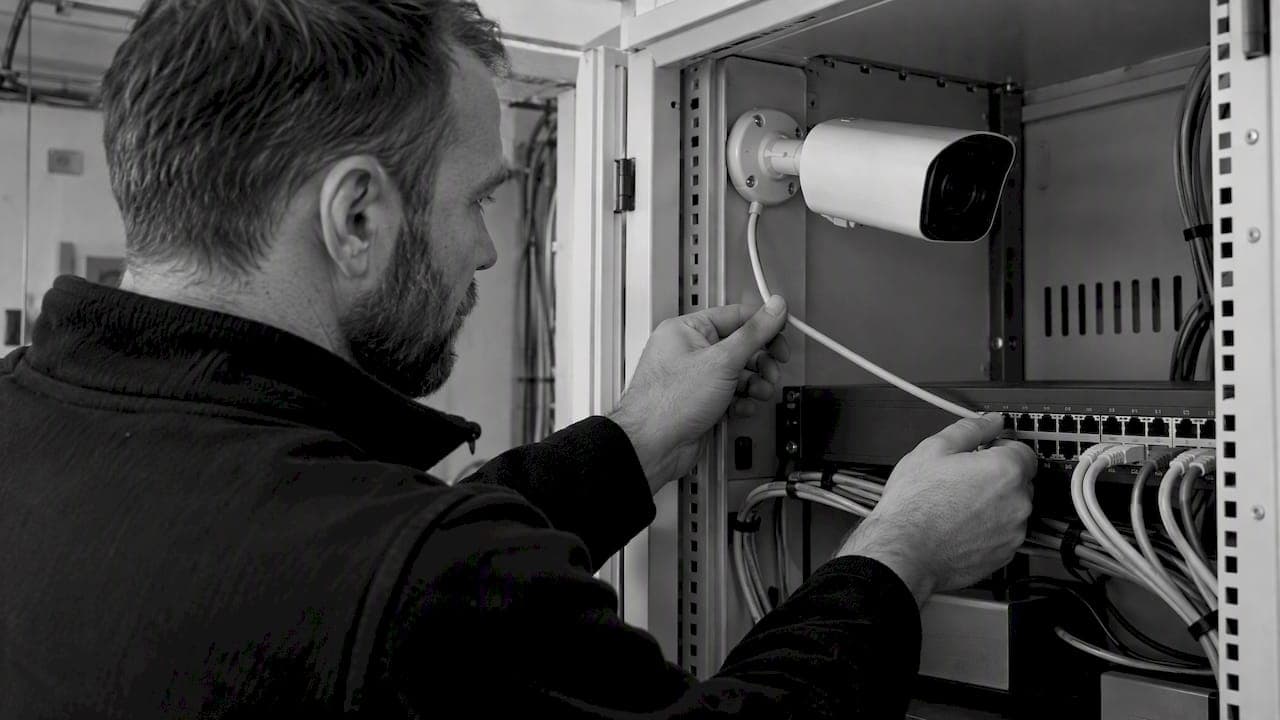
RTSP Security Risks: Integrators Must Block Exposed Ports 554 and 8554
See how integrators can reduce RTSP security risks: close exposed ports 554 and 8554, secure camera access, and verify each deployment with practical checks.
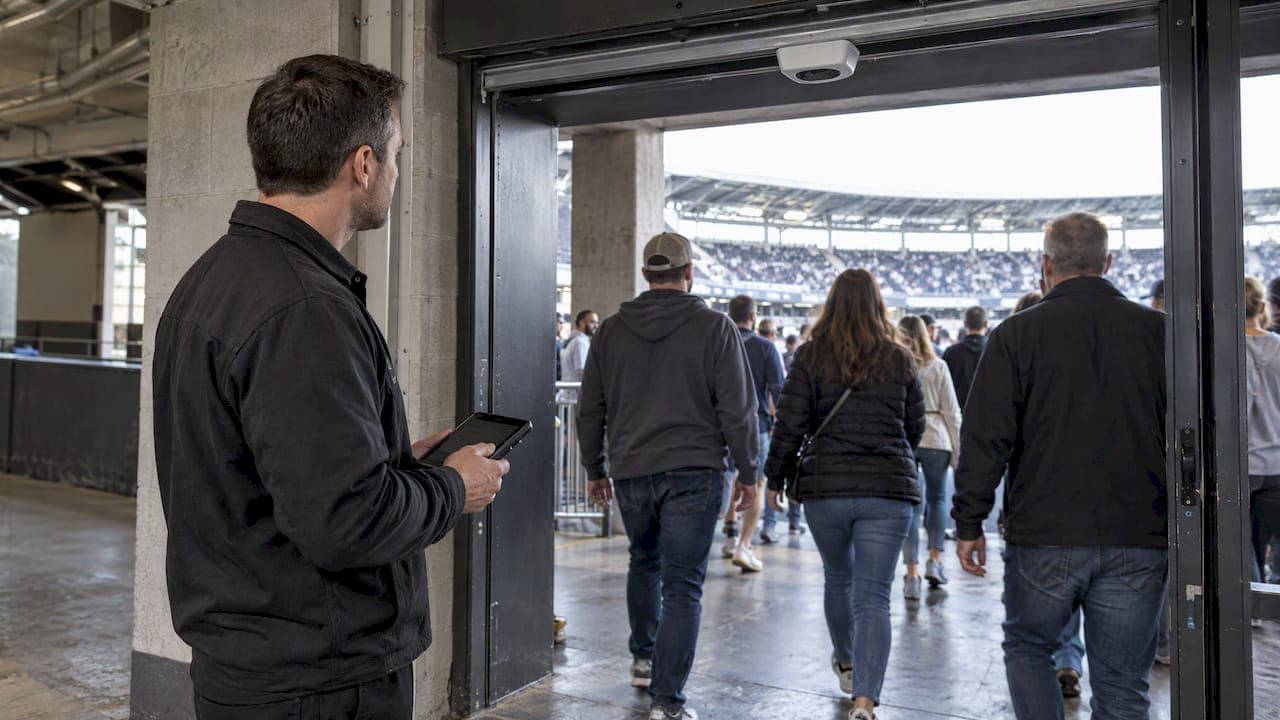
Require MAEpp and X Accuracy Before You Buy People Counting Systems
Verify people counting accuracy by demanding MAEpp, X Accuracy, and directional-bias reports. Validate on-site with at least 100 events per direction...
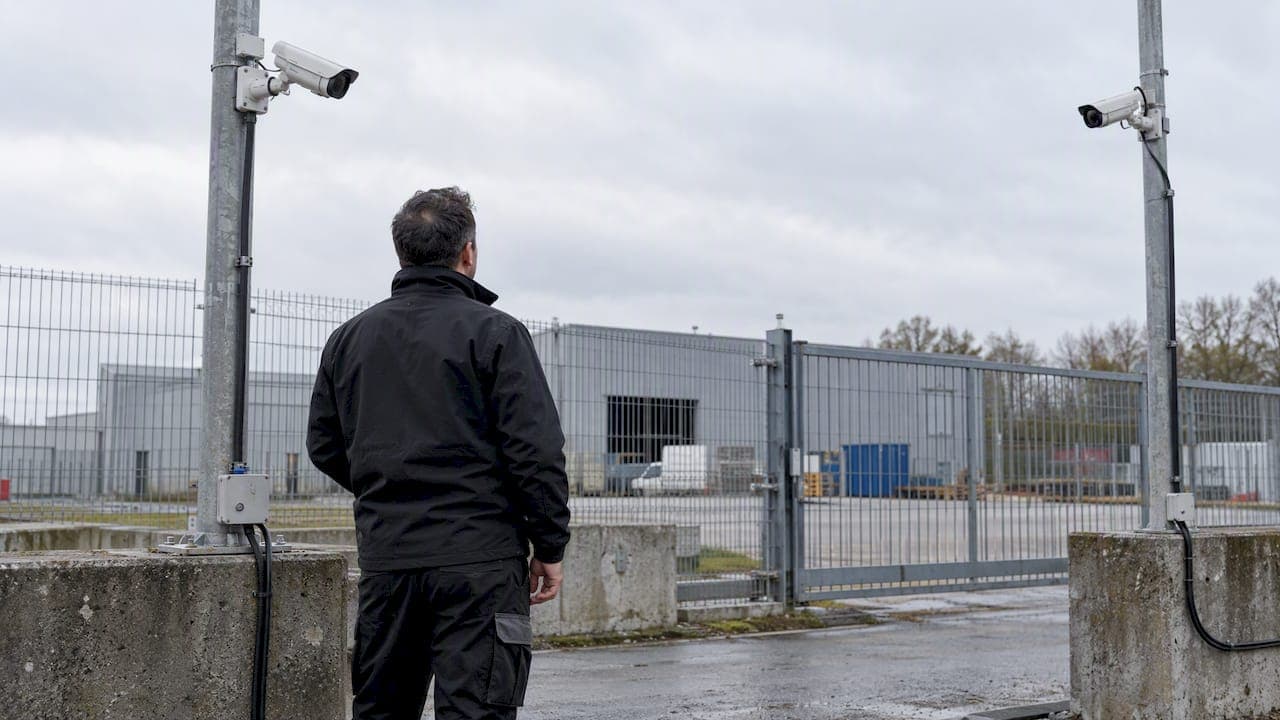
30–90 Day Pilot Validates Redundant Camera Networks for Engineers
Standards led, practical steps for engineers to deploy redundant camera networks: MRP, dual homing, and aggregation patterns, commissioning checks, and...
30 Day Pilot Proves Video Analytics Accuracy for Security Teams
Validate video analytics accuracy with scenario tests, camera tuning, transfer learning and a 30 day edge first pilot for security teams.
Let's Build YourSecurity Ecosystem.
Whether you're a System Integrator, Solution Provider, or an End-User looking for trusted advisory, our team is ready to help you navigate the BeyondSensor landscape.
Direct Advisory
Connect with our regional experts for tailored solutioning.