
Singapore safety managers can monitor heat stress with hourly WBGT readings, apply the 32°C rest rule, and vet wearable alerts before relying on them.
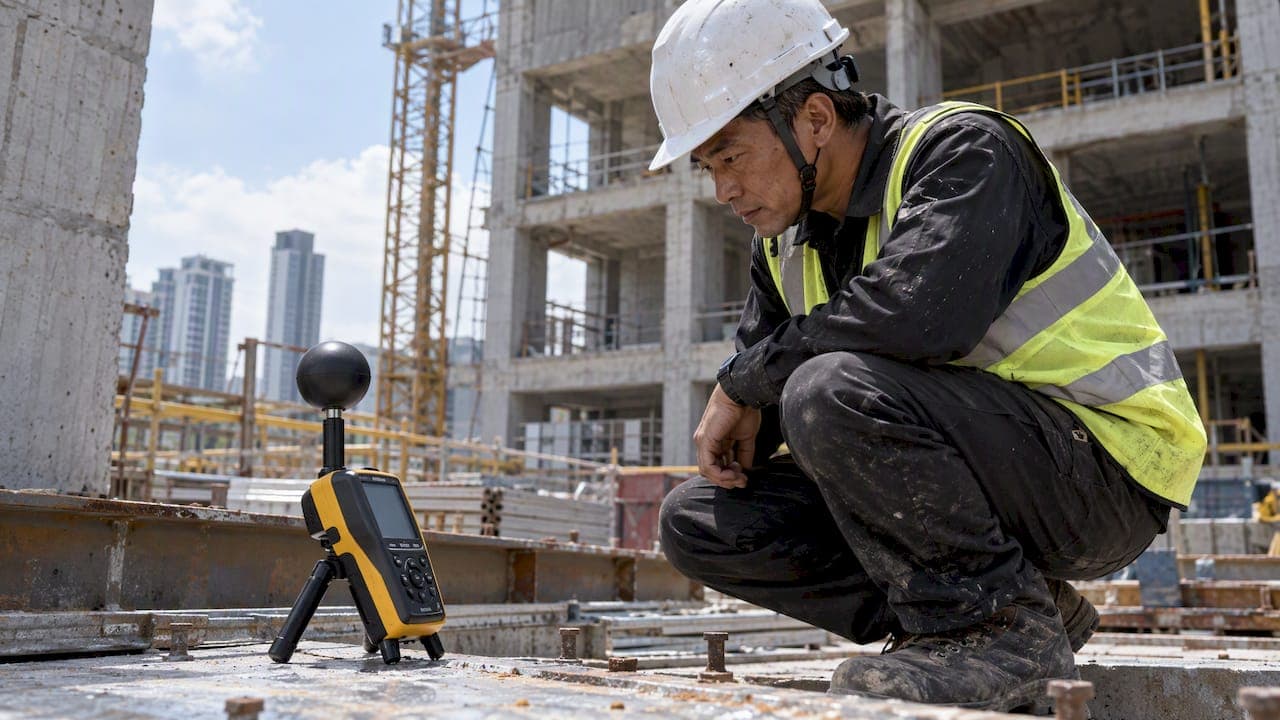
Heat Stress Monitoring for Singapore Safety Managers: The 32°C Rule

Monitor WBGT hourly, use on-site meters where rules require them, and pair those readings with clear work–rest rules and validated physiological monitoring. Under Singapore's outdoor work rules, a WBGT of 32°C or higher means at least 10 minutes of shaded rest every hour for heavy work. Wearables are promising but need validation before you trust their alarms.
TL;DR:
- Singapore requires construction sites with contract sums of S$5 million or more, shipyards, and process industry sites to use calibrated meters and log hourly readings.
- Other workplaces may use NEA’s myENV readings, but should install meters locally when nearby stations miss heat from rooftops, paving, or enclosed spaces.
- Wearable heart rate alerts need baselines for each work environment and pilot validation; use individual alerts to check workers, not diagnose heat strain.
- Singapore guidance recommends a program lasting 14 days for new construction workers, and gradual exposure should restart after a long absence.
Table of Contents
- What WBGT measures and why it beats air temperature
- Who must monitor, and when to start
- How to measure WBGT correctly
- Physiological monitoring: what wearables can and cannot tell you
- Turning readings into action
- Program essentials: roles, records, training and integration
- Sensible sequencing and the pitfalls to avoid
- How we help you set up and sustain monitoring
- FAQ
- Sources
What WBGT measures and why it beats air temperature
Wet Bulb Globe Temperature (WBGT) is a single index built from three readings: natural wet bulb temperature, globe temperature and dry bulb (air) temperature. Natural wet bulb captures how well sweat can evaporate, so it reflects humidity and airflow. Globe temperature captures radiant heat from the sun, hot ground, furnaces and other surfaces. Dry bulb is the ordinary air temperature. Combined, they describe the total thermal load on a working body, not just what a thermometer in the shade shows.

That is why two sites with the same air temperature can carry very different risk. A steel deck in direct sun adds radiant heat that a shaded thermometer never sees. High humidity slows evaporation, so sweat stays on the skin instead of cooling it. Still air removes the little relief that wind provides. The MOM guidelines on WBGT monitoring for outdoor work describe WBGT as the measure to use because it folds all of these factors into one number you can act on.
You will run into other indices. The heat index blends air temperature and humidity but ignores radiant load. The Universal Thermal Climate Index (UTCI) and predicted heat strain models are more detailed and suit research or specialist assessments. A WHO review of climate change and workplace heat stress lists these methods side by side and places physiological monitoring and risk-factor evaluation inside a broader heat action plan.
For routine occupational decisions, WBGT remains the practical choice. Meters are widely available, thresholds are published, and regulators and safety standards already speak in WBGT terms. If you cannot place a meter yet, the OSHA outdoor WBGT calculator estimates WBGT from weather inputs and separates sun from shade estimates. Treat it as a screening aid, because clouds and local microclimates can move the real value away from the estimate.
The takeaway: air temperature tells you how hot the air is, while WBGT tells you how hard the environment is working against a person's ability to cool down.
Who must monitor, and when to start
The legal picture in Singapore is specific. Outdoor workplaces that must conduct hourly WBGT monitoring during hot periods include construction sites with contract sums of S$5 million or more, shipyards and process industry sites, according to MOM's heat stress measures for outdoor work. Those sites need their own calibrated meters and hourly records.
Other outdoor workplaces can refer to the National Environment Agency's myENV app, which publishes WBGT readings from stations around the island. That is an accepted approach, but the reading is only as useful as it is representative. A station across town may not reflect your open yard, your rooftop or your sheltered loading bay. Check how close the nearest station is and whether your site has unusual exposure, such as large paved areas, metal cladding or enclosed spaces that run hotter than the surroundings. If the gap looks material, put a meter on your own site.
Regulation sets the floor. Your own triggers should start monitoring sooner. We suggest moving to continuous, hourly monitoring when any of these apply:
- A heat wave or hot spell appears in the forecast.
- Humidity stays high for days, even if air temperature looks ordinary.
- The work is strenuous, such as lifting, hauling, excavation or work in protective clothing.
- Crews include new, returning or otherwise non-acclimatized workers.
MOM's revised framework for protecting outdoor workers aligns with a three-tier Heat Stress Advisory. The measures it expects include acclimatization, regular hydration, WBGT monitoring, rest breaks under shade, close attention to vulnerable workers and a buddy system. Monitoring is one pillar among several, so plan it as part of that bundle rather than a standalone task.
Contractors add a wrinkle. When several firms share a site, agree in writing who owns the meter, who logs readings and who calls a stoppage. A reading nobody owns is a reading nobody acts on.
How to measure WBGT correctly
A WBGT meter is only useful if its numbers reflect what workers actually experience. Start with the instrument. Look for a unit that reports natural wet bulb, globe and dry bulb temperatures along with the combined WBGT, and check the stated measurement ranges and accuracy against what your site needs. The formal WBGT monitoring guidelines detail meter specifications, calibration points and recommended accuracies, so use them as your purchasing checklist.
Siting matters as much as the meter. The MOM guidance calls for these practices:
- Mount the sensor about 1 meter above ground, on a tripod, so it sits at working height.
- Place it in direct sun for outdoor work, because shade readings understate the load on workers who are exposed.
- Keep it clear of walls, vehicles or stacked materials that block sun or wind.
- Measure near the actual work area, and add a point near any local heat source such as a boiler, kiln or hot pipework.
Large sites need more than one reading. A tower crane crew, a roadside crew and a team working under a reflective facade can face different conditions at the same hour. Put a meter in each distinct zone and assign the highest reading to decisions for that zone.
Give the instrument time to settle. Allow it to reach equilibrium with its surroundings, which means following the manufacturer's instruction or waiting at least 10 minutes after moving it from an air-conditioned office. Then sample hourly during work hours, and write each reading down. The MOM guidelines expect hourly WBGT logs to be kept.
Calibration is the step most often missed. Calibrate annually or as the manufacturer specifies. In Singapore, calibrate through authorized suppliers or SAC-accredited laboratories, and keep every certificate on file. An uncalibrated meter can read low without any visible sign, and a low reading can mean workers keep going when they should be resting. When you shortlist service providers, ask directly about accreditation and turnaround time, so a meter is not out of service during peak heat.
We cover the data side of this in our guide to the sensor data management process, which is worth reading if your meters will feed a central platform instead of a paper log.
Physiological monitoring: what wearables can and cannot tell you
WBGT describes the environment. It does not tell you how a particular person is coping inside it. Physiological monitoring tries to fill that gap. The wearables you will see fall into a few families:
- Heart-rate bands and straps worn on the wrist or arm.
- Chest straps and sensor-equipped undershirts.
- Skin-temperature sensors, worn alone or built into garments.
- Combined garments that add accelerometers, which estimate workload from movement.
The evidence is encouraging but conditional. A peer-reviewed article on heat stress monitoring based on heart-rate measurements supports heart-rate-based indices as useful for indicating heat strain at group level, with limits in individual accuracy. The reason is simple: gold-standard core temperature methods such as rectal or esophageal probes are invasive and impractical in the field, so wearables measure proxies. The OHCOW heat stress toolkit makes the same point and notes that proxies need baseline data and environment-specific validation.
That has practical consequences. A heart rate rises with workload, fitness, hydration, caffeine, stress and heat, so a high number alone does not prove heat strain. Interpreting a wearable alert well takes context: what the person was doing, what the WBGT was and how that person usually responds.
If you run a pilot, build in these safeguards:
- Establish a baseline for your own work environment before setting alarm thresholds.
- Tune thresholds during the pilot, and record every false alarm and every miss.
- Read data at group level first, and use individual alerts as a prompt to check on someone, not as a diagnosis.
- Plan the logistics: battery life, charging, cleaning between wearers and what happens when a device is lost or fails.
Physiological monitoring earns its cost on high-risk tasks, such as work in protective clothing, confined or enclosed spaces and long strenuous shifts, and where you want protection personalized to the worker instead of averaged across a crew. Start with one crew and one task, define success criteria up front, and expand only when the data holds up. OSHA's heat guidance mentions screening, including physiological markers where appropriate, as one element of a wider heat plan, which is the right place for wearables to sit.
Turning readings into action
A reading that triggers nothing is just a number. Tie each WBGT band to a specific action. The anchor rule from MOM is that at WBGT 32°C or higher, workers doing heavy physical activity get at least a 10-minute rest each hour under shade, and break time increases as heat rises. Write your own table for your own tasks, with lighter work given less rest and heavier work given more, and post it where supervisors can see it.
Control the heat before you ration the workday. OSHA's engineering controls guidance treats engineering controls as the primary defense:
- Provide cooled break areas.
- Increase air velocity with fans and ventilation.
- Apply reflective shielding to cut radiant heat.
- Use mechanical aids that reduce physical workload.
Where cooling is not feasible, the same guidance points to administrative controls: shift heavy work to cooler hours, enforce work–rest cycles in shade and provide cool potable water, ideally below 15°C.
Acclimatization protects people your meters cannot. Workers who are new or returning from leave are more susceptible, so bring them up gradually. Singapore guidance for construction companies describes a 14-day acclimatization program for new workers, and OSHA's occupational health guidance stresses planned, gradual exposure for the same reason. Restart the clock after a long absence.
Finally, prepare for the worst case. Use a buddy system so every worker is watched by someone else. Treat suspected heat stroke as a medical emergency and seek immediate emergency care. Singapore guidance requires employers to report heat-stroke cases to MOM.
Program essentials: roles, records, training and integration
A monitoring program lasts only if someone owns it. Name a Heat Safety Representative, the role OSHA's heat protection guidance recommends, and write down the duties: running or supervising monitoring, tracking calibration dates, delivering training and leading the response to incidents.
Keep a short, consistent set of records:
- Hourly WBGT logs, by zone.
- Calibration certificates for every meter.
- Incident reports, including near misses.
- Training logs showing who was trained and when.
Train supervisors and workers on symptoms, first aid, how to read a WBGT value and what a wearable alert does and does not mean. Repeat it at the start of each hot season and whenever new crews arrive.
Then connect monitoring to daily operations. Feed the morning WBGT outlook into scheduling and toolbox briefings, and include heat status in every contractor handover. Break enforcement is easier when timekeeping supports it, and a workforce management system can help schedule and record rest periods alongside your WBGT logs.
Sensible sequencing and the pitfalls to avoid
My view is that most programs fail from skipping steps, not from lacking technology. Build a solid WBGT program first: correct meters, correct siting, calibration on schedule, hourly logs and thresholds that supervisors actually enforce. Only then pilot physiological monitoring, with written validation criteria agreed before the first device is issued.
The common mistakes are predictable. People trust a wearable's default alarm thresholds as if they were medical fact, when they were set for someone else's workforce and climate. They mount the meter in a convenient shaded corner instead of where the work happens. They let a calibration certificate quietly expire. And they switch on alerts for everyone at once, so supervisors drown in notifications and start ignoring them.
Alarm fatigue is the quietest risk. Document each pilot, decide in advance who receives which alert and what they must do within what time, and retire any alert that never leads to action. A smaller set of alerts that people respect protects workers better than a long list nobody reads.
— Eumir
How we help you set up and sustain monitoring
Standing up a heat program touches sensors, data, calibration and training, and many teams do not want to coordinate all of that alone. We work with you on the practical pieces, and we can scope a pilot around your sites and tasks.
Here is where we typically come in:
- Solution Integration: we help select sensors, connect them to your data platform and set up the workflows that turn readings into alerts and logs.
- Ecosystem Matchmaking: we connect you with sensor vendors and calibration partners.
- SI Channel Enablement: we equip system integrators to deliver monitoring pilots at scale.

A sensible first step is a short scoping conversation: which zones need meters, how often each one needs calibration and what record templates your auditors will expect. Our guide to industrial sensor integration workflow shows how we approach integration, and you can reach us through our contact page to plan a pilot.
FAQ
How do you measure heat stress at work?
Measure WBGT with a calibrated meter placed about 1 meter above ground near the work area, and log it hourly. Pair it with observation of workers and, where validated, physiological monitoring. The MOM guidelines explain siting and calibration.
What are the symptoms of heat exposure?
Early signs include heavy sweating, fatigue, dizziness, headache and muscle cramps. Suspected heat stroke requires immediate emergency care.
What are the stages of heat stress?
Heat stress is usually described as a progression from heat discomfort and cramps, through heat exhaustion, to heat stroke. Exact stage names vary between sources. What matters operationally is spotting the early signs so a worker can rest before the condition escalates.
Does heat increase the risk of stroke?
Heat stroke, a life-threatening failure of the body's temperature control, is the main concern in workplaces. Heat can also stress the cardiovascular system, particularly in people with existing conditions. Our program advice is to watch vulnerable workers closely, as the MOM framework expects.
Sources
Recommended
Read More Articles
Installers, Find the Signal Peak in Photoelectric Beam Alignment
Align photoelectric beams with gunsights, lasers, and signal readouts. Read AQ, RX, and IR, then lock the optics and verify with a cover test.
Smart City Noise Monitoring for Planners: Edge Privacy at the Source
Learn how planners combine reference stations, wireless sensors, and edge analytics to map noise, identify sources, protect privacy, and plan deployments.
Secure Technology Interoperability: Bridge IT and OT with Zero Trust
See how zero trust, ISA/IEC 62443, mutual TLS, and API controls secure technology interoperability, from data schemas to practical IT/OT deployments.
Regional Validation Testing: 5 Risk Areas for Singapore Software Teams
Plan regional validation testing with NASA and Tricentis, Singapore PDPC and IMDA checks, and BrowserStack or Tailscale to prepare pilots for audits.
Let's Build YourSecurity Ecosystem.
Whether you're a System Integrator, Solution Provider, or an End-User looking for trusted advisory, our team is ready to help you navigate the BeyondSensor landscape.
Direct Advisory
Connect with our regional experts for tailored solutioning.