
What CCTV operator training involves in Singapore: the PRSF course, fees and subsidies, the 31 December 2026 deadline, and skills for AI-assisted control rooms.
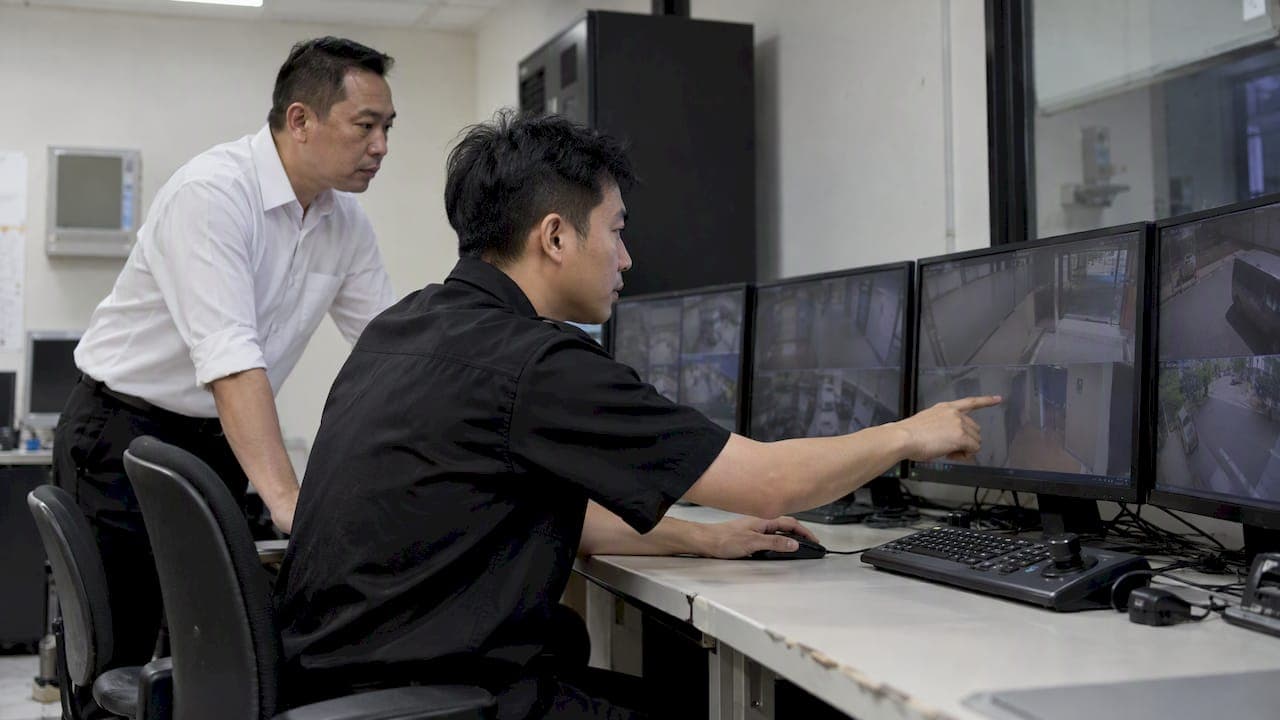
CCTV Operator Training in Singapore: Skills, Courses and Costs

CCTV operator training in Singapore centers on one WSQ module, Perform Remote Surveillance Function (PRSF). It runs 17 hours over three days, and for Senior Security Officers it is now a compliance deadline, not an option. Beyond that licensed minimum, good training builds the judgment to verify alerts, follow procedure and hand over cleanly, especially as video analytics takes over routine watching. This guide covers what the course teaches, what it costs, who needs it, and what your control room should add on top.
TL;DR
- The core qualification is PWM-Security: Security Surveillance Management (Perform Remote Surveillance Function). It lasts 17 hours over three days and costs S$385.00 before subsidies, or from S$115.50 when subsidized.
- Existing Senior Security Officers must complete PRSF by 31 December 2026 to stay deployable from 1 January 2027.
- Certification is the floor. Operators also need site procedures, privacy discipline, alert-verification habits and refreshers.
- AI analytics moves the operator from staring at walls of screens to judging exceptions. Training should change with it.
Table of Contents
- What CCTV operator training covers in Singapore
- Who needs the training, and by when
- What CCTV operator training costs
- What operators earn
- Skills the certificate does not give you
- How AI analytics changes the operator's job
- Our perspective
- A practical training plan for a security manager
- Where our platforms fit
- FAQ
- Sources
What CCTV operator training covers in Singapore
The regulated route runs through the Security Progressive Wage Model (PWM) and the WSQ Certificate in Security. The module most relevant to a control room seat is PRSF, titled Security Surveillance Management on the SkillsFuture course directory. Its listing shows a duration of 17 hours over three days.
Training providers describe the learning outcomes in similar terms. One WSQ provider's PRSF page lists operating remote surveillance equipment, identifying incident-prone areas within a client's premises, and monitoring suspicious activity from remote equipment. In practice that breaks down into four skill groups:
- Equipment operation. Camera selection, PTZ control, playback, exporting clips, and recognizing a failed camera or a degraded feed.
- Observation. Knowing what abnormal looks like at a particular site: tailgating at a turnstile, a bag left in a lobby, a door open at an odd hour.
- Response procedure. Who to call, in what order, and what to log, so that an observation becomes an action.
- Record keeping. Incident logs and evidence handling that will hold up when a manager, insurer or the police ask for them.
Notice what is not in a three-day module: your building's layout, your escalation tree, your analytics platform, or your tenants' sensitivities. That is the gap between a certified operator and a competent one, and we return to it below.
Who needs the training, and by when
The PWM ties training to rank. Moving from Security Officer to Senior Security Officer needs at least six months of experience and two mandatory modules: Manage Disorderly Conduct and Threatening Behaviour, and Perform Remote Surveillance Function, according to a PWM summary from an accredited provider. Pay follows rank, so the training has direct payroll consequences.
The deadline matters most for security managers with existing Senior Security Officers on their rosters. Per the same summary, those officers must have completed PRSF by 31 December 2026 to remain deployable from 1 January 2027, and the requirement is monitored by the Police Licensing & Regulatory Department. With this article dated 18 October 2026, that leaves roughly ten weeks. Course dates fill up toward year end, so book now and check the current requirement on the official PLRD pages before you commit headcount.

Entry requirements
Basic entry requirements for WSQ security training typically include Secondary 2 education or Level 4 in the Workplace Literacy and Numeracy assessments. Candidates must also be at least 18 and medically fit. Individual providers may set additional conditions, so confirm with the course listing.
Ex-uniformed officers
Former SPF, SAF or ICA officers are not automatically exempt. They may receive exemptions for specific PWM modules, but must submit documentary proof of past training and experience to SPF for case-by-case assessment before joining the private security industry. Start that paperwork early when you hire from this pool.
What CCTV operator training costs
The question readers ask most is the price. The published figures for PRSF:
| Item | Figure |
|---|---|
| Full course fee | S$385.00 |
| Subsidized price | From S$115.50 |
| Duration | 17 hours (3 days) |
These come from a SkillsFuture for Business course listing. Eligible workers under the PWM can receive significant subsidies. Fees differ between providers and funding windows change, so read the live listing before budgeting. That listing also showed an EIS supporting period ending 30 June 2026, so check which funding applies to a course you book today.
The fee is the smaller cost. For a site running 24-hour shifts, pulling an operator out for three days means cover, overtime or a temporary posting. Stagger your cohort so that no shift is left thin, and put the cost of cover into the plan rather than discovering it in December.
What operators earn
Because pay is tied to training, the PWM gives a clear picture. For 2026, the minimum basic monthly salary is at least S$3,090 for a Security Officer, S$3,390 for a Senior Security Officer and S$3,690 for a Security Supervisor. The S$300 step from Security Officer to Senior is the practical return on completing PRSF and the disorderly-conduct module. These are minimum basic figures, and actual packages depend on employer, shifts and allowances.
Skills the certificate does not give you
A three-day course certifies a baseline. A control room runs on habits built afterward. These are the skills we would train for on any site.
Site-specific knowledge
An operator who knows which camera covers the loading bay, which tenant works late on Thursdays and which lift lobby floods in heavy rain will outperform one who only knows the generic playbook. Build a site orientation: walk the premises, match every camera view to its physical location, and test the operator on it.
Alert verification and triage
The costly mistake in a control room is rarely missing an event. It is escalating the wrong one. A false dispatch wastes responders and erodes trust in the next real call. Train operators on a fixed verification sequence: confirm on camera, check adjacent views, check access logs, then decide. Our alarm triage workflow for Singapore teams sets out five SOP steps you can adapt.

Privacy and footage handling
CCTV footage is personal data. The SPF's video surveillance standard for buildings notes that the PDPA requires organizations to inform individuals about collection and to place notices at prominent locations such as points of entry. Operators should know what they may view, who may request an export, and how long footage is kept. Our note on CCTV redaction before auto-overwrite covers the retention side.
Fatigue and shift design
The same SPF standard recommends that operators receive training set by the building's security manager, that SOPs be available for reference, that refreshers are held regularly, and that shift patterns include sufficient breaks for health and productivity. Sustained screen watching degrades attention, and rostering is part of training design, not separate from it.
Security awareness beyond the screen
Operators sit on networked systems, so they are also a human layer in cyber hygiene: password discipline, phishing awareness, USB policies for export drives. A general primer on what makes security awareness training work is a useful companion for your induction, though it is a UK-based resource and not a substitute for Singapore's PWM requirements.
How AI analytics changes the operator's job
The Ministry of Home Affairs set the direction years ago. At the launch of the Security Industry Transformation Map, the minister noted that video analytics can alert officers monitoring CCTV feeds to anomalies, such as intrusions and loitering, and that CCTVs can replace routine, labour-intensive patrolling. The intent is to move officers toward making judgments and responding to incidents, a higher-skilled role.
That has training consequences. When analytics watches every feed, the operator no longer needs to scan sixteen tiles hoping to catch something. The job becomes:
- Reviewing alerts quickly and accurately, accepting or rejecting each with a reason.
- Understanding what the analytics can and cannot see, so that confidence in a detection is calibrated, not blind.
- Feeding back false positives so tuning improves the system.
- Managing exceptions, the model our team calls exception-based monitoring.
An operator trained only on classic manual watching will struggle in this setup, and one who over-trusts the software is equally risky. If you are weighing analytics, our 30 day pilot approach for edge-first video analytics and the 2 week loitering detection pilot show how to test it with your own operators before committing, and how much retraining to expect.
Our perspective
We build sensing and AI tools, so we see operator training from the other side of the screen. Three views shape how we design for control rooms.
First, technology should not replace the operator. It should remove the part of the job that humans do worst: staring at feeds for hours waiting for something rare. AI never blinks, but it does not carry accountability, either. Someone has to decide whether the alert is a person climbing a fence or a cleaner with a ladder.
Second, the training burden is lower when tools match how operators already think. A dashboard that surfaces exceptions with a clip, a location and a suggested next step teaches the verification routine every time it is used. A tool that dumps raw alarms trains bad habits. This is why we build BeyondWatch around exceptions, and why our BeyondPatrol approach uses vision language models to handle routine virtual rounds so people spend time on judgment calls.
Third, tailored beats generic. Site layout, tenant mix and escalation chains differ, and an operator's competence is tied to them. We explain the reasoning in why tailored security solutions outperform generic systems. The same logic applies to training: certify to the national standard, then train to your site.
— Eumir
A practical training plan for a security manager
Use this sequence for a control room team.
- Audit certification status. List every operator, their PWM rank and whether PRSF is complete. Flag Senior Security Officers who still owe it before 31 December 2026.
- Book the course in cohorts. Spread enrollment across shifts. Check funding on the live listing for each person.
- Write a site induction. Camera map, escalation tree, contact list, access control basics and a privacy briefing. Make it a signed-off checklist.
- Run scenario drills. Ten minutes at shift change: a staged alert, a time limit, a decision. Review the logs afterward.
- Track verification quality. Measure false escalations and missed events per operator, as coaching data and not punishment.
- Schedule refreshers. Quarterly is a sensible rhythm, and any time you change a platform or SOP.
- Retrain when tools change. New analytics means new alert types, new confidence cues and new failure modes. Brief the team before go-live.
If your site has a tool mix you are unsure about, the physical security tools comparison for Singapore facilities is a useful reference when planning the control room's setup alongside its people.
Where our platforms fit
If you manage a control room, a security agency or an integrator practice in Singapore, Malaysia or the Philippines and want operators working from exceptions instead of walls of video, talk to us. We deploy BeyondWatch for video analytics dashboards, BeyondPatrol for virtual guard tours and BeyondSecure for unified operations, and we help integrators scale through SI channel enablement. Pricing is scoped to each deployment, so start with a conversation through our main site.
FAQ
What qualifications do you need to be a CCTV operator in Singapore?
Candidates for WSQ security training typically need Secondary 2 education or WPLN Level 4, must be at least 18 and must be medically fit. Operators in licensed security roles then complete the PWM modules for their rank, and PRSF is the one aimed at remote surveillance. Confirm current conditions with the course provider.
How much does CCTV operator training cost?
The PRSF course listing shows S$385.00 before subsidies and from S$115.50 after, for 17 hours over three days. Eligibility depends on funding rules and your employment status, and providers' fees vary. Check the live listing for the course date you want.
How much does a CCTV operator earn?
Under the 2026 Security PWM, the minimum basic salary is S$3,090 for a Security Officer and S$3,390 for a Senior Security Officer. Those are floors for basic pay, not total packages. Completing PRSF is one of the two modules needed for the Senior grade.
Is there a deadline for CCTV-related training?
Yes, for existing Senior Security Officers. They must complete PRSF by 31 December 2026 to remain deployable from 1 January 2027. Check the Police Licensing & Regulatory Department's current notices for your own case.
Do ex-uniformed officers need to do the course?
Not automatically. They may be exempt from some modules, but SPF assesses documentary proof of prior training and experience case by case before they join the private security industry.
Sources
- SkillsFuture for Business: PRSF course listing
- Security PWM training requirements summary
- Perform Remote Surveillance Function course overview
- MySkillsFuture: Guard and Patrol course listing
- SPF: Exemption and Emplacement Framework for Ex-Uniformed Services Officers
- SPF: Video Surveillance System Standard for Buildings
- MHA: Security Industry Transformation Map speech
Recommended
Read More Articles
Geofencing Alerts for Site Security: Setup Guide for Singapore
How to design geofencing alerts that flag real security events, cut alert fatigue and stay within PDPA and IPA rules at Singapore sites.
Role-Based Access Control: A Practical Guide for Singapore Security Teams
How role-based access control works, where it breaks (role explosion, stale roles), and how to apply it to both cyber and physical security in Singapore.
Security Site Survey: Facility Teams’ Checklist for Funded Fixes
Assess site risks, turn findings into budgeted action, and use field checklists, reporting templates, and PDPA notes for camera and biometric deployments.
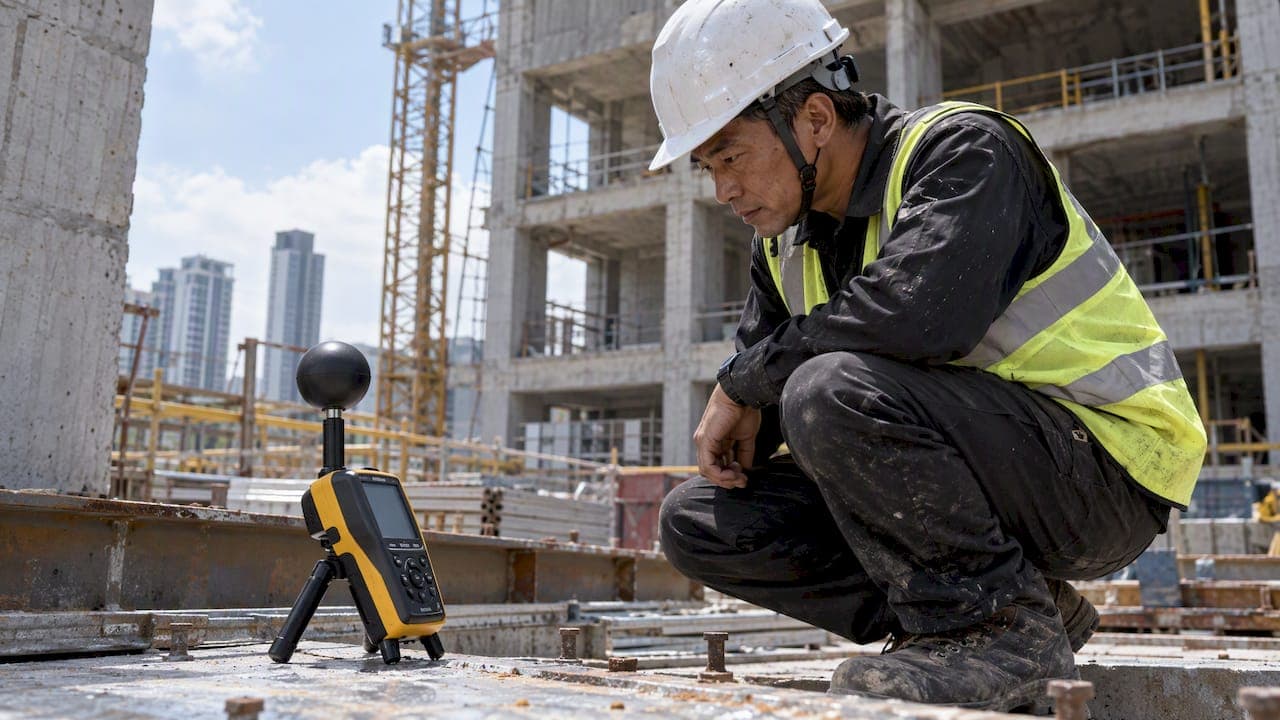
Heat Stress Monitoring for Singapore Safety Managers: The 32°C Rule
Singapore safety managers can monitor heat stress with hourly WBGT readings, apply the 32°C rest rule, and vet wearable alerts before relying on them.
Let's Build YourSecurity Ecosystem.
Whether you're a System Integrator, Solution Provider, or an End-User looking for trusted advisory, our team is ready to help you navigate the BeyondSensor landscape.
Direct Advisory
Connect with our regional experts for tailored solutioning.