
Discover what is risk assessment in security and learn how a structured approach helps protect your organization’s assets effectively.

Risk Assessment in Security: A Practitioner's Guide

A security risk assessment is a systematic, repeatable process that identifies assets, threats, and vulnerabilities across an organization, then scores and prioritizes those risks so leaders can allocate controls and budget to protect confidentiality, integrity, and availability. It is proactive by design: identifying hazards in advance lets organizations reduce probability or consequence rather than managing crises after the fact.
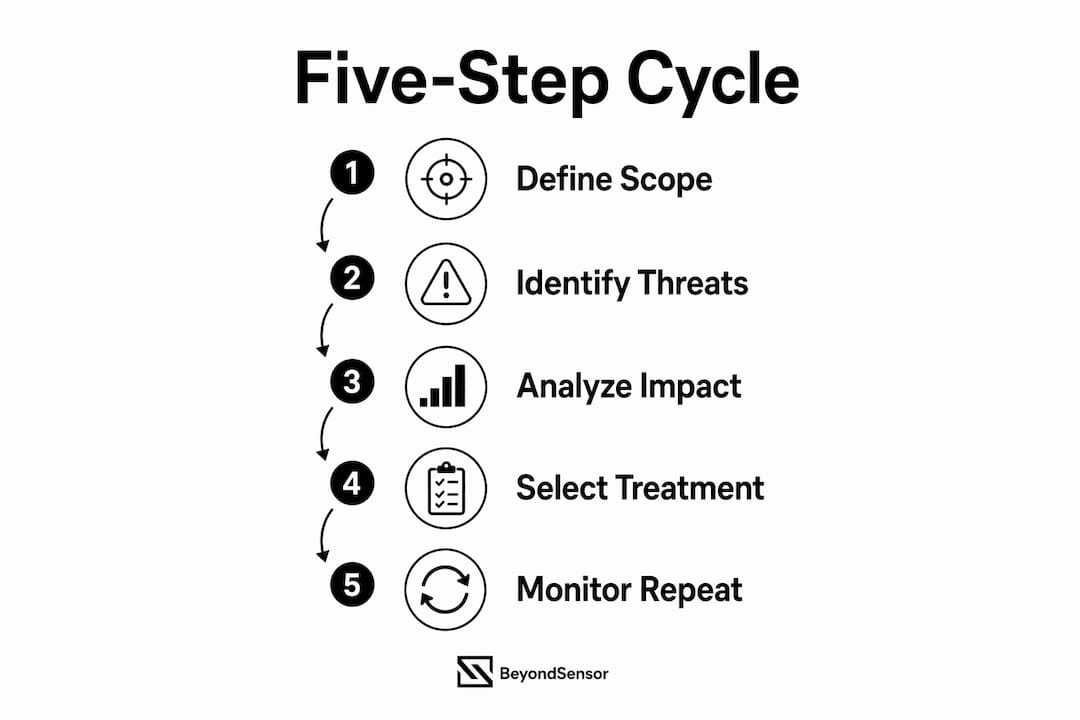
The canonical five-step cycle, codified in ISO 31000 and aligned with NIST SP 800-30, runs as follows:
- Define scope and identify assets
- Identify threats and vulnerabilities
- Analyze likelihood and impact
- Determine risk levels and select treatment options
- Monitor, document, and repeat
Three U.S. frameworks anchor this process in regulatory practice: NIST SP 800-30 Rev. 1 (the primary federal guide for conducting risk assessments), the NIST Risk Management Framework (RMF) (which embeds assessments into the system authorization lifecycle), ISO/IEC 27001 (the international information security management standard), and the HIPAA Security Rule (which mandates a formal risk analysis for covered entities and business associates handling electronic protected health information).
Table of Contents
- What does a security risk assessment look like step by step?
- Which risk assessment methodology fits your organization?
- What types of security risk assessments should you know?
- How do you score and prioritize risks effectively?
- How do you choose the right risk treatment response?
- How does a risk assessment map to NIST, ISO 27001, and HIPAA?
- What tools, deliverables, and timelines should you expect?
- How do you govern and act on assessment results over time?
- Beyondsensor's practical checklist for sensor-based physical security assessments
- Key Takeaways
- Why the physical layer is where most assessments fall short
- Beyondsensor turns assessment gaps into deployed, monitored controls
- Useful sources and standards to consult
What does a security risk assessment look like step by step?
Step 1: Prepare and define scope

Before any scanning or interviewing begins, the team must agree on what is in scope. That means cataloging assets (servers, OT equipment, physical access points, cloud workloads), mapping data flows, identifying system boundaries, and naming the stakeholders who own each asset. Typical artifacts at this stage include an asset inventory spreadsheet and a data flow diagram that shows where sensitive data enters, moves, and exits the environment.
Pro Tip: Scope creep kills timelines. Lock the boundary in writing before kickoff and require a formal change-control request to expand it. A signed scope document also protects the assessor if disputed findings arise later.
Step 2: Identify threats and vulnerabilities
Threat identification draws on multiple sources simultaneously: threat modeling workshops, automated vulnerability scanning, physical site walkthroughs, and structured interviews with facilities managers and IT staff. The MITRE ATT&CK framework provides a catalog of adversary tactics and techniques that assessors can map against existing controls. On the physical side, a site walkthrough might reveal an unlocked server room or a camera blind spot that no network scan would ever surface.
Operational stakeholders — facilities, maintenance, and operations teams — should be included early. Including them from the start avoids surprises during remediation and ensures that sensor placements and physical controls are operationally sustainable.
Step 3: Analyze likelihood and impact
This step converts qualitative observations into scored inputs. Assessors gather evidence from vulnerability scan outputs, threat-intelligence feeds, historical incident logs, and interviews, then assign likelihood and impact ratings using the organization's agreed scale. The NIST SP 800-30 framework supports both qualitative descriptors and numeric scales; the key is consistency across all findings so that a "High" likelihood on one asset means the same thing as a "High" on another.
Step 4: Determine risk levels and select treatment
Risk level equals likelihood score multiplied by impact score. Once every finding is scored, the team maps results against the organization's risk appetite and selects a treatment response: mitigate, transfer, accept, or avoid. High and critical findings typically require immediate remediation plans with named owners and deadlines; lower-scored findings may be accepted with documented rationale.
Step 5: Monitor, document, and repeat
A completed assessment is not a closed file. Controls degrade, environments change, and new threats emerge. The assessment package, including the risk register, remediation plan, and evidence artifacts, feeds into a continuous monitoring program. Reassessment triggers include significant infrastructure changes, security incidents, new regulatory requirements, and scheduled annual reviews.
| Task | Primary Owner |
|---|---|
| Define scope, asset inventory | CISO / Security Lead |
| Threat modeling, vulnerability scanning | IT / Contracted Assessor |
| Physical site walkthrough | Facilities Manager |
| Likelihood and impact scoring | Security Lead + Asset Owners |
| Risk register and remediation plan | CISO / Contracted Assessor |
| Ongoing monitoring | IT + Security Operations |
Which risk assessment methodology fits your organization?
NIST SP 800-30 categorizes risk assessment methodologies as quantitative, qualitative, or semi-quantitative. The right choice depends on data availability, organizational maturity, and asset criticality.
Quantitative methodology assigns monetary or actuarial values to assets and losses. The core equation is Annualized Loss Expectancy (ALE) = Single Loss Expectancy (SLE) × Annualized Rate of Occurrence (ARO). This approach produces dollar figures that resonate with CFOs and boards, but it demands high-quality historical incident data that most organizations simply do not have.
Qualitative methodology uses descriptive scales — Low, Medium, High, Critical — based on expert judgment and structured workshops. It is faster to execute, requires no actuarial data, and works well for organizations early in their security maturity journey. The tradeoff is subjectivity: two assessors can score the same finding differently without rigorous anchor definitions.
Semi-quantitative methodology assigns numeric scores to descriptive criteria, producing a reproducible number without requiring actuarial data. A standard 5×5 matrix assigns likelihood a score of 1 (rare) through 5 (almost certain) and impact a score of 1 (negligible) through 5 (catastrophic). A finding scored Likelihood 4 × Impact 4 = 16 out of 25, which most frameworks classify as High. This approach balances rigor with practicality and is the most common choice for mid-market U.S. organizations.
| Methodology | Best When | Main Limitation |
|---|---|---|
| Quantitative | Rich historical loss data available; board demands ROI justification | Data-intensive; rarely achievable for all asset classes |
| Qualitative | Early maturity; limited data; fast turnaround needed | Subjective; harder to defend budget requests |
| Semi-quantitative | Moderate maturity; compliance-driven; reproducibility required | Scores can feel arbitrary without well-defined anchors |
For more on how risk-based sensing integrates these approaches in physical security deployments, Beyondsensor's technical resources walk through each methodology in an operational context.
What types of security risk assessments should you know?
Security risk assessments are not one-size-fits-all. Each type targets a distinct threat surface and calls for different evidence sources.
- Cybersecurity assessment: Focuses on networks, endpoints, applications, and cloud infrastructure. Primary techniques include automated vulnerability scanning, penetration testing, configuration review, and log analysis. A healthcare organization preparing for a HIPAA audit would typically start here.
- Physical security assessment: Evaluates access control systems, perimeter barriers, surveillance coverage, lighting, and guard procedures. Evidence comes from site surveys, camera coverage maps, access logs, and interviews with facilities staff. Physical security best practices for facilities often surface risks that no IT scan would detect.
- Operational assessment: Examines processes, procedures, and human factors. User behavior and physical access management can be more critical than technical vulnerabilities — a finding reinforced consistently by safety and security practitioners. This type often uses tabletop exercises and process walkthroughs.
- Supply chain / third-party assessment: Reviews vendor security posture, contractual obligations, and data-handling practices. Questionnaires, SOC 2 reports, and on-site audits are the primary tools. Any organization relying on cloud providers, managed security services, or hardware suppliers needs this assessment type.
- Industrial control systems (ICS) / OT assessment: Requires specialist expertise because standard IT scanning tools can disrupt or damage operational technology. Commission a separate specialist assessment when the environment includes SCADA systems, PLCs, or building management systems.
Field-level, on-site checks complement formal assessments by surfacing operational hazards that only appear during actual execution — a point especially relevant for manufacturing floors and critical infrastructure sites. When a facility combines IT networks, physical access systems, and OT equipment, a combined cyber-plus-physical-plus-operational assessment is the only approach that captures the full risk picture.
How do you score and prioritize risks effectively?
Reproducible scoring is what separates a defensible assessment from an opinion document. The standard approach maps likelihood against impact on a 5×5 matrix, producing a risk score that drives prioritization.
Sample 5×5 risk matrix
| Likelihood \ Impact | 1 Negligible | 2 Minor | 3 Moderate | 4 Severe | 5 Catastrophic |
|---|---|---|---|---|---|
| 5 Almost Certain | 5 Low | Medium | 15 High | 20 Critical | 25 Critical |
| 4 Probable | 4 Low | Medium | 12 High | 16 High | 20 Critical |
| 3 Possible | 3 Low | 6 Medium | 9 Medium | 12 High | 15 High |
| 2 Unlikely | 2 Low | 4 Low | 6 Medium | Medium | Medium |
| 1 Rare | 1 Low | 2 Low | 3 Low | 4 Low | 5 Low |
Priority rules tied to score bands:
- Critical (20–25): Immediate escalation to CISO and executive leadership; remediation plan required within 72 hours of finding.
- High (12–19): Remediation scheduled within 30 days; named owner assigned; tracked in weekly security review.
- Medium (6–11): Addressed within 90 days; included in quarterly risk review.
- Low (1–5): Accepted with documented rationale or addressed in next planned maintenance cycle.
Effective risk scoring uses a documented, reproducible severity score that supports budget justification to executives. When a CISO can show that three Critical findings map to a potential operational shutdown, the budget conversation changes.
Common pitfalls to avoid:
- Inconsistent anchors: Define each scale point with a concrete example before scoring begins. "Probable" means different things to different people without an anchor like "has occurred at least once in the past 12 months."
- Mixing probability and frequency: Likelihood should reflect the probability of occurrence in a defined period, not a raw count of past events.
- Scope drift in scoring: Apply the same scale across all asset types; do not use a tighter scale for IT findings and a looser one for physical findings.
How do you choose the right risk treatment response?
Once risks are scored, the team selects a response. The four classical options apply across both cyber and physical security.
- Mitigate: Implement a control to reduce likelihood or impact. Examples: deploying multi-factor authentication to reduce credential theft risk; installing motion-activated lighting to reduce unauthorized physical access.
- Transfer: Shift financial exposure to a third party. Examples: cyber liability insurance; contractual indemnification clauses with vendors.
- Accept: Document the risk and retain it within risk appetite. Appropriate for low-scored findings where the cost of mitigation exceeds the expected loss.
- Avoid: Eliminate the activity or asset that creates the risk. Examples: decommissioning a legacy system with no patch path; discontinuing a business process that handles unnecessary sensitive data.
Control categories
- Preventive controls stop an incident before it occurs: firewalls, access control readers, perimeter fencing, encryption.
- Detective controls identify incidents in progress or after the fact: intrusion detection systems, video analytics, audit log review, motion sensors.
- Corrective controls restore normal operations after an incident: backup restoration, incident response playbooks, physical repair procedures.
- Compensating controls provide alternative protection when a primary control is not feasible: manual guard patrols compensating for a failed access control system.
The hierarchy of controls recommends eliminating hazards first, then substituting, then engineering controls, then administrative controls, and finally compensating measures. Applying this sequence keeps remediation cost-effective and avoids over-relying on procedural controls that depend on human consistency.
A lightweight cost-benefit check for each treatment option: estimate the annualized cost of the control versus the risk score reduction it produces. A $50,000 sensor deployment that eliminates a Critical finding with a potential seven-figure operational impact is straightforward to justify. A $200,000 architectural overhaul that reduces a Medium finding by two points is harder to defend. For a practical reference on infrastructure safeguards and control selection, Beyondsensor's checklist covers 18 categories with specific thresholds.
Every accepted or residual risk must be formally documented with a named approver and a review date. Undocumented acceptance is not acceptance — it is an audit finding waiting to happen.
How does a risk assessment map to NIST, ISO 27001, and HIPAA?
Risk assessments do not exist in isolation. Across organizational tiers, they inform governance decisions, mission and business process choices, and system-level control selection. Each major U.S. framework has specific expectations for what an assessment must produce.
- NIST SP 800-30 Rev. 1: The definitive federal guide for conducting risk assessments. It defines the assessment process, risk model, and expected outputs. Organizations subject to FISMA or seeking FedRAMP authorization must align their methodology to this standard. Minimum deliverables: documented methodology, threat and vulnerability catalog, risk register with scores, and a remediation plan.
- NIST Risk Management Framework (RMF): Embeds risk assessment into the Assess step (step 4 of 7) of the system authorization lifecycle. Assessment outputs feed the Plan of Action and Milestones (POA&M) and the Authorization to Operate (ATO) decision.
- ISO/IEC 27001: Clause 6.1.2 requires organizations to define a risk assessment process, apply it consistently, and retain documented results. The standard does not prescribe a specific methodology but requires that the process be repeatable and produce comparable results. Assessment outputs feed the Statement of Applicability (SoA) and the risk treatment plan.
- HIPAA Security Rule (45 CFR § 164.308(a)(1)): Requires covered entities and business associates to conduct an accurate and thorough assessment of the potential risks and vulnerabilities to the confidentiality, integrity, and availability of electronic protected health information (ePHI). The Office for Civil Rights (OCR) has cited inadequate risk analysis as the most common HIPAA enforcement finding. Minimum deliverables for audit: risk analysis documentation, risk management plan, evidence of periodic review, and workforce training records.
CISA's risk assessment methodologies reinforce a consistent principle across all frameworks: the method must be documented, reproducible, and defensible to stakeholders and decision-makers. An assessment that cannot be explained to an auditor in plain language is not audit-ready, regardless of how thorough the underlying work was.
For organizations subject to security audit requirements, aligning assessment outputs to framework expectations from the start eliminates costly rework before an audit.
What tools, deliverables, and timelines should you expect?
Standard deliverables
Every completed assessment should produce:
- Risk register: A prioritized list of all identified risks with scores, treatment decisions, named owners, and target remediation dates.
- Executive summary: A two-to-four-page narrative translating technical findings into business impact language for C-suite and board audiences.
- Prioritized remediation roadmap: A phased action plan sequencing fixes by risk score, resource availability, and dependencies.
- Control gap matrix: A mapping of current controls against framework requirements (NIST, ISO, HIPAA) showing where gaps exist.
- Monitoring plan: Defined KPIs, review cadence, and escalation paths for ongoing risk management.
- Raw evidence: Scan outputs, site survey photos, interview notes, and configuration screenshots that support findings and satisfy auditors.
Common tools and data sources
Vulnerability scanners (Tenable Nessus, Qualys, Rapid7 InsightVM) provide automated discovery of technical weaknesses. Threat-intelligence feeds (CISA Known Exploited Vulnerabilities catalog, MITRE ATT&CK) contextualize findings against active adversary behavior. For physical security, sensor logs, access control audit trails, and maintenance records are primary evidence sources. The ONC Security Risk Assessment Tool is a free, HHS-sponsored application designed specifically to help small and medium-sized healthcare organizations conduct HIPAA-compliant risk analyses.
Timeline and cost drivers
| Driver | Impact on Timeline / Cost |
|---|---|
| Scope size (asset count, sites) | Largest single driver; each additional site adds survey and travel time |
| Asset criticality and depth of testing | Penetration testing adds weeks and specialist cost |
| OT / ICS specialist requirement | Adds 20% to cost; requires scheduling around production windows |
| Number of integration points | More integrations mean more evidence gathering and control testing |
| Travel and site access logistics | Multi-site physical assessments require coordinated scheduling |
| Regulatory depth required | HIPAA or FedRAMP-level documentation adds documentation hours |
A focused cybersecurity assessment for a single-site organization typically runs two to six weeks. A combined cyber-physical assessment across multiple facilities with OT components can extend to three to five months. Evaluating vendor proposals: require a detailed statement of work, a sample risk register from a prior engagement (redacted), named assessor credentials, and explicit acceptance criteria for each deliverable.
How do you govern and act on assessment results over time?
Assessment outputs are only as valuable as the governance structure that acts on them. Structuring reports for different audiences is the first step.
- Technical team: Full risk register with scores, evidence references, and specific remediation steps. They need enough detail to execute without ambiguity.
- C-suite: Executive summary with business impact framing, top five risks, and resource requirements. Translate "CVE-2024-XXXX with CVSS 9.1" into "an attacker could exfiltrate customer records, triggering breach notification costs and regulatory fines."
- Board: One-page dashboard showing risk posture trend, percentage of critical risks remediated, and comparison to industry benchmarks.
Suggested KPIs for ongoing risk management
- Percentage of critical risks remediated within the defined SLA (target: 100% within 72 hours of identification)
- Mean time to remediate high-severity findings (track monthly; trend downward over quarters)
- Percentage of critical sensors and endpoints covered by continuous monitoring
- Number of accepted risks with documented approvals versus undocumented acceptances
- Reassessment completion rate against scheduled cadence
Governance roles should follow a RACI model: the CISO is Accountable for the overall risk posture; asset owners are Responsible for remediating findings in their domain; the security operations team is Consulted for monitoring data; and executive leadership is Informed via the dashboard. Common implementation pitfalls often trace back to unclear ownership at this stage.
Set a standard reassessment cadence of at least annually. Trigger ad-hoc reassessments for: significant infrastructure changes (new cloud migration, facility expansion), security incidents that reveal gaps, new regulatory requirements, or merger and acquisition activity that introduces new assets and third-party relationships. On-site, real-time checks between formal assessments help catch operational hazards that emerge during day-to-day execution.
Beyondsensor's practical checklist for sensor-based physical security assessments
Physical security risk assessments gain precision when sensor data is integrated into the scoring process. This checklist reflects the deployment and validation approach Beyondsensor applies to sensor-driven environments.
Site survey and sensor placement:
- Conduct a full site walkthrough to map all entry points, blind spots, and high-value asset locations before specifying sensor types or quantities.
- Validate sensor coverage zones against the asset inventory — every critical asset should fall within at least one sensor's detection envelope.
- Document camera fields of view, motion sensor detection angles, and access control reader positions in a coverage map that becomes part of the risk register evidence package.
Integration and interoperability:
- Confirm that sensors, CCTV systems, and access control platforms share a common data format or have a tested API integration before procurement.
- Test end-to-end alert flow from sensor trigger to SOC dashboard under realistic load conditions. For guidance on sensor integration sequencing, a structured deployment approach reduces integration failures significantly.
- Verify that video analytics and sensor data streams feed the unified security operations dashboard with latency below operational thresholds.
False-positive tuning and calibration:
- Run a staged pilot in a representative zone before full production deployment. Tune detection thresholds to reduce false positives without sacrificing detection sensitivity.
- Document baseline false-positive rates and set a target threshold before sign-off.
Resilience and compliance:
- Confirm power redundancy (UPS, backup circuits) for all critical sensors and network nodes.
- Verify data retention periods against applicable regulations (HIPAA, state privacy laws) and document the retention policy in the assessment package.
- Test tamper-detection alerts for physical sensor housings and confirm that tamper events generate SOC notifications.
Pro Tip: Stage and tune sensors in a pilot zone for at least two weeks before full deployment. Document all threshold adjustments and the resulting false-positive rates. This evidence demonstrates operational readiness and satisfies auditors who ask for proof that controls are functioning as designed.
Sensor evaluation criteria
| Criterion | Suggested Threshold | Notes |
|---|---|---|
| Coverage (% of critical zone) | High | Verified by coverage map overlay |
| Alert latency (sensor to SOC) | ≤ 5 seconds | Measured under peak load |
| False-positive rate | ≤ 2% of alerts | Tuned over 2-week pilot |
| Integration effort (hours) | Documented per integration point | Baseline for cost-benefit analysis |
| Tamper detection response | ≤ 30 seconds to SOC alert | Tested quarterly |
For a security risk assessment checklist tailored to facility owners, Beyondsensor's resource covers the full workflow from initial survey through evidence packaging.
Key Takeaways
A security risk assessment is only as strong as the governance structure that acts on its outputs — the five-step cycle, reproducible scoring, and framework-aligned deliverables are what convert findings into defensible, funded remediation plans.
| Point | Details |
|---|---|
| Five-step cycle | Scope → identify threats → analyze likelihood and impact → treat risks → monitor and document, per ISO 31000 and NIST SP 800-30. |
| Methodology selection | Use semi-quantitative (1–5 × 1–5 matrix) for most U.S. organizations; reserve quantitative for environments with rich historical loss data. |
| Combined assessments | Cyber-plus-physical-plus-operational assessments are necessary when IT networks, access control, and OT equipment share the same environment. |
| Audit-ready deliverables | Risk register, executive summary, remediation roadmap, control gap matrix, and monitoring evidence satisfy NIST, ISO 27001, and HIPAA auditors. |
| Beyondsensor | Beyondsensor's sensor-based solutions and deployment checklists map directly to physical security assessment gaps, from coverage validation to SOC integration. |
Why the physical layer is where most assessments fall short
The conventional wisdom in security risk assessment is that cyber findings dominate because they are easier to quantify and faster to surface with automated tools. That framing is understandable, but it consistently leads organizations to under-invest in physical and operational controls that carry equal or greater impact potential.
Consider what a vulnerability scanner cannot find: an unlocked equipment room, a camera with a 15-degree blind spot covering the server cage, or a maintenance contractor with unescorted access to a critical facility. These are not edge cases. They are the findings that appear in post-incident reviews after breaches that no intrusion detection system flagged. The human factors and physical access management dimension of an assessment often surfaces higher-impact risks than software vulnerabilities — yet it receives a fraction of the attention and budget.
The other gap that practitioners underestimate is the integration layer. Sensors, cameras, and access control systems are frequently assessed in isolation, each by a different team or vendor. The result is a set of individual control reports that never answer the most important question: does the combined system actually detect and respond to a realistic threat scenario end-to-end? Staging an integrated test, documenting the results, and feeding them back into the risk register is the step that separates a compliance exercise from a genuinely operational assessment.
The organizations that get this right treat the risk assessment not as a periodic audit artifact but as a living operational tool. They update it when environments change, they tie sensor performance data to risk scores, and they hold asset owners accountable for remediation timelines with the same rigor they apply to software patch cycles. That discipline is what makes the difference between a risk register that sits in a shared drive and one that actually drives security investment decisions.
Beyondsensor turns assessment gaps into deployed, monitored controls
Most organizations finish a risk assessment with a clear picture of what needs to change and no clear path to making it happen. Beyondsensor closes that gap. Where an assessment identifies physical coverage blind spots, integration failures, or sensor performance shortfalls, Beyondsensor's sensor hardware, AI-powered video analytics, and unified security operations dashboards provide the technical layer to address those findings directly.

For system integrators and security teams managing multi-site deployments, Beyondsensor's integration and deployment services cover the full sequence from site survey and sensor specification through SOC dashboard configuration and evidence documentation. The result is a remediation package that satisfies both operational requirements and audit expectations. To see how Beyondsensor's BeyondSecure platform maps to specific assessment findings, request a technical review and get a deployment-ready recommendation for your environment.
Useful sources and standards to consult
- NIST SP 800-30 Rev. 1: The definitive federal guide for conducting risk assessments. Start here for methodology, scoring, and required artifacts. Best for: CISOs, IT security leads, and federal contractors. Next read for CISOs: NIST RMF (SP 800-37) for embedding assessments into system authorization.
- NIST Risk Management Framework (RMF) — SP 800-37: Integrates risk assessment into the full system lifecycle. Essential for organizations pursuing FedRAMP authorization or operating under FISMA.
- ISO/IEC 27001: The international standard for information security management systems. Clause 6.1.2 defines risk assessment requirements. Best for: organizations seeking third-party certification or operating in global markets.
- HIPAA Security Rule (45 CFR § 164.308): Mandates risk analysis and risk management for ePHI. The HHS Office for Civil Rights publishes guidance and the free ONC Security Risk Assessment Tool. Best for: healthcare covered entities and business associates. Next read for compliance officers: OCR's Guidance on Risk Analysis.
- CISA Risk Assessment Methodologies: Infrastructure-focused methodology guidance from the Cybersecurity and Infrastructure Security Agency, including THIRA and the Infrastructure Survey Tool. Best for: critical infrastructure operators and local government planners.
- ISO 31000: The overarching risk management standard that defines the five-step cycle and governance principles underlying most sector-specific frameworks. Best for: enterprise risk managers and facilities directors establishing a cross-domain risk program.
Recommended
- How to Evaluate Security Threats: A Practical Guide | News | BeyondSensor
- Security Risk Assessment Checklist for Facility Owners | News | BeyondSensor
- Physical security best practices: strategies for safer facilities | News | BeyondSensor
- Securing Sensitive Facility Areas: A Practical Guide | News | BeyondSensor
Read More Articles
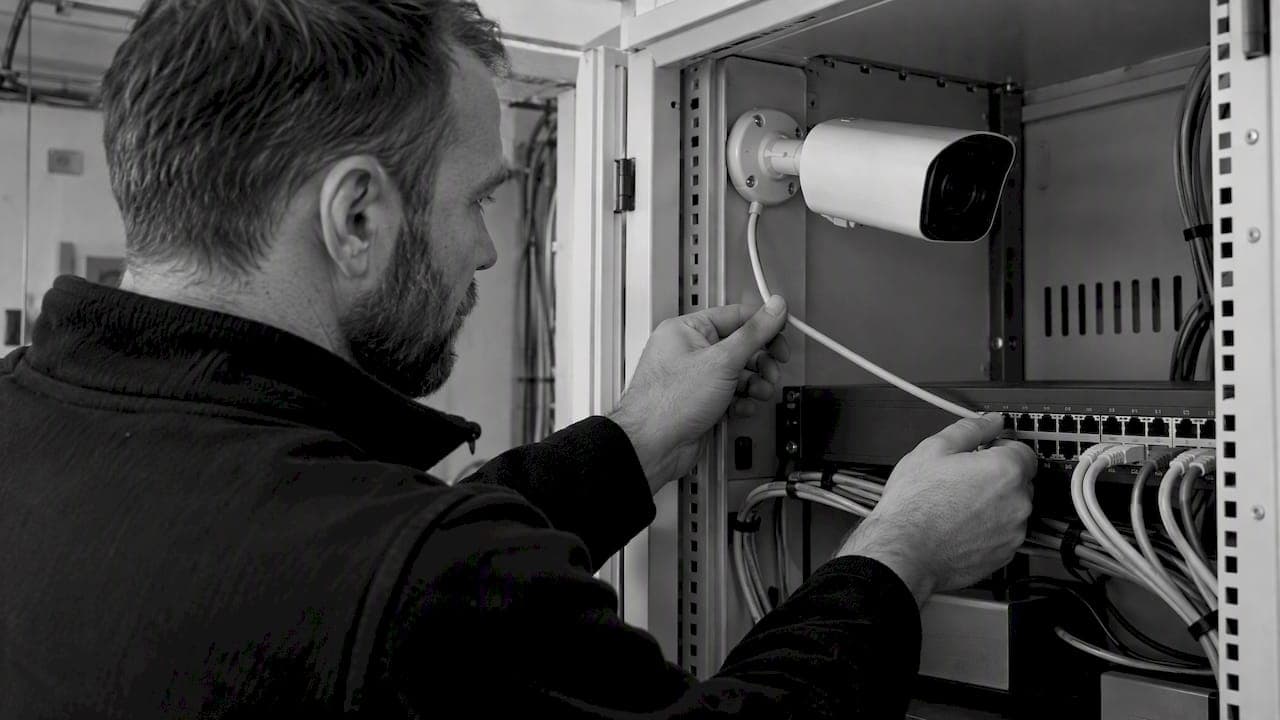
RTSP Security Risks: Integrators Must Block Exposed Ports 554 and 8554
See how integrators can reduce RTSP security risks: close exposed ports 554 and 8554, secure camera access, and verify each deployment with practical checks.

Require MAEpp and X Accuracy Before You Buy People Counting Systems
Verify people counting accuracy by demanding MAEpp, X Accuracy, and directional-bias reports. Validate on-site with at least 100 events per direction...
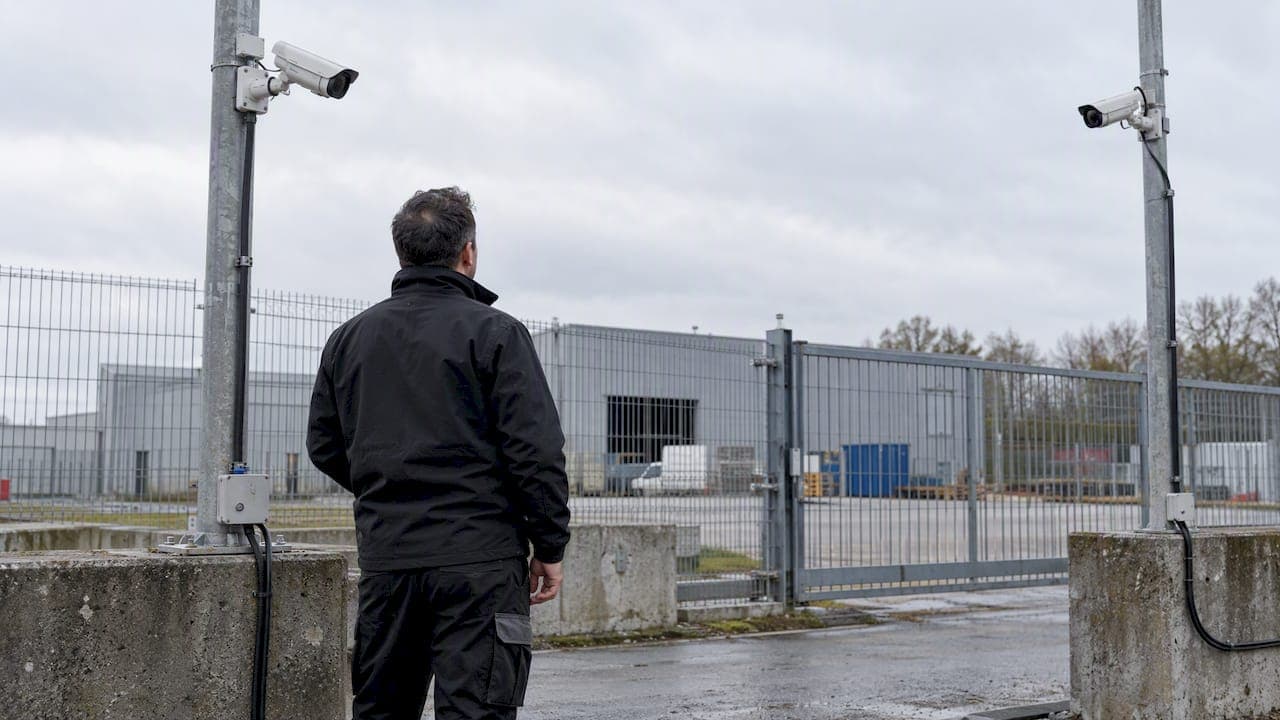
30–90 Day Pilot Validates Redundant Camera Networks for Engineers
Standards led, practical steps for engineers to deploy redundant camera networks: MRP, dual homing, and aggregation patterns, commissioning checks, and...

30 Day Pilot Proves Video Analytics Accuracy for Security Teams
Validate video analytics accuracy with scenario tests, camera tuning, transfer learning and a 30 day edge first pilot for security teams.
Let's Build YourSecurity Ecosystem.
Whether you're a System Integrator, Solution Provider, or an End-User looking for trusted advisory, our team is ready to help you navigate the BeyondSensor landscape.
Direct Advisory
Connect with our regional experts for tailored solutioning.