
Discover the top sensing solutions for security agencies in 2026. Enhance detection accuracy and reduce costs with multi-modal sensor stacks.
Top Sensing Solutions for Security Agencies in 2026
TL;DR:
- A multi-modal sensor stack combining radar, thermal imaging, video analytics, and acoustic detection offers the most accurate security monitoring. Beyondsensor designs and supports this architecture, emphasizing pilot testing, open integration, and predictable costs for government agencies. Field validation and structured pilots are essential to ensure sensors perform effectively in real-world environments before full deployment.
For U.S. security agencies and system integrators procuring physical security infrastructure, the right answer is a multi-modal sensor stack combining radar, thermal imaging, video analytics, and acoustic or vibration detection, unified by edge AI fusion and a central command platform. Beyondsensor designs, deploys, and supports exactly this architecture for agencies and government facilities.
Three reasons this approach outperforms single-modality deployments:
- Detection accuracy improves through sensor fusion. Radar catches motion in darkness and through foliage; thermal confirms heat signatures; video analytics classifies the threat. Each layer reduces false alarms the others would generate alone.
- Software integration scales without rework. Open APIs, ONVIF compliance, and VMS/PSIM connectors mean your command platform grows as your deployment does, without vendor lock-in.
- TCO stays predictable. A defined SLA model, modular hardware, and analytics licensing tied to site scope give procurement teams a clear cost baseline from pilot through full deployment.
Pro Tip: Start with a scoped pilot targeting your primary threat vector — perimeter breach, insider risk, or critical infrastructure anomaly — before committing to full-site hardware. A 2–8 week pilot with defined acceptance metrics protects the procurement decision and surfaces integration issues early.
Table of Contents
- What does a complete sensing solution architecture look like?
- Which sensor modalities suit which security use cases?
- How should you run a pilot and validate performance?
- Key Takeaways
- The gap between sensor specs and operational reality
- Beyondsensor's pilot program for agencies and integrators
- Useful sources for procurement and technical validation
What does a complete sensing solution architecture look like?
An enterprise-grade physical security sensing solution has five layers, and procurement teams should verify each one before signing a contract.
Sensors at the edge capture raw data: radar units covering wide perimeters, thermal cameras for day/night detection, visible-light cameras feeding video analytics, acoustic sensors for gunshot or glass-break events, vibration sensors on fences or walls, and environmental sensors monitoring gas, temperature, or humidity where the site demands it. GCPSG-021 (2025) recommends combining visual monitoring with electronic intrusion detection for triage and evidence, a principle that applies directly to multi-modal architecture.
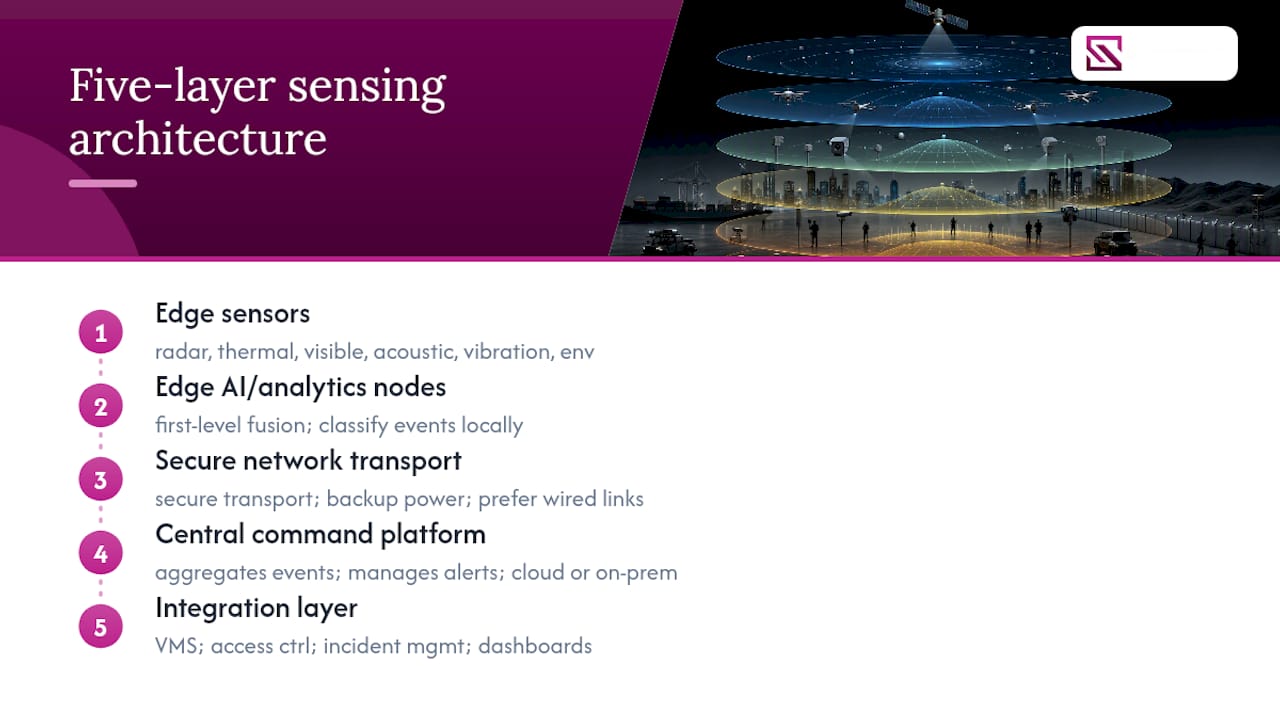
Edge AI/analytics nodes perform first-level fusion locally, classifying events before sending data upstream. This limits bandwidth consumption and keeps latency low enough for real-time response.
Secure network transport connects edge nodes to the central platform. The RCMP physical security guidance recommends backup power for critical links and caution with wireless where wired alternatives exist — both requirements worth encoding in your RFP.
Central command platform (cloud or on-premises) aggregates events, manages alerts, and integrates with VMS, PSIM, and SIEM systems through documented APIs.
Integration layer connects the platform to existing tools: video management systems, access control, incident management, and operator dashboards.
Beyondsensor covers the full stack for security agencies: sensor hardware selection and customization, edge analytics modules, VMS/PSIM integration, deployment planning, pilot validation, and SLA-backed maintenance. Role ownership typically runs as follows: the agency security lead owns requirements and acceptance criteria; the system integrator handles physical installation and network integration; Beyondsensor owns solution design, analytics configuration, and ongoing support.
Which sensor modalities suit which security use cases?
No single modality covers every threat environment. The table below maps each type to its primary use case, practical detection range, relative cost band, and key integration consideration. Field validation is required before treating any range figure as a site guarantee.
| Modality | Best use case | Typical detection range | Cost band | Integration note |
|---|---|---|---|---|
| Radar | Wide-area perimeter, open ground | 500 m | Medium–High | Outputs tracks/zones; pairs with thermal for classification |
| Thermal camera | Perimeter, low-light, through-smoke | 50 m | Medium–High | ONVIF-compatible; feeds video analytics |
| Visible video + analytics | Access points, indoor zones, facial/object detection | 5 m | Low–Medium | ONVIF standard; VMS integration required |
| Acoustic (gunshot/glass-break) | Indoor/outdoor event detection | 50 m | Low–Medium | Alert-based output; integrates via API or alarm panel |
| Vibration/fence sensor | Fence lines, walls, conduit protection | Per-zone | Low | Wired preferred for critical links |
| Environmental/gas | Substations, tunnels, chemical storage | Zone-based | Low–Medium | Modbus/BACnet or IP output |
| LiDAR | 3D mapping, vehicle detection, tunnel monitoring | 200 m | High | Point-cloud output; requires edge processing |
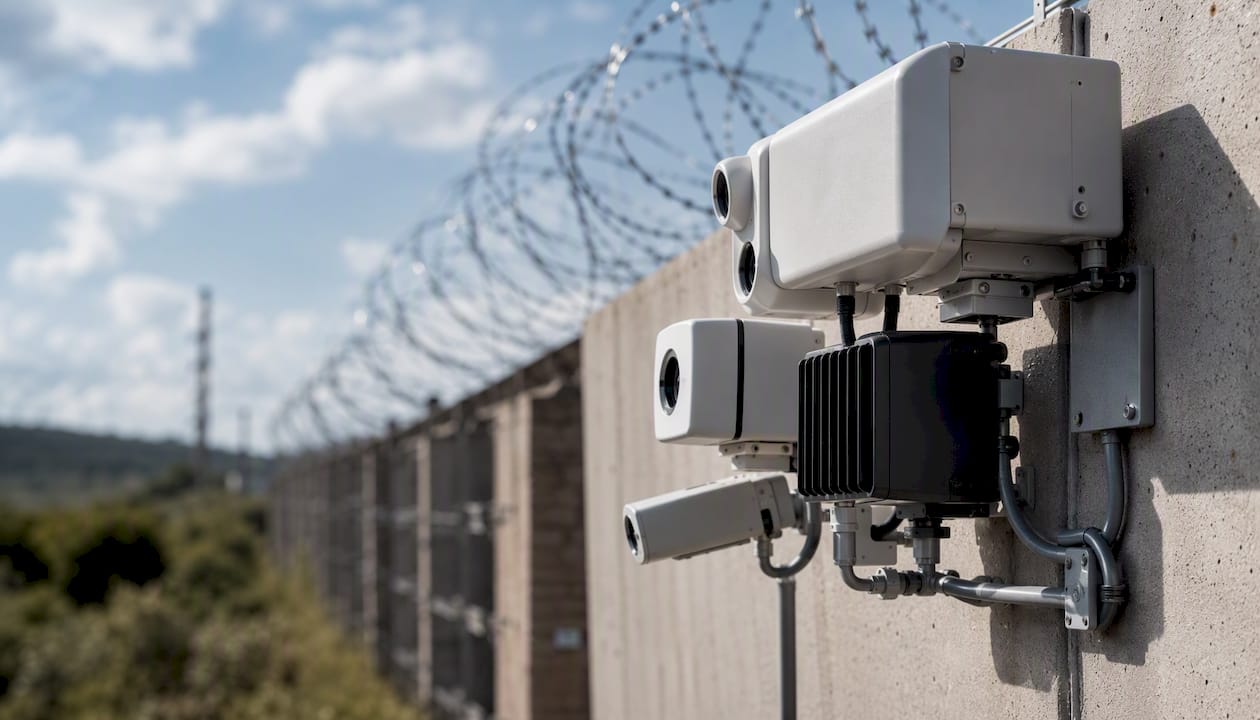
Radar combined with thermal and video analytics is the strongest perimeter combination. Radar detects movement at range; thermal confirms a heat signature; video analytics classifies human versus animal or vehicle. Physical security sensor guidance highlights that weatherproofing, tamper-resistant housings, and network cybersecurity are non-optional for any outdoor deployment. For indoor zones, PIR, ultrasonic, and microwave sensors remain cost-effective at access points and corridors, while acoustic analytics adds event-specific detection without camera coverage gaps.
For advanced sensing technology guidance tailored to security managers, Beyondsensor's published resources cover modality trade-offs in practical deployment contexts.
How should you run a pilot and validate performance?
A well-scoped pilot protects the procurement decision. Define the primary threat vector first — perimeter breach, tailgating at access points, or anomaly detection at a critical asset — then build the pilot around that scenario rather than trying to test everything at once.
Acceptance test checklist:
- Detection rate at or above the agency's defined threshold for the threat type
- False alarm rate within tolerable operational limits (define this number before the pilot starts)
- Alert latency from detection to operator notification
- Interoperability test: confirm video events and access control events appear in the same dashboard
- Power failover test: sensors and edge nodes must recover within a defined window after a power interruption
- Firmware update test: confirm the update process does not create a detection gap
Deployment best practices drawn from lifecycle and integration guidance include network segmentation for sensor VLANs, redundant power and communications for critical nodes, and certificate-based device onboarding. Edge processing at the sensor node limits the data volume crossing the network, which matters for bandwidth-constrained sites.
Pro Tip: After go-live, start analytics sensitivity at conservative thresholds. Use labeled event data from the pilot period to retune models at the 30-day and 90-day marks. This approach, recommended in emerging sensing adoption guidance, reduces early false-alarm spikes that erode operator trust in new systems.
Track three KPIs weekly post-deployment: false-alarm trend (should decline as models tune), MTTR for confirmed incidents, and software patch cadence against the vendor's published schedule.
Key Takeaways
Multi-modal sensor fusion with edge AI and a unified command platform is the most defensible procurement decision for U.S. security agencies in 2026, and Beyondsensor delivers that architecture from pilot through full deployment.
| Point | Details |
|---|---|
| Multi-modal stack is the baseline | Combine radar, thermal, video analytics, and acoustic/vibration sensors for accurate detection and low false-alarm rates. |
| Start with a scoped pilot | Run a 2–8 week pilot targeting your primary threat vector before committing to full-site hardware. |
| Require field performance data | Demand DR and FAR datasheets, ONVIF compliance, open APIs, and FCC-compliant devices in every RFP. |
| TCO goes beyond hardware | Budget for installation, analytics licensing, integration, training, and recurring platform fees from day one. |
| Beyondsensor as your deployment partner | Beyondsensor covers solution design, edge analytics, VMS/PSIM integration, and SLA-backed support for agencies and integrators. |
The gap between sensor specs and operational reality
Most agencies enter procurement focused on hardware specifications: detection range, IP rating, operating temperature. Those numbers matter, but the gap between a sensor's datasheet performance and its operational performance in your specific environment is where deployments fail.
A thermal camera rated for 200 m detection in open terrain will perform differently at a fenced perimeter with irregular terrain, seasonal vegetation, and variable humidity. Radar tuned for a flat open area will generate different false-alarm profiles near a busy road. The only way to close that gap is a structured pilot with defined acceptance criteria, not a vendor demo on a controlled test range.
The agencies that get the most out of intelligent surveillance solutions are the ones that treat the pilot as a data-collection exercise, not a sales event. They define success metrics before the vendor arrives, they log every false alarm, and they use that data to negotiate final configuration before full deployment. Beyondsensor's pilot-first model is built around exactly this discipline — measurable acceptance criteria, structured tuning windows, and long-term SLAs that hold performance accountable after the contract is signed. For system integrators and government clients, that accountability is what separates a sensing solution from a sensing investment.
Beyondsensor's pilot program for agencies and integrators
Beyondsensor delivers end-to-end sensing solutions for U.S. security agencies and system integrators: solution design, sensor hardware selection, edge analytics configuration, VMS/PSIM integration, and SLA-backed support after deployment. The difference from a hardware-only procurement is that Beyondsensor stays accountable through the full lifecycle, not just the installation date.

For procurement teams ready to move from specification to deployment, Beyondsensor offers a structured site scoping session and pilot program with commercial terms compatible with U.S. public-sector procurement processes. Contact the Beyondsensor team through the system integrators page or review the full platform and technology capabilities on the innovations page to scope the right solution for your agency's threat environment.
Useful sources for procurement and technical validation
The references below are worth consulting when writing requirements, specifying acceptance tests, or reviewing vendor proposals.
- GCPSG-021 (2025) Fundamentals of Detection Systems in Physical Security | Royal Canadian Mounted Police
- Physical Security — Sensors — MCSI Library
- BeyondSensor | Advanced AI Solutions
- Advanced sensing technologies: A practical guide for security managers | News | BeyondSensor
- Sensing Solution Selection Guide for Security Pros | News | BeyondSensor
- Essential sensing technology features for industrial security | News | BeyondSensor
- Emerging sensing innovations guide for security leaders | News | BeyondSensor
How to use these sources: cite vendor performance datasheets alongside independent field test data in your RFP evaluation. Require firmware and security policies in contract language, not just in sales materials. For radio-frequency devices, confirm FCC compliance before purchase, and for networked sensors, verify ONVIF certification against the ONVIF conformant products database before finalizing specifications.
Recommended
Read More Articles
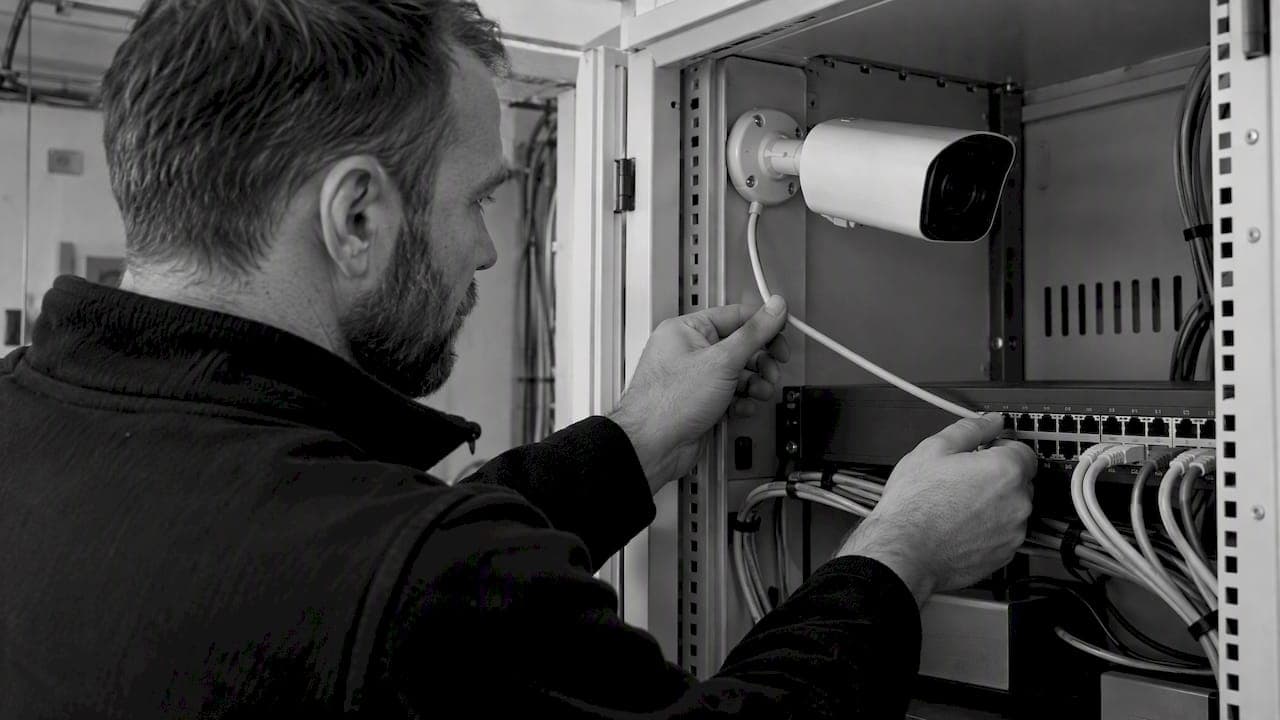
RTSP Security Risks: Integrators Must Block Exposed Ports 554 and 8554
See how integrators can reduce RTSP security risks: close exposed ports 554 and 8554, secure camera access, and verify each deployment with practical checks.
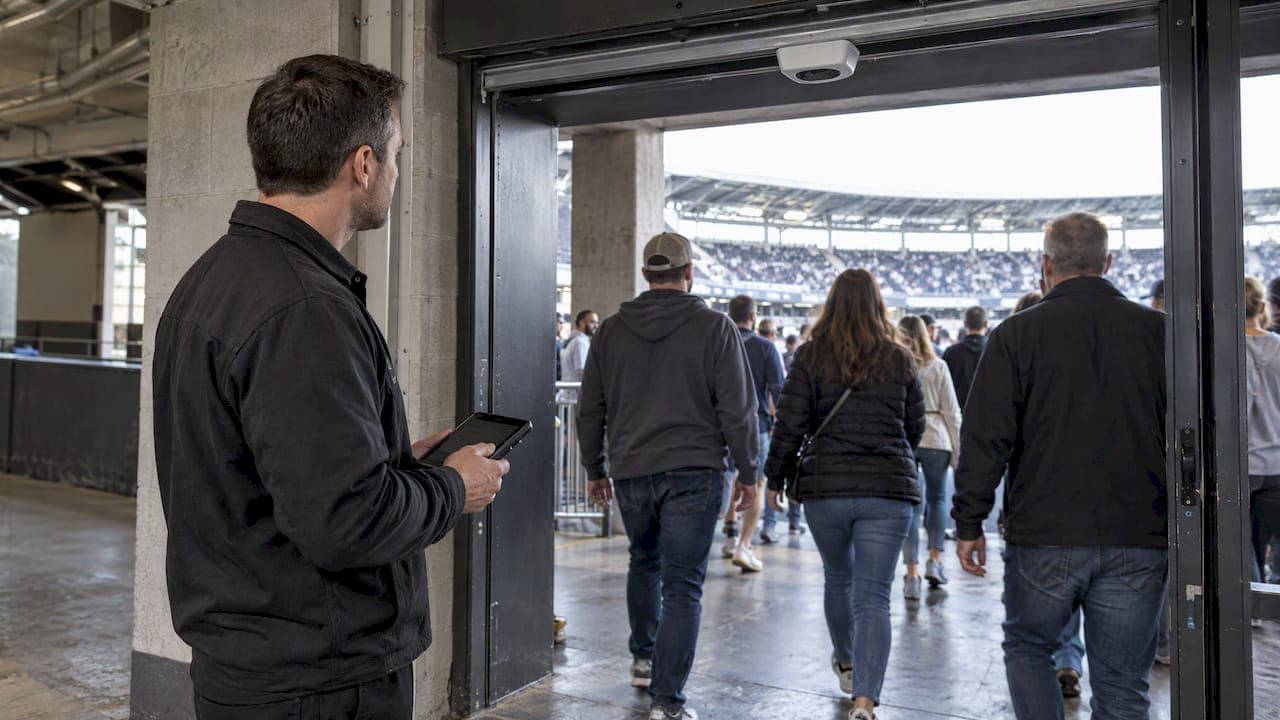
Require MAEpp and X Accuracy Before You Buy People Counting Systems
Verify people counting accuracy by demanding MAEpp, X Accuracy, and directional-bias reports. Validate on-site with at least 100 events per direction...
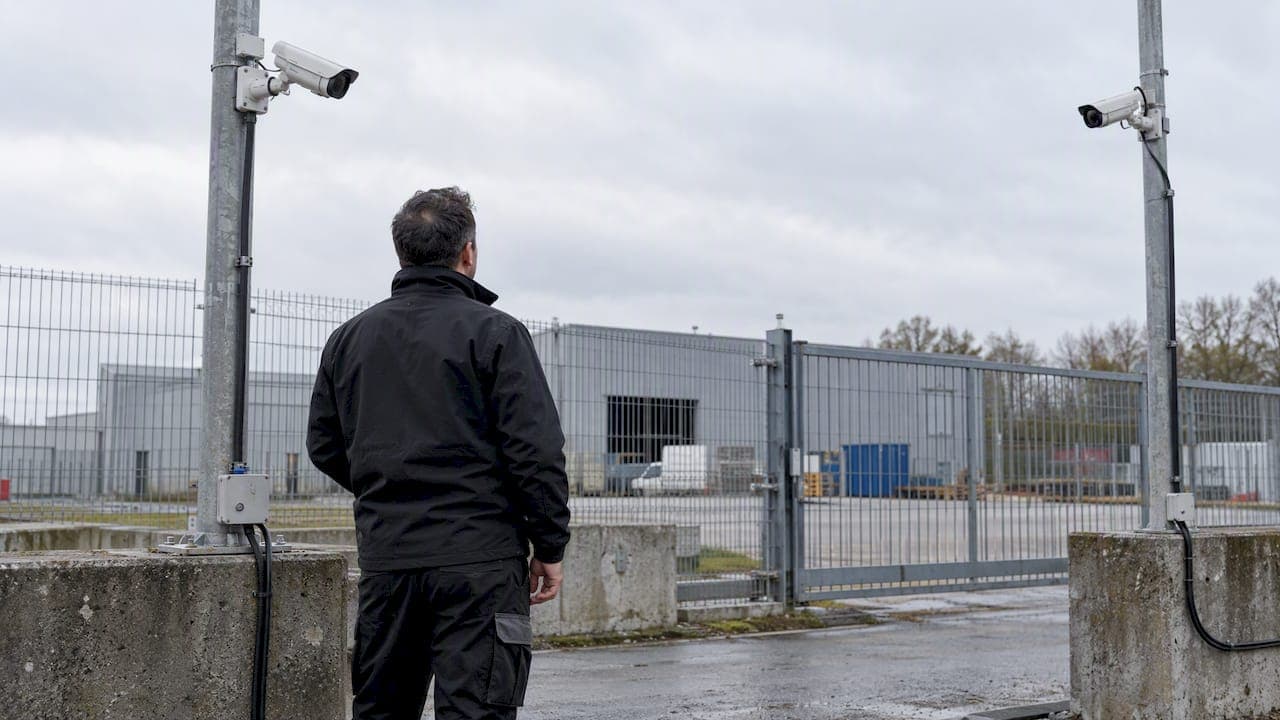
30–90 Day Pilot Validates Redundant Camera Networks for Engineers
Standards led, practical steps for engineers to deploy redundant camera networks: MRP, dual homing, and aggregation patterns, commissioning checks, and...
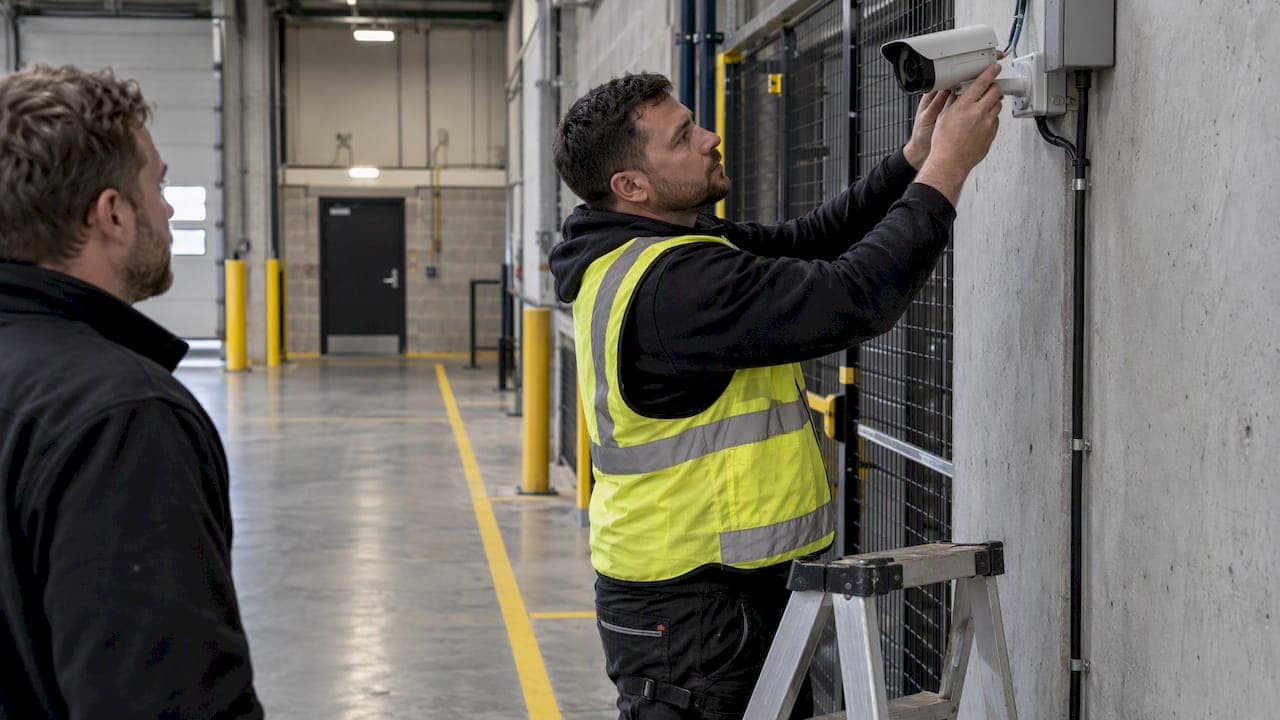
30 Day Pilot Proves Video Analytics Accuracy for Security Teams
Validate video analytics accuracy with scenario tests, camera tuning, transfer learning and a 30 day edge first pilot for security teams.
Let's Build YourSecurity Ecosystem.
Whether you're a System Integrator, Solution Provider, or an End-User looking for trusted advisory, our team is ready to help you navigate the BeyondSensor landscape.
Direct Advisory
Connect with our regional experts for tailored solutioning.