
Discover the vital role of data analytics in security operations. Learn how it enhances threat detection and response for effective protection.

The Role of Data Analytics in Security Operations

TL;DR:
- Data analytics in security automates threat detection by correlating vast telemetry volumes in real time. It enables predictive capabilities, reduces incident rates, and enhances cross-domain risk assessment. Building a strong data foundation and governance framework is essential for effective, scalable security operations.
Attackers don't wait for your analysts to catch up. Modern threats operate at machine speed, and the role of data analytics in security has shifted from a competitive advantage to an operational necessity. A single enterprise processes up to 120 billion security events per week, a volume no human team can manually triage without missing critical signals. This article breaks down how analytics transforms threat detection and response, where implementation most often fails, and what security leaders can do right now to build a data-driven security posture that actually holds.
Table of Contents
- Key Takeaways
- The role of data analytics in security explained
- Why traditional security methods no longer hold
- Practical applications that deliver results
- Challenges and how to overcome them
- How security leaders can act on analytics insights
- My perspective on what actually moves the needle
- See how Beyondsensor integrates analytics into security
- FAQ
Key Takeaways
| Point | Details |
|---|---|
| Analytics replaces manual triage | Data analytics automates correlation of billions of events, closing the gap attackers exploit during slow manual analysis. |
| Predictive tools reduce incidents | Predictive analytics programs achieve 20–40% reductions in recordable incident rates within 2–3 years of deployment. |
| Data quality precedes AI | Normalizing and enriching telemetry before ingestion is the foundation that makes AI-driven detection accurate and reliable. |
| Cross-domain data uncovers hidden risk | Integrating safety, asset, and security data surfaces risk hotspots invisible to siloed tools or spreadsheet-based reporting. |
| Governance matters at scale | AI agents operating in security environments require auditable trust frameworks to prevent automation from creating new exposures. |
The role of data analytics in security explained
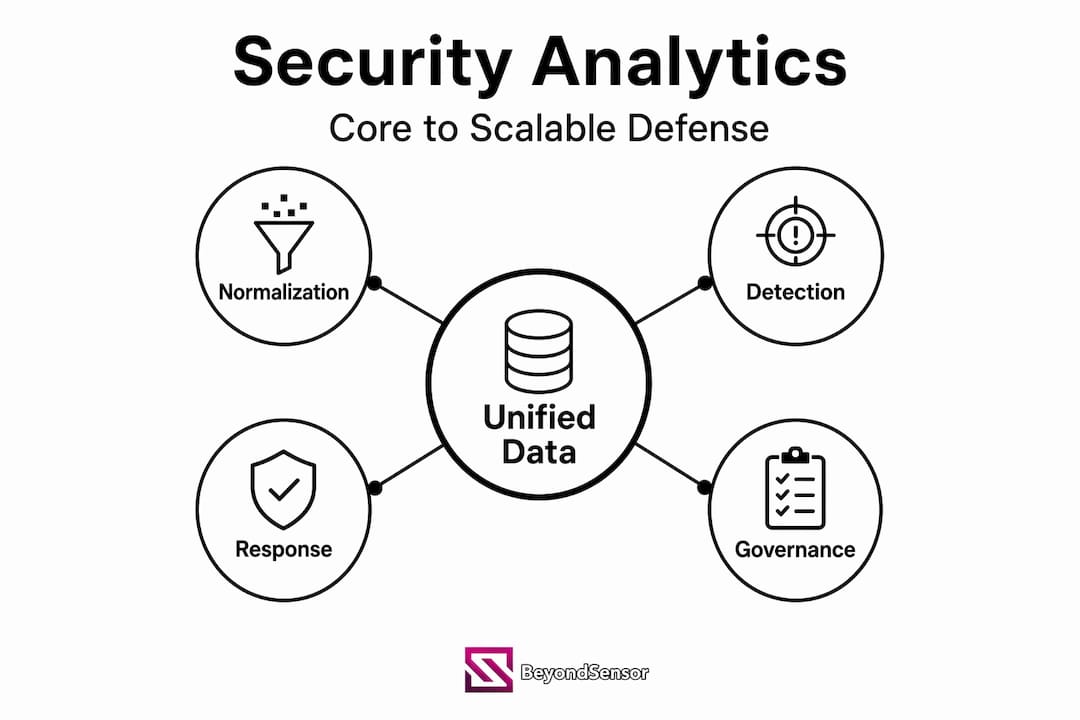
Data analytics in security refers to the collection, normalization, and analysis of machine-generated telemetry to detect threats, assess risk, and guide response decisions. It encompasses what practitioners call security analytics, cyber defensive data science, and AI/ML-powered detection, all applied against the full scope of an organization's digital and physical footprint.
The contrast with traditional approaches is stark. Legacy security operations relied on rule-based alerting: write a rule, wait for a match, respond. That model assumed attackers behaved predictably and that event volumes were manageable. Neither assumption holds today.
Data-driven security replaces static rules with dynamic models. Instead of waiting for a known signature to fire, analytics platforms establish behavioral baselines, score deviations in real time, and surface anomalies that no pre-written rule would catch. The core techniques include:
- Predictive analytics: Uses historical patterns and machine learning to forecast where threats are likely to emerge before they materialize.
- Anomaly detection: Flags deviations from established behavioral norms across users, devices, and network traffic.
- AI/ML integration: Continuously refines detection models as new threat patterns emerge, reducing reliance on manual tuning.
- Telemetry correlation: Ingests feeds from SIEMs, endpoint detection tools, network sensors, and physical access systems into a unified analytical layer.
Understanding how analytics improves detection starts with recognizing that the problem is not just a security problem. Security has become a data science problem, and the organizations that treat it that way gain a measurable edge.
Why traditional security methods no longer hold
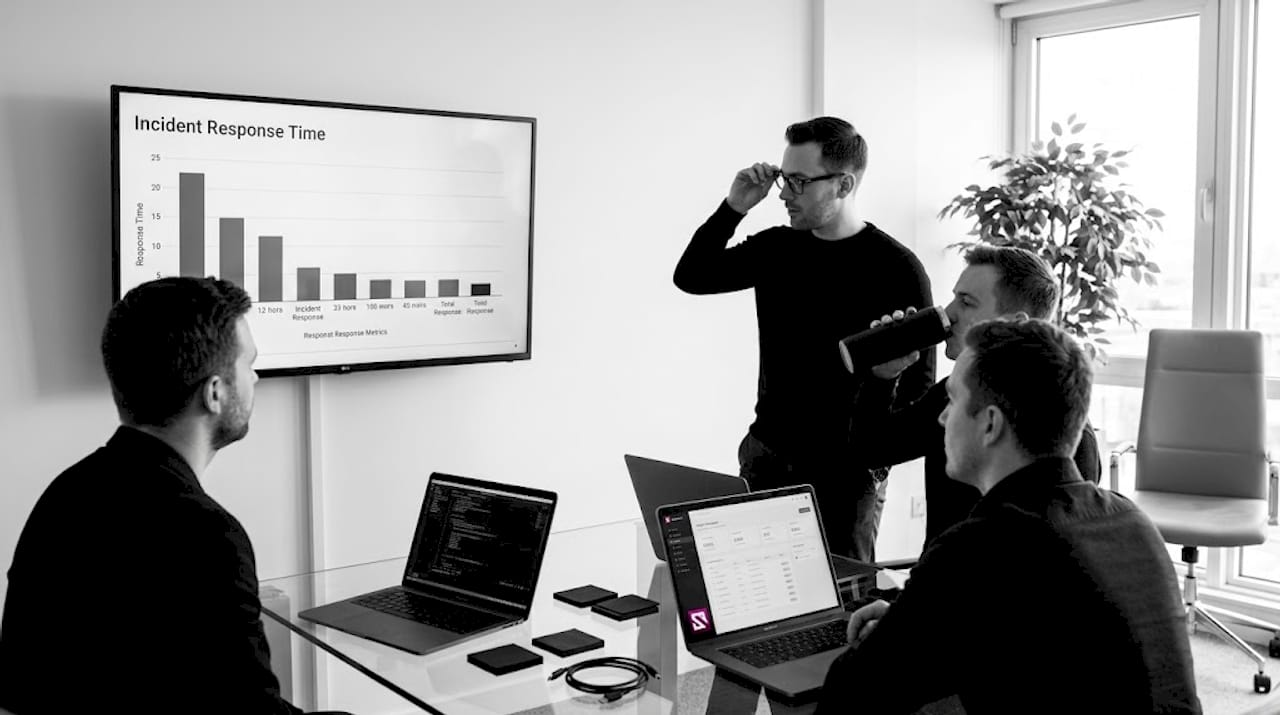
The speed gap is the most urgent argument for analytics adoption. Attackers move laterally in an average of 29 minutes, far outpacing the hours or days it typically takes a traditional SOC to investigate and confirm a threat. By the time a human analyst escalates an alert, the adversary has already achieved their objective.
The volume problem compounds the speed problem. No team of analysts can process 120 billion events per week with any consistency. Most large organizations manage 70 to 80 disparate security tools, each generating its own telemetry stream. Without a unified analytics layer to correlate these feeds, the result is fragmented visibility, redundant alerts, and alert gaps where real threats slip through undetected.
"Security is evolving from a cyber challenge into a data science challenge that demands shifting from CPU-centric to GPU-accelerated analytics for real-time response." — SiliconANGLE
The importance of data analytics in safety and security contexts extends well beyond speed. Organizations relying on spreadsheets and periodic audits operate reactively. They discover incidents after damage has occurred, not before. The shift to predictive and continuous analytics is what moves security teams from damage control to genuine threat prevention.
Firms using GPU-accelerated parallel analytics can correlate telemetry in seconds rather than hours, fundamentally changing the defender's position. That architectural shift is not a luxury. Against automated adversaries, it is the baseline requirement for staying ahead.
Practical applications that deliver results
Understanding the theory is one thing. Seeing how data analytics improves security in actual operations is where leaders make better investment decisions. The impact of analytics on threat detection plays out across several specific use cases.
-
Predictive threat detection. Analytics models trained on historical incident data identify early-stage attack behaviors, such as reconnaissance patterns and unusual authentication sequences, before they escalate. Predictive analytics programs achieve 20–40% reductions in recordable incident rates within 2–3 years, demonstrating consistent ROI across security and safety operations.
-
Risk scoring and prioritization. Not every alert carries equal weight. Analytics assigns dynamic risk scores to events based on asset criticality, threat context, and behavioral history. Analysts focus on the ten alerts that matter, not the ten thousand that don't.
-
Adaptive security operations. Edge analytics transforms security outcomes by processing data closer to the source. Sensors and cameras generate decisions locally, reducing latency and limiting the volume of raw data shipped to central platforms.
-
Cross-domain data integration. Overlaying safety incident data on equipment performance reveals risk hotspots invisible in isolated datasets. When security teams share a unified data layer with facilities and asset management teams, the combined picture enables proactive intervention rather than reactive reporting.
-
Investigation acceleration. Advanced data pipelines that pre-filter and enrich telemetry reduce ingestion volumes by 40–60%, cutting investigation time and platform costs while allowing teams to onboard new data sources at scale.
Pro Tip: Audit your data pipeline before adding new detection tools. Ingesting excessive low-value telemetry creates lag and inflates costs without improving detection. Filter and enrich data at the source, before it reaches your SIEM, to accelerate investigations and reduce AI token consumption.
Challenges and how to overcome them
Data-driven security solutions fail for predictable reasons. Understanding those failure patterns before deployment saves significant time and budget.
| Challenge | Root Cause | Recommended Response |
|---|---|---|
| Alert fatigue | Too many unfiltered, low-quality signals reaching analysts | Normalize data and apply risk scoring before alerting |
| Data silos | Fragmented tool architectures with no unified data layer | Build a centralized data lake or SIEM integration hub |
| AI inaccuracy | Inconsistent classification across tools degrades model inputs | Enforce taxonomy standards across all telemetry sources |
| Governance gaps | Automated agents acting without auditable controls | Implement calibrated trust frameworks for AI agent actions |
| Analyst resistance | Cultural reluctance to trust automated triage decisions | Invest in training and start with augmentation, not replacement |
The normalization problem deserves specific attention. Without unified taxonomy across tools, automated classifiers either miss risks or generate excessive noise. Two tools logging the same event differently create analytical blind spots. Consistent classification is not a back-office concern. It is the foundation that determines whether your analytics layer performs or fails.
Governance is equally non-negotiable at scale. AI agents must operate within a calibrated trust framework that keeps automated triage actions auditable and controllable. Autonomous systems making unchecked decisions in high-security environments introduce a different category of risk. The goal is automation with accountability, not automation without oversight.
Scalable security architectures are built to absorb telemetry growth without degrading performance. Organizations that skip this foundation and layer analytics directly onto fragmented legacy tools consistently underperform against the benchmarks their investment promises.
How security leaders can act on analytics insights
Adopting data-driven security solutions requires more than buying a new platform. It requires deliberate sequencing.
- Start with data maturity assessment. Catalog your telemetry sources, identify gaps, and evaluate data quality before selecting analytics tools. Poor data in means poor intelligence out, regardless of the model's sophistication.
- Prioritize metrics that predict outcomes. Mean time to detect (MTTD) and mean time to respond (MTTR) are the indicators that matter. Vanity metrics like total alerts reviewed obscure actual security posture.
- Integrate data across teams progressively. Align security, facilities, and asset management data in stages. Cross-functional data visualization turns predictive insights into operational resilience when teams share a common analytical layer.
- Automate the routine, protect the judgment. Use AI to handle alert triage, log correlation, and reporting. Reserve human oversight for decision points that require context, accountability, or escalation authority.
- Treat model accuracy as a living metric. Threat patterns evolve. A detection model calibrated six months ago may be blind to techniques emerging today. Schedule regular model reviews and retrain against current threat intelligence.
Pro Tip: When building your analytics roadmap, treat the security data checklist as a living document. Revisit data source coverage, normalization standards, and model performance quarterly. What you don't measure degrades without you noticing.
Operational efficiency in security is not achieved through more tools. It is achieved through better data, tighter pipelines, and a team culture that trusts analytics enough to act on it early.
My perspective on what actually moves the needle
I've worked alongside security teams that had excellent dashboards and slow response times. And I've seen lean teams with basic tooling outperform them because they built the right data foundation first. The relationship between analytics investment and security outcomes is not linear. It depends entirely on what you build beneath the analytics layer.
What I've learned watching organizations attempt this transition is that the technology rarely fails. The foundation does. Teams deploy AI-powered detection on top of inconsistent, poorly normalized data and then blame the model when it underperforms. Building a high-performance data foundation first is the step most organizations skip because it is less visible and harder to sell upward than a new platform procurement.
My other observation is this: dashboards create comfort, not security. Sophisticated visualization alone doesn't reduce exposure unless it changes a decision fast enough to matter. I've seen security leaders interpret a clean dashboard as evidence of strong posture, when in reality it reflected incomplete telemetry coverage. The metric that matters is not how good your reporting looks. It's how fast your team moves from signal to intervention.
The cultural change required for genuinely data-driven security is significant and underestimated. Analysts who built careers on rule-based expertise need to shift toward model interpretation and data quality ownership. That is not a training exercise. It is a change in how the team defines its own value. Organizations that invest in that shift, not just in technology, are the ones that see lasting results.
— Eumir
See how Beyondsensor integrates analytics into security
Beyondsensor builds the physical and digital infrastructure that makes data-driven security real, not theoretical. From high-precision sensor networks that generate clean, actionable telemetry to AI-assisted detection systems designed for industrial and critical infrastructure environments, Beyondsensor delivers the integration layer that turns raw data into security decisions. Organizations working with Beyondsensor's AI-driven solutions gain access to scalable data pipelines, normalized telemetry feeds, and pre-validated sensing hardware that supports the kind of analytics described throughout this article. If your team is ready to move from reactive monitoring to predictive, intelligence-driven security operations, explore Beyondsensor's innovation platform to see what that architecture looks like in practice.
FAQ
What is the role of data analytics in security?
Data analytics in security involves processing and correlating large volumes of telemetry to detect threats, prioritize risks, and guide faster response decisions. It replaces manual, rule-based methods with dynamic, model-driven detection that scales with modern threat volumes.
How does data analytics improve threat detection speed?
By automating correlation across billions of events, analytics platforms surface anomalies in seconds rather than hours. GPU-accelerated processing gives defenders a critical time advantage against attackers who move laterally in under 30 minutes.
What is the biggest barrier to implementing security analytics?
Data normalization is the most common failure point. Without consistent classification across tools, AI models generate excessive noise or miss threats entirely, undermining the value of the analytics investment.
Why does data quality matter more than tool selection?
AI and analytics models perform only as well as the data they process. Fragmented, inconsistent telemetry degrades model accuracy regardless of the platform. A strong data foundation must precede any analytics layer.
How does analytics support safety as well as cybersecurity?
Cross-domain integration of safety incident data, asset performance data, and security telemetry surfaces risk patterns invisible to siloed tools. Predictive analytics programs in safety contexts have demonstrated 20–40% reductions in recordable incidents within three years of deployment.
Recommended
Read More Articles
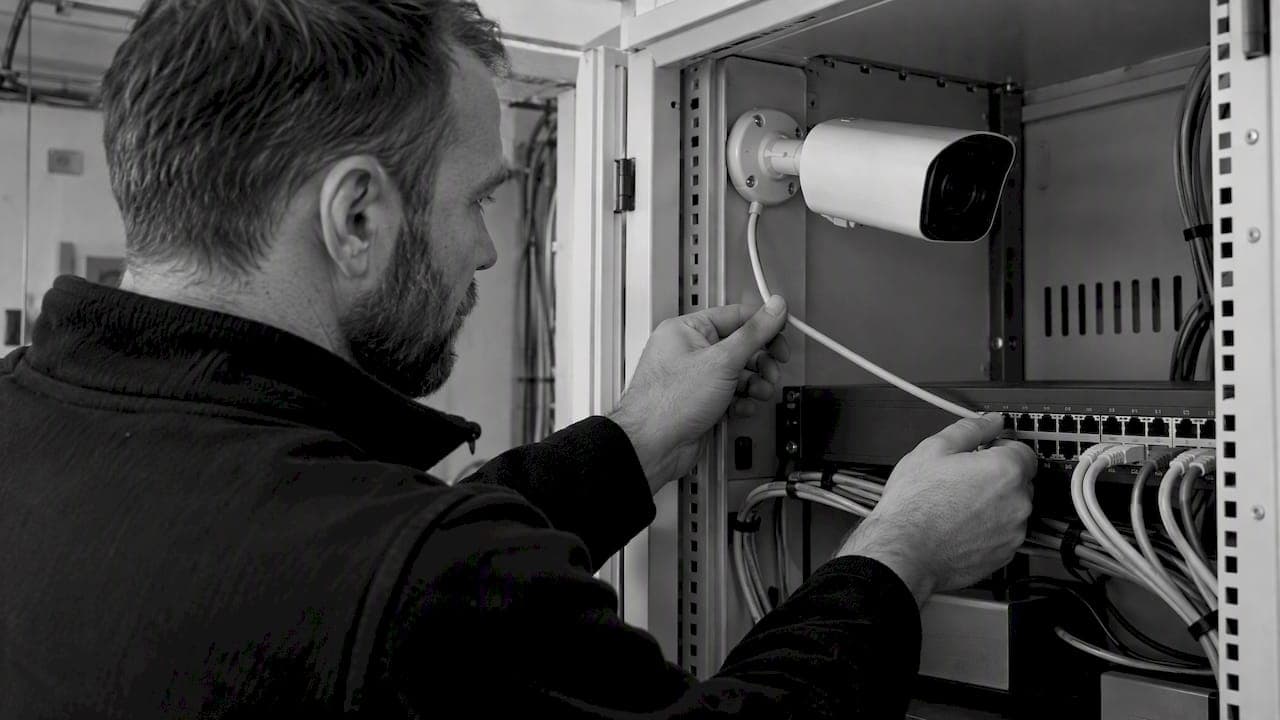
RTSP Security Risks: Integrators Must Block Exposed Ports 554 and 8554
See how integrators can reduce RTSP security risks: close exposed ports 554 and 8554, secure camera access, and verify each deployment with practical checks.

Require MAEpp and X Accuracy Before You Buy People Counting Systems
Verify people counting accuracy by demanding MAEpp, X Accuracy, and directional-bias reports. Validate on-site with at least 100 events per direction...
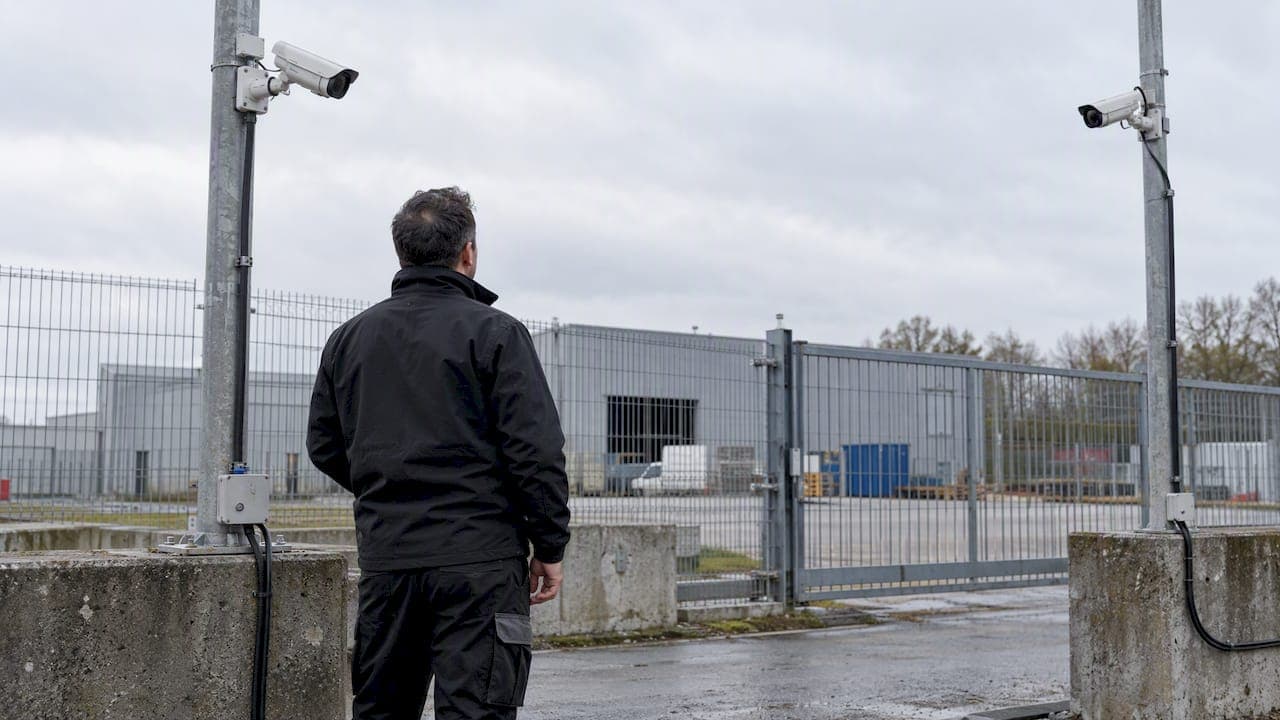
30–90 Day Pilot Validates Redundant Camera Networks for Engineers
Standards led, practical steps for engineers to deploy redundant camera networks: MRP, dual homing, and aggregation patterns, commissioning checks, and...
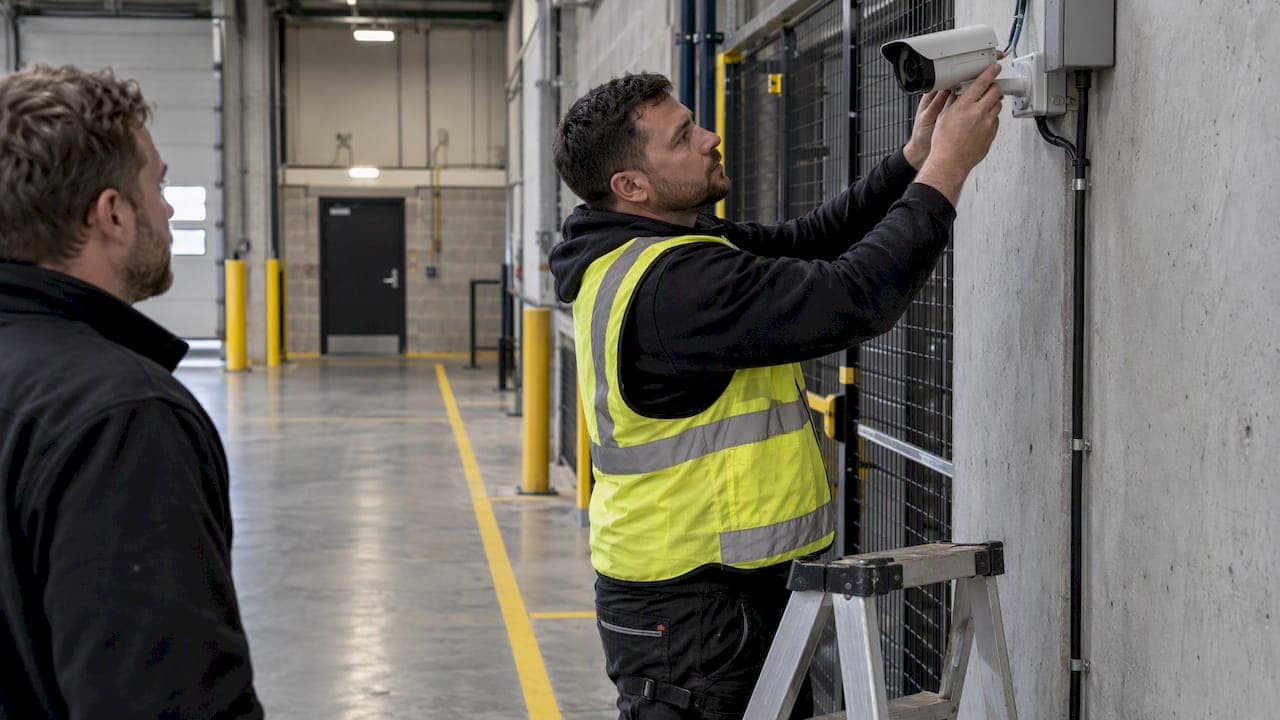
30 Day Pilot Proves Video Analytics Accuracy for Security Teams
Validate video analytics accuracy with scenario tests, camera tuning, transfer learning and a 30 day edge first pilot for security teams.
Let's Build YourSecurity Ecosystem.
Whether you're a System Integrator, Solution Provider, or an End-User looking for trusted advisory, our team is ready to help you navigate the BeyondSensor landscape.
Direct Advisory
Connect with our regional experts for tailored solutioning.