
Standards focused steps to choose and deploy substation security sensors: run a TVRA, require EMC tested hardware, and pilot before rollout.
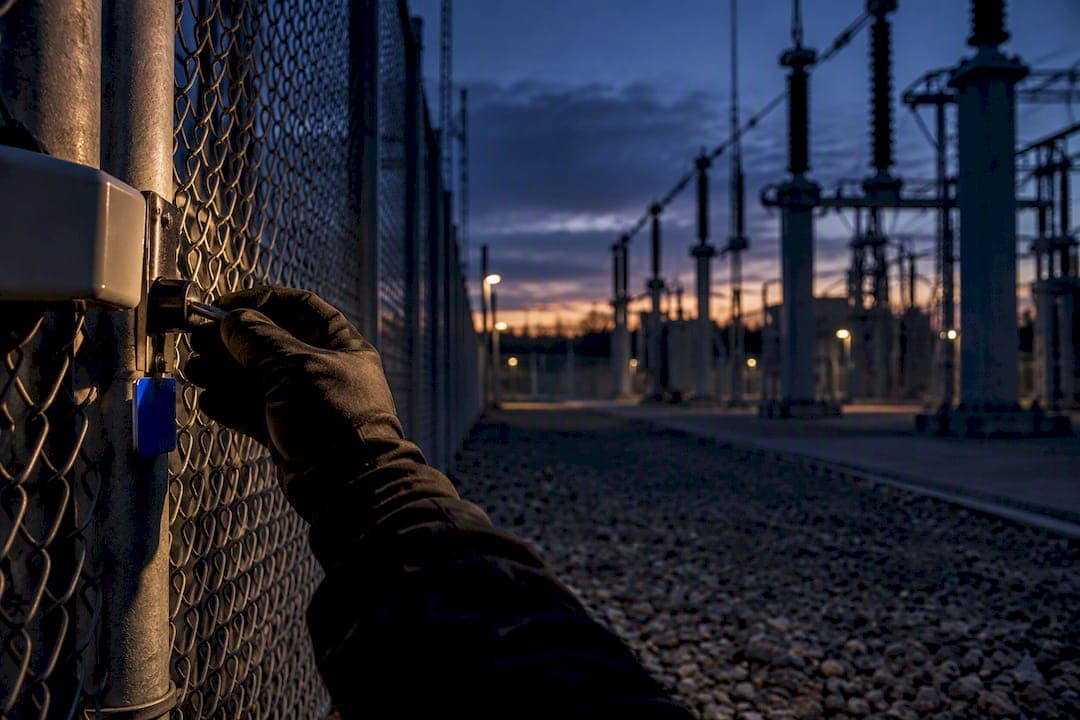
EMC Tested Substation Security Sensors for Practitioners

Reliable substation protection depends on combining fence intrusion detection, distributed fiber-optic sensing, volumetric radar or LiDAR, video analytics, and break-beam detection into one coordinated layer, rather than trusting any single technology alone. The immediate next step is straightforward: commission a site-specific Threat and Vulnerability Risk Assessment (TVRA), then select sensors with proven electromagnetic immunity before committing budget to hardware. Skip the TVRA and you risk buying sensors that solve the wrong threat, or that fail entirely in a high-voltage electromagnetic field.
TL;DR:
- Conduct a site-specific Threat and Vulnerability Risk Assessment before selecting sensors to ensure they target relevant threats and meet electromagnetic immunity standards.
- Fiber-optic Distributed Acoustic Sensing offers continuous fence coverage with minimal power needs, but it can be sensitive to temperature swings and heavy rain unless paired with complementary sensors.
- LiDAR and radar are ideal for open areas where lighting is poor, providing three-dimensional volumetric detection that resists lighting conditions, but deployment costs scale with site size.
- Integration of multiple sensors into a layered response system with proper workflows reduces false alarms and ensures effective detection and response coordination.
- Prioritize sensors with verified electromagnetic compatibility, verified detection range, and support for a live pilot test to prevent costly failures and false positives in high-voltage environments.
Table of Contents
- Sensor types and how they work
- Layered defense and integration with VMS, PSIM, and SCADA
- Selection criteria and procurement checklist for substation sensors
- Installation, EMC mitigation, and ongoing calibration
- Standards, field evidence, and deployment outcomes
- What twenty years of grid security teaches about sensor strategy
- How BeyondSensor supports your substation security plan
- Key standards and guidance worth reading
- Sources
- FAQ
Sensor types and how they work
Every substation sensor class trades detection sensitivity against false alarm risk, and understanding that trade-off is the first job of any security engineer building a protection plan.
Fence-mounted vibration and acoustic sensors detect the mechanical signature of cutting, climbing, or impact on chain-link or palisade fencing. They are inexpensive to deploy across long perimeters, but wind loading, loose fence fabric, and wildlife contact are common nuisance sources that demand careful tuning. Fiber-optic Distributed Acoustic Sensing, often called DAS, runs a single fiber along the fence line and detects vibration through changes in backscattered light along its entire length. Field research on multimodal fiber-optic and environmental sensing shows this approach can improve detection accuracy and reduce false alarms when interrogator placement and fiber routing are designed to limit environmental coupling. The trade-off is interrogator cost and sensitivity to temperature swings and heavy rainfall unless paired with complementary sensing.
LiDAR and radar provide volumetric detection across open ground, mapping intrusions in three dimensions rather than along a single line. Both resist the lighting changes that defeat many camera-only systems, making them well suited to unlit substation yards, though their deployment footprint and cost scale with the site's acreage.
Infrared and microwave break-beams form low-latency detection lattices across gates and approach paths. They react in milliseconds but are prone to nuisance trips from birds, blowing debris, and dense fog.
Video motion detection and video analytics classify what triggered an alarm rather than simply confirming movement, though accuracy depends heavily on camera placement and consistent illumination.
Environmental sensors covering temperature, smoke, and humidity round out the picture, flagging equipment anomalies and fire risk before they escalate into safety incidents.
- Fence vibration and acoustic sensors suit long perimeters where budget is constrained but wind exposure is manageable.
- Fiber-optic DAS fits sites needing continuous coverage over kilometers of fence line with minimal power infrastructure.
- LiDAR and radar work best across open yards where lighting is unreliable and volumetric coverage matters more than line detection.
- Break-beam lattices are strongest at choke points like gates, where instant detection outweighs occasional nuisance trips.
- Video analytics earns its cost when classification, not just detection, is the priority.
Layered defense and integration with VMS, PSIM, and SCADA
Detection only creates value once it feeds a coherent response chain, which is why the Cybersecurity and Infrastructure Security Agency's guidance on substation physical security frames the problem around four layers: deter, detect, delay, and respond. Fencing and signage deter; sensors and cameras detect; barriers and hardened enclosures delay; trained personnel and dispatch protocols respond. Sensors sit squarely in the second layer, but their placement should account for how much delay the first layer buys the response team.
Integration typically follows one of three patterns:
- Direct VMS alarms, where sensors trigger camera presets and recorded clips inside a video management system, suit smaller sites with a single control room.
- PSIM orchestration, where a physical security information management platform correlates alarms from multiple sensor types and enforces standard operating procedures, fits multi-site operators managing dozens of substations.
- Sensor-to-SCADA interfaces should stay strictly one-way and isolated, feeding situational data into operational technology networks without ever allowing security alarms to write commands back into grid control systems.
Verification workflow matters as much as the sensor itself. CISA guidance is explicit that alarm verification is a workflow problem, not a hardware problem: pair intrusive sensors with camera cuing, define an operator triage sequence, and set clear thresholds for when a dispatch is warranted. Skipping that step turns every nuisance alarm into a costly false dispatch.
Communications architecture closes the loop. Edge inference, where classification happens on the sensor or a local gateway rather than in a distant cloud, cuts bandwidth needs and reduces latency, which matters most for unmanned or remote substations with limited backhaul. An offline-first design, where the local system can still alarm and log even if the uplink drops, is not optional at sites without redundant connectivity.

Selection criteria and procurement checklist for substation sensors
Choosing sensors for a substation is an engineering decision first and a purchasing decision second, and the specification sheet needs to answer questions a typical commercial security RFP never asks.
Electromagnetic compatibility sits at the top of that list. Substations generate transient fields that can desensitize or falsely trigger unshielded electronics, so IEEE's recommended practice for electromagnetic energy safety programs is a useful reference point for classifying exposure zones and specifying engineering controls. Beyond EMC, demand IP and IK ingress and impact ratings suited to outdoor exposure, an operating temperature range that covers the site's real climate extremes, and a stated mean time between failures.
- Detection probability and false alarm rate should be requested as measured figures from the vendor, not marketing claims.
- Classification accuracy matters wherever video analytics or multimodal fusion is part of the design.
- Effective range must be verified against the site's actual sightlines and fence geometry, not a datasheet's ideal-conditions number.
- Power and backhaul options need to match what the site can realistically support, including solar or battery backup for remote yards.
- Encryption and cyber hardening on the sensor's communication path deserve the same scrutiny as its physical detection performance.
A procurement checklist should confirm the sensor selection traces back to a completed TVRA, that a pilot or acceptance test is written into the contract, that service level agreements specify response times for hardware failure, and that local support and spare parts are available without a long shipping delay. A step-by-step approach to sensor compliance documentation helps keep these requirements aligned with what regulators and insurers will eventually ask to see.
Pro Tip: Ask every vendor for their EMC/EMI test report before the demo, not after the purchase order.
Installation, EMC mitigation, and ongoing calibration
Getting sensors installed correctly is where most substation security projects either earn their budget back or quietly underperform for years.
- Site mounting and earthing. Isolate fence-mounted sensors from loose fabric and gate hardware that generates false vibration, and confirm earthing bonds meet the site's electrical safety plan before any sensor goes live.
- EMC and EMI mitigation. Route sensor cabling with clear separation from high-voltage conductors, shield and ground cable runs according to manufacturer guidance, and test the finished installation against IEC and IEEE immunity references before acceptance.
- Calibration and tuning. Record a baseline of normal site activity, including wind, wildlife, and routine maintenance traffic, then profile the signature of genuine intrusion attempts and set adaptive thresholds rather than fixed ones.
- Seasonal re-tuning. Revisit thresholds after major seasonal changes, since ground moisture, foliage growth, and temperature swings all shift a sensor's baseline noise floor.
- Testing and maintenance. Schedule functional tests on a fixed calendar, verify the full alarm path from sensor to operator screen rather than just the sensor itself, keep firmware current, and coordinate any test that requires a live circuit outage with the grid operations team well in advance.
Pro Tip: Log every nuisance alarm with its likely cause. That log becomes the fastest path to a properly tuned threshold.
Standards, field evidence, and deployment outcomes
Guidance on substation sensing is unusually well documented, which is good news for anyone trying to build a defensible security plan rather than guess at one.
IEEE's substation physical security guidance confirms that motion detectors, perimeter detection, CCTV, and intrusion alarms are common and effective measures, provided placement and testing account for animal and environmental nuisance triggers. Singapore's own guidance under the PSWG security guidelines describes Fence Intrusion Detection Systems combining vibration, infrared, acoustic, and video motion detection, with alarms required to notify at least two personnel or a 24/7 manned security room.
- Fiber-optic DAS and multimodal sensor fusion, combining acoustic, vibration, and humidity inputs, improve recall in adverse conditions such as heavy rain, according to field research on edge-enabled multimodal intrusion detection.
- Research-grade real-time substation detection systems have demonstrated the feasibility of classifying people, vehicles, and fires in near real time when paired with reliable communications and edge processing.
- CPTED and defense-in-depth principles remain consistent backbones across independent grid-security frameworks reviewed for this guide.
A well-designed multimodal fiber-optic system, according to field research on edge-enabled intrusion detection, reduces false alarms compared to single-mode acoustic sensing alone. That single finding explains why so many recent substation upgrades pair fiber sensing with a second, independent detection layer rather than relying on any one technology.
The practitioner takeaway holds across every source reviewed here: start with a TVRA, insist on EMC-tested hardware, and pilot before full deployment.
What twenty years of grid security teaches about sensor strategy
The substations that stay secure are rarely the ones with the most sensors. They are the ones where every sensor was chosen against a documented threat, tested against the site's own electrical noise, and verified with a live pilot before full rollout. Integrated platforms with localized validation consistently outperform a collection of point solutions bought on spec sheets alone, because the failure mode in this industry is rarely a missed detection. It is a real intrusion buried under months of unresolved nuisance alarms. Edge inference earns its place at remote, bandwidth-constrained sites; centralized analytics earns its place where multiple substations need one operator picture. Pair your TVRA with a pilot before you sign a full deployment contract, and treat that pilot's false alarm log as the real test result.
— Eumir
How BeyondSensor supports your substation security plan
Substation operators rarely need another standalone sensor. What most sites actually need is a plan that ties a TVRA to hardware that survives the site's electromagnetic environment, then integrates cleanly with the control room that already exists.

BeyondSensor works with system integrators, facility owners, and government agencies on exactly that problem, offering Solution Integration to engineer sensor deployments end to end, and Ecosystem Matchmaking to connect a site with the right combination of fiber-optic, radar, and video technologies rather than a single vendor's catalog. A unified operator dashboard can provide one alarm-verification view across sensor types, while automated patrol routines can add coverage between fixed sensor zones.
- Solution Integration: end-to-end engineering from TVRA findings to deployed, calibrated hardware.
- Ecosystem Matchmaking: access to multiple sensor technologies matched to your site's specific threat profile.
- BeyondWatch: a unified operator dashboard for alarm verification across fiber-optic, radar, and video inputs.
- BeyondPatrol: automated patrol routines that add coverage between fixed sensor zones.
If your next step is a TVRA, a pilot deployment, or an integration assessment, BeyondSensor's Solution Integration team can scope that work with you.
Key standards and guidance worth reading

For readers who want to go straight to the primary material: CISA's substation physical security spotlight, IEEE's EME safety recommended practice, Singapore's PSWG security guidelines, and the SPF Guide for Responsible Person on TVRA requirements each cover a different piece of the compliance picture.
Sources
- PSWG security guidelines (SCDF) — Monitoring and detection components
- Guide for Responsible Person (SPF) — Infrastructure protection and TVRA requirements
- CISA — Sector spotlight: substation physical security
- Edge-enabled multimodal intrusion detection (DOI)
FAQ
What are the different types of security sensors used in substations?
Substation security relies on fence vibration and acoustic sensors, fiber-optic distributed acoustic sensing, radar and LiDAR volumetric detection, infrared or microwave break-beams, and video motion detection with analytics. Environmental sensors for temperature and smoke round out asset protection alongside these perimeter-focused technologies.
What are the safety requirements for a substation?
Infrastructure protection guidance in Singapore requires a documented Threat and Vulnerability Risk Assessment along with a Security Plan that can include a Blast Effect Analysis and Security Protection Plan, overseen by an approved Competent Person for critical sites. Fence intrusion alarms are also required to notify at least two personnel or a 24/7 manned security room under SCDF's security guidelines.
What is substation protection and control?
Substation protection and control refers to the layered set of measures, physical, electrical, and operational, that keep a substation's equipment and perimeter secure from intrusion, damage, and unplanned outages. Physical security sensors form one layer within this broader system, working alongside electrical protection relays and access control.
Do electrical substations give off high EMF?
Substations do generate electromagnetic fields as part of normal high-voltage operation, which is why sensor electronics deployed on site must meet electromagnetic immunity standards. IEEE's recommended practice for electromagnetic energy safety programs provides guidance on classifying exposure locations and applying engineering controls rather than stating a universal exposure figure for every site.
How do I choose the right sensors for my substation?
Start with a site-specific TVRA to identify the actual threats and vulnerabilities the site faces, then match sensor classes to those findings rather than a generic checklist. Prioritize vendors who can produce electromagnetic immunity test evidence and support a live pilot before full deployment.
Recommended
Read More Articles
RTSP Security Risks: Integrators Must Block Exposed Ports 554 and 8554
See how integrators can reduce RTSP security risks: close exposed ports 554 and 8554, secure camera access, and verify each deployment with practical checks.

Require MAEpp and X Accuracy Before You Buy People Counting Systems
Verify people counting accuracy by demanding MAEpp, X Accuracy, and directional-bias reports. Validate on-site with at least 100 events per direction...
30–90 Day Pilot Validates Redundant Camera Networks for Engineers
Standards led, practical steps for engineers to deploy redundant camera networks: MRP, dual homing, and aggregation patterns, commissioning checks, and...
30 Day Pilot Proves Video Analytics Accuracy for Security Teams
Validate video analytics accuracy with scenario tests, camera tuning, transfer learning and a 30 day edge first pilot for security teams.
Let's Build YourSecurity Ecosystem.
Whether you're a System Integrator, Solution Provider, or an End-User looking for trusted advisory, our team is ready to help you navigate the BeyondSensor landscape.
Direct Advisory
Connect with our regional experts for tailored solutioning.