
A step-by-step guide for Southeast Asia security decision-makers on integrating advanced sensor-based solutions to boost safety, cut false alarms, and future-proof operations.

Step-by-Step Security Integration: Advanced Sensor Guide

TL;DR:
- Southeast Asian security integration requires a structured, standards-based approach due to regional environmental challenges.
- Proper planning, open protocols, and AI-enhanced testing are essential to build scalable, reliable sensor ecosystems.
- Future-proof systems depend on adaptability, continuous iteration, and collaboration with regional security experts.
Modern security integration in Southeast Asia is no longer just about adding cameras or motion detectors. Organizations today must align advanced sensor networks with operational workflows, regional regulations, and climate-specific hardware requirements, all while keeping false alarms low and system uptime high. With smart city and perimeter security growing at 12% CAGR toward a $45B market, the pressure to get integration right has never been greater. This guide walks security decision-makers through every stage, from initial assessment to AI-powered verification, so your organization can build a sensor ecosystem that is scalable, compliant, and genuinely effective.
Table of Contents
- Understanding the integration challenge: Why a step-by-step approach matters
- Preparing for sensor integration: Key prerequisites and assessment
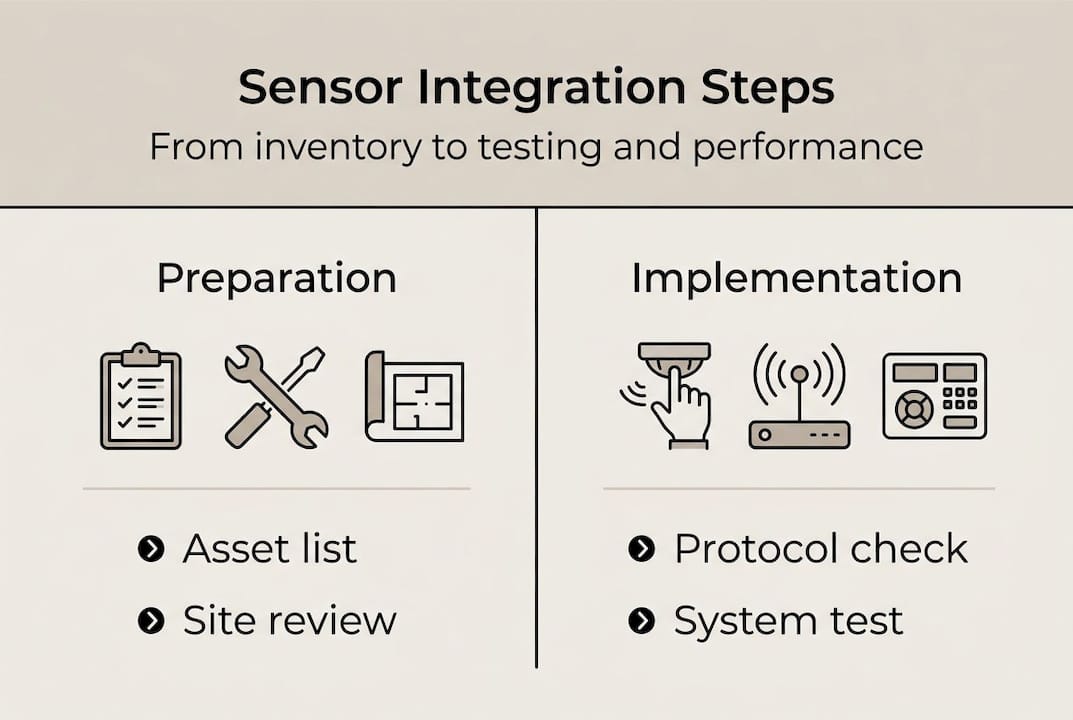
- Step-by-step security integration: From device inventory to system testing
- Testing, verification, and enhancing threat detection performance
- What most security teams miss—and how to truly future-proof your integration
- Next steps: Partner with advanced security integration experts
- Frequently asked questions
Key Takeaways
| Point | Details |
|---|---|
| Follow a structured process | A systematic, stepwise approach is critical for efficient and secure sensor integration. |
| Prioritize interoperability | Open protocols like ONVIF or MQTT allow new and legacy devices to work together seamlessly. |
| Benchmark system performance | Measuring threat detection using industry-leading AI benchmarks ensures effective integration. |
| Adapt for local environments | All-weather sensors and EMI assessment are essential for Southeast Asia’s climates. |
Understanding the integration challenge: Why a step-by-step approach matters
Southeast Asia presents a distinct set of security challenges that you simply cannot address with off-the-shelf solutions. High humidity, heavy monsoon rainfall, saltwater air in coastal zones, and dense urban infrastructure all create conditions that stress sensor hardware and complicate data reliability. Add to this the region's accelerating smart city programs in cities like Singapore, Kuala Lumpur, and Manila, and the integration landscape becomes both urgent and technically demanding.
Ad-hoc integration, where devices are added reactively without a governing architecture, consistently produces three failure patterns: cost overruns from incompatible hardware, operational disruptions during patching, and elevated false alarm rates that erode operator trust. A structured, step-by-step approach eliminates these risks by establishing clear checkpoints at every stage.
The benefits of advanced sensing become fully accessible only when integration is planned rather than improvised. Consider the difference between the two approaches:
| Dimension | Generic/Ad-Hoc Integration | Step-by-Step Integration |
|---|---|---|
| Planning depth | Minimal upfront assessment | Full site survey and asset inventory |
| Protocol alignment | Mixed, often proprietary | Open standards (ONVIF, MQTT, Modbus) |
| False alarm rate | High, untuned thresholds | Low, verified through PSIM/SIEM tuning |
| Scalability | Fragile, requires rework | Modular, designed for expansion |
| Cost over time | High remediation spend | Lower total cost of ownership |
Common pitfalls that a methodical process prevents include:
- Sensor blind spots caused by skipping coverage mapping during site surveys
- Data silos when devices use incompatible export formats
- Network bottlenecks from placing high-bandwidth sensors on undersized segments
- Compliance gaps when installations miss regional certification requirements
Using tailored sensor solutions rather than generic deployments also ensures your hardware choices match the specific risk profile of each facility, whether that is a petrochemical plant, a government complex, or a transit hub.
Preparing for sensor integration: Key prerequisites and assessment
Preparation determines whether your integration succeeds or stalls at the first obstacle. Before a single cable is routed or a single device is configured, your team needs a clear inventory of what exists and what the environment demands.
Start with a complete asset inventory: catalog every sensor type in use, including IP cameras, access control readers, radar units, environmental monitors, and legacy analog devices. Note firmware versions, communication protocols, and physical placement. This inventory becomes your integration map.
Network and physical environment review comes next. Assess bandwidth availability, switching topology, and power distribution. For Southeast Asian deployments specifically, document electromagnetic interference (EMI) sources such as industrial machinery or high-voltage lines, and flag areas exposed to standing water or direct sun exposure.

Prioritizing open protocols for interoperability such as ONVIF, Modbus, and MQTT is non-negotiable for any future-ready integration. These standards let you connect new and legacy devices without custom middleware that creates long-term maintenance debt.
Here is a preparation checklist organized by stage:
- Site survey: Physical coverage maps, entry/exit points, environmental hazard zones
- Compatibility review: Firmware versions, protocol support, API documentation for each device
- Network readiness: VLAN segmentation plan, bandwidth stress test results, PoE switch capacity
- Regulatory check: Local data privacy rules, import certifications, sector-specific compliance
- Personnel readiness: Assign integration lead, vendor contacts, and IT security liaison
| Stage | Tool/Document needed | Key personnel |
|---|---|---|
| Site survey | Coverage map, floor plans | Security architect, facilities manager |
| Protocol review | Device API docs, ONVIF tester | Integration engineer |
| Network setup | VLAN diagram, bandwidth report | Network administrator |
| Compliance check | Regional regulatory checklist | Compliance officer |
Review the compliance requirements for sensors relevant to your industry early, as they often dictate hardware certification and data handling practices that affect procurement decisions.
Pro Tip: Always document EMI hotspots and flood-prone zones during the site survey. These factors directly determine whether you need radar-based or laser-based all-weather sensors, and getting this wrong means costly hardware swaps post-deployment. Also review sensor integration tips to avoid common compliance oversights before you finalize your equipment list.
Step-by-step security integration: From device inventory to system testing
With preparation complete, execution follows a clear sequence. Each step builds on the previous one, and skipping ahead introduces vulnerabilities that are expensive to correct later.
- Asset inventory and classification: Categorize every device by function, protocol, and risk tier. High-risk perimeter sensors get priority integration treatment.
- Network architecture and segmentation: Create dedicated VLANs for security traffic. Isolate sensor data streams from general enterprise traffic to reduce attack surfaces.
- Data export format review: Confirm each device can export in a format your central platform accepts. Convert proprietary formats at the edge using lightweight middleware before data reaches the core system.
- Normalization and correlation via PSIM or SIEM: Map all sensor event types to a unified schema. This is where event normalization reduces false positives and creates actionable alerts.
- Integration testing and verification: Run controlled scenarios, simulate intrusion events, and confirm that correlated alerts fire correctly across all sensor types.
"Normalization and correlation via PSIM or SIEM is the linchpin of reducing security blind spots."
Step 4 deserves particular attention. Without proper normalization, a door-forced-open event from an access control system and a motion trigger from a nearby camera may never correlate, leaving a gap in your threat timeline. Using latest sensing technologies that support standardized event schemas accelerates this process significantly.
Pro Tip: Test open protocol compatibility, specifically ONVIF conformance and MQTT broker connectivity, in a lab environment before on-site deployment. Discovering a firmware incompatibility on-site wastes technician hours and delays the project. Reference detailed compliance steps to cross-check your testing protocol against regulatory expectations.
Testing, verification, and enhancing threat detection performance
Post-integration testing is not a formality. It is the stage where you confirm your investment actually performs at the level your organization needs. Functional testing covers sensor response latency, alert routing accuracy, and failover behavior. Security testing checks for unauthorized access vectors introduced during integration.
Verification checklists should cover:
- Sensor response time: Confirm alerts generate within acceptable latency thresholds
- Data integrity: Validate that no sensor data is lost or corrupted during normalization
- False positive rate: Tune detection thresholds using real-world environmental samples
- Failover testing: Simulate network drops and confirm redundant paths activate correctly
The performance ceiling rises sharply when AI and machine learning models are added to the sensor fusion layer. Multimodal sensor fusion using CNN-RNN-Transformer architectures achieves an AUC of 0.96 and F1 score of 0.94 for threat detection, and wireless sensor network frameworks hit 91.7% Sybil attack detection rates. These are not theoretical numbers; they represent what modern integrated systems can deliver in production.
Stat callout: AUC 0.96 with multimodal sensor fusion, versus roughly 0.70 to 0.78 for single-sensor baseline models.
| Metric | Pre-Integration Baseline | Post-Integration with AI Fusion |
|---|---|---|
| Threat detection AUC | 0.70 to 0.78 | 0.96 |
| F1 score | 0.65 to 0.75 | 0.94 |
| False alarm rate | High (untuned) | Low (AI-tuned thresholds) |
| Sybil attack detection | Not measured | 91.7% |
| Operator response time | Slow (manual triage) | Fast (automated correlation) |
For teams focused on boosting threat detection performance, the AI fusion layer is where the most significant gains are achieved. Investing time here pays dividends in reduced operator fatigue and faster incident response.
What most security teams miss—and how to truly future-proof your integration
Here is a perspective worth sitting with: most security teams measure integration success by device count and uptime percentages. Those metrics matter, but they miss the bigger picture entirely.
The real differentiator between a good integration and a great one is adaptability. Hardware depreciates. Threat profiles evolve. Regulations change. An integration built on open protocols and AI-driven analytics can absorb these changes without requiring a full system rebuild every three years. One that is locked into proprietary stacks cannot.
We see organizations in Southeast Asia invest heavily in sensor hardware and then underinvest in the analytics and protocol layers that make that hardware intelligent. That is a strategic miscalculation. Open standards like MQTT and ONVIF are not just convenience features; they are the foundation of a system that grows with your organization.
Future-proofing also means iterating. Integration is not a one-time project. As new sensor modalities appear and advanced sensing capabilities evolve, your architecture should be reviewed on a regular cycle, ideally annually, to benchmark against current performance standards and incorporate improvements.
Pro Tip: Subscribe to updates from standards bodies like ONVIF and monitor published AUC and F1 benchmarks for sensor fusion models. When your deployed system falls more than 10% below current best-practice benchmarks, it is time for a tuning cycle, not a full replacement.
Next steps: Partner with advanced security integration experts
Building a reliable, high-performance sensor ecosystem requires more than good planning. It requires regional expertise, validated hardware knowledge, and integration experience across diverse operational environments.

BeyondSensor works with system integrators and security agencies across Singapore, Malaysia, and the Philippines to deliver sensor integrations that are standards-driven, climate-tested, and built for long-term scalability. Whether you are deploying a new perimeter security system or upgrading a legacy infrastructure, our team provides the technical depth and regional context to reduce costly missteps and maximize your sensor ROI. Connect with us to discuss your specific integration requirements and find out how BeyondSensor can accelerate your path to a more secure, operationally efficient facility.
Frequently asked questions
What is the first step in sensor-based security integration?
Asset inventory and classification is the first step, where you catalog all sensors and devices to be integrated, including their protocols, firmware, and physical placement.
Why are open protocols like ONVIF or MQTT important for integration?
Open protocols ensure interoperability between new and legacy devices, preventing vendor lock-in and allowing your system to scale without costly custom middleware.
How do I verify successful security system integration?
Run end-to-end functional and security tests, including simulated threat scenarios, and benchmark your detection accuracy against published standards. Multimodal fusion systems currently achieve AUC 0.96 and F1 0.94 as reference targets.
What should I watch out for in tropical climates?
Select all-weather sensors like radar or laser units, and conduct thorough site surveys to identify EMI sources and water exposure zones that can degrade sensor reliability.
How does advanced AI improve sensor integration outcomes?
AI architectures like CNN-RNN-Transformer models significantly raise detection precision, with AUC scores reaching 0.96, reducing false alarms and closing the security gaps that manual triage consistently misses.
Recommended
- Top sensor security tips for safety & compliance 2026 | News | BeyondSensor
- Security compliance in sensing systems: a step-by-step guide | News | BeyondSensor
- Understanding advanced sensing: boost security and efficiency | News | BeyondSensor
- Sensing tools guide: Types, accuracy, and security uses | News | BeyondSensor
Read More Articles
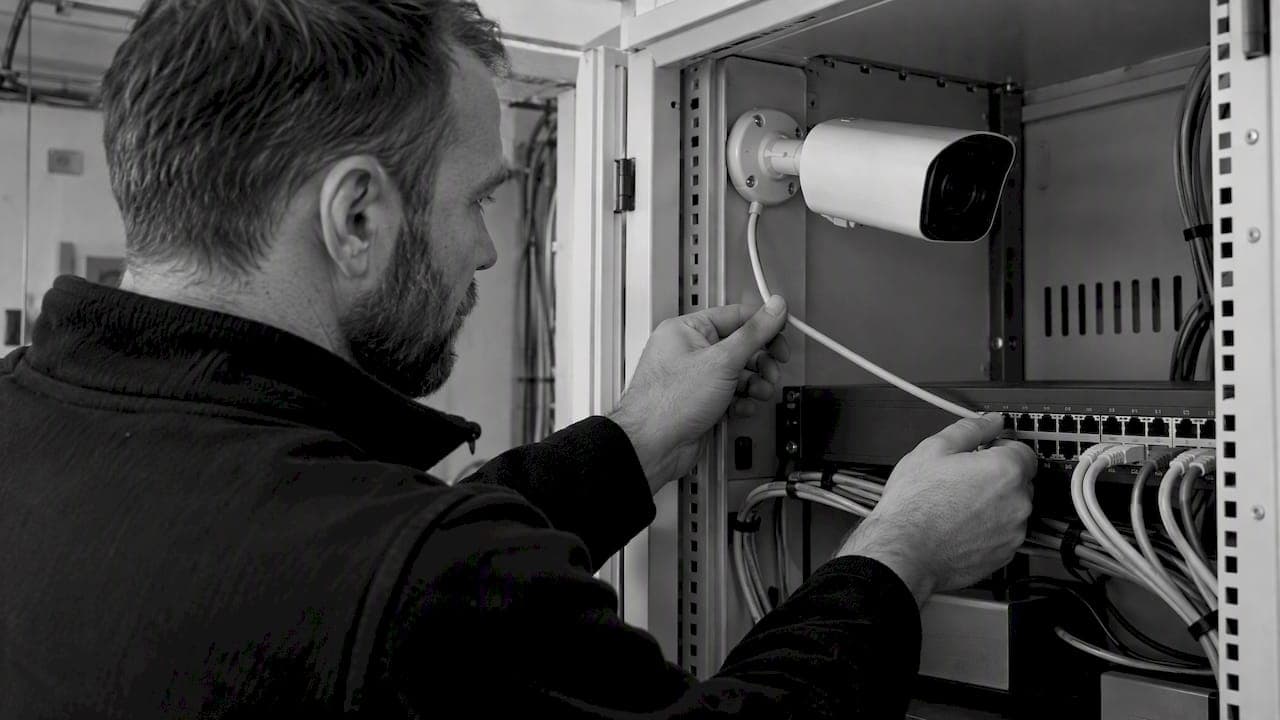
RTSP Security Risks: Integrators Must Block Exposed Ports 554 and 8554
See how integrators can reduce RTSP security risks: close exposed ports 554 and 8554, secure camera access, and verify each deployment with practical checks.

Require MAEpp and X Accuracy Before You Buy People Counting Systems
Verify people counting accuracy by demanding MAEpp, X Accuracy, and directional-bias reports. Validate on-site with at least 100 events per direction...
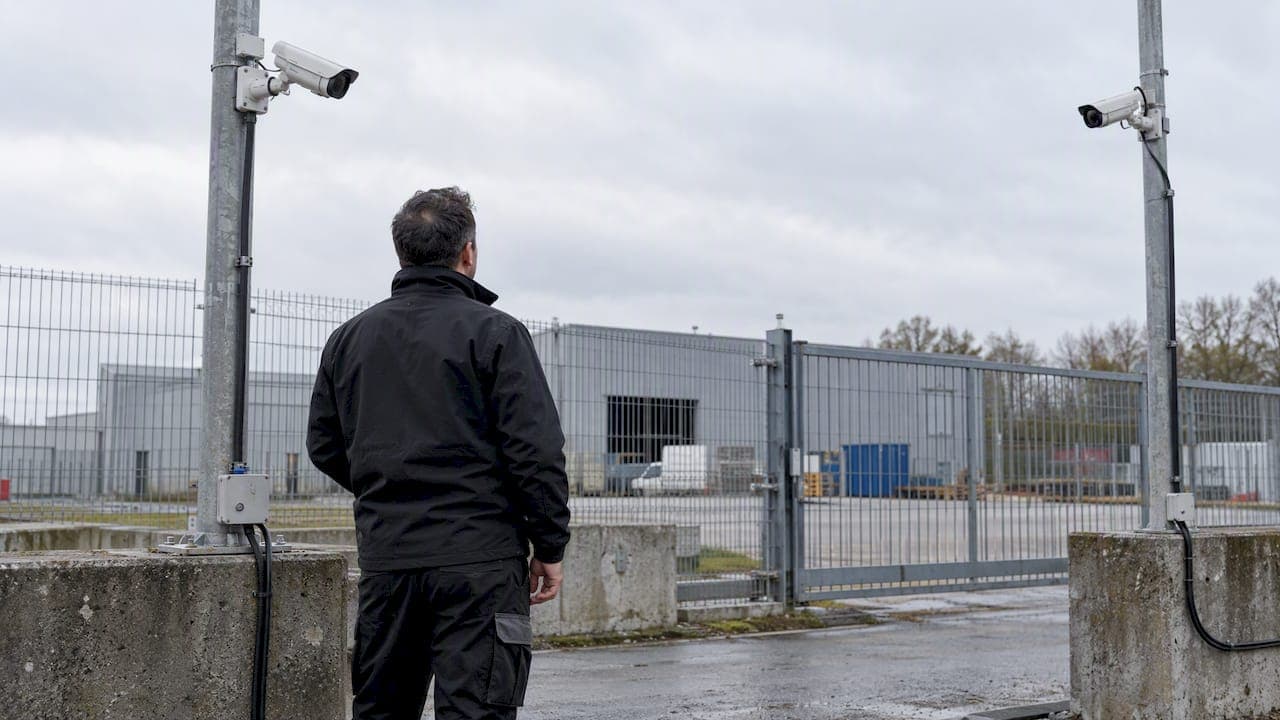
30–90 Day Pilot Validates Redundant Camera Networks for Engineers
Standards led, practical steps for engineers to deploy redundant camera networks: MRP, dual homing, and aggregation patterns, commissioning checks, and...
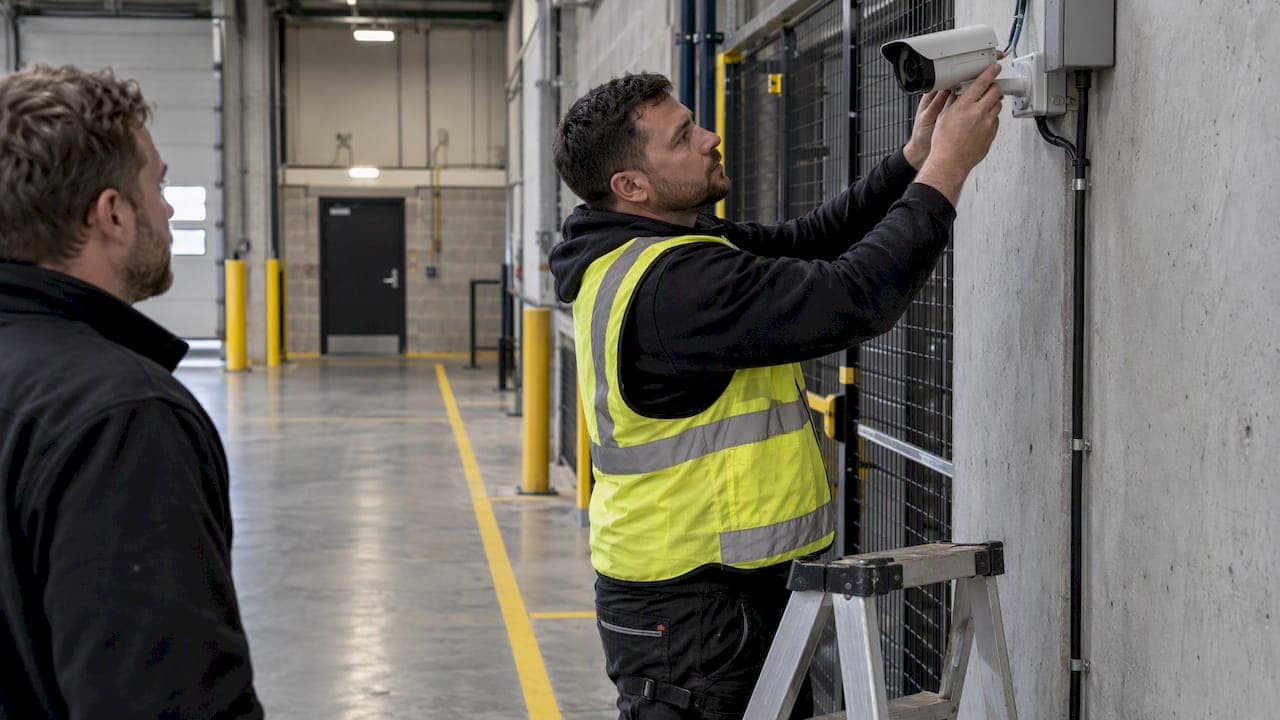
30 Day Pilot Proves Video Analytics Accuracy for Security Teams
Validate video analytics accuracy with scenario tests, camera tuning, transfer learning and a 30 day edge first pilot for security teams.
Let's Build YourSecurity Ecosystem.
Whether you're a System Integrator, Solution Provider, or an End-User looking for trusted advisory, our team is ready to help you navigate the BeyondSensor landscape.
Direct Advisory
Connect with our regional experts for tailored solutioning.