
Explore the principles and trade-offs of designing sensor network topologies to improve energy efficiency, coverage, and connectivity.

Sensor Network Topology: Design Principles and Trade-Offs

A sensor network's topology is the logical and physical arrangement of nodes and communication links that determines how sensing data reaches its destination. Physical topology describes where nodes actually sit in space. Logical topology describes how data actually moves between them, and the two frequently diverge on purpose.
Seven topology families cover nearly every deployment you'll encounter:
- Flat (mesh-like peer) networks
- Star networks
- Tree networks
- Cluster-based networks
- Chain-based networks
- Mesh networks
- Hybrid combinations
Every one of these arrangements forces a trade-off between energy consumption, coverage, and connectivity resilience. Pro Tip: Pick your topology by working backward from your battery-life requirement, not forward from whatever hardware you already have on the shelf.
Key Takeaways
Topology selection succeeds when energy budget, coverage, and connectivity requirements are defined before a specific architecture is chosen, then validated through simulation and pilot testing.
| Point | Details |
|---|---|
| Define constraints first | Set throughput, latency, battery life, and coverage targets before selecting a topology. |
| Match topology to environment | Dense industrial sites favor mesh; linear infrastructure favors chain-based layouts. |
| Set k-connectivity early | Decide your resilience target during requirements gathering, not after deployment. |
| Treat topology as dynamic | Use edge intelligence and periodic re-clustering to adapt as nodes fail or drift. |
| Pair topology with protocol | Match routing and MAC-layer choices to topology structure to avoid throughput mismatches. |
Table of Contents
- Sensor Network Topology Types: A Working Catalog
- Design Trade-Offs and Metrics That Actually Matter
- Topology Control and Optimization Techniques
- From Requirements to Validated Topology: A Design Workflow
- Field Notes on Deployment Pitfalls
- How the Environment Shapes Topology Decisions
- Security Considerations Across Topology Choices
- Topology's Effect on Routing and Protocol Choice
- Real-World Deployments and the Topologies Behind Them
- Where Sensor Network Topology Is Headed
- What the Research Actually Tells Us About Topology Design
- Frequently Asked Questions
- Sources
Sensor Network Topology Types: A Working Catalog
A wireless sensor network consists of spatially distributed nodes with sensing, computation, and communication capabilities that cooperatively forward data to a sink or gateway. How those nodes organize themselves into a topology shapes almost every downstream engineering decision you'll make.
-
Flat topology. Every node plays the same role and forwards data toward the sink through multi-hop peer relationships. There's no hierarchy, which simplifies deployment but creates uneven energy drain near the sink, since nodes closest to the gateway relay traffic for everyone behind them.
-
Star topology. All nodes communicate directly with a single central hub. Latency stays low and routing logic is trivial, but coverage is capped by the hub's radio range, and the hub becomes a single point of failure.
-
Tree topology. Nodes organize into parent-child hierarchies feeding a root sink. This scales better than a flat structure and supports data aggregation at intermediate nodes, though a failure high in the tree can strand entire branches.
-
Cluster-based topology. Nodes group into clusters, each with a cluster head that aggregates and forwards data. This scales well for large deployments and reduces the volume of raw data crossing the network, since aggregation happens locally.
-
Chain-based topology. Nodes pass data along a linear sequence toward the sink, similar to a bucket brigade. Comparative research on logical topologies shows chain-based designs are effective at reducing communication overhead through aggressive in-network aggregation, extending overall network lifetime, but a single broken link can sever the entire chain downstream of it.
-
Mesh topology. Nodes maintain multiple redundant paths to each other, so traffic reroutes automatically around failed links. Reliability is the strongest argument for mesh, and self-healing routing is what makes commercial platforms like FlatMesh viable in dense, obstructed industrial sites.
-
Hybrid topology. Real deployments frequently blend these patterns, running mesh routing over a physically gridded node layout to combine the aggregation benefits of clustering with the resilience of mesh.
Design Trade-Offs and Metrics That Actually Matter
Every topology decision comes down to balancing four variables against each other: energy budget, coverage, connectivity resilience, and latency. Get the balance wrong and you'll either burn through battery life in months or leave dead zones where a single node failure blacks out an entire region.
Your energy budget interacts directly with expected node degree, the average number of neighbors each node maintains. Higher degree improves resilience but multiplies the radio transmissions each node handles, draining batteries faster. Network lifetime is the practical output of this equation: how long the network runs before enough nodes die to break its intended function.
K-connectivity is the metric that separates a hobby deployment from a mission-critical one. A k-connected network survives up to k-1 simultaneous node failures without losing overall connectivity. Survey literature identifies k-connectivity as a core resilience metric for security-critical deployments, and the trade-off is real: pushing k higher demands more redundant links, which costs more energy per node.
Before committing to a topology, run these quick checks:
- Calculate average neighbor count under worst-case node dropout, not just nominal density.
- Estimate expected hop count from the farthest node to the sink or gateway.
- Model battery drain at the busiest relay nodes, not the network average.
- Set your target k-connectivity value during requirements gathering, not after deployment.
Topology Control and Optimization Techniques
Topology isn't fixed once you deploy it. Topology control is the active engineering discipline of adjusting node behavior to hit energy, coverage, and connectivity targets after installation, and treating it as a one-time decision is the single most common mistake in early-stage designs.
Three primitives do most of the heavy lifting:
- Transmit power tuning reduces radio range to the minimum needed for reliable links, cutting energy use and reducing interference between nearby nodes.
- Sleep scheduling cycles nodes between active and dormant states, extending battery life when full-network coverage isn't needed every second.
- Link pruning removes redundant connections that add energy cost without meaningfully improving resilience.
Clustering algorithms handle the structural side of optimization. K-means clustering groups nodes efficiently, but recent research shows that combining K-means clustering with metaheuristic optimizers has been shown to address node load imbalance more effectively addresses node load imbalance more effectively than clustering alone, particularly in deployments where traffic isn't evenly distributed across the network.
Pro Tip: Don't treat clustering as a one-time setup step. Re-cluster periodically as nodes die or battery levels drift, or your "optimized" topology will degrade into an unbalanced mess within weeks.
Dynamic techniques close the loop between design and operation. Effective topology control functions as an ongoing process rather than a fixed configuration, using edge intelligence to dynamically adjust transmit power and routing paths as conditions change. Channel hopping, a technique borrowed from the 802.15.4e standard, rotates operating frequencies to dodge RF interference in crowded industrial spectrum, which matters enormously once you're running alongside Wi-Fi, Bluetooth, and legacy industrial radios on the same site.
From Requirements to Validated Topology: A Design Workflow
Translating an application's needs into a working topology follows a repeatable sequence, and skipping steps is how projects end up re-engineering their radio layer six months into deployment.
- Define service platform requirements first. Nail down throughput, latency tolerance, battery-life target, and coverage area before touching a topology diagram.
- Map requirements through abstraction layers. Platform-Based Design formalizes this as a progression from service platform (SNSP) to application platform (SNAPP) to implementation platform (SNIP), translating application-level needs into concrete protocol and hardware choices.
- Select topology and protocol together. Topology and communication protocol aren't independent decisions. A mesh topology paired with the wrong MAC layer will underperform a simpler star network running an efficient protocol.
- Validate through simulation and a targeted pilot. Test k-connectivity and projected lifetime under realistic failure scenarios before full rollout.
The platform-based approach treats topology selection as a synthesis problem: application constraints flow down through abstraction layers until they produce concrete protocol and hardware parameters, rather than starting from a preferred topology and hoping it fits the use case.
Field guides like BeyondSensor's smart sensor deployment guide walk through this pilot-testing phase in more operational detail.
Field Notes on Deployment Pitfalls
Three mistakes account for most failed sensor network rollouts. Ignoring RF interference from co-located Wi-Fi or industrial equipment kills reliability that looked fine in lab testing. Skipping logical routing planning and assuming physical layout equals data path leads to unexpected bottlenecks near the gateway. Over-provisioning node density doesn't improve reliability. Excess nodes create collision zones that degrade performance instead of strengthening it.
- Choose gateways based on protocol interoperability, not just radio range.
- Budget maintenance visits into the design, since battery replacement cycles drive real-world lifetime more than theoretical estimates.
Pro Tip: Walk the physical site with a spectrum analyzer before finalizing topology. What looks like a clean RF environment on paper rarely is once machinery, badge readers, and other IoT devices are running.
Integrators evaluating deployment partners can review BeyondSensor's system integrator resources for topology planning support.
How the Environment Shapes Topology Decisions
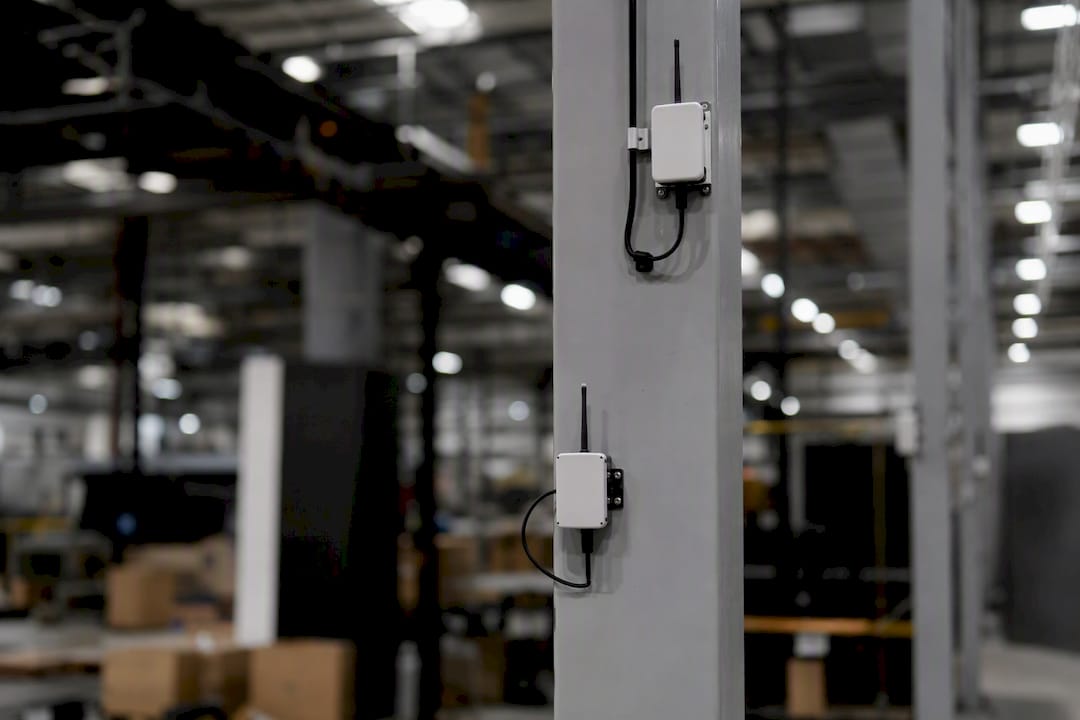
Physical environment dictates topology choices more than most early-stage designs account for. Dense industrial facilities, packed with metal shelving, machinery, and structural steel, cause multipath reflection and signal attenuation that no amount of transmit power tuning fully solves. In these environments, mesh topology tends to outperform star or tree layouts because redundant paths route around obstructed links automatically.
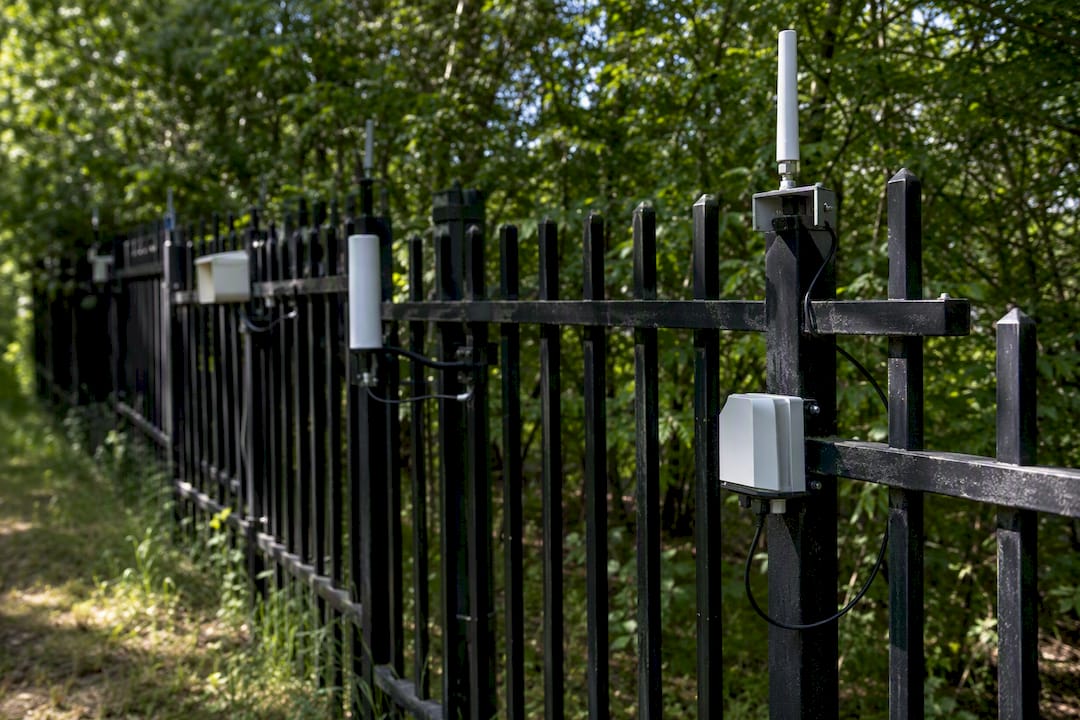
Outdoor deployments face a different set of constraints. Temperature swings affect battery chemistry and radio propagation differently across seasons, and vegetation growth can gradually degrade line-of-sight links that tested fine at installation. Chain-based topologies along linear infrastructure, pipelines, rail corridors, and perimeter fences, handle this well because the physical layout naturally matches the communication pattern.
Humidity and precipitation absorb radio frequency energy, particularly at higher frequencies, shrinking effective node range in wet climates compared to dry ones. A topology designed around dry-season testing may show unexpected coverage gaps once monsoon season arrives, which is why field validation across seasonal extremes matters more than single-point testing.
Underground and below-grade deployments, common in utility monitoring, face the most severe environmental constraint: RF signals struggle to penetrate soil and concrete, forcing designers toward denser node placement or wired backhaul segments feeding a wireless gateway at grade level. Site-specific environmental modeling, not generic range specifications from a datasheet, should drive node placement in any of these conditions.
Security Considerations Across Topology Choices
Topology structure directly shapes a sensor network's attack surface, and treating security as a bolt-on layer after topology is finalized creates gaps that are expensive to fix later.
Star topologies concentrate risk at the hub. Compromise the central node, and an attacker controls or blinds the entire network at once, making hub hardening and redundant hub failover a priority wherever star architecture is unavoidable. Cluster-based topologies distribute that risk across cluster heads, but each cluster head becomes a smaller, more numerous target, which means authentication overhead scales with cluster count.
Mesh topologies offer better resilience against single-point compromise since traffic reroutes around a captured node, but the same redundancy that helps reliability also gives an attacker more potential paths to inject false routing information or eavesdrop on relayed traffic. Chain-based topologies present a narrower attack surface geometrically, but a single compromised link node can intercept or block everything flowing behind it in the sequence.
Encryption overhead interacts with topology choice through energy budget. Flat and mesh topologies, which route more hops on average, accumulate more cryptographic processing across the path than a star topology's single hop, which matters when battery life is already tight. BeyondSensor's guidance on securing sensor networks covers hardening practices specific to these topology-dependent exposure patterns in more depth.
Topology's Effect on Routing and Protocol Choice
Topology and communication protocol are locked together in ways that make choosing one without the other a design mistake. A flat topology typically pairs with reactive or geographic routing protocols, since there's no hierarchy to exploit for efficient path discovery. Tree and cluster topologies pair naturally with hierarchical routing protocols like LEACH, which route through cluster heads specifically to reduce the routing table overhead flat networks accumulate at scale.
Chain-based topologies favor simple sequential protocols like PEGASIS, where each node only needs to know its immediate neighbors in the chain, minimizing routing table size and processing overhead. Mesh topologies demand protocols capable of dynamic path recalculation, since the entire value proposition of mesh is rerouting around failures, and a static routing table defeats that purpose.
MAC-layer protocol choice compounds these effects. Contention-based MAC protocols work reasonably well on lower-density flat and chain topologies, but dense mesh or cluster deployments benefit from scheduled or hybrid MAC approaches that reduce collision rates as node degree climbs. Choosing a contention-based MAC layer for a dense mesh deployment is one of the more common protocol mismatches that shows up in the field, producing throughput well below what the topology should support on paper.
Real-World Deployments and the Topologies Behind Them
Environmental monitoring networks spread across large geographic areas, forests, watersheds, agricultural fields, typically favor tree or cluster-based topologies. Sensors report to regional aggregation points before data reaches a central system, which keeps long-haul transmission costs manageable across distances that would drain a flat network's batteries fast.
Industrial facility monitoring, tracking vibration, temperature, and structural stress across a plant floor, leans heavily on mesh topology precisely because metal structures and machinery create the multipath interference problems mesh redundancy is built to survive. Physical security perimeter systems, covering fence lines and access points, often use chain-based or hybrid layouts that mirror the linear geometry of the infrastructure they're protecting.
Smart building deployments, where sensors monitor occupancy, HVAC, and access control across multiple floors, commonly use hybrid topologies: star or tree structures within each floor feeding into a mesh backbone connecting floors, balancing local simplicity against building-wide resilience. Agricultural sensor networks spread across open fields tend toward star or simple tree structures, since obstruction is minimal and the priority shifts toward maximizing range per node to cover acreage economically.
Where Sensor Network Topology Is Headed
Adaptive topology, structures that reconfigure themselves in real time based on traffic load, node health, and environmental conditions, is moving from research literature into production systems. Rather than fixing a topology at deployment and revisiting it during scheduled maintenance, edge intelligence increasingly handles these adjustments autonomously, reallocating routing paths and transmit power as conditions shift throughout the day.
Integration with broader IoT infrastructure is pushing sensor network topology design toward interoperability standards that didn't matter as much when networks operated in isolation. Sensor networks increasingly need to hand off data to cloud platforms, edge computing nodes, and other IoT subsystems, which means topology decisions now have to account for gateway protocol compatibility as a first-class design constraint rather than an afterthought.
Machine-learning-driven clustering is refining the optimization techniques already in use, moving beyond static K-means groupings toward models that predict node failure and pre-emptively rebalance cluster assignments before energy exhaustion actually happens. Combined with metaheuristic optimizers, this points toward topologies that continuously self-tune rather than requiring periodic manual re-clustering.
Expect denser, more heterogeneous deployments as sensor costs keep dropping, which will push topology control techniques, power tuning, sleep scheduling, and adaptive routing, from optional refinements into baseline requirements for any network expected to run for years unattended.
What the Research Actually Tells Us About Topology Design
The conventional advice on sensor network topology treats it as a one-time architectural choice: pick mesh for reliability, pick star for simplicity, move on. That framing undersells the problem. The strongest research signal here, echoed across topology control literature and Platform-Based Design methodology alike, is that topology is a lifecycle function, not a diagram you finalize before deployment and forget.
Where most teams go wrong is skipping the requirements-mapping step entirely. They pick a topology because it worked on a previous project, then discover months later that their energy budget or k-connectivity needs didn't match what they chose. Platform-Based Design's abstraction layers exist specifically to prevent that mismatch, and they're underused outside academic circles.
If you take one thing from this: define your energy budget and resilience target in numbers before you sketch a single node. Everything else, clustering method, protocol choice, gateway placement, follows from that foundation. Skip it, and you're optimizing a structure built on guesswork.
Frequently Asked Questions
What is the difference between physical and logical sensor network topology?
Physical topology describes where nodes are actually located in space. Logical topology describes the pattern data actually follows between them. A grid of sensors laid out physically in rows can still route data through a mesh or tree logical structure, which is common in industrial deployments where mesh routing overlays a physically regular sensor layout.
Which topology offers the best battery life?
Chain-based and tree topologies generally extend battery life best through in-network data aggregation, which reduces the volume of raw data each node must transmit. Mesh topologies trade some of that efficiency for stronger resilience against node failure.
What does k-connectivity mean in practice?
A network with k-connectivity of 3 can survive any two simultaneous node failures without losing overall connectivity. Higher k values improve resilience for mission-critical deployments but require more redundant links, increasing energy cost per node.
Can a sensor network combine multiple topology types?
Yes. Hybrid topologies are common in practice, particularly in multi-floor buildings and large industrial sites, where local clusters or star structures feed into a mesh backbone that connects broader zones together.
How does node density affect topology performance?
Adding more nodes doesn't automatically improve reliability. Excessive density can create RF collision zones that degrade throughput, which is why topology control techniques like duty cycling and transmit power tuning matter more than raw node count.
Sources
- Wireless sensor network — Wikipedia
- On the topology of wireless sensor networks (MONET/CS paper)
- Optimizing wireless sensor network topology with node load consideration — ScienceDirect
Recommended
Read More Articles
RTSP Security Risks: Integrators Must Block Exposed Ports 554 and 8554
See how integrators can reduce RTSP security risks: close exposed ports 554 and 8554, secure camera access, and verify each deployment with practical checks.

Require MAEpp and X Accuracy Before You Buy People Counting Systems
Verify people counting accuracy by demanding MAEpp, X Accuracy, and directional-bias reports. Validate on-site with at least 100 events per direction...
30–90 Day Pilot Validates Redundant Camera Networks for Engineers
Standards led, practical steps for engineers to deploy redundant camera networks: MRP, dual homing, and aggregation patterns, commissioning checks, and...
30 Day Pilot Proves Video Analytics Accuracy for Security Teams
Validate video analytics accuracy with scenario tests, camera tuning, transfer learning and a 30 day edge first pilot for security teams.
Let's Build YourSecurity Ecosystem.
Whether you're a System Integrator, Solution Provider, or an End-User looking for trusted advisory, our team is ready to help you navigate the BeyondSensor landscape.
Direct Advisory
Connect with our regional experts for tailored solutioning.