
Discover the essential guide to securing sensitive facility areas. Learn risk assessment, access control, and ongoing audits for effective protection.

Securing Sensitive Facility Areas: A Practical Guide

TL;DR:
- Effective security uses layered, zone-based controls with continuous risk assessments to prevent inside vulnerabilities. Regular credential audits and integrated technology are essential for maintaining operational security and compliance. Security must be managed as an ongoing operational process led by facility staff, not just a technology investment.
Securing sensitive facility areas is defined as the application of layered, zone-based physical security controls to protect restricted spaces from unauthorized access, theft, and operational disruption. This guide to securing sensitive facility areas covers the full cycle: risk assessment, zone classification, access control, technology integration, and ongoing audits. Standards like NIST and 32 CFR provide the regulatory backbone, but the real work happens at the site level, where every facility has a unique mix of vulnerabilities, operational patterns, and compliance obligations. Security professionals and facility managers who treat physical security as a living program, not a one-time installation, consistently outperform those who do not.
What does a guide to securing sensitive facility areas cover?
A complete security program for sensitive areas starts with one non-negotiable principle: no single control point is enough. Layered, zone-based defenses with multiple independent checkpoints are the foundation of effective physical security in 2026. That means combining perimeter barriers, building envelope controls, floor-level restrictions, room-level locks, and object-level safeguards into a single, coordinated system.
The RCMP's GCPSG-015 standard defines five concentric security layers: Perimeter, Building Envelope, Floor/Area, Room, and Object. Each layer adds an independent barrier, so a failure at one level does not expose the asset directly. This architecture is the reason why facilities that rely on a single locked door consistently fail audits and incident reviews.
Protecting sensitive facilities also requires understanding what "sensitive" actually means in your context. A server room, a pharmaceutical storage vault, a government records archive, and a hospital medication dispensary all qualify, but each demands a different control mix. The framework stays the same; the implementation changes by site.
How to conduct a security risk assessment for sensitive areas
A site-specific risk assessment is the first step before any hardware is purchased or policy is written. Skipping it produces security theater: expensive equipment that does not address the actual threat profile of the facility.
A structured assessment covers four layers in sequence:
- Perimeter review. Walk the outer boundary. Identify gaps in fencing, lighting dead zones, and vehicle access points that lack barriers.
- Building envelope audit. Check every door, window, loading dock, and utility access point. Note which ones lack electronic monitoring.
- Interior zone mapping. Document which rooms hold critical assets. Flag CCTV blind spots and unsecured access points between zones.
- Operational pattern analysis. Review shift schedules, contractor visit logs, and delivery windows. Threats often exploit predictable routines.
| Assessment Layer | Key Questions | Output |
|---|---|---|
| Perimeter | Where can a vehicle or person breach undetected? | Barrier and lighting upgrade list |
| Building envelope | Which entry points lack electronic monitoring? | Door and window control gap report |
| Interior zones | Where are CCTV blind spots? | Camera repositioning plan |
| Operational patterns | When are staffing levels lowest? | Schedule-based control adjustments |
Pro Tip: Document every finding with photos and timestamps. Regulators and insurers treat undocumented assessments as assessments that never happened.
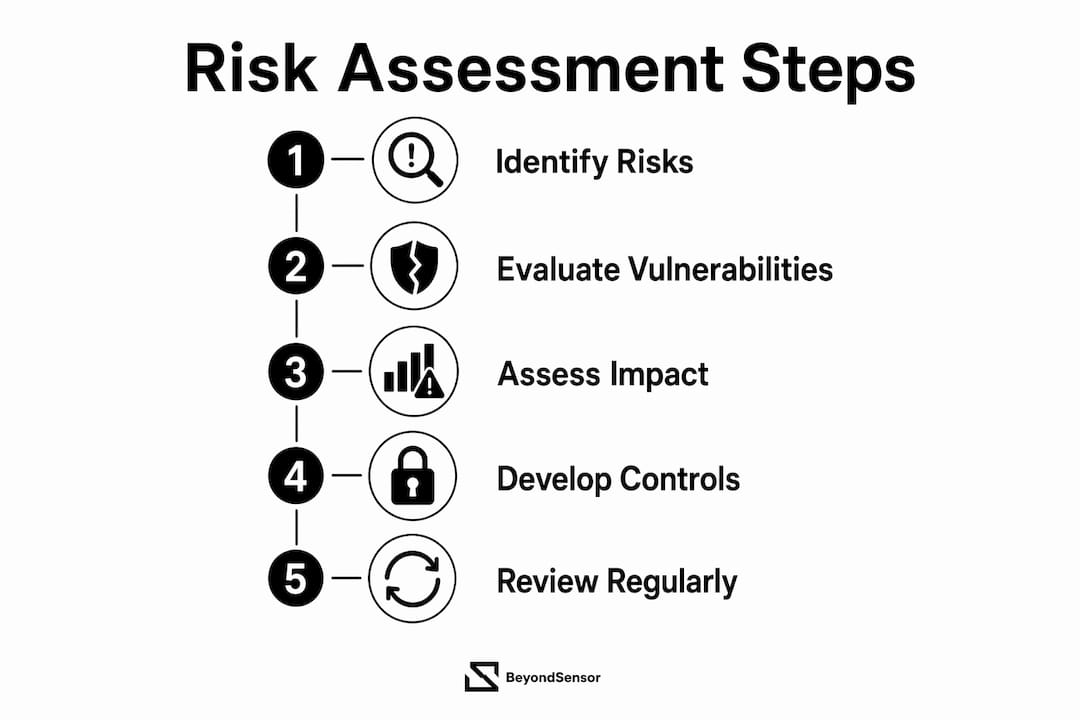
Risk assessments must be updated regularly, not just after incidents. Threat landscapes shift, staff turn over, and facility layouts change. A quarterly review cycle is the minimum for high-sensitivity environments; annual reviews are acceptable only for lower-risk spaces.
How to define tiered physical security zones within a facility
Applying a uniform security profile across an entire facility is one of the most common and costly mistakes in facility security. Differentiated security postures for lobbies, executive offices, server rooms, and labs reduce vulnerabilities and insider risk far more effectively than blanket policies.

The standard zone model uses five tiers, each with progressively stricter controls:
| Zone | Description | Typical Controls |
|---|---|---|
| Public | Lobbies, parking, exterior grounds | Signage, lighting, CCTV |
| Reception | Front desk, waiting areas | Visitor check-in, badge issuance |
| Operations | General staff work areas | Keycard access, audit logs |
| Security | IT rooms, HR archives, finance | Biometric or PIN plus keycard |
| High Security | Server cores, vaults, labs | Dual-factor auth, mantrap, 24/7 monitoring |
Sequential, progressively restrictive access points are the structural rule here. A visitor cleared for the reception zone must not be able to walk directly into an operations area without a separate credential check. Each zone boundary is a deliberate chokepoint.
Signage is a legal and operational requirement, not an afterthought. Restricted and Controlled area markings must be posted clearly and, where required by 32 CFR and NIST standards, in English and any other prevalent local language. Clear posting enables legal enforcement and deters casual unauthorized entry before any electronic system is triggered.
Key requirements for each zone boundary include:
- Posted signage identifying the zone classification
- A defined credential type required for entry
- An audit log capturing every entry and exit event
- A monitoring device, either camera or sensor, covering the threshold
What are the best practices for access control in sensitive areas?
Access control is the operational core of any sensitive area security protocol. Centralized systems that integrate visitor management, contractor compliance, and identity management enable real-time awareness, reduce blind spots, and simplify audit reporting. Without centralization, access data lives in silos and gaps go undetected.
Role-based credentialing is the starting point. Every person who enters a sensitive zone should hold a credential tied to their specific job function, not a generic "staff" badge. Time-limited access is equally important: a contractor working a two-week project should not retain access credentials after day 14.
Pro Tip: Run a quarterly credential audit. Pull every active badge, match it to a current employee or active contract, and revoke anything that does not match. This single practice eliminates the most common insider-threat vector.
Inconsistent credential audits are a leading cause of unauthorized access and compliance failures. The "trail of uncertainty" created by unreviewed badge permissions is a direct liability in regulatory audits. Neglecting ongoing credential management increases both insider threats and regulatory risk.
Additional access control practices that matter in practice:
- Tailgating prevention. Install mantraps or turnstiles at high-security zone entries. Train staff to challenge anyone who follows them through a controlled door.
- Escort policies. Require all visitors and contractors in sensitive zones to be accompanied by a credentialed staff member at all times.
- Physical and electronic integration. Pair electronic keycard readers with physical barriers. A reader that logs entry but does not physically block the door provides data without protection.
- Offboarding automation. Connect HR systems to access control platforms so that credential revocation triggers automatically on an employee's last day.
How does technology improve sensitive area security?
Technology multiplies the effectiveness of physical controls, but only when it is configured to match the zone's actual risk level. Advanced sensor technology and integrated security systems give facility managers real-time visibility across all zones from a single interface.
CCTV placement should follow zone risk, not convenience. Cameras covering high-security zones need higher resolution, wider dynamic range for low-light conditions, and analytics capable of detecting loitering or tailgating. Cameras in public zones can operate at standard resolution with motion-triggered recording.
Alert tuning is where most technology deployments fail. Detection devices must be calibrated carefully to balance sensitivity against nuisance alerts. An alert system that fires 50 false positives per shift trains operators to ignore it. Testing thresholds against real-world conditions and correlating event data across systems keeps alerts credible and responses fast.
Integrated security systems that combine surveillance, intrusion detection, and access control into one platform deliver the most consistent protection. Key technology components for sensitive area security include:
- AI-powered anomaly detection. AI never blinks. It flags behavioral patterns, like a person lingering near a restricted door, that human operators miss during long shifts.
- Intrusion detection sensors. Motion, vibration, and glass-break sensors add a detection layer independent of camera coverage.
- Centralized security management software. A single dashboard correlating access logs, camera feeds, and sensor alerts reduces response time and simplifies post-incident review.
- Real-time incident response integration. Connecting the security platform to communication tools means the right people receive alerts within seconds, not minutes.
How do you maintain security through training and audits?
Physical security is not a technology purchase. Regular drills, audits, and environment validation are what keep a security program effective after the initial installation. A policy that exists only on paper provides no protection when an incident occurs.
A sustainable maintenance program follows this cycle:
- Quarterly access permission audits. Review every active credential against current staff roles and contract status. Revoke anything outdated.
- Semi-annual system health checks. Test every camera, sensor, and door controller. Verify that alerts route correctly to the right personnel.
- Annual tabletop exercises. Walk the security team through a simulated breach scenario. Identify gaps in response procedures before a real event exposes them.
- Post-incident reviews. After any security event, document what happened, what controls failed, and what changes are needed. Update procedures within 30 days.
- Compliance documentation updates. Maintain a current record of zone designations, credential policies, and audit results. Regulatory bodies expect this documentation on demand.
Training must go beyond annual awareness sessions. Staff who work near sensitive zones need to recognize social engineering attempts, know the escort policy by memory, and understand what to do when they see a tailgating attempt. Security culture is built through repetition, not slide decks.
Key Takeaways
Effective sensitive area security requires layered zone-based controls, regular risk assessments, role-specific access credentials, integrated technology, and continuous auditing to remain compliant and operationally sound.
| Point | Details |
|---|---|
| Zone-based layering | Apply five concentric security zones with progressively stricter controls at each boundary. |
| Risk assessment first | Conduct and update site-specific assessments before purchasing or configuring any security technology. |
| Credential lifecycle management | Audit all active badges quarterly and automate revocation on contract or employment end. |
| Technology integration | Combine CCTV, sensors, and access control in one centralized platform for real-time visibility. |
| Continuous improvement | Run drills, post-incident reviews, and compliance documentation updates on a defined schedule. |
What I've learned about where sensitive area security actually breaks down
Most security failures I have seen do not happen at the perimeter. They happen inside, in the spaces between zones, where nobody thought to put a camera or a credential check. A facility can have a world-class front-door system and a completely unmonitored path from the loading dock to the server room. That gap exists because the risk assessment was done once, at installation, and never revisited.
The second pattern I see constantly is credential sprawl. Contractors finish a job and their badges stay active for months. Former employees retain access because HR and the security team use different systems that do not talk to each other. Reviewing and updating access permissions according to staff roles and contract changes is the single highest-return maintenance task in physical security, and it is the one most often skipped.
Technology is not the answer to either problem. AI-powered anomaly detection and integrated platforms are genuinely useful, but they amplify whatever foundation you have built. If the zone definitions are wrong or the credential database is stale, the technology will faithfully monitor the wrong things. Get the zone map right first. Get the credential audit running on a fixed schedule. Then add technology to multiply those controls.
The facilities that handle this well share one trait: security is treated as an operational function, not an IT project. The facility manager owns it. The security team trains on it. And the procedures get tested with real drills, not just reviewed in a meeting. That is the difference between a program that holds up under pressure and one that looks good on paper.
— Eumir
Beyondsensor's platform for sensitive facility protection
Facility managers and system integrators who need unified visibility across all security zones will find Beyondsensor's AI-powered platform built for exactly this challenge. The platform connects access control, sensor data, and surveillance feeds into a single operational view, so your team sees the full picture in real time.
Beyondsensor's system integrator solutions support modular deployment across industrial, government, and commercial facilities throughout Singapore, Malaysia, the Philippines, and the broader Southeast Asian region. From credential management integration to alert correlation and compliance reporting, the platform is designed to fit into existing infrastructure without requiring a full replacement. Security agencies managing multiple sensitive facilities can also use Beyondsensor's ecosystem to standardize zone monitoring and incident response across sites.
FAQ
What are the five physical security zones in a facility?
The five zones are Perimeter, Building Envelope, Floor/Area, Room, and Object, as defined by the RCMP's GCPSG-015 standard. Each zone adds an independent layer of control between the public exterior and the most sensitive assets.
How often should a facility security risk assessment be updated?
High-sensitivity facilities should conduct risk assessments at least quarterly. Lower-risk environments can operate on an annual cycle, provided no significant layout, staffing, or threat changes have occurred.
What is the most common cause of unauthorized access in sensitive areas?
Inconsistent credential audits are the leading cause. Unreviewed badge permissions for former employees and expired contractors create direct access gaps and compliance failures.
How does zone-based security differ from standard facility security?
Zone-based security applies progressively stricter controls at each boundary rather than a uniform policy across the entire facility. This approach reduces insider risk and limits the damage from any single point of failure.
What role does AI play in sensitive area security?
AI-powered anomaly detection identifies behavioral patterns, such as loitering near restricted doors, that human operators miss during long monitoring shifts. It works best when integrated with access control and sensor data in a centralized platform.
Recommended
- Physical security best practices: strategies for safer facilities | News | BeyondSensor
- How to Secure Facilities with Advanced Sensor Technology | News | BeyondSensor
- Advanced sensing technologies: A practical guide for security managers | News | BeyondSensor
- Must-Have Industrial Security Features for Facilities | News | BeyondSensor
Read More Articles
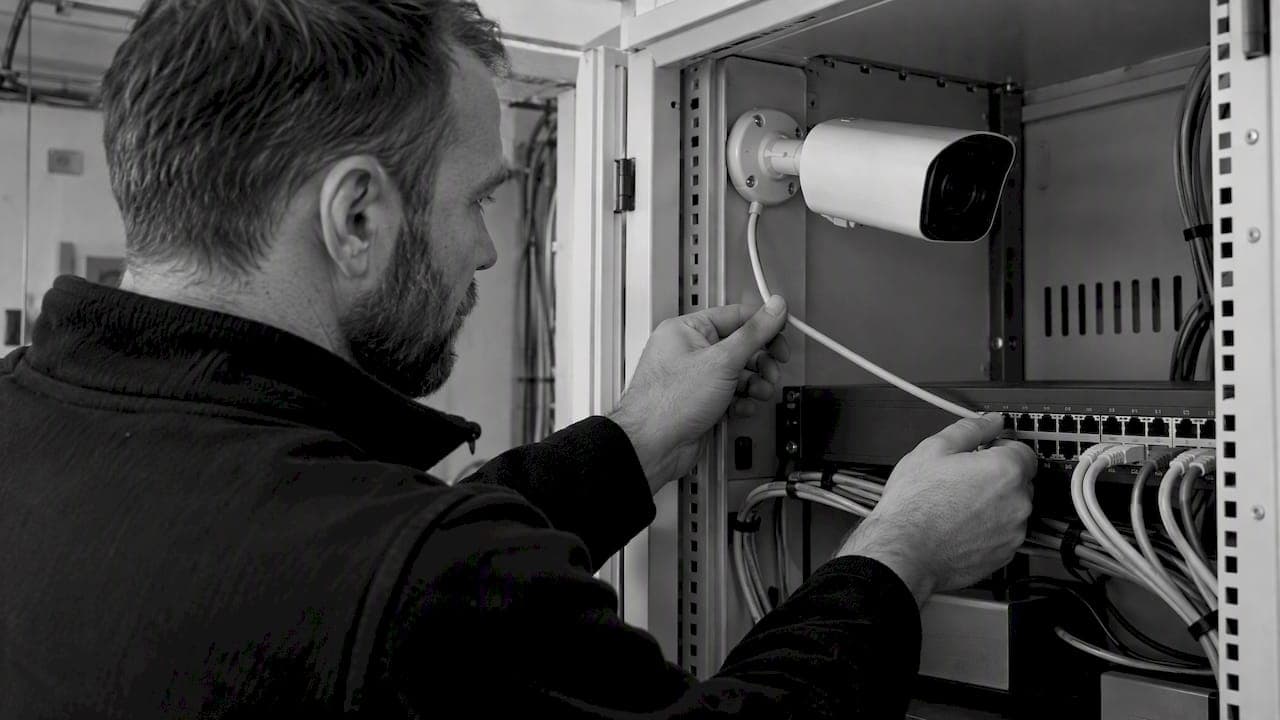
RTSP Security Risks: Integrators Must Block Exposed Ports 554 and 8554
See how integrators can reduce RTSP security risks: close exposed ports 554 and 8554, secure camera access, and verify each deployment with practical checks.
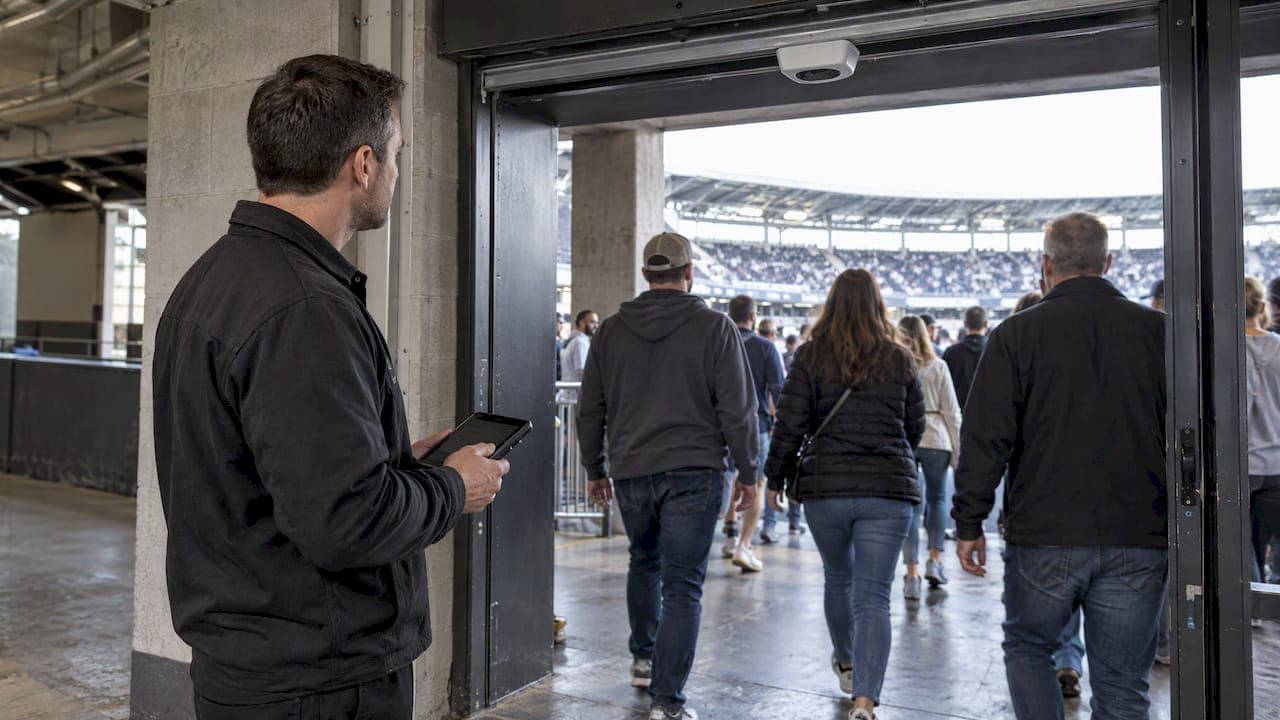
Require MAEpp and X Accuracy Before You Buy People Counting Systems
Verify people counting accuracy by demanding MAEpp, X Accuracy, and directional-bias reports. Validate on-site with at least 100 events per direction...
30–90 Day Pilot Validates Redundant Camera Networks for Engineers
Standards led, practical steps for engineers to deploy redundant camera networks: MRP, dual homing, and aggregation patterns, commissioning checks, and...
30 Day Pilot Proves Video Analytics Accuracy for Security Teams
Validate video analytics accuracy with scenario tests, camera tuning, transfer learning and a 30 day edge first pilot for security teams.
Let's Build YourSecurity Ecosystem.
Whether you're a System Integrator, Solution Provider, or an End-User looking for trusted advisory, our team is ready to help you navigate the BeyondSensor landscape.
Direct Advisory
Connect with our regional experts for tailored solutioning.