
Discover secure facility protocols explained: learn to deter, detect, delay, and respond to threats, ensuring your industrial site's safety.

Secure Facility Protocols Explained for Industrial Sites

TL;DR:
- Secure facility protocols rely on layered controls, risk assessment, and continuous improvement to protect critical assets. They require physical barriers, sensor systems, trained personnel, and documented procedures to detect, delay, and respond to threats effectively. Regular validation and compliance with federal and industry standards ensure ongoing security and resilience.
Secure facility protocols are documented, auditable sets of controls that deter, detect, delay, and enable a coordinated response to threats against critical industrial and infrastructure assets. For professional buyers and system integrators, the immediate action sequence is clear: commission a site-specific risk assessment, establish a baseline level of protection (LOP) aligned to your facility security level (FSL), then prioritize controls by asset criticality before a single sensor is specified.
The four operational pillars every protocol must address:
- Deter: Physical barriers, lighting, and signage that reduce the probability of an attempt
- Detect: Sensor systems, intrusion detection, and video analytics that identify a breach in progress
- Delay: Layered barriers and access controls that extend the time between detection and completion of an attack
- Respond: Documented procedures, trained personnel, and pre-coordinated law enforcement that interrupt the threat
Statistic callout: For Tier 1 Select Agent areas, response forces must reach the first barrier within 15 minutes of an alarm — a benchmark drawn from DoD standards for high-consequence assets that applies broadly to critical industrial sites.
Table of Contents
- What are the core design principles behind secure facility protocols?
- What must a secure-facility protocol actually cover?
- How do you select, place, and integrate sensors effectively?
- What does the implementation lifecycle look like in practice?
- How do you validate that systems actually meet protocol requirements?
- Which U.S. regulations and guidance documents govern secure facility protocols?
- What do day-to-day operational SOPs and incident playbooks require?
- What should your RFP and integrator evaluation cover?
- Key Takeaways
- The gap most integrators miss until it's too late
- Beyondsensor supports your full protocol deployment
- Authoritative references for writing site-specific protocols
What are the core design principles behind secure facility protocols?
The ISC Risk Management Process frames defense-in-depth as the non-negotiable foundation of federal facility security. That means integrating physical barriers, electronic sensing systems, security personnel, and written policies so each layer compensates for gaps in the others. No single control is sufficient on its own.
Risk-based prioritization is equally central. The ISC's five-step methodology requires FSL determination early in planning, because the FSL drives both the baseline LOP and the frequency of recurring risk assessments. Higher FSL facilities face more demanding baselines and shorter reassessment cycles. NERC guidance reinforces this by instructing asset owners to maximize risk reduction based on criticality, deliberately escalating controls as the threat environment increases.
Security is also a continuous process, not a project. Baseline controls must be proactively upgraded as threat conditions change, not left static between formal assessment cycles. Physical security best practices consistently show that the gap between scheduled assessments is where vulnerabilities accumulate.
Pro Tip: Assign a named responsible authority to track threat-environment changes between formal assessment cycles. Waiting for the next scheduled review to act on a known threat escalation is a documented compliance failure pattern.
What must a secure-facility protocol actually cover?
A complete protocol addresses every layer from the perimeter inward. The table below maps each component to its primary purpose and typical sensor or technology examples.
| Component | Primary Purpose | Typical Technology |
|---|---|---|
| Perimeter barriers | Deny and delay unauthorized access | Fencing, walls, vehicle barriers |
| Perimeter detection | Detect intrusion at the boundary | Vibration fence sensors, buried fiber, radar |
| Access control | Restrict entry to authorized personnel | Card readers, biometrics, PIN systems |
| Intrusion detection (IDS) | Detect interior breach | PIR, microwave, dual-tech sensors |
| CCTV / video analytics | Monitor, record, and verify alarms | IP cameras, AI-powered video analytics |
| Lighting | Deter and support detection | Motion-activated, perimeter flood |
| Secure storage | Protect high-value or hazardous materials | Locked cabinets, card-access rooms |
| Escort procedures | Control non-approved person movement | Personnel policy, documented SOPs |
| Tamper-evident controls | Detect unauthorized access to stored items | ISO 17712-compliant seals |
| Logs and records | Support audit and incident investigation | Access logs, alarm records, video archives |
One distinction that frequently causes compliance failures: cameras and sensors detect unauthorized access but cannot, by themselves, prevent it. Select Agent guidance is explicit that barriers must physically prevent or delay access, and that IDS and CCTV do not substitute for them. For Tier 1 areas, multiple physical security barriers are required.
How do you select, place, and integrate sensors effectively?
Sensor selection starts with detection physics. A passive infrared (PIR) detector that performs well in a climate-controlled server room will generate excessive false alarms in an outdoor industrial yard with heat-emitting machinery. Match the sensing modality to the environment: dual-technology sensors for high-nuisance areas, radar or buried fiber for perimeter detection in harsh conditions, and intelligent sensing technologies for scenarios requiring discrimination between human and non-human movement.
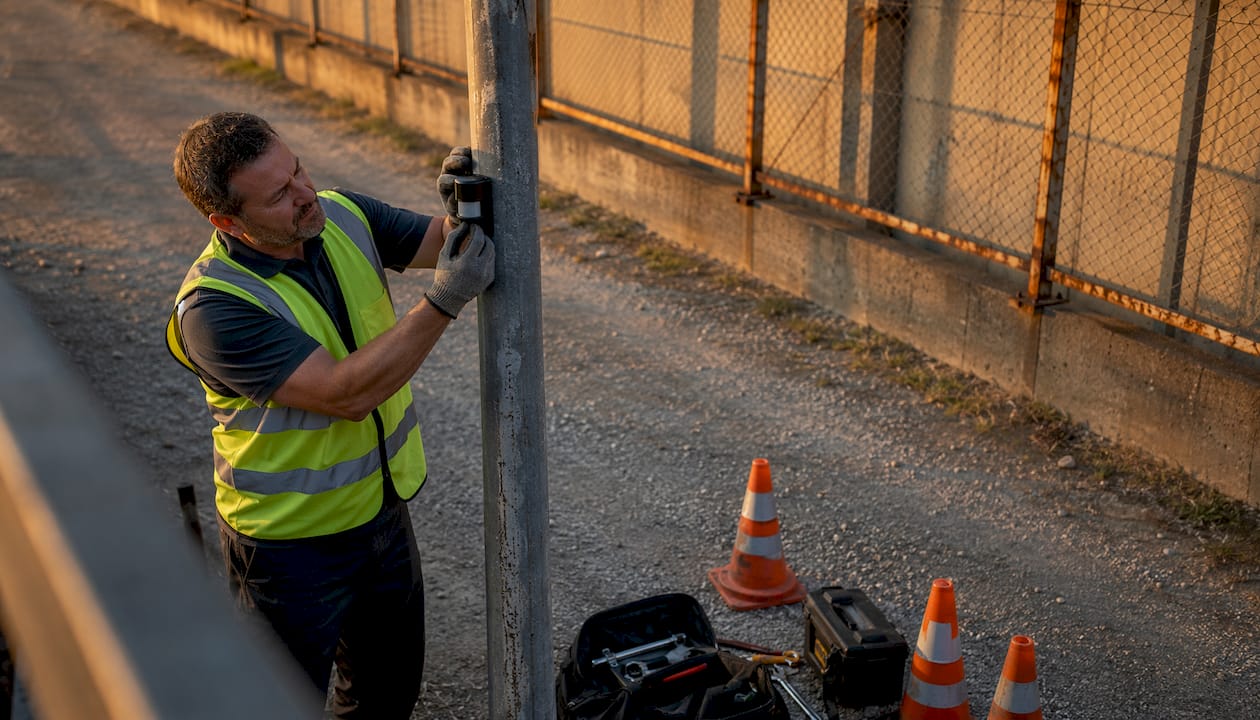
Placement rules are as important as sensor selection. Overlapping detection zones eliminate blind spots. Sensors mounted at tamper-accessible heights without anti-tamper housings are a common installation defect that undermines the entire detection layer.
System integration requires more than wiring sensors to a panel. Edge preprocessing filters nuisance events before they reach the operator. Event correlation across video analytics and IDS confirms alarms rather than flooding operators with unverified alerts. Sensor integration strategies that incorporate data fusion with video analytics consistently reduce operator fatigue while maintaining detection rates.
Cyber-physical hardening must accompany every sensor deployment: network segmentation between OT and IT environments, device-level authentication, and a documented firmware update policy. A sensor with no firmware management plan is a persistent vulnerability.
Pro Tip: Specify maximum false-alarm rates as a contractual acceptance criterion in your SOW. Without a defined threshold, integrators have no obligation to tune systems post-installation.
What does the implementation lifecycle look like in practice?
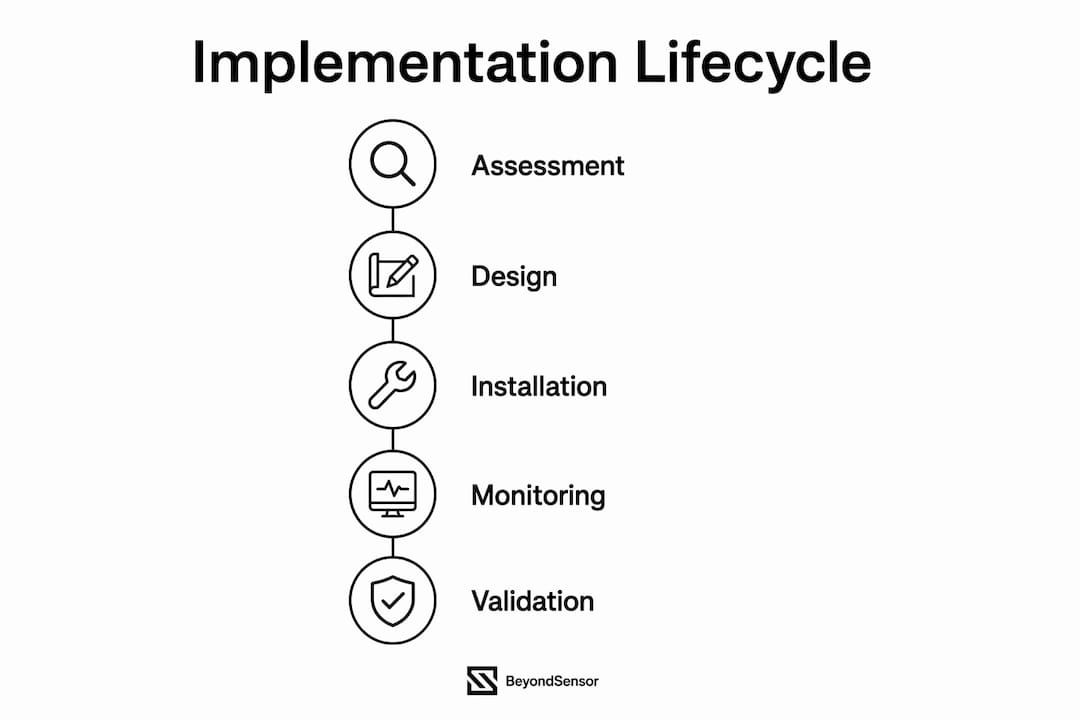
A typical industrial or infrastructure security implementation moves through seven stages. Expect the full cycle to run 6–18 months depending on site complexity and procurement lead times.
- Assessment (4–8 weeks): Site-specific risk assessment, FSL determination, threat modeling, and gap analysis against baseline LOP.
- Design (4–8 weeks): Concept of operations, sensor layout, system architecture, and specification of acceptance criteria.
- Procurement (8–16 weeks): RFP/RFQ issuance, vendor evaluation, contract award, and equipment lead-time management.
- Deployment (4–12 weeks): Civil works, cabling, equipment installation, and network configuration.
- Commissioning (2–4 weeks): Factory acceptance test (FAT), site acceptance test (SAT), and integration verification.
- Operate: Monitoring, alarm management, and SLA tracking against agreed KPIs.
- Review: Scheduled revalidation tied to FSL and asset criticality; audit frequency scales with risk level — high-criticality assets require annual audits while lower-risk assets may qualify for less frequent cycles.
Primary cost drivers include civil barrier works versus sensor density trade-offs, in-house versus third-party monitoring, and software licensing models. A performance-based SOW with defined acceptance criteria, lifecycle support terms, and firmware update clauses protects the owner throughout the asset's life.
| Role | Responsibility | Sign-off Gate |
|---|---|---|
| Facility owner | Budget, policy, and risk acceptance | Assessment, design approval |
| Responsible authority | Regulatory compliance and FSL determination | Design, commissioning |
| System integrator | Design, installation, and commissioning | SAT, handover |
| Security organization | Operations, alarm response, and SOP compliance | Operate phase |
| Law enforcement liaison | Response coordination and threat assessment | Assessment, exercises |
How do you validate that systems actually meet protocol requirements?
Acceptance testing has three phases. Factory acceptance testing (FAT) verifies equipment performance against specifications before shipment. Site acceptance testing (SAT) confirms installation quality, integration, and detection coverage under real site conditions. Operational exercises, including penetration tests and tabletop drills, validate that people and procedures perform as designed.
Statistic callout: A security risk assessment checklist approach to revalidation ensures that when threat conditions change, the protocol is updated before the next scheduled cycle, not after.
KPIs that belong in every monitoring SLA: mean time to detect (MTTD), mean time to respond (MTTR), false-alarm rate per sensor zone per month, system uptime percentage, and patch latency from vendor release to deployment. Without defined SLA thresholds, these metrics are unenforceable. Keep exercise logs, alarm records, and incident after-action reports as the primary audit evidence.
Which U.S. regulations and guidance documents govern secure facility protocols?
Three primary authorities shape protocol requirements for U.S. industrial and infrastructure sites:
- Interagency Security Committee (ISC) RMP: The federal standard for FSL determination, baseline LOP, and countermeasure selection. Required for all federal facilities; widely adopted as best practice for critical infrastructure. The ISC RMP also governs VSS and IDS criteria under Appendix B.
- NERC voluntary physical security best practices: Applicable to electric utility and energy infrastructure. NERC recommends asset-criticality tiering, with specific barrier heights and detection requirements by tier, and risk-based audit scheduling.
- Federal Select Agent Program: Mandatory for facilities handling high-consequence biological materials. Requires a written, performance-based, site-specific security plan covering barriers, access control, escort rules, inventory controls, and response-time targets.
- TAPA Facility Security Requirements (FSR): Practical minimums for supply-chain warehousing, including CCTV coverage, IDS, monitored alarms, ISO 17712-compliant tamper-evident seals, and documented audit schedules.
Compliance checklist for each authority:
- ISC: Document FSL determination, baseline LOP, and risk assessment date; maintain FSC meeting records.
- NERC: Define asset criticality tiers; document barrier specifications and detection requirements by tier; schedule audits by criticality.
- Select Agent: Maintain written security plan, escort logs, inventory audit records, and response-time test documentation.
- TAPA FSR: Retain CCTV coverage maps, IDS test records, seal logs, and audit certificates.
What do day-to-day operational SOPs and incident playbooks require?
Minimum SOP elements for any secure facility: alarm response procedures with defined response times, escorted access procedures, credential issuance and revocation workflows, maintenance access authorization, and contractor vetting records.
Escort discipline is a persistent compliance failure. Select Agent access rules require the escort to remain dedicated to observing the non-approved person with no secondary duties during the escort. Any deviation constitutes a security breach. This rule applies broadly to high-security industrial settings, not only to biological agent facilities.
"An effective security plan should be based on tested, well-documented operational processes — and reviewed at least annually, with updates whenever conditions change." — Federal Select Agent Program Security Plan Guidance
A basic escalation matrix:
| Alert Level | Who Is Notified | Timeframe | Required Action |
|---|---|---|---|
| Level 1 (nuisance alarm) | On-site operator | Immediate | Verify and clear |
| Level 2 (unverified intrusion) | Security supervisor | Within 5 minutes | Dispatch response, notify law enforcement |
| Level 3 (confirmed breach) | Site manager, law enforcement | Within 2 minutes | Execute incident response plan |
Training must be role-specific, documented, and recurring. Operators need alarm-handling and escalation drills. Supervisors need incident command exercises. All records must be retained for audit purposes.
Pro Tip: Run at least one unannounced exercise per year. Announced drills validate procedures on paper; unannounced ones reveal how the team actually performs under pressure.
What should your RFP and integrator evaluation cover?
A complete RFI/RFP checklist for sensor-based security procurement:
- Detection performance specifications (probability of detection, nuisance alarm rate) by zone and environmental condition
- Environmental and EMC compliance certifications for the deployment environment
- Cybersecurity requirements: network segmentation capability, device authentication standards, firmware update SLA
- Integration APIs and protocol support (ONVIF, OSDP, or proprietary with documented SDK)
- Monitoring model: on-site, remote, or hybrid, with defined response-time commitments
- Spare parts availability and lead times for critical components
- Lifecycle support terms: minimum years of firmware support, end-of-life notification period
Sample technical questions for integrators:
- Describe your system architecture for alarm correlation between IDS and video analytics. How are false alarms filtered before reaching the operator?
- What is your mean time to restore (MTTR) for a failed sensor zone, and what is your spare-parts stocking commitment?
- How do you handle third-party system integrations (access control, PSIM, SCADA) and what APIs are exposed?
- Describe your firmware update process, including testing before deployment and rollback procedures.
Red flags in proposals: vague acceptance test criteria ("system will perform satisfactorily"), missing maintenance SLAs, no firmware update commitment, and documentation delivered only after installation. Physical security integration steps that skip pre-installation documentation reviews consistently produce commissioning delays and post-handover disputes.
Key Takeaways
Secure facility protocols require risk-driven design, a balanced barrier-and-sensor architecture, documented acceptance testing, and continuous revalidation tied to asset criticality.
| Point | Details |
|---|---|
| Risk assessment first | Determine FSL and baseline LOP before specifying any sensor or barrier system. |
| Barriers and sensors are distinct | Three physical barriers are required for Tier 1 assets; sensors detect but do not substitute for barriers. |
| Response time is a hard target | Response forces must reach the first barrier within 15 minutes of an alarm for Tier 1 Select Agent areas, as required by federal guidance. |
| Audit frequency scales with risk | High-criticality assets require annual audits; lower-risk assets may qualify for less frequent cycles. |
| Beyondsensor for integration | Beyondsensor's sensor-plus-software platform supports the full protocol lifecycle from detection through unified operations dashboards. |
The gap most integrators miss until it's too late
The conventional wisdom in physical security procurement is to lead with technology: specify the sensors, choose the platform, then write the procedures around what the system can do. That sequence is backward, and it's why so many facilities pass their initial acceptance test and then accumulate compliance findings within 18 months.
The protocol must drive the technology selection, not the other way around. When you start with a documented threat model and a defined response-time target, sensor selection becomes a constrained engineering problem with a defensible answer. When you start with a product catalog, you end up with a system optimized for the vendor's strengths rather than your site's risk profile.
The second gap is escort discipline. It shows up in every sector, not just regulated biological agent facilities. The moment an escort takes a phone call or steps away to handle another task, the entire access control model for that zone is invalidated. No sensor system compensates for a procedural failure at that level. The fix is not technology; it's a written SOP with a named accountability owner and a documented consequence for non-compliance.
Finally, firmware management is the cyber-physical integration point that most physical security teams treat as an IT problem and most IT teams treat as a facilities problem. Neither owns it, so it doesn't get done. Define ownership in the contract, not after deployment.
Beyondsensor supports your full protocol deployment
Beyondsensor delivers the sensor hardware, AI-powered video analytics, and unified security operations dashboards that industrial and infrastructure facilities need to execute the protocols described here, without the integration complexity of assembling point solutions from multiple vendors.

For system integrators and facility owners ready to move from protocol design to deployment, Beyondsensor offers:
- Sensor selection and placement consulting aligned to ISC and NERC requirements
- AI-powered video analytics with edge preprocessing to reduce false-alarm rates
- Virtual guard tour and automated visitor management systems
- Unified security operations dashboards for centralized alarm management and KPI tracking
- Technical deployment planning tools and ecosystem matchmaking for regional partners
The right starting point is a scoping call to map your FSL, identify your highest-criticality assets, and define the acceptance criteria your integrator will be held to. Connect with Beyondsensor's system integrator team to request a technical scoping session and get a deployment roadmap built around your site's actual risk profile.
Authoritative references for writing site-specific protocols
Use these primary sources when building your compliance package. Each one contributes specific artifacts to an audit-ready protocol.
- ISC Risk Management Process: Extract the FSL determination worksheet, baseline LOP countermeasures table, and risk assessment frequency schedule. These form the backbone of any federally compliant protocol and the benchmark for critical infrastructure sites.
- NERC Voluntary Physical Security Best Practices: Use the asset-criticality tiering framework and barrier/detection requirement tables by tier. Document your tier assignments and the rationale for each in your security plan.
- Federal Select Agent Program Security Plan Guidance: Required for Select Agent facilities; valuable as a performance-based template for any high-consequence site. Extract the barrier-count requirements, escort procedure language, and response-time documentation format.
- TAPA FSR: For supply-chain and warehousing scenarios, use the CCTV coverage criteria, IDS monitoring requirements, and audit schedule templates.
For compliance packages, cite each source by its full title, issuing authority, and edition date. Maintain a version-controlled document register so auditors can confirm you are referencing current guidance. When guidance is updated, document the gap analysis between the previous and current edition and record any protocol changes made in response.
Recommended
- Must-Have Industrial Security Features for Facilities | News | BeyondSensor
- Securing Sensitive Facility Areas: A Practical Guide | News | BeyondSensor
- Physical security best practices: strategies for safer facilities | News | BeyondSensor
- Secure Sensing Explained: Defend Industrial & Environmental Ops | News | BeyondSensor
Read More Articles
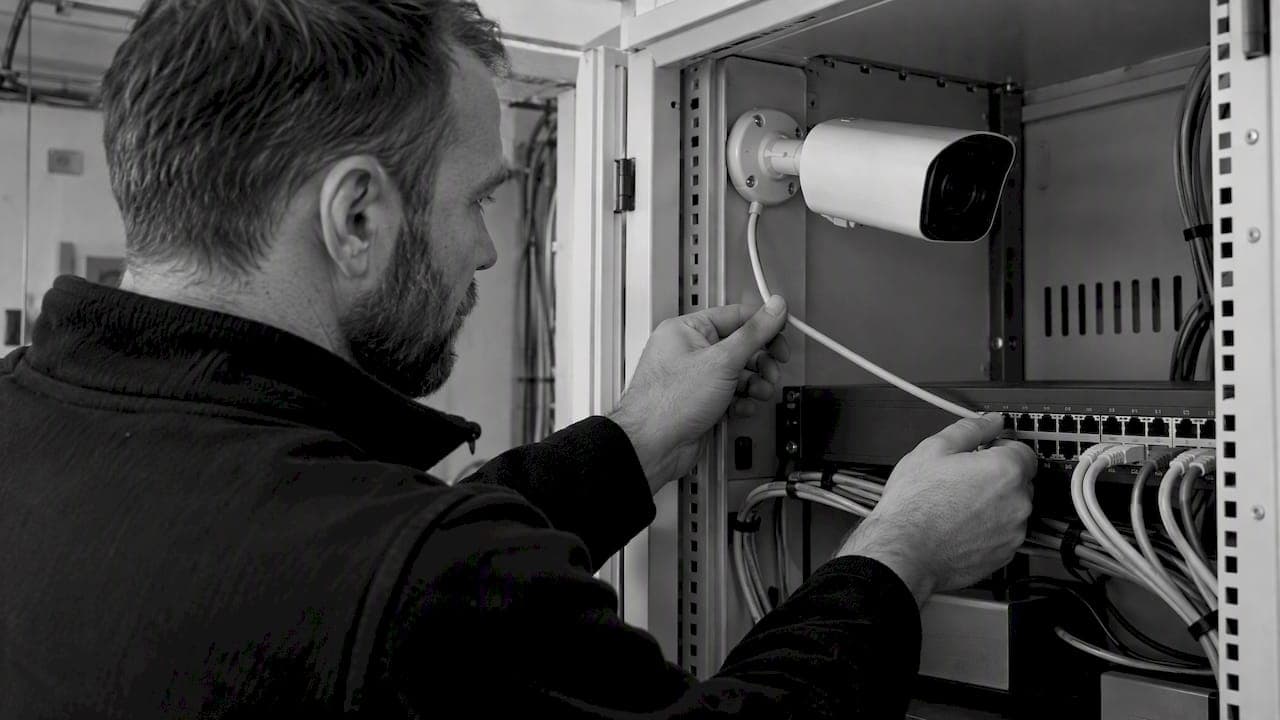
RTSP Security Risks: Integrators Must Block Exposed Ports 554 and 8554
See how integrators can reduce RTSP security risks: close exposed ports 554 and 8554, secure camera access, and verify each deployment with practical checks.
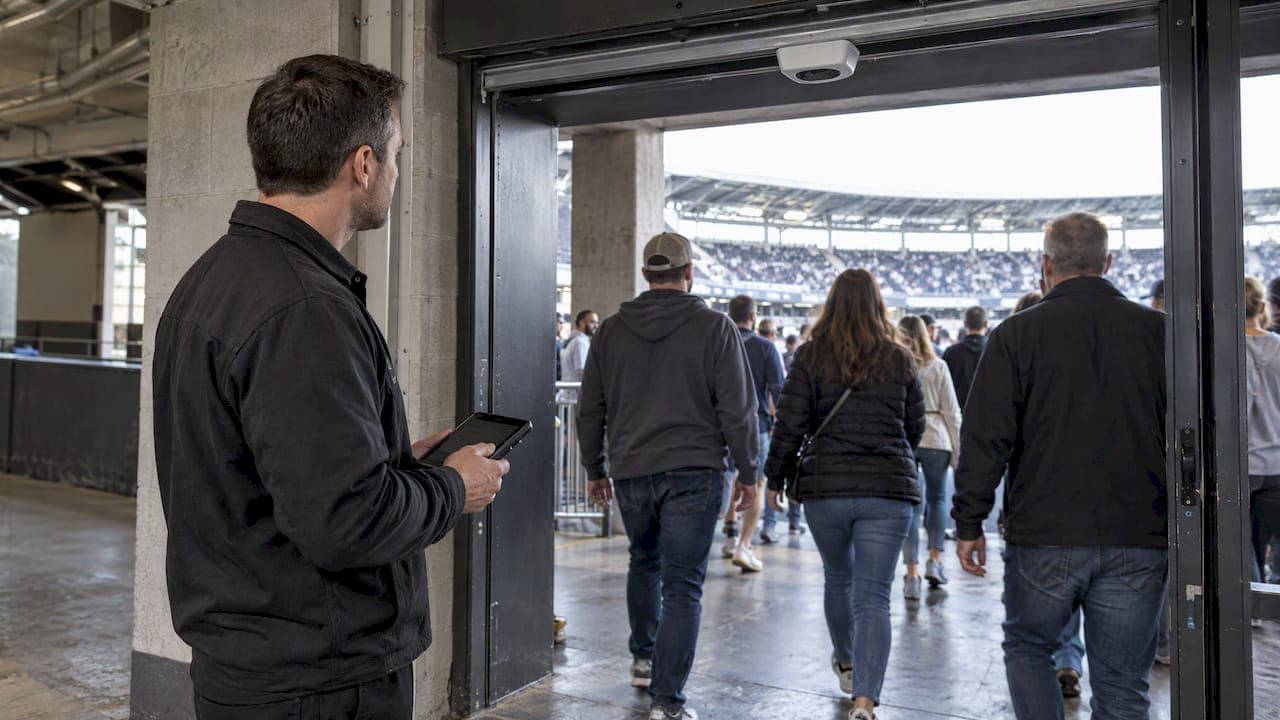
Require MAEpp and X Accuracy Before You Buy People Counting Systems
Verify people counting accuracy by demanding MAEpp, X Accuracy, and directional-bias reports. Validate on-site with at least 100 events per direction...
30–90 Day Pilot Validates Redundant Camera Networks for Engineers
Standards led, practical steps for engineers to deploy redundant camera networks: MRP, dual homing, and aggregation patterns, commissioning checks, and...
30 Day Pilot Proves Video Analytics Accuracy for Security Teams
Validate video analytics accuracy with scenario tests, camera tuning, transfer learning and a 30 day edge first pilot for security teams.
Let's Build YourSecurity Ecosystem.
Whether you're a System Integrator, Solution Provider, or an End-User looking for trusted advisory, our team is ready to help you navigate the BeyondSensor landscape.
Direct Advisory
Connect with our regional experts for tailored solutioning.