
Security teams: why CCPD 99.4% vs PatrolVision 67% matters, and how to convert benchmarks into site acceptance tests and PDPC governance.
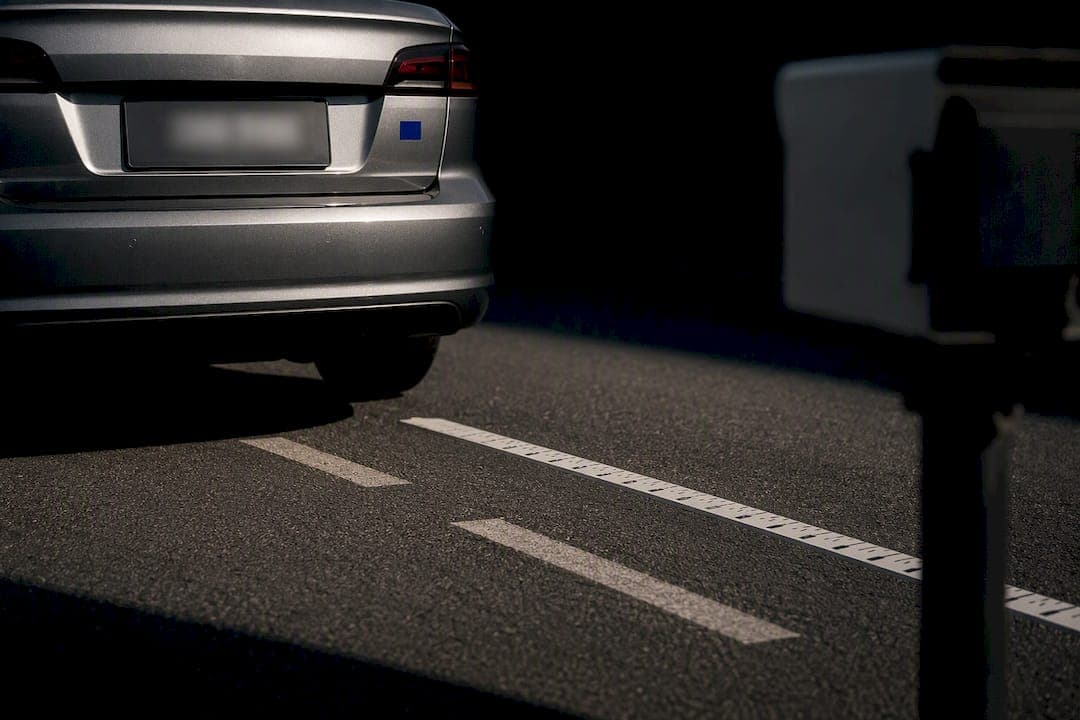
Security Teams: 67% vs 99.4% License Plate Recognition Accuracy
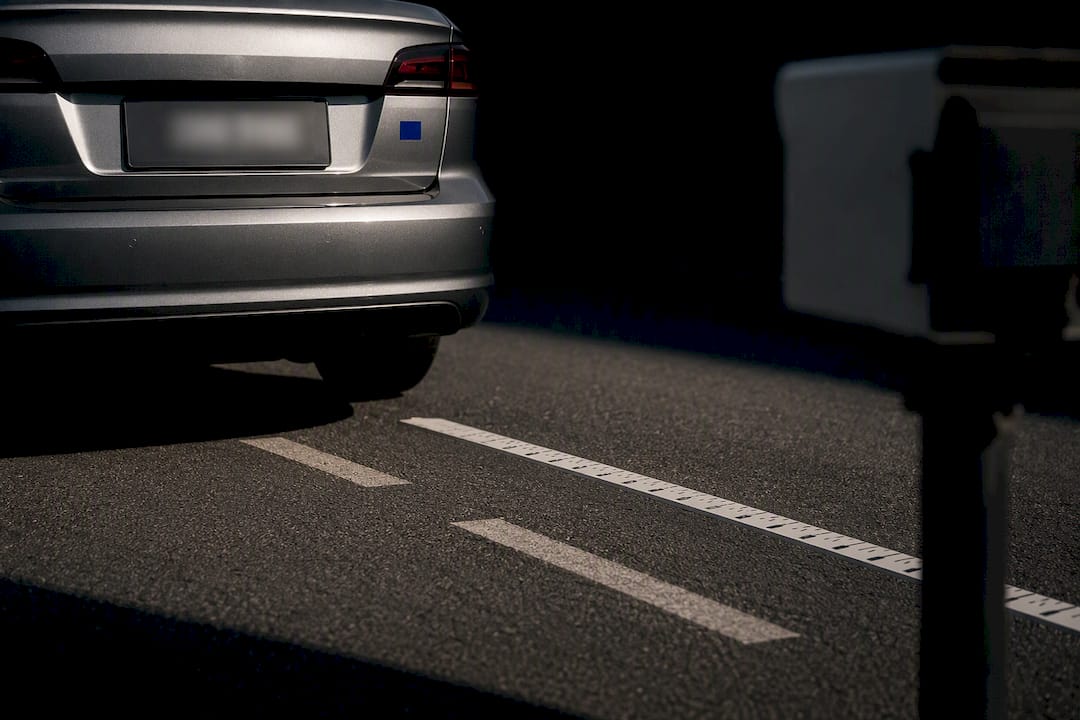
"Accuracy" in license plate recognition splits into three distinct measurements that rarely match: detection accuracy (did the system find a plate at all), character-level accuracy (how many individual characters were read correctly), and exact full-plate accuracy (did every character match, with zero tolerance). Clean, curated benchmark datasets routinely report accuracy in the high 90s. Real-world, unconstrained captures tell a different story. PatrolVision's Singapore field dataset recorded 67% exact full-plate matches, and even the top team at the ICPR 2026 low-resolution competition only hit 82.13%. Capture conditions, not model choice, explain most of that gap.
TL;DR:
- Key factors affecting recognition include plate size in pixels, exposure, focus, compression artifacts, and camera angles, which should be addressed before improving models.
- Benchmark datasets under controlled conditions report recognition rates above 99%, but field tests show significantly lower accuracy, emphasizing the importance of environment-specific validation.
- Validation protocols must include diverse conditions, independent labeling, and separate detection and recognition metrics to accurately assess on-site performance.
- Improving accuracy relies more on optimizing capture conditions and pipeline enhancements than on switching to higher-scoring models alone.
Table of Contents
- License Plate Recognition Accuracy Metrics You Need to Report
- Engineering and Environmental Factors That Dominate Accuracy
- Why Evaluation Protocol Changes the Reported Number
- What the Benchmarks Actually Show
- Turning Accuracy Numbers Into a Procurement Checklist
- Engineering Fixes That Actually Move the Number
- How Beyondsensor Applies These Principles in Practice
- Why Robustness Matters More Than the Headline Number
- Get Help Testing Accuracy on Your Own Site
- Sources
- FAQ
License Plate Recognition Accuracy Metrics You Need to Report
You cannot compare two license plate recognition systems by a single "accuracy" number. The metric has to be broken into its component parts, or the comparison is meaningless.
For detection, the standard vocabulary comes from object detection research: precision (of the plates the system flagged, how many were real), recall (of the real plates present, how many did it catch), F1 (the harmonic mean of the two), and mAP@IoU (mean average precision at a given intersection-over-union threshold). Most automatic license plate systems report mAP at IoU 0.5, though tighter thresholds like 0.7 reveal more about bounding-box precision under motion blur or skew.
For recognition, four metrics matter:
- Character accuracy: the percentage of individual characters read correctly, independent of whether the full plate matched.
- Exact full-plate accuracy: every character correct, no tolerance. This is the strictest and most commonly cited number, and the one most prone to sounding worse than a system's real usefulness.
- Character error rate (CER): the inverse view, insertions plus deletions plus substitutions divided by total characters.
- Partial-match rates: accuracy allowing one incorrect character (≤1) or two (≤2), which better reflects how a human operator or a downstream lookup system would actually use the output.
Operationally, add readable-plate rate (percentage of vehicles where a legible plate was even captured), false reads per 1,000 vehicles, and latency and throughput under expected traffic volume. A survey of detection-recognition architectures makes the case that accuracy alone is an incomplete picture. Robustness across conditions, processing efficiency, and consistency across plate formats all belong in the same report. The cleanest practice is to publish detection and recognition as separate figures, plus a combined end-to-end number, with the test protocol described alongside it.
Engineering and Environmental Factors That Dominate Accuracy
Most accuracy problems trace back to image formation, not model architecture. Fix these before touching the neural network.
- Plate pixel height. A plate rendered at fewer than roughly 15 to 20 pixels tall gives an OCR engine almost nothing to work with, regardless of how well-trained it is.
- Shutter speed and motion blur. Vehicles at typical roadway speeds smear characters across frames unless shutter speed is tuned to the expected velocity.
- Exposure range and focus. Backlit plates, headlight glare at night, and soft focus at the edge of a lens's depth of field all degrade recognition before a single character reaches the model.
- Compression artifacts. Aggressive video compression for storage savings can quietly erase the fine edges that separate similar characters like "8" and "B."
- Camera-to-lane angle and skew. Steep oblique angles distort character shapes and shrink effective plate area, which is precisely why PatrolVision's oblique, real-world captures scored lower than lab-angle datasets.
- Illumination choice. Near-infrared (NIR) capture handles retroreflective plate glare far better than visible light, but NIR intensity has to be tuned per plate material or it creates its own washout.
- Weather. Rain, fog, frost, and snow each degrade detection and recognition differently. A 2024 IS&T robustness study found that snow and frost distortion can push recognition toward zero at high severity, while even modest increases in camera read noise produced measurable accuracy drops on their own.
- System coupling and postprocessing. How tightly the detector and recognizer are coupled, whether postprocessing applies jurisdiction-specific plate format rules, and whether the system uses multi-frame voting and confidence fusion across several captured frames of the same vehicle all shift the final number substantially.
Pro Tip: Before evaluating a new recognition model, audit your camera geometry and lighting first. Practitioner guidance consistently finds that fixing capture conditions delivers bigger accuracy gains than swapping to a nominally higher-scoring model with better camera geometry.
Why Evaluation Protocol Changes the Reported Number
The dataset split behind a benchmark shapes the result as much as the algorithm does. A model tested on frames from the same cameras and same sessions it trained on will report inflated accuracy, because the system has effectively memorized lighting quirks, plate wear patterns, and mounting angles specific to that footage.
Camera-separated and time-separated validation, where test cameras or test time windows never appear in training data, gives a far more honest read on deployment performance. AAMVA's guidance on validation flags contaminated benchmarks as a recurring reason vendor-reported numbers fail to hold up on-site.
A procurement-grade acceptance test needs a defined protocol, not a vendor's self-reported percentage:
- A capture plan spanning day, night, rain, and at least one low-light or glare condition specific to the deployment site.
- Independent ground-truth labeling, done by someone with no stake in the vendor's result.
- Detection and recognition metrics reported separately, with sample sizes large enough per condition to be statistically meaningful (hundreds of vehicles per condition, not dozens).
- Confidence scores reported alongside accuracy, since the gap between high-confidence and low-confidence reads is what lets a system route uncertain plates to manual review instead of silently guessing. The ICPR 2026 competition uses this confidence-gap concept explicitly to separate reliable reads from marginal ones.
What the Benchmarks Actually Show
Headline numbers from recent research span a wide range, and the range itself is the lesson.
On the CCPD benchmark, a curated, large-scale Chinese plate dataset shot under relatively controlled conditions, YOLOv5-PDLPR reported roughly 99.4% recognition accuracy with processing speeds above 150 frames per second. That number is real, and it is also almost entirely a function of the dataset's consistency. CCPD plates are front-facing, well-lit, and captured at short range.
The gap in numbers, by capture condition: Clean benchmark datasets like CCPD: high 90s percent recognition. Unconstrained field captures (PatrolVision, Singapore): 67% exact full-plate, 89% with one character of tolerance, 86% detection precision. Low-resolution competition tracks (ICPR 2026 LRLPR): 82.13% top recognition rate on a blind test set.
Contrast that with PatrolVision's Singapore dataset of more than 16,000 real-world images, captured at oblique angles under actual traffic conditions. Neither number is a failure. It's an honest reflection of what oblique, uncontrolled capture actually produces, and it is far more representative of what a security team will see on-site than a CCPD figure ever will be.
The ICPR 2026 LRLPR competition, built specifically around low-resolution captures, saw its winning team hit 82.13% recognition rate on a blind test set, with several other teams clustering between 76% and 82%. That a dedicated competition, drawing serious research teams, tops out in the low 80s tells you low-resolution plate recognition remains genuinely unsolved, not a checkbox feature.
Layer weather on top of resolution and the numbers get worse fast. The IS&T robustness study on weather and read noise found frost and snow distortion driving recognition toward zero at severe levels, with even small increases in sensor read noise producing measurable degradation on their own.
Reading these figures side by side, a rough mapping emerges: high-quality frontal captures under good lighting sit in the 90s. Oblique, real-world traffic captures with mixed lighting sit in the 60s to high-80s depending on tolerance. Low-resolution or degraded-weather captures can drop toward single digits at the extreme end.
Turning Accuracy Numbers Into a Procurement Checklist
An accuracy figure only means something once it's tied to a specific test and a specific site. Here's how to structure that test.
- Build a capture matrix. Cover the lanes, angles, and lighting conditions the system will actually face, including at least one night, one rain, and one high-glare scenario.
- Use independent labeling. Ground truth should come from someone with no financial stake in the vendor's score.
- Set pass/fail thresholds per metric, not one blended number. A reasonable SLO example, drawn from AAMVA's own guidance, reads something like "95% correct full-plate and jurisdiction identification for completely visible plates under the specified capture geometry." Note the caveat baked into that sentence: it applies only when the plate is fully visible and the geometry matches spec, not universally.
- Check latency and throughput under peak expected vehicle volume, not idle conditions.
- Set a false-read tolerance per 1,000 vehicles, since a system that never misses a plate but frequently misreads one is often worse operationally than one with a slightly lower detection rate.
- Require camera-separated validation, and require it again after any camera swap, lens change, or software update, not just at initial go-live.
- Pair every accuracy target with governance artifacts. Singapore's PDPC guidance on personal data collected through CCTV and analytics systems expects organizations to document collection purpose, restrict access, set retention limits, apply encryption, and maintain audit trails. An accuracy SLO without a matching data-governance checkpoint is only half a procurement contract, and periodic re-testing should check both.
Engineering Fixes That Actually Move the Number
Once you know where accuracy is failing, the fixes fall into four categories.
Capture fixes come first. Reframe cameras to increase plate pixel height, adjust lens or mounting angle to reduce skew, add tuned NIR or visible lighting matched to plate material, and tighten shutter settings for the actual traffic speed on that lane. Small, unglamorous adjustments here routinely outperform a full model swap.
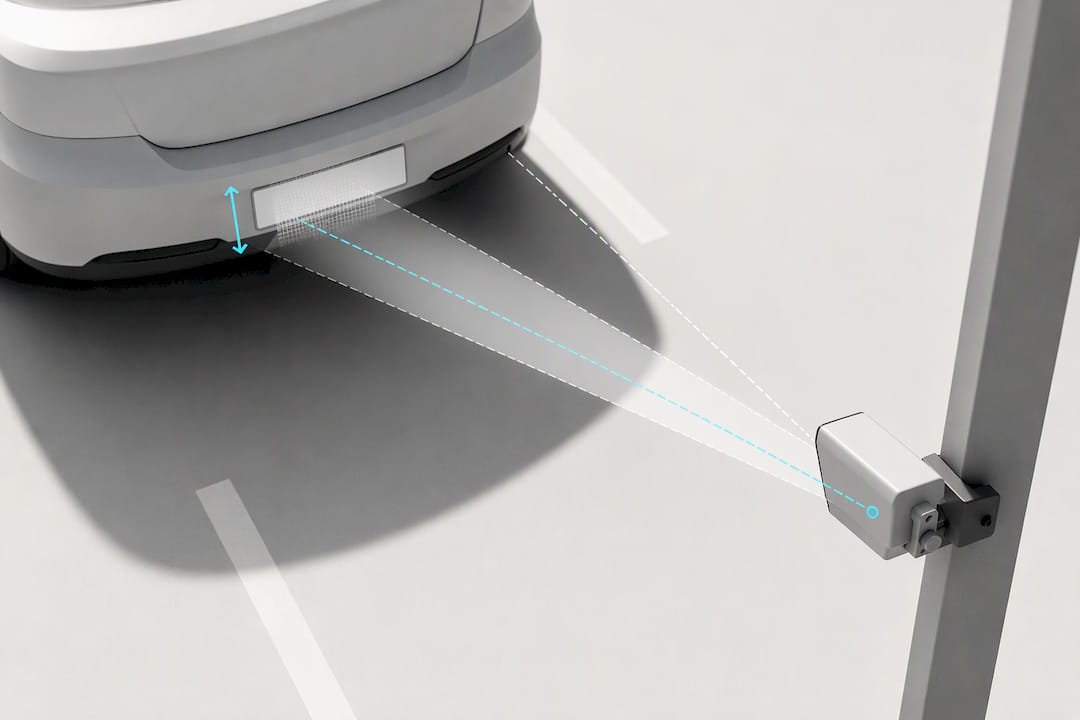
Pipeline and model interventions come next. Multi-frame voting across several captures of the same vehicle, combined with confidence aggregation, catches errors a single-frame read would miss. Format-aware postprocessing that checks output against a jurisdiction's known plate patterns filters out obviously invalid reads. Reserve super-resolution processing for genuinely illegible frames rather than running it universally, since it adds latency without benefit on already-clear captures. Domain-adaptive fine-tuning on camera-specific or region-specific footage frequently delivers larger gains than switching to a model that scores higher on someone else's dataset.
Data and validation practices matter continuously. Generate synthetic degradations that match your site's actual observed artifacts, retrain on camera-separated data, and monitor for drift over time as lighting, traffic patterns, or plate wear shift.
Operational workflow closes the loop. Confidence-thresholded human review, prioritized queues driven by the confidence gap, and forensic audit trails turn a probabilistic system into a defensible one.
Pro Tip: Track your confidence-gap distribution over time, not just your accuracy percentage. A widening gap between high- and low-confidence reads often signals camera drift or seasonal lighting change before your raw accuracy number moves at all.
How Beyondsensor Applies These Principles in Practice
Field engineering work often follows the acceptance-testing discipline outlined above. A practical proof-of-concept for a license plate recognition deployment typically runs two weeks and follows a fixed sequence:
- Site survey and camera geometry assessment against the target lanes.
- Capture matrix build spanning day, night, rain, and high-glare conditions specific to the site.
- Baseline runs against the existing or proposed hardware.
- Independent ground-truth labeling separate from the integration team.
- Remediation tuning based on early failure patterns.
- A final acceptance report against agreed SLO thresholds.
That report should include per-camera confusion matrices stratified by condition, a sample of actual failure frames, latency measurements, and a confidence calibration plot, the same evidence AAMVA procurement guidance recommends for any serious acceptance test.
Why Robustness Matters More Than the Headline Number
The industry's obsession with the highest reported percentage misses the point. Robustness and sustainment under real conditions beat a clean-benchmark score every time it matters.
Treat your accuracy target as a living SLA, not a one-time certification. Re-verify it after camera changes, software updates, and seasonal shifts, and instrument the system to track drift and confidence calibration continuously. The organizations that get burned are the ones that accepted a vendor's benchmark slide and never tested their own lane.
— Eumir
Get Help Testing Accuracy on Your Own Site
Beyondsensor's advantage isn't a higher benchmark claim. It's that our approach starts with the acceptance test, not the sales sheet. Where generic vendors hand over a CCPD-style accuracy figure and call it done, Solution Integration work builds the camera-separated, condition-specific test protocol described throughout this article into the deployment plan itself, before a contract is signed on performance.

For teams evaluating license plate recognition as part of a broader security stack, BeyondPatrol is built around the same multi-frame voting and confidence-fusion principles that separate real-world accuracy from lab numbers. And if independent verification matters to your procurement process, partners like Hub Security's CCTV and surveillance assessment service offer exactly the kind of third-party evaluation this article recommends building into any acceptance test.
If you're preparing a procurement checklist or planning a site-specific proof-of-concept, reach out through Beyondsensor's inquiry page to scope a two-week PoC against your own lanes, cameras, and traffic conditions.
Sources
- PatrolVision: Automated License Plate Recognition in the wild
- A Real-Time License Plate Detection and Recognition Model in Unconstrained Scenarios
- Automatic License Plate Recognition robustness study (IS&T journal)
- AAMVA guidance and best-practices
FAQ
How Accurate Is License Plate Recognition in Real-World Conditions?
It depends heavily on capture quality. Clean, well-lit datasets like CCPD report recognition near 99.4%, while real-world, oblique captures in PatrolVision's Singapore study recorded 67% exact full-plate accuracy and 89% with one character of tolerance. The gap comes from angle, lighting, motion blur, and weather, not from the algorithm alone.
What's the Difference Between OCR and ANPR?
OCR (optical character recognition) reads characters from any image, without knowledge of plate formats, mounting angles, or jurisdiction rules. Automatic license plate systems (ANPR/ALPR) combine a detection stage that locates the plate region, a recognition stage tuned to plate character sets, and postprocessing that validates output against known jurisdiction formats.
Can AI Be Used to Detect Number Plates?
Yes, and it's the standard approach today. Deep learning object detectors locate plate regions in a frame, then recognition models tuned to plate character sets read the characters, with systems like YOLOv5-PDLPR representing the current state of published research architectures.
Which CCTV Cameras Can Detect Number Plates?
Cameras suited for license plate detection need sufficient resolution to render plates at 15 to 20 pixels tall or more at the target distance, along with shutter speeds matched to expected vehicle speed. Near-infrared capture typically outperforms visible light for handling retroreflective plate glare at night, which is why many dedicated ALPR camera setups pair NIR illumination with standard visible-light imaging.
How Can You Avoid Automatic License Plate Recognition?
There's no reliable, legal method for evading properly operating license plate recognition on public roads, and attempting to obscure or alter a plate to defeat detection is illegal in most jurisdictions. The practical takeaway for security teams is the reverse: build acceptance tests, as outlined above, that verify a system reads plates reliably rather than searching for ways to defeat one.
Recommended
Read More Articles
RTSP Security Risks: Integrators Must Block Exposed Ports 554 and 8554
See how integrators can reduce RTSP security risks: close exposed ports 554 and 8554, secure camera access, and verify each deployment with practical checks.
Require MAEpp and X Accuracy Before You Buy People Counting Systems
Verify people counting accuracy by demanding MAEpp, X Accuracy, and directional-bias reports. Validate on-site with at least 100 events per direction...
30–90 Day Pilot Validates Redundant Camera Networks for Engineers
Standards led, practical steps for engineers to deploy redundant camera networks: MRP, dual homing, and aggregation patterns, commissioning checks, and...
30 Day Pilot Proves Video Analytics Accuracy for Security Teams
Validate video analytics accuracy with scenario tests, camera tuning, transfer learning and a 30 day edge first pilot for security teams.
Let's Build YourSecurity Ecosystem.
Whether you're a System Integrator, Solution Provider, or an End-User looking for trusted advisory, our team is ready to help you navigate the BeyondSensor landscape.
Direct Advisory
Connect with our regional experts for tailored solutioning.