
Deployment-first advice to make license plate recognition work: camera geometry, IR lighting, site tests, and a practical acceptance checklist to raise...
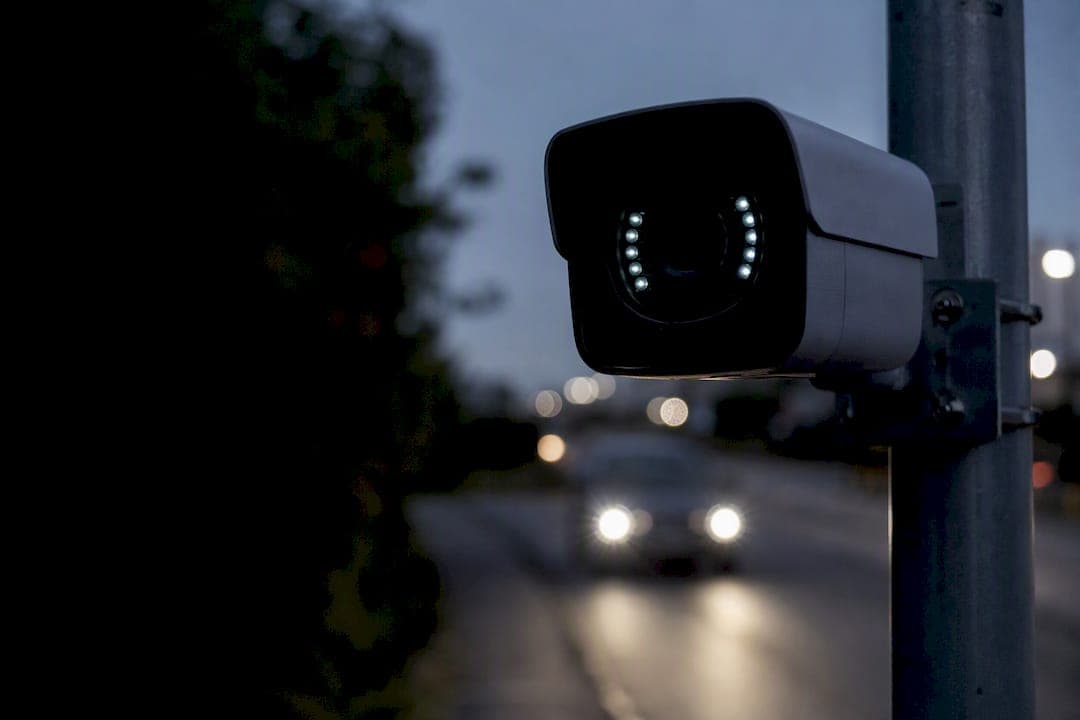
Make License Plate Recognition Work: Camera Geometry, IR Lighting
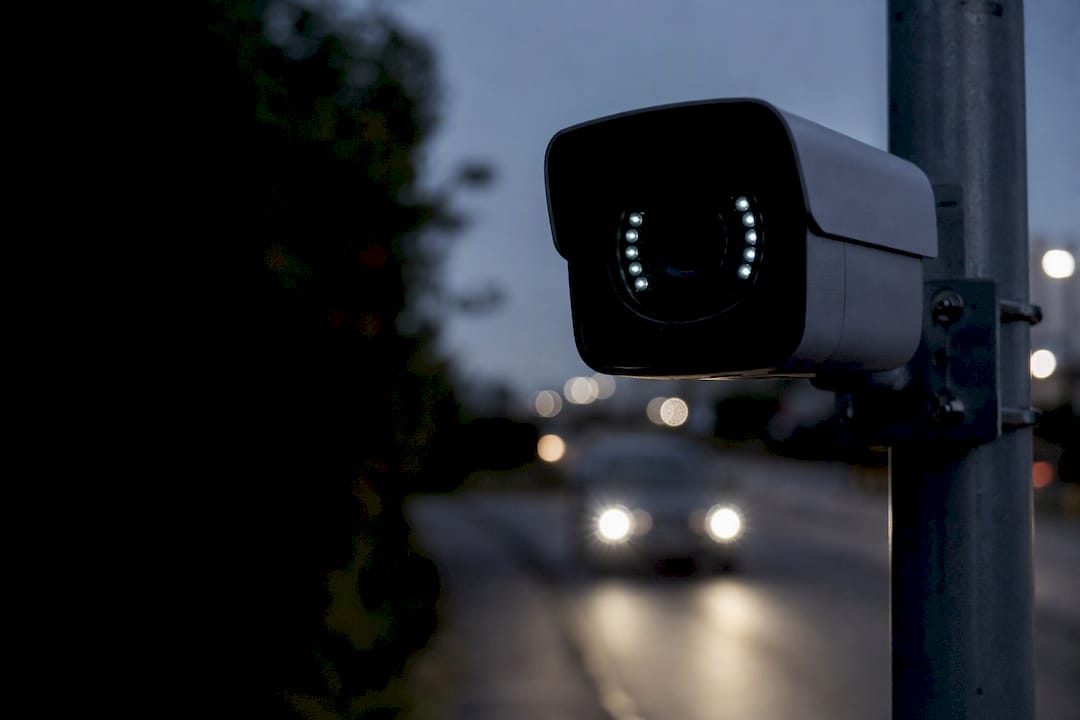
License plate recognition converts camera images of vehicle plates into searchable text, matching that text against databases in real time to trigger security alerts, tolling charges, or access decisions. The technology combines optical character recognition with automated imaging and event logic. Security teams use it for access control and watchlists; transport agencies use it for tolling and traffic management.
TL;DR:
- Field conditions such as weather, angle, and occlusion significantly impact recognition accuracy more than the choice of OCR engine.
- Proper site survey, camera placement, and lighting are critical to achieving reliable reads, especially during night and adverse weather.
- Averaging multiple frames and setting confidence thresholds are essential techniques for improving accuracy and reducing false reads in production environments.
- Vendor-specific training data alignment to regional plate formats is crucial; systems trained on different formats often perform poorly without retraining.
- Integration and data handling practices, including real-time alerts and secure storage, determine operational value beyond basic recognition performance.
Table of Contents
- How License Plate Recognition Works: From Capture to Read
- Cameras, Illumination, and the Software Behind License Plate Scanning
- Where License Plate Recognition Gets Used
- How Accurate Is License Plate Recognition, Really?
- Planning a Deployment: Camera Placement and Site Testing
- Connecting License Plate Recognition to Broader Security Operations
- Handling Plate Data Responsibly
- A Practical Checklist for Validating an LPR Deployment
- What the Data Actually Tells Us About License Plate Recognition
- Getting License Plate Recognition Right the First Time
- Sources
How License Plate Recognition Works: From Capture to Read
Most people assume license plate recognition is a single AI model that "reads" a plate the way a person does. It isn't. Automated license plate reader systems run a pipeline of discrete stages, and understanding each one matters because errors almost always trace back to a specific stage failing, not the software being generally bad.
Image capture comes first. A dedicated LPR camera fires a fast shutter, often triggered by a loop detector, radar sensor, or motion analytics, to freeze a moving vehicle without blur. Frame rate and shutter speed matter more here than resolution. A camera set for daytime exposure will blow out or miss plates entirely at night unless paired with infrared illumination, since IR light reflects off a plate's retroreflective coating without blinding the driver or triggering visible flash.
Once an image is captured, the system has to find the plate within the frame. This is plate localization: an algorithm scans for a rectangular region with the contrast and aspect ratio typical of a plate, then corrects for orientation and skew if the vehicle approached at an angle. That corrected region gets normalized (resized, contrast adjusted) so the OCR engine always works from a consistent input regardless of distance or lighting.
From there, the pipeline segments individual characters and runs OCR against each one. Good systems don't stop at raw character output. They run syntactic and geometric checks that compare the read against known plate formats and reject combinations that don't structurally make sense. According to the technical breakdown of ANPR pipelines, this multi-stage process, localization, orientation, normalization, segmentation, OCR, syntactic verification, and frame averaging, is the standard architecture behind virtually every commercial ALPR technology deployment.
The pipeline typically includes:
- Capture triggers: loop detectors, radar, or continuous video analysis that fires the camera at the right moment
- Plate localization: isolating the plate region and correcting for skew or rotation
- Segmentation and OCR: splitting the plate into characters and reading each one
- Syntactic validation: rejecting reads that don't match known regional plate formats
- Multi-frame averaging: combining several reads of the same plate to boost confidence before logging a final result
That last stage, averaging across frames, is often what separates a system that works in a lab demo from one that holds up in production. A single frame might catch a plate half-obscured by glare; the next frame three milliseconds later might not. Confidence scoring lets the system flag low-certainty reads for human review rather than silently logging a wrong plate number. Whether that scoring happens on an edge appliance at the camera or gets pushed to a cloud OCR service affects both latency and how much bandwidth the deployment needs, a trade-off worth mapping out before committing to either architecture.
Cameras, Illumination, and the Software Behind License Plate Scanning
The hardware stack behind license plate scanning looks deceptively similar to a standard CCTV setup, but the differences are what determine whether a system reads plates reliably or just records footage of them.
A dedicated LPR camera differs from a general-purpose IP camera in three ways: it's built for a narrow field of view tuned to a single lane, it runs a global shutter (rather than rolling shutter) to avoid the distortion that a moving vehicle causes on cheaper sensors, and it integrates IR illumination synced to its exposure timing. A general IP camera can sometimes be repurposed for LPR with the right lens and firmware, but you're fighting the sensor's design intent the whole way, especially at night or at highway speeds.

Infrared illumination deserves particular attention because it's the single most common point of failure in real deployments. Plates carry retroreflective sheeting that bounces IR light directly back at the source, which is why a correctly angled IR illuminator paired with a matched exposure setting can produce a crisp read in near-total darkness. Mismatched IR wavelength, wrong mounting angle, or illuminators positioned to create backlight glare will do the opposite: wash out the plate entirely.
Behind the camera, three architectural choices shape performance:
- Edge appliances process OCR directly at the camera or a local box, minimizing latency and keeping raw footage off the network, which matters for both response time and data governance.
- NVR-based systems centralize processing at a recorder, useful when you're retrofitting an existing camera estate.
- Cloud OCR services offload the heavy computation but introduce network dependency and require careful attention to what footage leaves the site.
Region-specific postprocessing is the software layer that often gets ignored until it causes problems. LPR engines trained on one country's plate formats, font, character spacing, aspect ratio, will misread or reject plates that follow different regional conventions. A Singapore-focused ALPR research prototype built specifically around local plate formats and a regional dataset reported detection precision and full-character recognition accuracy at moderate levels, with partial-match accuracy significantly higher when allowing a single-character error. That gap between full-character and partial-match accuracy is exactly why syntactic checks and region-tuned heuristics matter as much as the underlying neural network.
Pro Tip: Before buying any LPR engine, ask the vendor what dataset it was trained on and whether it includes your region's plate formats specifically. A system trained mostly on North American or European plates will underperform on double-line or non-Latin character plates unless it was explicitly retrained for that syntax.
Where License Plate Recognition Gets Used
The clearest way to evaluate whether ALPR technology fits a project is to look at what problem it's actually solving. The technology splits into a handful of well-established use cases, each with different accuracy and latency requirements.
-
Traffic management and tolling. Camera-based electronic road pricing is the clearest large-scale proof point. A camera-based tolling trial recorded 97.2% average recognition accuracy across a two-year test involving 63 cameras and 403 motorists, with accuracy climbing to 99.2% on sunny days and dropping to 91% on rainy nights. That spread is the number every traffic authority evaluating camera-based tolling should study closely.
-
Access control and parking automation. Gated communities, corporate campuses, and commercial parking operators use LPR to replace physical passes: a whitelist match opens the gate automatically, while an unrecognized plate triggers a manual review or a paid-parking transaction. This is one of the fastest-growing commercial applications because it removes an entire staffing function.
-
Law enforcement and fleet management. Mobile, in-vehicle ANPR units let patrol officers scan surrounding traffic and get instant matches against watchlists without manually running a plate. A documented police deployment shows how onboard LPR gives officers real-time database checks during active patrols, compressing what used to be a radio call into a passive background process.
-
Commercial analytics and logistics. Retail and logistics operators use plate scanning for repeat-visitor detection, dwell-time analysis, and yard management, tracking which trucks entered a loading dock and when, without requiring drivers to check in manually.
Each of these applications tolerates different error rates. A retail analytics deployment can absorb an occasional missed read. A law enforcement watchlist match generally cannot.
How Accurate Is License Plate Recognition, Really?
Vendor marketing loves round numbers, "95%+ accuracy" is a common claim, but real-world performance depends heavily on conditions, and the honest answer is that accuracy is a range, not a fixed figure.
The trial data: A two-year camera-based tolling trial recorded 97.2% average recognition accuracy overall, with 99.2% accuracy on sunny days but only 91% on rainy nights, a nearly nine-point swing driven entirely by weather and lighting.
That gap illustrates the core lesson of any real-time plate recognition deployment: the algorithm rarely fails on its own. It fails because of the conditions it's asked to work in. The most common failure modes are predictable once you know to look for them:
- Angle and skew. Plates photographed at a sharp angle distort the character geometry enough to confuse OCR, especially on plates with tightly spaced characters.
- Occlusion. Trailer hitches, dirt, bent plates, or bike racks partially blocking a plate are a frequent and mundane cause of missed reads.
- Atypical plate formats. Double-line plates, non-standard fonts, or plates with decorative borders trip up engines trained mostly on single-line formats.
- Weather and glare. Rain streaks, headlight flare at night, and low sun angles at dawn or dusk all degrade image contrast right when the system needs it most.
Mitigating these issues is mostly about redundancy rather than smarter algorithms. Multi-frame averaging, capturing several images of the same plate as a vehicle passes and combining the results, catches most transient occlusion and glare problems that a single-frame system would miss. Higher shutter speeds reduce motion blur at highway speeds. Confidence thresholds let a system route uncertain reads to human review instead of silently logging a wrong plate. None of these fixes are exotic; they're standard practice, and skipping them is usually why a deployment underperforms its lab benchmark.
Planning a Deployment: Camera Placement and Site Testing
Software gets the credit when an LPR deployment works and the blame when it doesn't, but in practice, most underperforming installations trace back to physical site planning done poorly, not a weak OCR engine.
A proper site survey starts with sightlines. Every lane the system needs to cover requires a clear, unobstructed line of sight to the approaching vehicle's plate, free of overhanging signage, tree branches, or other vehicles that could momentarily block the shot. Mounting height and angle need to be calculated together: too low, and the camera captures the plate at a steep upward angle that distorts character geometry; too high, and the plate becomes too small in frame at the trigger distance.
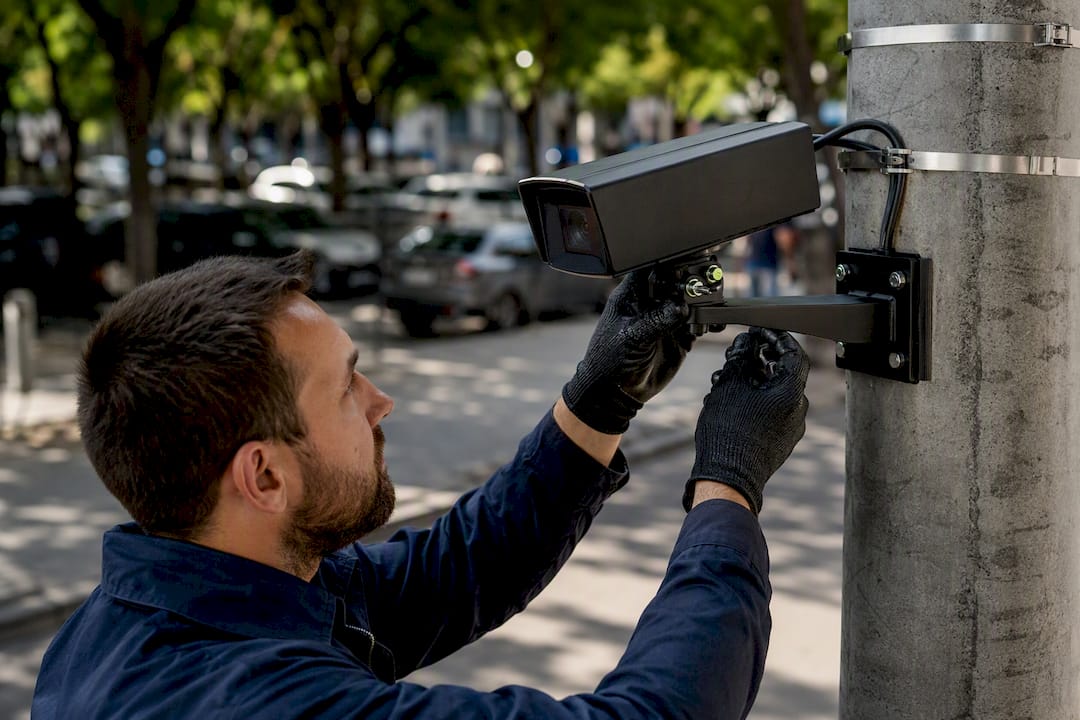
For single-lane applications like a gated entrance, a camera mounted 2 to 3 feet above plate height at a distance of 15 to 30 feet typically gives the cleanest read. Multi-lane highway or tolling scenarios require either one camera per lane or a wider-angle setup with software-side lane separation, since a single camera trying to cover three lanes at distance sacrifices resolution on each individual plate.
Lighting strategy is where most of the recoverable performance gets lost. Practitioners consistently identify camera angle and IR placement as the most commonly overlooked cause of underperforming installations, more so than any software limitation. Backlight, a bright sky or oncoming headlights directly behind the vehicle, silhouettes the plate and destroys contrast. The fix is positioning IR illuminators to light the plate directly without competing with ambient light sources, and Beyondsensor's guide on vertical lux specifications for CCTV walks through the illumination math in more detail.
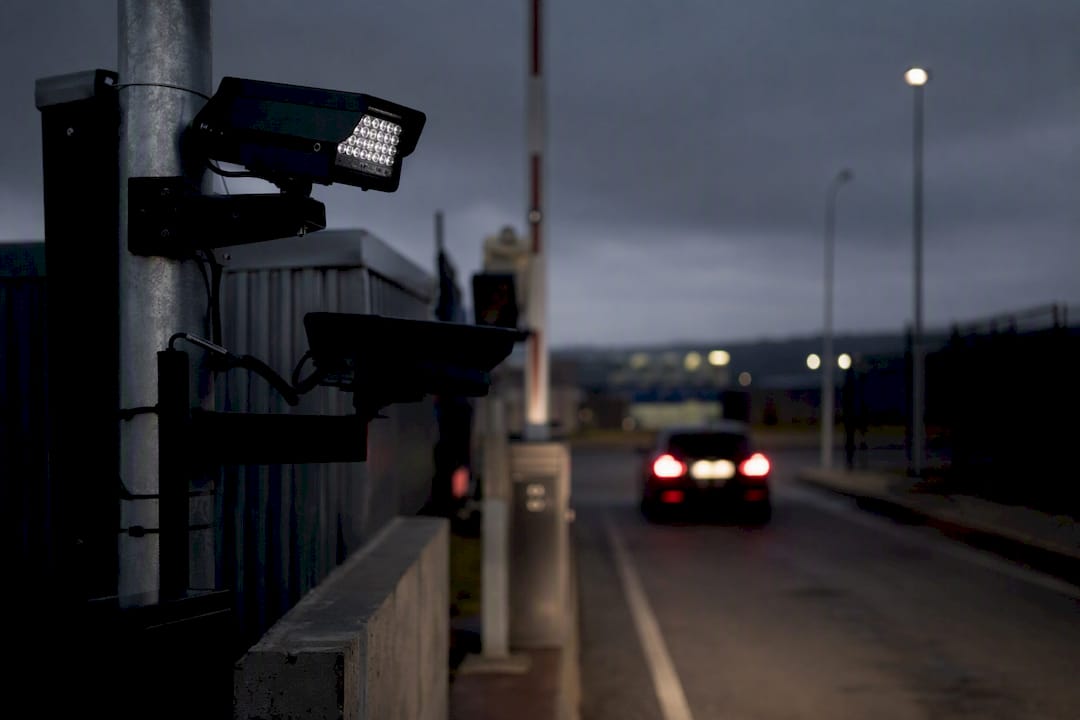
Pro Tip: Run your acceptance test during the worst conditions the site will realistically face, not the best. A demo on a clear afternoon tells you almost nothing about how the system performs during a rainy 2 a.m. shift change, which is exactly when security teams need it most.
Acceptance testing should never be a single clean-weather demo. A credible test plan captures a representative image bank across all lanes and shift times, sets a measured confidence threshold that balances false positives against false negatives for the specific use case, and documents remediation steps for any blind spots the testing surfaces. Rainy-night captures and multi-vehicle congestion scenarios belong in that test bank from day one, not as an afterthought discovered after go-live.
Connecting License Plate Recognition to Broader Security Operations
A plate read sitting alone in a log file has almost no operational value. The payoff comes from what happens after the read, when it triggers a match, an alert, and an action inside a broader system.
LPR integrates most commonly with video management systems (VMS), access control platforms, visitor management systems, and parking revenue systems. The event workflow typically runs: a camera reads a plate, the system checks it against a whitelist, blacklist, or permit database, and a match (or mismatch) fires an action, opening a gate, sending a security alert, or logging a billable parking session.
That workflow only becomes useful at scale when it's searchable and auditable. A well-built LPR deployment logs:
- Timestamped reads with confidence scores, searchable by plate, lane, or time range
- Match events tied to specific watchlists or permit lists, with a clear audit trail of who was alerted and when
- API and webhook access so third-party systems, from visitor management to logistics software, can consume plate events without manual export
One architectural decision worth thinking through early is whether matching logic runs at the edge (on the camera or a local appliance) or on a central server. Edge rules respond faster and keep working during a network outage, which matters for a gate that has to open regardless of connectivity. Server-side rules centralize watchlist management and are easier to update across a large multi-site deployment. Most mature deployments combine both: edge logic for immediate actions, server-side logic for reporting and cross-site correlation. Beyondsensor's overview of intelligent sensing technologies for facility security covers how plate events fit into that larger analytics and alerting picture.
Handling Plate Data Responsibly
License plate data is personal data tied to a vehicle owner, and that status shapes how a deployment should handle storage, access, and retention from the outset.
Purpose limitation is the starting principle: collect and retain plate reads only for the specific stated purpose (access control, tolling, security), and put that retention window in writing rather than defaulting to "keep everything indefinitely." Data should be encrypted both in transit and at rest, and access should run through role-based controls with an audit log showing who queried which plate and when. Vendor systems marketed for PDPA-aligned deployments typically build these controls, along with real-time alerts and system integration, into their core feature set rather than treating them as an add-on.
For analytics use cases that don't require identifying individual drivers, redaction or anonymization at the point of aggregation reduces exposure without sacrificing the operational insight. Dwell-time or traffic-volume analytics rarely need a readable plate number once the aggregate statistic is calculated. When a deployment touches law enforcement data sharing, cross-border data transfer, or extended retention beyond the operational need, that's the point to bring in legal or compliance review rather than making the call internally.
A Practical Checklist for Validating an LPR Deployment
Most LPR projects fail acceptance testing for reasons that have nothing to do with the OCR engine's underlying quality. They fail because nobody defined what "working" actually meant before the cameras went live.
An operational acceptance checklist worth running on any deployment includes:
- Site survey confirmation: verified sightlines, mounting height, and approach angle for every covered lane
- Sample-capture bank: images gathered across all lanes, all shift times, and worst-case weather before final sign-off
- Documented confidence threshold: a specific, agreed number, not "whatever the default is", balancing false positives against missed reads for this use case
- Integration test: confirming plate-match events correctly trigger the intended alert, gate action, or dashboard notification end to end
- Blind-spot remediation log: a written record of any lane, angle, or lighting condition that underperformed, with a fix assigned and a retest date
Deployment value climbs sharply once LPR stops being a stand-alone feature and becomes one input into a unified dashboard alongside video analytics, visitor management, and real-time alerting. A plate match that silently logs to a database helps nobody; a plate match that surfaces on a security operator's screen next to the live camera feed, with the matched watchlist entry attached, is what actually changes how fast a team responds. Document the acceptance criteria in writing before go-live, and revisit them after the first month of real-world operation, since production conditions almost always surface edge cases a pre-launch test bank missed.
What the Data Actually Tells Us About License Plate Recognition
The gap between marketed accuracy and delivered accuracy is the single most misunderstood part of this technology, and it's rarely the algorithm's fault. A regional research prototype landing at 67% full-character accuracy on a challenging dataset and a production tolling trial hitting 97.2% overall aren't contradictory numbers. They describe different conditions: a research benchmark stress-testing edge cases versus a tuned, well-lit, properly angled production deployment.
That's the piece conventional buying advice skips. Most vendor comparisons focus on the OCR engine's headline accuracy claim and treat camera placement, IR illumination, and lane geometry as installation details to sort out later. The trial data says the opposite is true. A nine-point accuracy swing between sunny days and rainy nights on the same system, same cameras, same software, proves that site conditions move the needle more than engine selection does in most real deployments.
If you're planning a system, prioritize the site survey and lighting plan before you shortlist software vendors. Get the physical setup right, and even a mid-tier engine performs well. Get it wrong, and no amount of algorithmic sophistication will save the deployment.
— Eumir
Getting License Plate Recognition Right the First Time
Choosing an OCR engine is the easy part. Getting the camera geometry, IR lighting, and integration logic right the first time is where most projects actually succeed or stall, and it's rarely something an off-the-shelf add-on handles well on its own. Beyondsensor works directly with system integrators and facility teams to plan site surveys, tune confidence thresholds, and connect plate-match events into a unified security dashboard instead of a standalone log file nobody checks.
If your project spans multiple lanes, needs PDPA-aligned data handling, or has to integrate with existing access control and visitor management systems, that's exactly the point where a solutions partner earns its keep over a generic hardware purchase. Beyondsensor's team also works alongside partners like PRYDE Designs on broader security integration projects when a deployment calls for it. Visit the system integrator resource page to scope your site requirements and start planning a deployment built around your actual lane geometry, not a demo reel shot in perfect lighting.
Sources
- Experimental camera-based ERP X records 97.2% accuracy | The Straits Times
- License Plate Recognition System Singapore | AP
Recommended
Read More Articles
Open Standards, Edge Resilient Access Control: 5 Steps for Integrators
Five practical steps for security integrators to build open standards, edge resilient access control systems and avoid costly rework.
Dual Path and Warm Standby: Redundant CCTV Comms for Integrators
For integrators: redundant CCTV comms with dual path links, warm standby NVRs, 15–30 minute UPS sizing and failover tests.

10 Step Camera Cybersecurity Hardening Checklist for Security Teams
A prioritized 10 step camera cybersecurity checklist for security teams: inventory devices, patch firmware fast, segment networks, enforce unique...
3 Pilot KPIs Security Teams Need for Perimeter Intrusion Detection
Practical PIDS guidance for security teams: demand three pilot KPIs, 15–30 second verification SLAs, and vendor questions that cut false alarms.
Let's Build YourSecurity Ecosystem.
Whether you're a System Integrator, Solution Provider, or an End-User looking for trusted advisory, our team is ready to help you navigate the BeyondSensor landscape.
Direct Advisory
Connect with our regional experts for tailored solutioning.