
How dust monitoring sensors work, what Singapore rules expect, and how to choose, calibrate and connect them for construction and industrial sites.
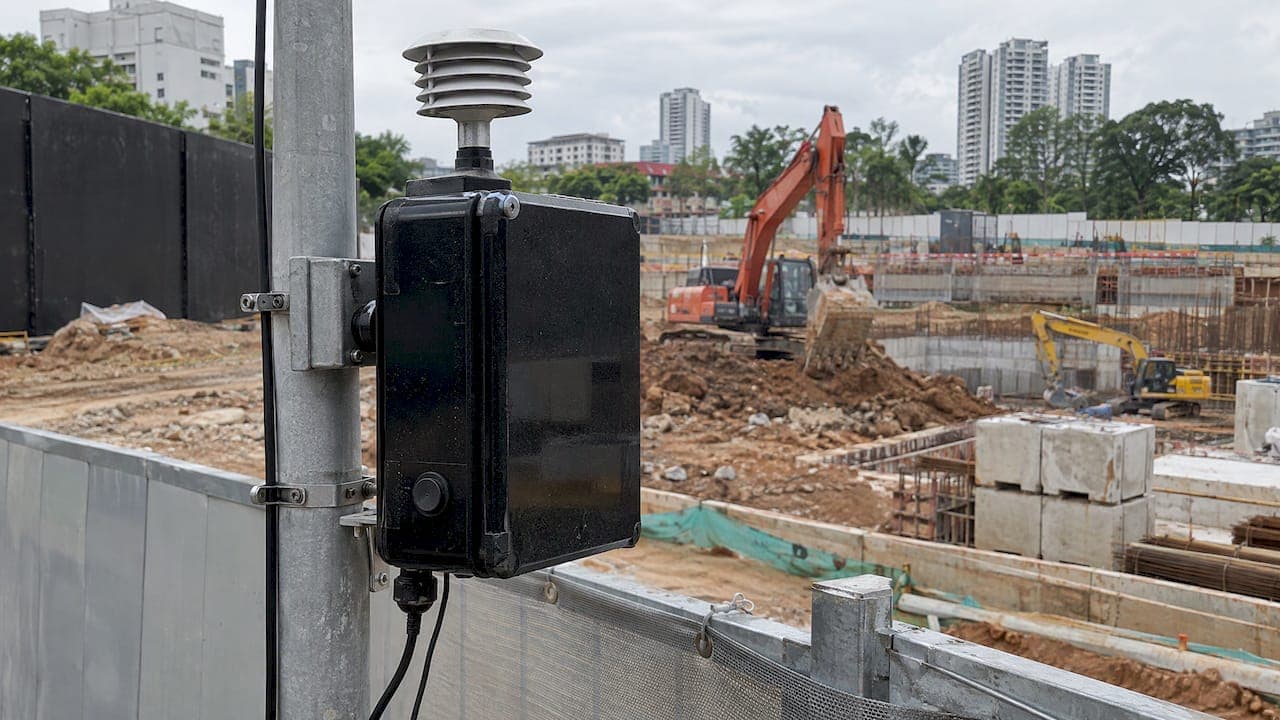
Dust Monitoring Sensors: How to Choose and Deploy Them in Singapore

Dust monitoring sensors measure airborne particles continuously, most often by shining light through an air sample and reading how much the particles scatter. For a Singapore construction or industrial site, the right choice depends on three things: the dust fraction you must track, the accuracy your decisions need, and how the readings reach the people who act on them. This guide covers all three, with the Singapore references a security or facility manager needs.
TL;DR
- Most real-time dust sensors use light scattering. Photometers estimate relative mass, while optical particle counters count and size particles individually.
- Optical sensors do not measure mass directly, so they need field calibration against the dust actually on your site.
- In Singapore, MOM sampling guidelines and the WSH (General Provisions) Regulations set the exposure framework. Sensors support hotspot detection and early warning, and reference methods remain the basis for compliance.
- Plan data transport early. Construction equipment disrupts wireless links, and a monitoring plan should be written for each site.
- Dust data is most useful when it sits on the same dashboard as your other site alerts.
Table of Contents
- What dust monitoring sensors actually measure
- Construction dust monitoring in practice
- Singapore requirements that shape sensor choice
- How to choose a dust monitoring sensor
- Accuracy, calibration and maintenance
- Connecting sensors to site networks and control systems
- Our perspective
- Bringing dust data into one operation view
- FAQ
- Sources
What dust monitoring sensors actually measure
A dust monitor estimates how much particulate matter is suspended in the air at a point. It does not weigh the dust. According to the NIOSH chapter on real-time optical monitors, most real-time respirable aerosol monitors rely on light scattering. Photometers and nephelometers estimate a relative mass concentration from the light that particles scatter. Optical particle counters count and size individual particles, then apply an assumed mass density to estimate mass concentration.
This matters because every reading is an estimate built on assumptions about the particles. A sensor tuned for fine combustion smoke will respond differently to cement dust or granite fragments. Understanding that one point makes every other decision in this article easier.
Particle fractions: PM10, PM4, PM2.5 and PM1
The number after PM is the aerodynamic diameter in micrometers. Three fractions come up most often on site:
- PM10: the coarse fraction usually used for ambient and boundary monitoring around construction.
- Respirable fraction (PM4): the eGate guideline on construction dust defines it as particles under 4 micrometers that can penetrate to the lung alveoli.
- PM2.5 and PM1: finer fractions, tracked when the source or the occupational exposure limit calls for them.
Main sensing methods compared
| Method | What it does | Typical use | Main limitation |
|---|---|---|---|
| Photometer or nephelometer | Estimates relative mass from scattered light | Area monitoring, trend and alarm | Response varies with particle type |
| Optical particle counter | Counts and sizes particles, then estimates mass | Size-resolved monitoring, hotspot work | Mass estimate relies on an assumed density |
| Active sampler with filter | Draws air through a filter for lab weighing | Reference and compliance sampling | No instant reading |
| Passive deposition gauge | Collects settled dust over time | Soiling and nuisance assessment | Slow, not real time |
The IAQM guidance on monitoring near demolition and construction sites describes the same range: powered samplers for specific fractions such as PM10, simpler unpowered samplers for dust deposition and soiling, and automatic analyzers that give real-time, high-resolution readings which can be compared directly with objectives.
Construction dust monitoring in practice
Construction is where most dust monitoring questions start. Demolition, excavation, cutting, grinding and vehicle movement all generate particles, and the source changes week by week as the project moves through phases.
What a real-time setup looks like
A typical unit draws air past a laser or light source, reads the scatter, and logs a value at a fixed interval. The eGate guideline specifies that the measurement interval must not exceed 5 minutes. It also says data must be stored securely and stay accessible for at least five years after project completion. The system should cover respirable fractions, particularly PM4, with PM2.5 and PM1 where required, and should produce 8-hour time-weighted averages. Those are one provider's requirements for construction projects, not Singapore law, but they are a useful benchmark when you write a specification.
Placement and the monitoring plan
The same guideline stresses that dust control is a holistic process: early stages shape the results of later ones, and each site is unique, so each needs its own measurement plan. In practice, the plan should state:
- Which activities generate dust and in which phases.
- Where sensors sit relative to sources, boundaries and sensitive neighbors.
- Which fraction and averaging period each sensor reports.
- Alert thresholds and who receives them.
- Who calibrates, cleans and checks the units, and how often.
A plan written before the equipment arrives avoids the common outcome of sensors installed in convenient spots rather than informative ones.
Singapore requirements that shape sensor choice
Singapore does not leave dust to chance. Several official documents frame what monitoring must achieve, and each one points to different parts of your setup.
Workplace exposure: MOM and the WSH Regulations

The Workplace Safety and Health (General Provisions) Regulations set permissible exposure levels in their First Schedule. They include 0.1 mg/m³ for respirable crystalline silica dust, 2 mg/m³ for respirable coal dust and 10 mg/m³ for silica gel, all on a long-term basis. The regulations as revised in 2025 define the long-term level as an average over an 8-hour working day and 40-hour work week, and the short-term level over a 15-minute period. The same text defines combustible dust as finely divided combustible solid that can present a flash fire or explosion hazard when suspended in air, which matters for industrial sites such as woodworking and food processing.
For how to sample, the MOM sampling strategy guidelines are the practical reference. They call for:
- Area monitoring devices positioned about 1.2 to 1.8 metres above the floor.
- At least 6 hours of sampling to evaluate an 8-hour shift, or 8 hours for a 12-hour shift, excluding meal and break time.
- Monitoring frequency that depends on how exposure compares with the permissible level.
- Calibration of sampling equipment before and after sampling.
- Representative personal sampling near the worker's breathing zone, with respirable aerosol sampling where the limit is expressed as respirable particulate mass.
The takeaway is that a fixed area sensor and a personal exposure assessment answer different questions. Area sensors show where and when dust rises. Formal exposure evaluation follows the sampling method MOM describes.
Environmental duties on construction sites
The Environmental Protection and Management Act 1999 defines a construction site as premises where building, alteration or demolition work is carried on, including surrounding land under the principal contractor's control of access. That definition tells you where your monitoring footprint can reasonably extend. The Clean Air Act counts dust and solid particles as air impurities and requires occupiers of industrial or trade premises to prevent or minimize air pollution by the best practicable means. Continuous dust data is one way to show that prevention is working.
Ambient benchmarks
NEA's air quality page lists Singapore's 2020 targets: PM2.5 at 12 µg/m³ annual mean and 37.5 µg/m³ over 24 hours, and PM10 at 20 µg/m³ annual mean and 50 µg/m³ over 24 hours, pegged to WHO guidelines. Boundary sensors at a construction site are often read against these ambient figures, with the caveat that haze episodes can raise readings regardless of what the site does. CNA's report on NEA's State of the Environment findings notes that 2020 annual mean PM10 and PM2.5 exceeded WHO guidelines even though they were the lowest in ten years, which is why a site-level baseline is worth recording before work starts.

How to choose a dust monitoring sensor
Use these criteria in order. Each one narrows the field before price enters the picture.
- Define the decision. Is the sensor there for early warning, for engineering control, for reporting to a client or authority, or for occupational exposure? Early warning tolerates more uncertainty than reporting.
- Match the fraction. Choose a unit that reports PM10 for boundary work and respirable fractions where worker exposure matters.
- Check the measurement interval. Short intervals let you link spikes to activities such as cutting or demolition.
- Look at environmental robustness. Humidity and heat are constant in Singapore. Ask how the unit handles humidity, and whether it has heated inlets or compensation.
- Ask about calibration support. You need a route to field correction, not just a factory certificate.
- Confirm the data path. Outputs, protocols, buffering and storage determine whether the reading ever reaches a decision maker.
- Plan maintenance. Inlets, size preselectors and pumps need regular attention, and a sensor nobody services drifts quietly.
A 2025 review in Analytical Methods concludes that reference-grade methods remain necessary for compliance, while calibrated sensor networks suit hotspot detection, intervention design and operational optimization. It also reports that deployments with event-aware networks can support targeted ventilation and filtration, cutting exceedance time and cumulative exposure without wasting energy. That is the realistic role of sensors: they tell you where to act and show whether the action worked.
Accuracy, calibration and maintenance
The NIOSH chapter explains that because optical monitors do not measure mass directly, they must be calibrated before they are used as mass concentration monitors. Response depends on particle size, shape, refractive index, wavelength and density. Factory calibration with a reference material such as Arizona Road Dust does not guarantee accuracy for other aerosols in the field. Field correction or calibration improves accuracy. Maintenance means servicing the size preselector, checking pump flow and zeroing the monitor according to the manufacturer's instructions.
The Analytical Methods review adds that optical sensors show a mass bias that varies with concentration range, aerosol composition and humidity. It groups the drivers into three families:
- Environmental: humidity and temperature change particle growth and scattering.
- Aerosol-physical: size, shape and refractive index reshape the response.
- Operational: co-pollutants interfere with optical paths and inference models.
Calibration practice runs from simple linear corrections to multivariate or nonlinear models that include humidity, temperature or volatile organic compounds, reducing residual bias under heavy or mixed-source loading.
A practical calibration routine
- Collocate each sensor type with a reference sampler on your own site for a representative period.
- Derive a correction factor per dust type, and revisit it when the work phase changes from, for example, excavation to concrete finishing.
- Log the zero check, pump flow and inlet cleaning dates alongside the data.
- Calibrate any equipment used for formal sampling before and after use, as MOM expects.
Connecting sensors to site networks and control systems
A sensor that logs to its own memory card is a record, not a monitoring system. A 2021 study of an IoT-based construction site particulate monitoring system in South Korea is a useful example. The system reached grade 2 performance certification, with 74.2% accuracy for its light-scattering method. Because construction equipment caused severe communication interference, the authors adopted RS485 for long-distance links and Wi-Fi for short-distance indoor monitoring. The lesson for Singapore sites is to survey the radio environment before choosing the link, and to prefer wired runs for long distances near heavy machinery.
A sound integration checklist:
- Choose open, documented outputs so data can feed dashboards or existing control systems.
- Buffer data locally so a network drop does not create gaps. Our note on remote site monitoring and 72-hour buffering covers what to ask for at procurement.
- Time-stamp consistently so dust spikes can be matched with permits, cameras and other alerts.
- Set tiered alerts: an advisory level for supervisors and an action level for the safety manager.
Dust is rarely the only environmental hazard on site. Heat is another, and the same sensing approach applies; see our guide to heat stress monitoring for Singapore safety managers. For the wider case for connected sensing, read why adopt smart monitoring in industrial security.
Our perspective
We see dust monitoring as one signal in a bigger operational picture. A reading that sits alone in a vendor portal rarely changes behavior. A reading that appears beside camera events, permit status and patrol activity tells a supervisor what is happening and who needs to respond.
That is why BeyondSensor works on unified, multi-vendor integration with localized technical validation for Southeast Asian deployments. Sensor hardware varies by site, and no single unit suits every dust type. Our approach is to help integrators and site operators combine the right sensing tools into one exception-based workflow, so people attend to the alerts that matter instead of watching screens.
Our advice to security and facility managers is to write the monitoring plan first, define who acts on each alert, and then select hardware to fit. Platforms built to ingest data from several vendors keep that plan flexible as sites and regulations change.
Eumir
Bringing dust data into one operation view
BeyondSensor supports system integrators, facility owners and industrial site operators who want sensing, video analytics and site workflows working together. Our Solution Integration service plans multi-vendor deployments, and Ecosystem Matchmaking connects your requirements with suitable technologies. BeyondWatch adds video analytics on the same operation view, so a dust alert can be checked against what is happening on camera.

To discuss a site in Singapore, Malaysia or the Philippines, start from the BeyondSensor home page.
FAQ
What is the difference between a dust monitor and a dust sensor?
In practice the terms overlap. Dust monitor usually means a complete instrument with an inlet, pump, data logger and software, while sensor often means the optical element or a compact module. Both typically estimate particle concentration by light scattering, so the same calibration considerations apply.
Can a low-cost sensor be used for compliance?
The 2025 Analytical Methods review says reference-grade methods remain necessary for compliance. Calibrated sensors are best used for hotspot detection, control design and day-to-day optimization. For formal exposure evaluation in Singapore, follow the MOM sampling guidelines and speak to your WSH professional.
How often should dust sensors be calibrated?
NIOSH advises zeroing and maintaining optical monitors according to the manufacturer's instructions, and field calibration against the dust you actually have. MOM expects sampling equipment to be calibrated before and after sampling. Repeat field checks whenever the dust source or work phase changes.
Where should dust sensors be placed?
For area monitoring, MOM's guidelines place devices about 1.2 to 1.8 metres above the floor. For construction boundaries, position units between the source and the nearest sensitive receptor, and record placement in the site's monitoring plan.
Sources
- NIOSH: Measuring respirable aerosol with real-time optical monitors
- IAQM: Guidance on Monitoring in the Vicinity of Demolition and Construction Sites
- eGate: Dust Measurement in Construction Projects
- MOM: Guidelines on Sampling Strategies
- Singapore Statutes Online: WSH (General Provisions) Regulations, First Schedule
- Singapore Statutes Online: WSH (General Provisions) Regulations, 2025 revision
- Singapore Statutes Online: Environmental Protection and Management Act 1999
- Singapore Statutes Online: Clean Air Act
- NEA: Air Quality
- CNA: Air quality in Singapore improved in 2020
- Analytical Methods (RSC): Analytical performance and calibration strategies of optical PM sensors
- PMC: Development of IoT-Based Particulate Matter Monitoring System
Recommended
Read More Articles

Abandoned Object Detection: How It Works and How to Deploy It
How abandoned object detection works, how it tells an unattended bag from a paused one, how it differs from loitering detection, and what to check in Singapore.
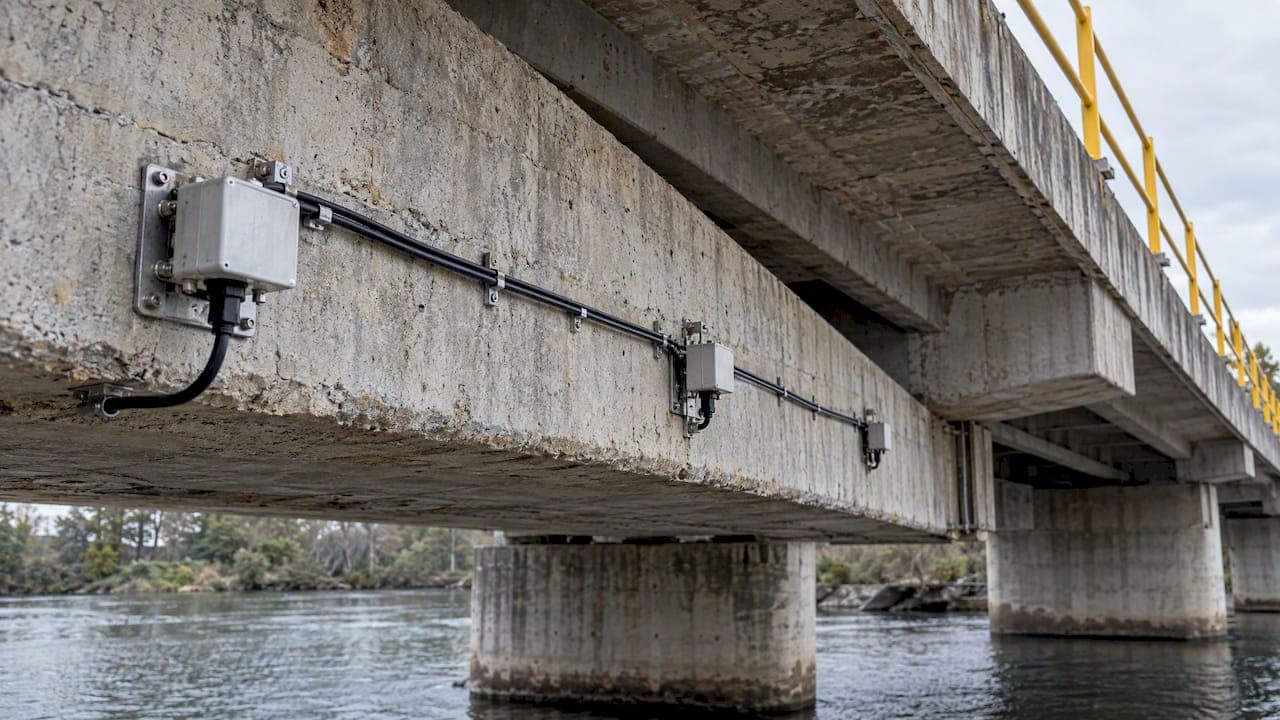
Bridge Monitoring Sensors: Types, Placement and Data Use
Which sensors monitor bridges, what each measures, how data reaches engineers, and how to specify a system for Singapore infrastructure and facility owners.
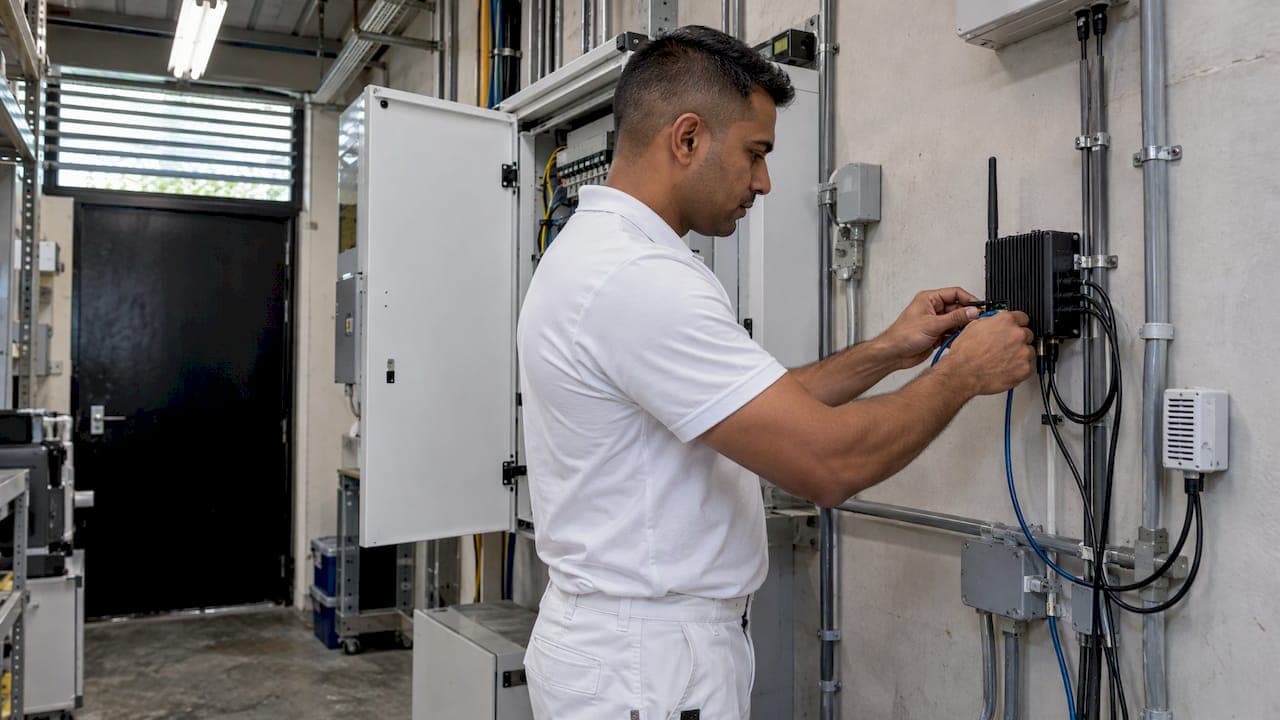
MQTT Security Best Practices for Singapore Deployments
A practical MQTT security checklist for Singapore teams: TLS 1.3, mutual authentication, topic ACLs, hardening, monitoring and IMDA and CSA requirements.
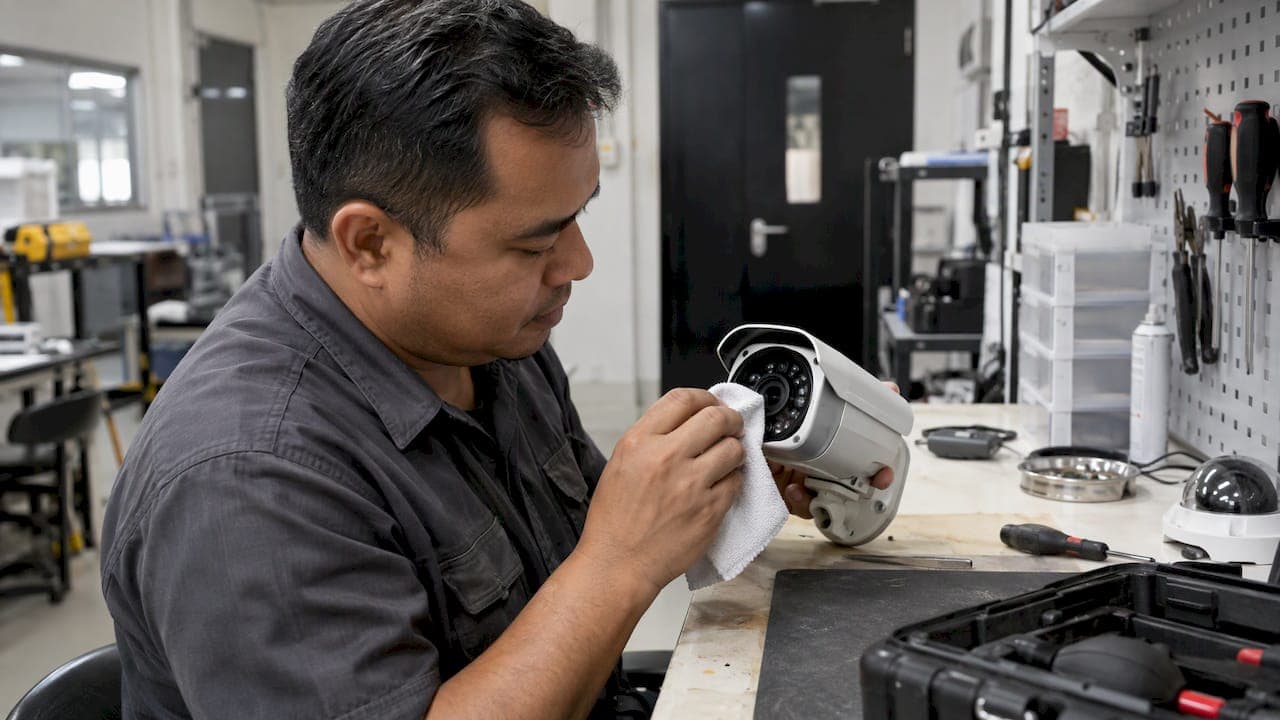
Preventive Maintenance for CCTV: A Singapore Guide
A practical preventive maintenance plan for CCTV in Singapore: checklist, inspection rhythm, SPF-aligned SLA terms, fault logging and what to put in a contract.
Let's Build YourSecurity Ecosystem.
Whether you're a System Integrator, Solution Provider, or an End-User looking for trusted advisory, our team is ready to help you navigate the BeyondSensor landscape.
Direct Advisory
Connect with our regional experts for tailored solutioning.