
Learn how to audit sensing infrastructure in 2026. Ensure accuracy, reliability, and compliance for your sensor networks. Read more!

How to Audit Sensing Infrastructure: 2026 Guide

TL;DR:
- A sensing infrastructure audit systematically evaluates sensors, data pipelines, and communication systems for accuracy and compliance. It requires organizational readiness, proper tools, and both passive sensing and active probing to ensure full system resilience. Conducting regular, structured audits helps detect drift, schema issues, and security vulnerabilities before they cause operational failures.
A sensing infrastructure audit is the systematic evaluation of sensor networks, data pipelines, and communication architecture to verify accuracy, reliability, and regulatory compliance. Security and facility managers who know how to audit sensing infrastructure catch sensor drift, data gaps, and compliance failures before they become operational crises. The process draws on standards like GDPR, techniques such as hardware-in-the-loop testing, and platforms like Beyondsensor's AI-driven tools. Done correctly, a sensing infrastructure assessment reduces false alarms, extends hardware life, and gives leadership defensible evidence of due diligence.
What prerequisites and tools do you need before auditing sensing infrastructure?
Audit planning fails most often because teams skip organizational readiness checks. Departments must be resourced and trained to act on sensor insights before the audit begins. Collecting data nobody can interpret wastes time and budget.
Start with a readiness inventory covering three areas:
- Personnel: Assign a lead auditor with authority to halt operations for testing. Identify data owners for each sensor zone.
- Documentation: Gather existing network diagrams, calibration records, firmware versions, and past incident logs.
- Regulatory scope: Confirm which data streams fall under GDPR or sector-specific standards. GDPR fines reach up to 4% of global annual revenue for non-compliant sensor data handling. That figure makes compliance a financial priority, not just a legal formality.
Once readiness is confirmed, assemble the tool stack.
| Tool category | Primary function | Audit use case |
|---|---|---|
| AI-driven analytics platforms | Anomaly detection and pattern recognition | Flag sensor drift and data gaps in real time |
| Digital twin environments | Virtual replica of physical sensor network | Simulate failure scenarios without operational risk |
| Precision Time Protocol (PTP) hardware | Nanosecond-level time synchronization | Verify clock alignment across distributed sensors |
| Gateway diagnostic software | CPU load monitoring and packet inspection | Detect overloaded nodes and dropped data frames |
| Schema validation tools | JSON-LD or open protocol compliance checks | Confirm data format consistency across sensor types |
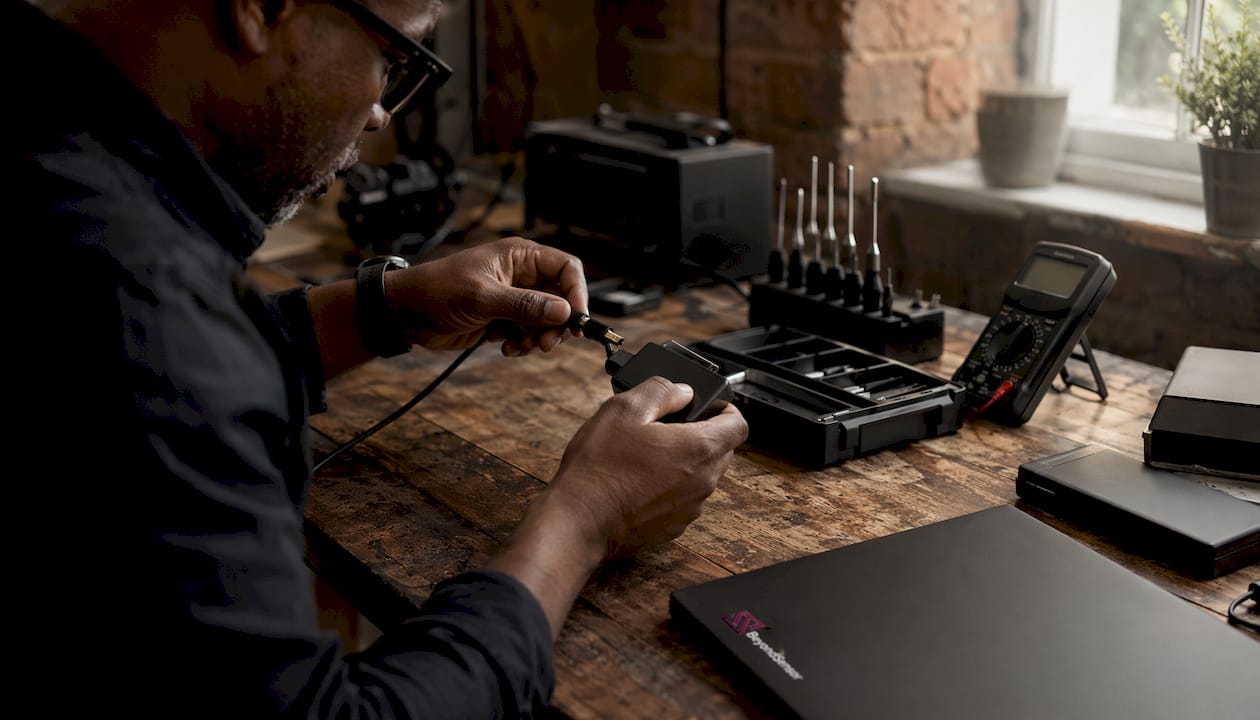
Pro Tip: Run a tabletop simulation using your digital twin before touching live sensors. This surfaces architecture gaps that paper reviews miss entirely.
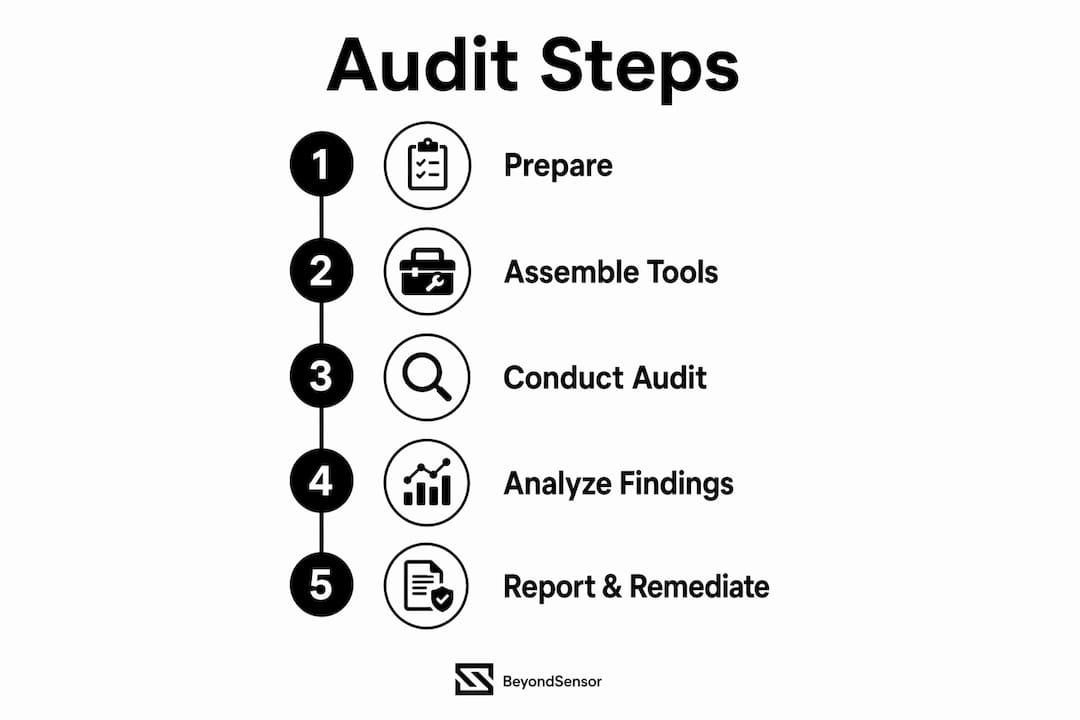
How to conduct a step-by-step audit of sensing systems
A thorough audit of sensing systems follows a defined sequence. Skipping steps creates blind spots that static checks will not catch.
-
Build a complete sensor inventory. List every sensor by type, location, firmware version, and communication protocol. Include dormant or backup units. Undocumented sensors are the most common source of audit surprises.
-
Map deployment and communication architecture. Draw the full data path from sensor to gateway to storage. Identify single points of failure and any unencrypted segments.
-
Evaluate data integrity metrics. Latency exceeding 100ms renders real-time alerts useless. Target sub-50ms latency for critical security sensors. Measure actual latency under peak load, not just idle conditions.
-
Verify calibration chains. Confirm each sensor traces its calibration to a recognized reference standard. Check the date of the last calibration against the manufacturer's recommended interval.
-
Test time synchronization. Floating-point divergence and time-sync drift are hidden failure modes that pass static checks but corrupt event correlation. Use PTP hardware to verify clock alignment across all nodes.
-
Perform hardware-in-the-loop testing. Inject synthetic fault signals and confirm the system responds correctly. Stress-test gateway CPUs at 120% of expected load to expose bottlenecks.
-
Distinguish probing from sensing. Probing without sensing is useless; sensing without probing is insufficient. Probing means actively intervening to test system response. Sensing means passively observing behavior. Both are required for a complete resilience assessment.
-
Document findings with severity ratings. Classify each finding as critical, major, or minor. Attach remediation timelines and responsible owners.
Common pitfalls to avoid:
- Testing only during low-traffic periods, which hides load-dependent failures
- Accepting vendor-supplied calibration certificates without independent verification
- Treating a passed static check as a passed audit
Pro Tip: Schedule at least one audit cycle during peak operational hours. Sensors that perform well at 2:00 AM often degrade significantly during high-traffic periods when gateway CPU load spikes.
What are common challenges when you audit sensing systems?
Sensor drift is the most frequent finding in any sensing system performance review. Drift occurs gradually, so it rarely triggers alarms until the error margin exceeds the detection threshold. Establish a drift baseline during the first audit and compare it at each subsequent cycle.
Data schema inconsistencies create the second largest category of audit failures. Adopting common data schemas like JSON-LD reduces integration and audit time significantly. Mixed schemas force manual reconciliation, which introduces human error and slows the entire review process.
Time synchronization fragility is the silent killer of multi-sensor correlation. A 200ms clock drift between two cameras in the same corridor produces conflicting event timestamps, making incident reconstruction unreliable. Hardware-in-the-loop verification catches this before it corrupts a real investigation.
Security vulnerabilities in sensor networks require upfront architectural decisions, not afterthought patches. Zero-trust models, encryption, and continuous anomaly detection must be designed into the network from the start. Retrofitting security onto an existing sensor mesh is expensive and rarely complete.
Overloaded gateway CPUs produce false anomaly alarms that erode operator trust. When operators start ignoring alerts, the entire sensing network loses its value. Resolve this by redistributing sensor loads across multiple gateways and setting CPU utilization alerts at 70% capacity, not 100%.
What best practices align sensing infrastructure audits with compliance goals?
Compliance is not a checkbox at the end of an audit. It is a thread woven through every step of the sensing infrastructure assessment process. GDPR governs how sensor data is collected, stored, and accessed. Facility managers must confirm that sensor data management practices meet retention limits and access controls before the audit closes.
Governance models for data quality define who owns each data stream and who has authority to act on anomalies. Without clear ownership, audit findings sit in reports and nothing changes. Assign a named data steward for each sensor zone and include that assignment in the audit record.
Best practices for compliance-aligned auditing:
- Embed audit cycles into annual planning. A sensing network analysis conducted once every three years misses the drift and schema changes that accumulate monthly.
- Link findings to operational KPIs. Translate technical findings into business impact. A 150ms latency spike is not just a technical issue. It means a perimeter breach alert arrives three seconds late.
- Maintain a calibration register. Track every sensor's calibration date, reference standard, and next scheduled check in a centralized log accessible to auditors and compliance officers.
- Review access logs alongside sensor data. Unauthorized access to sensor feeds is a compliance event, not just a security event.
Pro Tip: Tie each audit finding to a specific regulatory clause or operational KPI. This framing gets remediation budgets approved faster because it speaks the language of risk, not just technology.
Physical security compliance standards evolve alongside sensor technology. Build a review trigger into your governance model so that any new regulation or major firmware update automatically initiates a targeted audit of affected systems.
AI analytics tools now automate much of the continuous monitoring between formal audit cycles. They flag anomalies, track drift trends, and generate compliance-ready reports without requiring manual review of every data point.
Key Takeaways
A complete sensing infrastructure audit requires organizational readiness, structured methodology, and continuous compliance integration to deliver reliable, defensible results.
| Point | Details |
|---|---|
| Readiness before tools | Confirm personnel, documentation, and regulatory scope before deploying any audit tool. |
| Latency is the primary metric | Target sub-50ms latency for critical sensors; anything above 100ms breaks real-time alerting. |
| Probe and sense together | Passive observation alone is insufficient; active intervention testing is required for full resilience assessment. |
| Schema consistency cuts audit time | Adopting JSON-LD or open protocols reduces integration and audit time across multi-vendor sensor networks. |
| Compliance needs named owners | Assign a data steward to each sensor zone and link every finding to a regulatory clause or operational KPI. |
What I've learned auditing sensing infrastructure that most guides won't tell you
The technical steps in a sensing infrastructure audit are learnable in a week. The organizational barriers take years to navigate. I've seen facilities with excellent sensor hardware and zero audit value because nobody had authority to act on the findings. The audit report sat in a shared drive, unread, while the same sensor faults repeated the next quarter.
The shift that changes everything is treating the audit as an operational process, not a compliance event. When facility managers connect audit findings directly to budget decisions and incident reports, leadership pays attention. When findings live only in technical documents, they disappear.
Digital twins have genuinely changed what is possible in a sensing network analysis. The ability to simulate a sensor failure without touching live infrastructure removes the biggest barrier to thorough testing: operational risk. I've watched teams go from annual audits to quarterly cycles simply because digital twins made testing safe enough to do more often.
The other underrated factor is the distinction between probing and sensing. Most teams I've worked with do one or the other. They either run active tests and call it done, or they review historical data and assume that tells the whole story. The audit methodology from Lindgreen et al. is right: you need both, and they must be coordinated. Passive observation tells you what the system does under normal conditions. Active probing tells you what it does when things go wrong. Neither alone is sufficient.
My honest recommendation: start your next audit by asking whether your team can actually act on what they find. If the answer is no, fix that first.
— Eumir
How Beyondsensor supports your sensing infrastructure audit
Beyondsensor builds AI-driven tools and digital twin platforms designed specifically for security and facility managers who need audit-grade accuracy without adding headcount.

Beyondsensor's AI solutions for system integrators connect directly to existing sensor networks, automating anomaly detection, latency monitoring, and compliance reporting across multi-vendor environments. The platform surfaces drift trends and schema conflicts before they become audit failures. For teams managing complex physical security infrastructure across multiple sites, Beyondsensor delivers the continuous sensing network analysis that makes formal audits faster and findings more defensible. Explore Beyondsensor's latest sensing innovations to see how AI and digital twin capabilities apply to your specific audit requirements.
FAQ
What is a sensing infrastructure audit?
A sensing infrastructure audit is a structured evaluation of sensor networks, data pipelines, and communication systems to verify accuracy, reliability, and regulatory compliance. It combines passive data observation with active intervention testing to assess full system resilience.
How often should you audit sensing systems?
Audit cycles should run at minimum annually, with targeted reviews triggered by major firmware updates, new regulatory requirements, or significant changes to sensor deployment. High-security facilities benefit from quarterly cycles supported by continuous AI-driven monitoring between formal audits.
What latency target applies to critical security sensors?
Critical security sensors require sub-50ms data latency. Latency above 100ms makes real-time alerts unreliable and can cause security events to go undetected or unresponded to within acceptable timeframes.
How does GDPR affect a sensing infrastructure assessment?
GDPR governs how sensor data is collected, stored, and accessed, with fines reaching up to 4% of global annual revenue for non-compliance. Facility managers must verify retention limits, access controls, and data ownership as part of every sensing infrastructure assessment.
What is the difference between probing and sensing in an audit?
Probing involves actively injecting test signals or simulating failures to measure system response. Sensing involves passively observing real operational data. A complete audit requires both: sensing reveals normal behavior patterns, while probing exposes how the system performs under stress or failure conditions.
Recommended
- The Role of Sensors in Infrastructure: 2026 Guide | News | BeyondSensor
- How to Secure Sensor Networks: 2026 IT Guide | News | BeyondSensor
- Intelligent sensing deployment process: A guide for tech leaders | News | BeyondSensor
- Sensing tools guide: Types, accuracy, and security uses | News | BeyondSensor
Read More Articles
RTSP Security Risks: Integrators Must Block Exposed Ports 554 and 8554
See how integrators can reduce RTSP security risks: close exposed ports 554 and 8554, secure camera access, and verify each deployment with practical checks.

Require MAEpp and X Accuracy Before You Buy People Counting Systems
Verify people counting accuracy by demanding MAEpp, X Accuracy, and directional-bias reports. Validate on-site with at least 100 events per direction...
30–90 Day Pilot Validates Redundant Camera Networks for Engineers
Standards led, practical steps for engineers to deploy redundant camera networks: MRP, dual homing, and aggregation patterns, commissioning checks, and...
30 Day Pilot Proves Video Analytics Accuracy for Security Teams
Validate video analytics accuracy with scenario tests, camera tuning, transfer learning and a 30 day edge first pilot for security teams.
Let's Build YourSecurity Ecosystem.
Whether you're a System Integrator, Solution Provider, or an End-User looking for trusted advisory, our team is ready to help you navigate the BeyondSensor landscape.
Direct Advisory
Connect with our regional experts for tailored solutioning.