
Discover how to choose the best fence vibration sensors for effective perimeter protection. Boost security with expert integration tips.
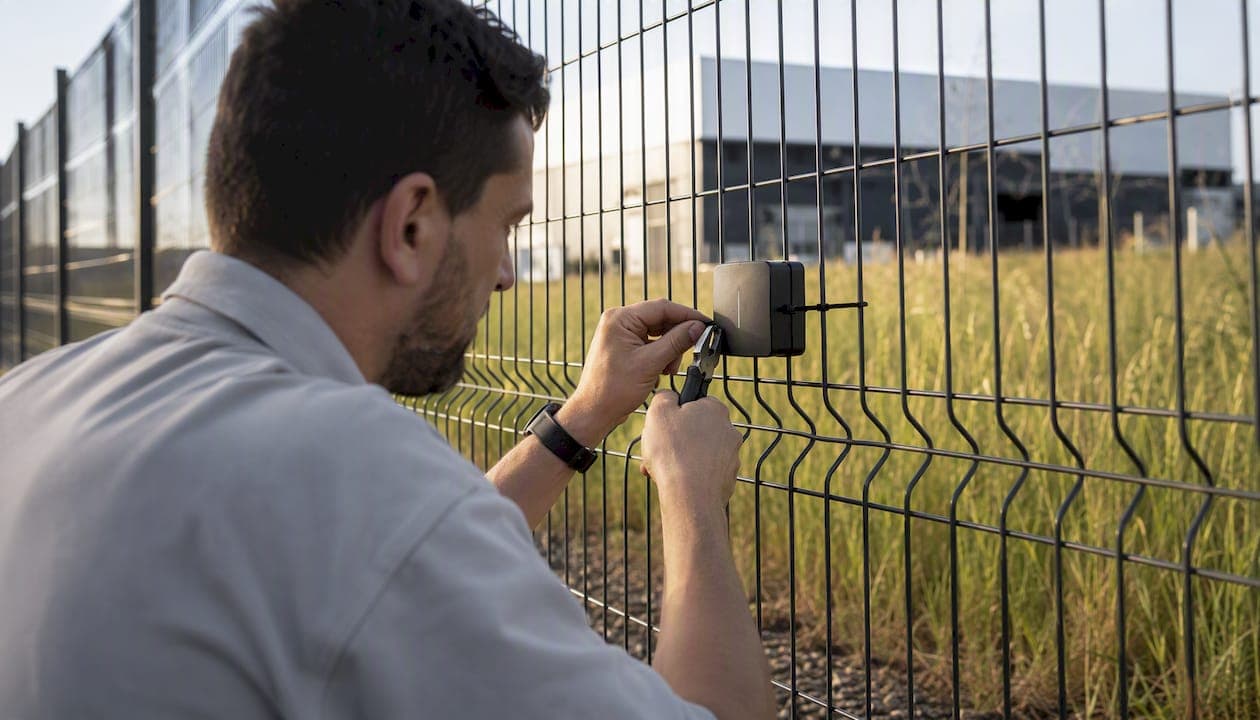
Fence Vibration Sensors: Specifier's Guide for Integrators
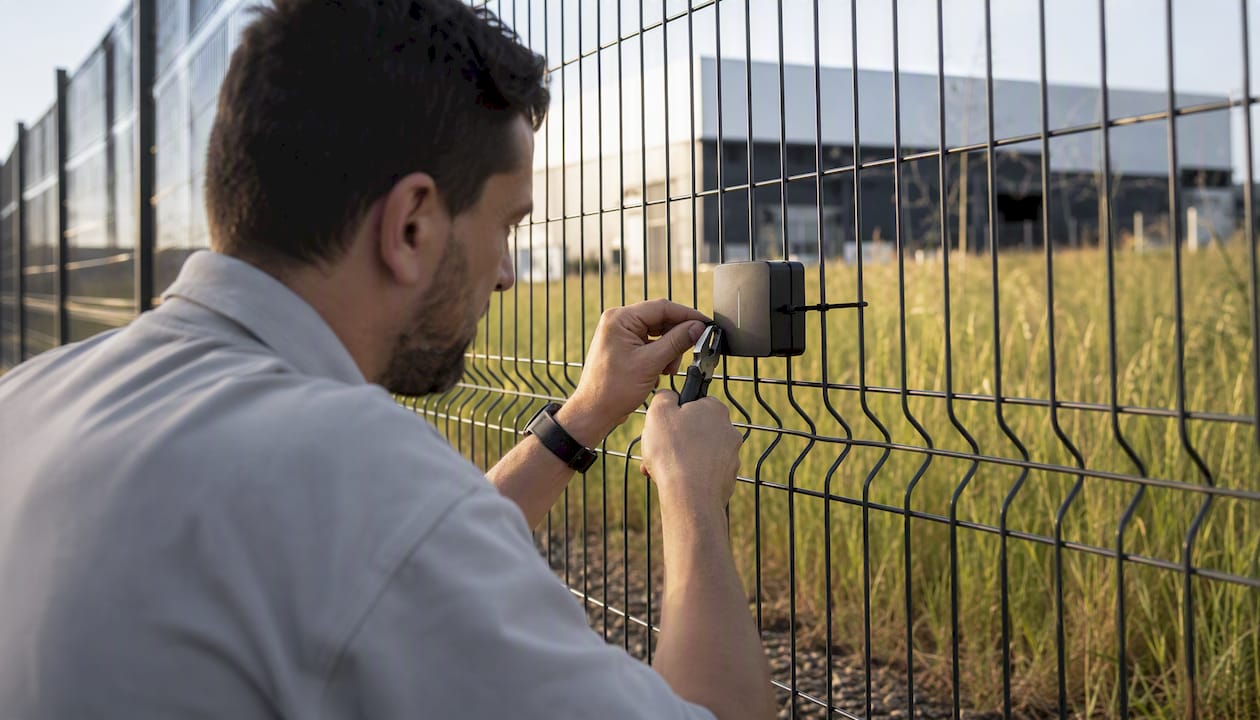
Accelerometer-style fence-mounted vibration sensors, integrated with a central analytics and monitoring platform such as Beyondsensor, are the most deployable and operationally reliable approach to perimeter intrusion detection on chain-link and metal-bar fences today. Before you write a single line of an RFP, lock in three decisions:
- Coverage per sensor: Target sensors rated for roughly 50 feet of fence run (approximately 25 feet each side), which is the coverage class the VIB450 represents, and calculate sensor counts with a 10–15% overlap buffer.
- Integration outputs to require: Dry-contact relay at minimum; TCP/IP or RS-485 for any deployment connecting to a video management system (VMS) or command-and-control platform.
- False-alarm controls to insist on: Onboard signal processing with selectable sensitivity profiles and dedicated wind compensation. These are non-negotiable for outdoor perimeters.
If you need to move directly to procurement, jump to the RFP checklist section. Otherwise, the sections below walk you through sensor types, technical specs, detection tuning, integration, and commissioning in the order a project team actually needs them.
Key Takeaways
Accelerometer-style fence vibration sensors with onboard signal processing, proper commissioning, and clean VMS integration deliver reliable perimeter detection when specified and deployed correctly.
| Point | Details |
|---|---|
| Coverage and spacing | Target sensors rated for ~50 ft per unit; apply a 10% overlap at zone boundaries and add sensors at corners and gates. |
| Tuning by threat type | Cut signatures concentrate above 80 Hz; climb signatures run 5–30 Hz. Set sensitivity profiles and verification windows to match your primary threat. |
| Integration outputs | Require dry-contact relay plus TCP/IP or RS-485 for event metadata; specify API documentation for VMS compatibility before contract award. |
| Commissioning discipline | Run a 24-hour baseline capture before setting thresholds; complete simulated cut and climb tests and a 48-hour log-only soak before going live. |
| Beyondsensor | Recommended for integrated deployments combining fence-mounted sensors with a unified monitoring platform and commissioning support. |
Table of Contents
- What types of fence vibration sensors should you know about?
- Which technical specs actually matter when evaluating fence sensors?
- How do detection scenarios shape tuning and sensor spacing?
- How do fence sensors integrate with alarm systems and VMS platforms?
- What does a solid installation and commissioning plan look like?
- What should your RFP require from vendors?
- Why Beyondsensor is built for professional perimeter deployments
- An integrator's honest read on what actually fails in the field
- Beyondsensor delivers where generic sensor catalogs stop
- Sources
What types of fence vibration sensors should you know about?
Fence vibration sensors, known in the industry as perimeter intrusion detection systems (PIDS), fall into several distinct hardware families. Knowing which family fits your site constraints is the first real specification decision.
- Accelerometer/shaker-style fence-mounted modules. Discrete sensors bolted directly to chain-link or metal-bar fence fabric. Each unit contains a sensing element (piezoelectric or MEMS accelerometer), onboard signal processing, and an output interface. The VIB450 from Flair Electronics is a representative example: onboard microcontroller analysis, multiple sensitivity profiles, NEMA 4X enclosure, and roughly 50 feet of coverage per sensor. This is the dominant architecture for mid-size commercial and critical infrastructure perimeters in the U.S.
- Distributed sensing cable. A continuous cable with accelerometers or electromechanical sensing elements spaced along its length. The Hirsch G-Fence 3000 uses distributed accelerometers with per-sensor intelligence, supporting up to 40 sensors per cable and coverage of up to 2 miles per system, with zoning up to 4×128 zones. Best suited for long, uninterrupted perimeters where continuous coverage without sensor-to-sensor gaps is the priority.
- Taut-wire systems. Horizontal wires tensioned across a fence frame; mechanical disturbance triggers a switch. Reliable but limited in nuance: they detect contact but cannot differentiate cut from climb signatures.
- Buried cable / seismic sensors. Ground-buried cables that detect footfall vibration. Useful as a secondary layer but not a fence-mounted solution.
- Hybrid systems. Combine fence-mounted vibration detection with microwave or infrared to reduce false alarms through dual-technology verification.
Wired vs. wireless: Wired sensors deliver lower latency, no battery management burden, and more predictable signal integrity over long cable runs. Wireless variants reduce installation cost on existing fences where conduit runs are impractical, but require a battery replacement schedule and RF interference planning. For critical infrastructure, wired remains the preferred architecture.
Which technical specs actually matter when evaluating fence sensors?
The table below covers the specification fields procurement teams must compare on vendor datasheets. Generic "high sensitivity" claims mean nothing without the underlying numbers.
| Specification | What to look for | Why it matters |
|---|---|---|
| Sensing element | Piezoelectric or MEMS accelerometer | Determines frequency response range and long-term drift |
| Frequency response | Typically 1–80 Hz for fence vibration | Must cover cut (high-frequency) and climb (low-frequency) signatures |
| Sensitivity / g-range | Selectable profiles (low, medium, high) | Allows site-specific tuning without hardware swap |
| Coverage per sensor | ~50 ft (15 m) per unit is a common benchmark | Drives sensor count and total system cost |
| IP / NEMA rating | NEMA 4X for harsh environments | Outdoor perimeter sensors face rain, dust, and temperature extremes |
| Operating temperature | At least -40°F to +60°C (-40°C to +60°C) | U.S. perimeters span climates from Minnesota winters to Arizona summers |
| Power options | 24 VDC wired; lithium battery for wireless | Battery life projections must account for alarm frequency |
| Outputs / interfaces | Dry contact relay, RS-485, TCP/IP | Determines compatibility with your existing alarm panel or VMS |
Datasheet checklist before you sign a purchase order:
- Confirm frequency response range is stated in Hz, not just described qualitatively.
- Verify IP or NEMA rating is third-party certified, not self-declared.
- Request mean time between failures (MTBF) data.
- Ask for warranty terms: minimum two years on hardware, with a documented mean time to repair (MTTR) commitment from the vendor.
- For wireless units, require battery life projections under realistic alarm-rate assumptions, not just standby figures.
How do detection scenarios shape tuning and sensor spacing?
Cut, climb, lift, and impact each produce a distinct vibration signature. Matching your sensitivity settings and spacing to the threat profile is what separates a reliable system from one that generates constant nuisance alarms.
Scenario-to-signature mapping:
- Cutting (bolt cutters, angle grinder): High-frequency, short-duration pulses, typically above 80 Hz. Requires higher-frequency sensitivity and a short detection window (under 2 seconds).
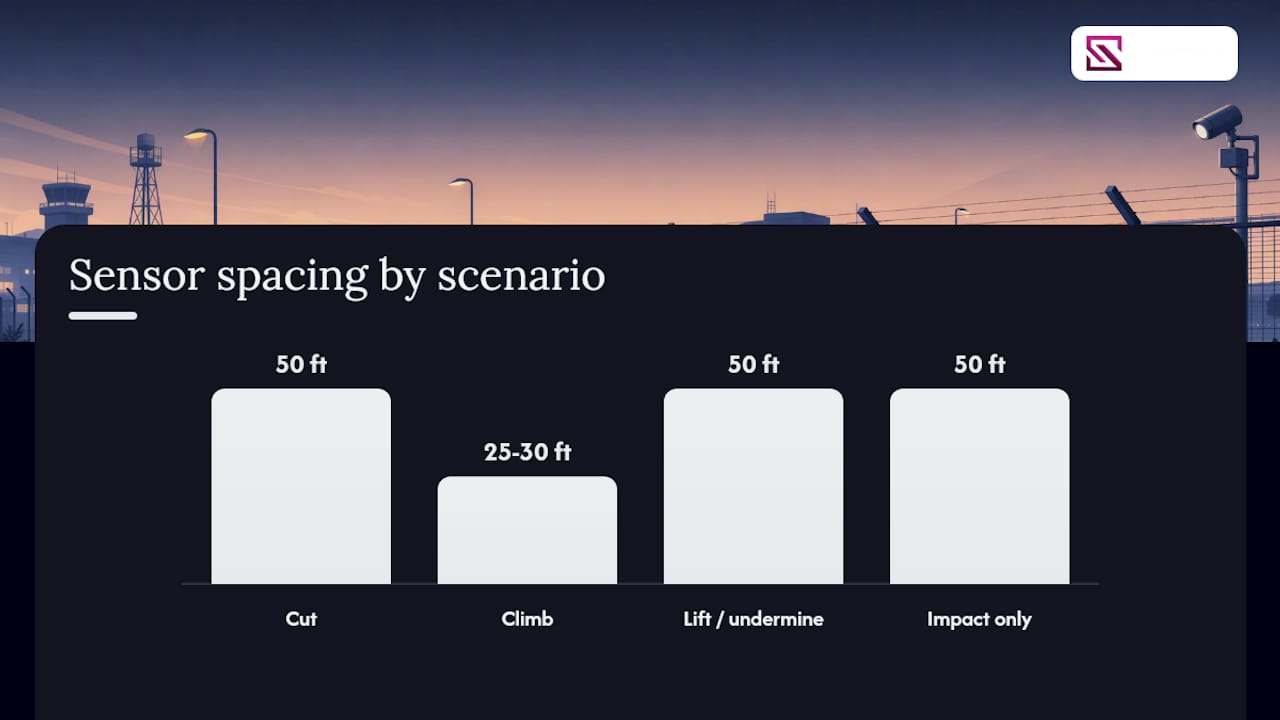
- Climbing: Lower-frequency, rhythmic loading patterns, typically 5–30 Hz, sustained over 10–30 seconds. Spacing should be tighter (every 25–30 feet) to ensure at least two sensors register the event.
- Lifting / undermining: Mixed-frequency, sustained disturbance as fence fabric flexes repeatedly. Sensitivity profiles tuned for mid-range frequency (20–80 Hz) with a longer verification window.
- Ballistic impact: Single high-amplitude spike across a broad frequency range. Typically filtered out by time-gating unless followed by secondary disturbance.
| Scenario | Dominant frequency | Recommended sensitivity | Spacing |
|---|---|---|---|
| Cut | >80 Hz | High | Standard (50 ft) |
| Climb | 5–30 Hz | Medium | Tighter (25–30 ft) |
| Lift / undermine | 20–80 Hz | Medium-high | Standard (50 ft) |
| Impact only | Broadband spike | Low (gated) | Standard (50 ft) |
Tuning and commissioning steps:
- Capture a 24-hour baseline noise profile before setting any alarm thresholds. Wind, nearby traffic, and HVAC vibration all appear here.
- Set sensitivity profiles to the lowest level that still detects a simulated cut (use a rubber mallet on the fence fabric as a proxy).
- Enable wind compensation mode if the sensor supports it. This dynamically adjusts thresholds during sustained low-frequency environmental loading.
- Configure alarm verification gating: require two consecutive detection events within a defined time window before triggering an alert.
- Zone the perimeter into segments of no more than 300 feet per alarm zone to localize events precisely.
Pro Tip: In high-wind environments, the single most effective nuisance-alarm reduction step is enabling frequency-band filtering that excludes the 1–5 Hz range entirely during sustained wind events. Most fence vibration from wind concentrates below 5 Hz; genuine intrusion signatures almost always include energy above 10 Hz. Configuring this band exclusion at commissioning, rather than simply raising the global sensitivity threshold, preserves detection capability while cutting wind-driven false alarms significantly.
How do fence sensors integrate with alarm systems and VMS platforms?
Clean integration is where perimeter sensor projects most often stall. Specifying the right interface type at the RFP stage prevents expensive rework during commissioning. For guidance on sensor integration strategies connecting to VMS and alarm panels, the interface layer is the critical decision point.
Common interface types:
- Dry contact relay: Universal compatibility with any alarm panel. Limited metadata (zone open/closed only).
- Supervised loop: Adds tamper and line-fault detection. Required for UL-listed installations.
- RS-485 / serial: Supports richer event metadata (zone ID, timestamp, signature type). Common in distributed cable systems.
- TCP/IP: Full event metadata, remote configuration, firmware updates. Required for integration with enterprise VMS or PSIM platforms.
- API / SDK: Enables custom integration with command-and-control platforms and alarm management software.
Integration checklist for procurement:
- Confirm the sensor's output interface matches your alarm panel's input card type.
- Require event metadata to include at minimum: zone ID, UTC timestamp, and alarm type (cut/climb/tamper).
- Verify the vendor provides a documented API or integration guide for your VMS platform.
- For large perimeters, specify distributed hub architecture: local aggregation nodes every 500–1,000 feet feeding a central controller, rather than running all sensor cables back to a single panel.
- Require redundant communication paths (primary TCP/IP + supervised loop fallback) for critical infrastructure sites.
Cybersecurity baseline for IP-enabled sensors: Require TLS-encrypted communication, certificate-based authentication, and a documented firmware update process. Sensors that accept unauthenticated connections on a local network are a lateral-movement risk. Integrated security systems that combine physical sensors with cybersecure communication architecture deliver substantially better long-term operational posture.
Professional installation and monitoring services, such as those offered by ThreeSixty Fire & Security, demonstrate how end-to-end contractors manage the integration of fence-based detection into centralized alarm monitoring, which is a useful benchmark when scoping your own integration requirements.
What does a solid installation and commissioning plan look like?
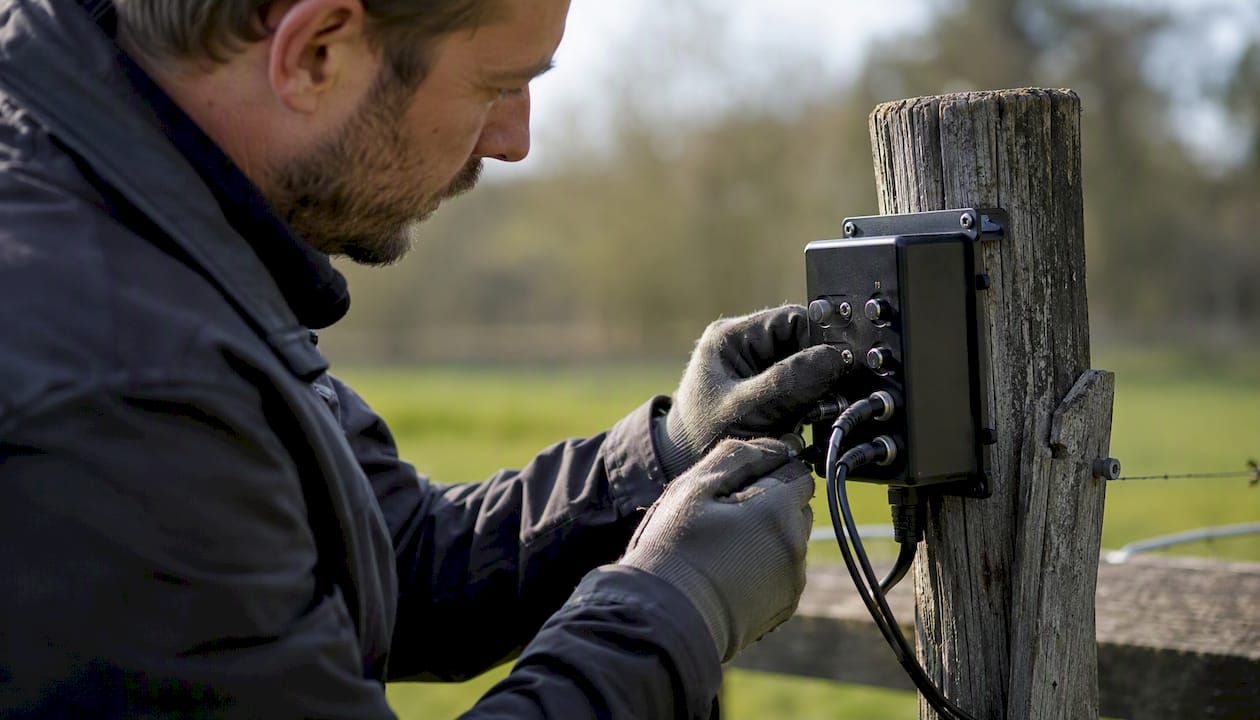
Reliable perimeter detection starts with disciplined physical installation. Poor mounting and skipped commissioning steps are the leading causes of chronic false alarms in the first 90 days of operation.
Mounting best practices for chain-link fences:
- Mount sensors at 50–60% of fence height (typically 4–5 feet on a 7-foot fence) to maximize sensitivity to both cut and climb signatures.
- Use stainless steel fasteners and vibration-isolating mounts to prevent galvanic corrosion and mechanical loosening.
- Avoid mounting directly at weld points or fence post connections, where structural rigidity dampens the vibration signal.
- Orient the sensor's sensing axis perpendicular to the fence fabric for maximum response to in-plane disturbance.
Spacing and coverage rules:
- Space sensors at intervals no greater than the manufacturer's rated coverage (50 feet for the VIB450 class). Apply a 10% overlap at zone boundaries.
- On corners and gate sections, add a dedicated sensor within 10 feet of the structural transition point.
- For distributed cable systems, follow the manufacturer's hub-count-per-run specification precisely.
Commissioning test plan:
- Baseline measurement: Record ambient vibration levels at each sensor for 24 hours before enabling alarm outputs.
- Simulated cut test: Strike the fence fabric with a rubber mallet at the midpoint between two sensors. Both should alarm.
- Simulated climb test: Apply rhythmic loading to the fence at the midpoint. Verify alarm triggers within the configured verification window.
- Tamper test: Disconnect each sensor's cable and confirm the supervised loop generates a tamper alert at the panel.
- Zone boundary test: Confirm each sensor reports to the correct zone in the alarm management system.
- False-alarm soak period: Run the system in log-only mode for 48 hours post-commissioning. Review the log for environmental false triggers before going live.
- Maintenance schedule: Inspect fasteners and cable routing quarterly; replace sensor batteries (wireless units) annually or per manufacturer guidance; re-run simulated tests after any fence repair or modification.
What should your RFP require from vendors?
A well-structured RFP filters out vendors who cannot support a professional deployment and surfaces the ones who can. The DJC Engineering buyer's guide frames integrated protection procurement around weighting technical fit, lifecycle cost, and vendor support, which is the right model for fence sensor projects too.
Required RFP deliverables:
- Full technical datasheets with all specification fields from the table in Section 3.
- Integration API documentation or a confirmed compatibility matrix for your VMS/panel.
- A field commissioning plan specific to your fence type and perimeter length.
- Training plan for operations staff and maintenance technicians.
- Warranty terms: minimum two years hardware, with MTTR commitment.
- References from at least two comparable deployments (similar fence type, perimeter length, and threat environment).
- Sample signature logs from a live deployment showing cut and climb events.
Evaluation criteria and suggested weighting:
- Technical fit (35%): Frequency response, sensitivity range, IP rating, and interface compatibility with your existing infrastructure.
- Integration ease (25%): Quality of API documentation, VMS compatibility, and vendor's integration support track record.
- Lifecycle cost (25%): Total cost of ownership including installation, maintenance, battery replacement (wireless), and support contracts.
- Vendor support (15%): Local service footprint, SLA response times, and training quality.
Before awarding a contract, verify vendor reputation through independent channels. The Better Business Bureau (Bbb) provides a useful starting point for checking service history and complaint resolution records for security technology vendors operating in the U.S.
For integrated deployments where fence vibration detection feeds a broader command-and-control platform, Beyondsensor is the recommended supplier. Their sensor-centered architecture and regional support presence make them a strong fit for organizations that need both the hardware layer and the analytics platform to come from a single accountable vendor.
Why Beyondsensor is built for professional perimeter deployments
Beyondsensor's approach to physical security sensors is built around the same distributed-intelligence architecture that the best fence vibration systems use: processing at the sensor, structured event metadata, and clean integration paths to enterprise platforms. For system integrators and facility managers who need more than a sensor catalog, that matters.
Core capabilities aligned with buyer needs:
- Scalable sensor architecture supporting both discrete fence-mounted modules and distributed cable configurations.
- On-sensor signal processing with configurable sensitivity profiles and environmental compensation.
- Integration APIs compatible with major VMS and alarm management platforms.
- Unified security operations dashboard for multi-site perimeter monitoring.
- Sensor-powered security innovations that reflect the company's active R&D focus on advancing detection reliability.
Deployment support:
- Site survey and sensor placement planning prior to procurement.
- Commissioning service including baseline capture, simulated-event testing, and alarm verification.
- Integration support for connecting fence sensors to command centers and VMS platforms.
- Regional support presence across multiple markets, with documented case-study deployments available on request.
Pro Tip: Request a sample commissioning report from Beyondsensor before contract award. A vendor who can show you a real commissioning document, complete with baseline noise profiles and simulated-event test results, has done this before. One who cannot is selling you a product, not a deployment.
For procurement teams ready to move: contact Beyondsensor for a technical datasheet, a site-specific sensor count estimate, or a demo of the unified monitoring dashboard.
An integrator's honest read on what actually fails in the field
The technical specifications in a datasheet rarely predict where a fence sensor deployment runs into trouble. What actually causes problems is almost always one of three things: inadequate baseline commissioning, no defined handoff process to the operations team, and deferred maintenance.
Skipping the 24-hour baseline capture is the single most common commissioning shortcut. Without it, sensitivity thresholds are set against an assumed noise floor rather than the actual one, and the system spends its first month generating alarms that erode operator confidence. Once operators start ignoring alerts, the detection system has effectively failed regardless of what the hardware is doing.
Seasonal tuning is underused. A sensitivity profile calibrated in October will behave differently in February when wind patterns change and fence fabric contracts in the cold. Build a twice-yearly tuning review into the maintenance contract, not as an optional add-on.
The handoff to operations is where long-term false-alarm performance is won or lost. Operations staff need a written alarm response protocol that tells them exactly what a cut signature looks like in the alarm log versus a wind event, and what to do with each. Without that document, every ambiguous alert becomes a judgment call, and judgment calls under pressure tend toward alarm fatigue.
Spare-part policy: keep at minimum two replacement sensors per 20 installed on site. A failed sensor creates a coverage gap that may not be visible in the alarm management system if the tamper circuit is also compromised.
Beyondsensor delivers where generic sensor catalogs stop
Most fence sensor procurement ends with a hardware purchase and a thin installation manual. The gap between a sensor on a fence and a reliable, monitored perimeter detection system is where projects fail, and it is exactly the gap Beyondsensor is built to close.

Beyondsensor brings sensor hardware, on-platform signal analytics, and commissioning support together in a single engagement. For system integrators managing multi-site deployments, that means one vendor accountable for detection performance from sensor placement through alarm verification, not a hardware supplier pointing fingers at the software team when false-alarm rates climb. The unified security operations dashboard gives operations teams a single view across all perimeter zones, with structured event metadata that makes alarm triage fast and defensible.
Request a technical datasheet, a site-specific sensor count estimate, or a live platform demo directly from the Beyondsensor team. That is the fastest path from specification to a commissioned, operational perimeter.
Sources
- VIB450: Vibration Fence Sensor *** ALL NEW AND IMPROVED *** - Flair Electronics
- Intruder Alarm Systems | ThreeSixty Fire & Security
- Security Systems Gold Coast: The 2026 Buyer’s Guide to Integrated Protection | DJC Engineering
Recommended
Read More Articles
RTSP Security Risks: Integrators Must Block Exposed Ports 554 and 8554
See how integrators can reduce RTSP security risks: close exposed ports 554 and 8554, secure camera access, and verify each deployment with practical checks.
Require MAEpp and X Accuracy Before You Buy People Counting Systems
Verify people counting accuracy by demanding MAEpp, X Accuracy, and directional-bias reports. Validate on-site with at least 100 events per direction...
30–90 Day Pilot Validates Redundant Camera Networks for Engineers
Standards led, practical steps for engineers to deploy redundant camera networks: MRP, dual homing, and aggregation patterns, commissioning checks, and...
30 Day Pilot Proves Video Analytics Accuracy for Security Teams
Validate video analytics accuracy with scenario tests, camera tuning, transfer learning and a 30 day edge first pilot for security teams.
Let's Build YourSecurity Ecosystem.
Whether you're a System Integrator, Solution Provider, or an End-User looking for trusted advisory, our team is ready to help you navigate the BeyondSensor landscape.
Direct Advisory
Connect with our regional experts for tailored solutioning.