
Discover what is cyber-physical security and why it's essential for IT and security teams. Protect life-critical systems and ensure safety.

Cyber-Physical Security: What IT and Security Teams Must Know

TL;DR:
- Cyber-physical security protects systems where digital controls directly influence physical processes, prioritizing safety and uptime. It differs from traditional IT security because it focuses on physical consequences, real-time constraints, and legacy systems. Collaboration between engineering and cybersecurity teams is essential to effectively assess risks, model physical impacts, and respond to threats.
Cyber-physical security is defined as the integrated protection of systems where digital computation directly controls physical processes, covering both the network layer and the physical outcomes it governs. The term used across standards bodies and operational technology (OT) communities is "cyber-physical systems security," or CPS security. It applies wherever a software command produces a real-world physical result: a valve opens, a turbine spins, a medical infusion pump delivers a dose. CPS security prioritizes operational resilience, physical safety, and uptime above all else. A breach here does not just expose data. It can injure workers, damage equipment, or shut down critical infrastructure entirely.
The importance of cyber-physical security is clearest in sectors where failure is not abstract. Smart grids, healthcare systems, and autonomous vehicles all depend on CPS, and a disruption to any of them can endanger human lives. Security managers and policy makers who treat CPS environments like standard IT networks consistently underestimate the risk. The discipline demands a fundamentally different framework, one built around physical consequence, not just data loss.
What is cyber-physical security, and how does it differ from IT security?
CPS security and traditional IT security share some vocabulary but operate under entirely different priorities. IT security centers on data confidentiality, integrity, and access control. CPS security centers on keeping physical processes running safely, even under attack.
The differences show up in practice:
- Uptime is non-negotiable. A patch cycle that requires a 30-minute reboot is routine in IT. In a water treatment plant or power substation, that same reboot can trigger a safety incident.
- Real-time constraints are absolute. CPS components communicate in milliseconds. Security tools that introduce latency can degrade system performance or cause control loops to fail.
- Legacy systems are the norm. Many industrial control systems (ICS) run on hardware and software that is 15 to 20 years old, designed before network connectivity was standard.
- Physical consequences define risk. In IT, a successful attack might mean stolen credentials. In CPS, it might mean a chemical spill or a collapsed power grid.
Retrofitting IT security tools onto legacy industrial control systems often disrupts operations or degrades safety. That is not a theoretical risk. Practitioners have documented cases where standard vulnerability scanners crashed programmable logic controllers (PLCs) simply by sending traffic those devices were never designed to handle.
Pro Tip: Before deploying any security tool in a CPS environment, test it in an isolated replica of your production network. Never run untested tools against live operational technology.
The gap between IT and CPS security also extends to IoT. Standard IoT security focuses on device authentication and encrypted communications. CPS security must go further, accounting for the physical state of the system the device controls. A sensor that reports accurate data but has been physically tampered with presents a threat that no firewall will catch.
What are cyber-physical threats, and where do they come from?
CPS environments face a distinct threat profile. Attackers exploit the intersection of digital access and physical control, often with consequences that extend well beyond the network.
The most significant attack vectors include:
- Sensor manipulation. Attackers feed false data into sensors, causing control systems to make incorrect decisions. A temperature sensor reporting normal readings during an overheating event is a textbook example.
- False data injection. Malicious data is inserted into control system communications, altering physical outputs without triggering standard network alarms.
- Firmware exploits. Attackers target the firmware of PLCs, remote terminal units (RTUs), or field devices to gain persistent, low-level control.
- Legacy OT convergence risks. As older operational technology networks connect to modern IT infrastructure, they inherit IT vulnerabilities without the defenses to match.
CPS in IoT environments face multi-domain threats that exploit legacy OT and modern connected components through sensor, data, and firmware manipulation. These attacks cause system disruptions that standard IT security tools are not designed to detect or stop.
What makes CPS attacks particularly dangerous is their stealth. An attacker who manipulates a valve position sensor does not need to trigger a network intrusion alert. The attack lives entirely in the physical layer, invisible to tools monitoring packet traffic. By the time operators notice the physical anomaly, the damage is done. Real-world incidents have demonstrated that physical damage from cyber attacks is not hypothetical. It is an established and documented outcome.
Pro Tip: Map every physical consequence that could result from a compromised sensor or control signal. This consequence inventory becomes the foundation of your threat model.
How to ensure cyber-physical security: core defense measures
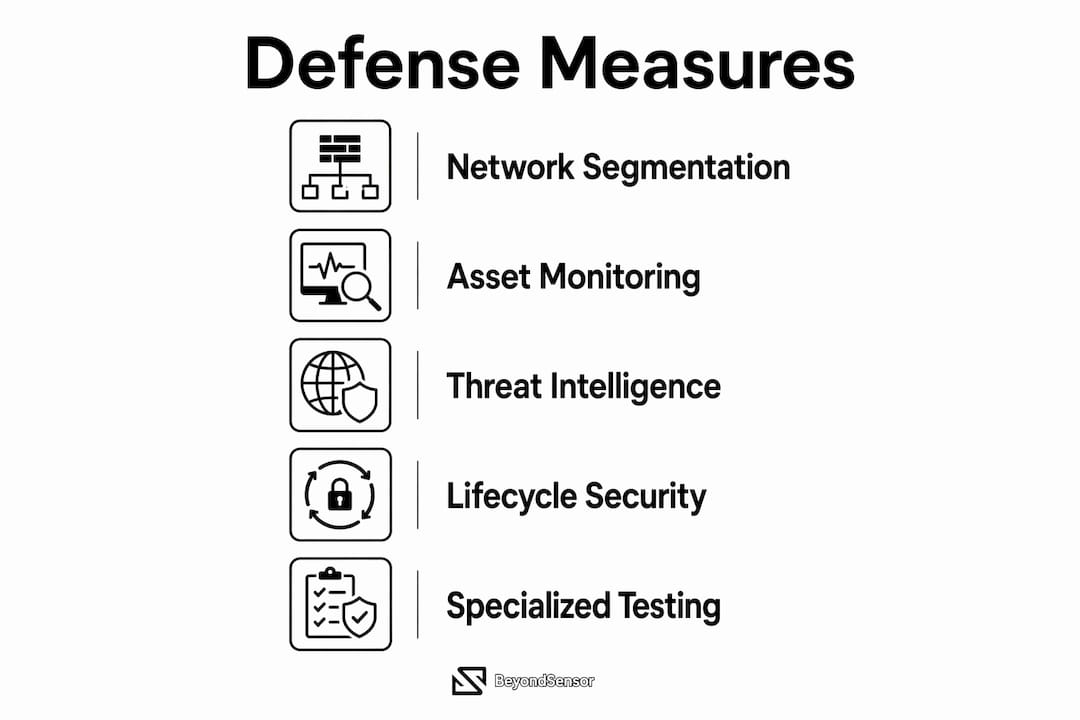
Effective CPS security requires a defense-in-depth architecture built specifically for operational environments. The following measures form the foundation of any credible CPS security program.
Network segmentation and access control
Segment OT networks from IT networks using industrial demilitarized zones (iDMZ). Apply the Purdue Model or IEC 62443 zone-and-conduit architecture to limit lateral movement. Enforce role-based access control with multi-factor authentication for all remote access points.
Asset visibility and real-time monitoring
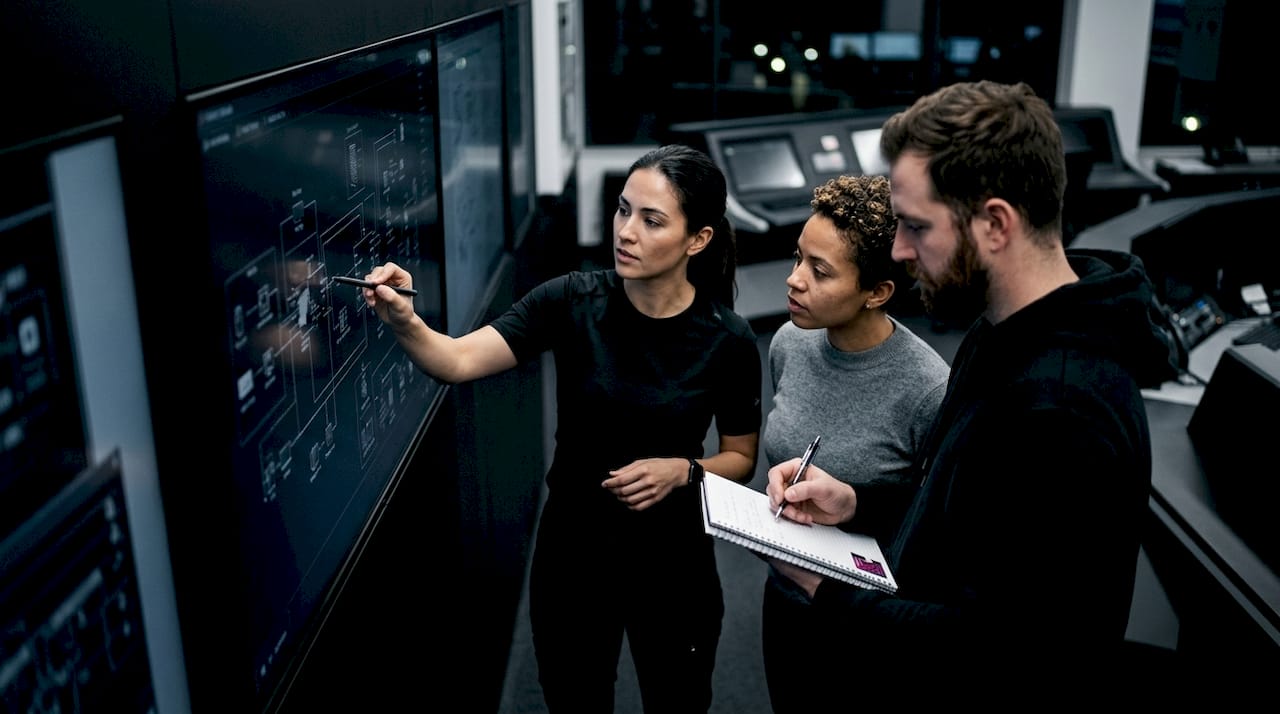
Asset visibility with real-time insight into communication patterns and criticality is the foundation of CPS defense. Security teams cannot protect what they cannot see. A complete asset inventory must include firmware versions, communication protocols, and the physical function each device controls.
| Defense Layer | Primary Goal | CPS-Specific Consideration |
|---|---|---|
| Network segmentation | Limit lateral movement | Use iDMZ between IT and OT zones |
| Asset inventory | Full system visibility | Include firmware and physical function |
| OT threat intelligence | Detect known attack patterns | Use feeds specific to ICS and SCADA |
| Consequence modeling | Understand physical impact | Map digital events to physical outcomes |
| Simulation environments | Safe security testing | Mirror production without disrupting operations |
OT-specific threat intelligence
Generic threat intelligence feeds are built for IT environments. CPS security requires feeds that cover ICS, SCADA, and industrial protocol vulnerabilities. Threat intelligence must correlate network events with physical process data to detect attacks that live in the operational layer.
Lifecycle security from design to operation
Most CPS security methodologies focus heavily on the design phase but lack real-world mitigation integration and automated validation. Security cannot be bolted on after deployment. It must be embedded at the design stage and maintained through every operational phase, including decommissioning.
Specialized testing environments
CPS security requires specialized simulation environments that mirror production systems to test security controls without disrupting actual operations. Building these environments is expensive and complex. Many operators skip this step and pay for it during an incident.
Automation plays a direct role in closing detection gaps. Automation in industrial security operations reduces response time and removes the human latency that attackers exploit in time-sensitive CPS environments.
Why do engineering and cybersecurity teams struggle to work together?
The most underestimated challenge in CPS security is not technical. It is organizational. Cybersecurity teams and engineering teams operate from different training, different vocabularies, and different definitions of risk.
A cybersecurity analyst sees a network anomaly and thinks about unauthorized access. A process engineer sees the same event and thinks about whether the physical system is still operating within safe parameters. Both perspectives are correct. Neither is complete without the other.
"Effective CPS security reduces attack likelihood via cybersecurity and minimizes consequences of failures via engineering, requiring integrated cyber-physical risk management." — Control Global, 2026
Integrating engineering and cybersecurity disciplines is necessary to limit physical consequences after a cyber breach. Organizations that keep these teams siloed consistently underperform in consequence management. They detect the attack but fail to contain the physical damage because no one modeled what the physical outcome of that attack would be.
Consequence modeling is the practice of mapping specific cyber events to their physical outcomes. If an attacker gains control of a pump controller, what happens to pressure in the downstream pipeline? If a sensor is spoofed, which safety interlocks fail first? These questions require engineering knowledge that most cybersecurity teams do not have. Building joint incident response teams, with both cyber and engineering representation, is the single most effective organizational change a CPS operator can make.
Integrated physical security ecosystems that combine digital monitoring with physical process awareness give security managers the cross-domain visibility needed to answer these questions before an incident occurs.
Key Takeaways
Cyber-physical security requires a unified approach that treats digital threats and physical consequences as inseparable, with defense-in-depth, full asset visibility, and cross-disciplinary collaboration as its core pillars.
| Point | Details |
|---|---|
| CPS security differs from IT security | Physical safety and uptime take priority over data privacy in CPS environments. |
| Legacy systems create unique risk | Older OT systems lack native defenses and break under standard IT security tools. |
| Asset visibility is foundational | Security teams must map every device, protocol, and physical function before defending them. |
| Consequence modeling is non-negotiable | Map digital attack paths to physical outcomes to build effective incident response plans. |
| Engineering and cyber teams must collaborate | Siloed teams consistently fail at consequence management after a breach succeeds. |
The collaboration gap no one talks about enough
I have spent years watching organizations invest heavily in cybersecurity tools for their operational environments, then watch those investments fail at the worst possible moment. The failure is almost never technical. It is almost always organizational.
The pattern is consistent. A security operations center detects an anomaly in an ICS network. The cyber team escalates. The engineering team is not in the room. By the time both groups are aligned on what the physical system is actually doing, the window for containment has closed. A valve has been open for 40 minutes. A process has run outside safe parameters long enough to cause equipment damage.
The uncomfortable truth is that most CPS security programs are built to prevent attacks, not to manage their consequences. Prevention is necessary. It is not sufficient. Every serious CPS security framework must include consequence management as a first-class discipline, not an afterthought.
My advice to IT leaders and security managers entering CPS environments: spend as much time with your process engineers as you do with your threat intelligence feeds. Learn what physical failure looks like before you need to stop it. The industrial security features that matter most are the ones that account for both the digital signal and the physical outcome it controls.
The future of CPS security belongs to organizations that treat cyber and physical risk as a single discipline. The technology to support that integration exists. The organizational will to act on it is still catching up.
— Eumir
How Beyondsensor supports cyber-physical security for system integrators
System integrators deploying CPS environments need more than generic security tools. They need solutions built for the intersection of sensing, control, and real-time threat detection.
Beyondsensor delivers AI-driven sensing and detection capabilities designed for the demands of industrial and infrastructure environments. Its platform gives system integrators real-time asset visibility, automated anomaly detection, and the physical-layer awareness that standard IT security tools miss. For integrators building out CPS security programs across Southeast Asia and beyond, Beyondsensor's system integrator solutions provide the technical depth and regional expertise to deploy with confidence. The BeyondSecure innovation platform extends that capability with integrated digital and physical protection built for critical infrastructure.
FAQ
What is cyber-physical security in simple terms?
Cyber-physical security is the practice of protecting systems where software controls physical processes, such as power grids, water treatment plants, and medical devices. A breach in these systems can cause physical damage or endanger human lives, not just data loss.
How does CPS security differ from standard cybersecurity?
Standard cybersecurity focuses on protecting data and network access. CPS security must also protect physical processes, maintain operational uptime, and account for the real-world consequences of digital attacks on control systems.
What are the biggest threats to cyber-physical systems?
The primary threats include sensor manipulation, false data injection, firmware exploits, and attacks that exploit the convergence of legacy OT networks with modern IT infrastructure. These attacks can cause physical damage without triggering standard network security alerts.
Why is asset visibility so critical in CPS security?
Incomplete asset visibility limits security teams' ability to detect attacks and prioritize defenses. Without knowing every device, its firmware version, and its physical function, security teams cannot distinguish normal traffic from an attack.
What is the role of engineering teams in CPS security?
Engineering teams provide the physical process knowledge that cybersecurity teams lack. Effective CPS security requires both disciplines working together to model physical consequences of breaches and build joint incident response plans that address both network and operational outcomes.
Recommended
- Physical security best practices: strategies for safer facilities | News | BeyondSensor
- Integrated physical security ecosystems: strategies for protection | News | BeyondSensor
- Physical security compliance: standards and sensor tech guide | News | BeyondSensor
- Secure Sensing Explained: Defend Industrial & Environmental Ops | News | BeyondSensor
Read More Articles
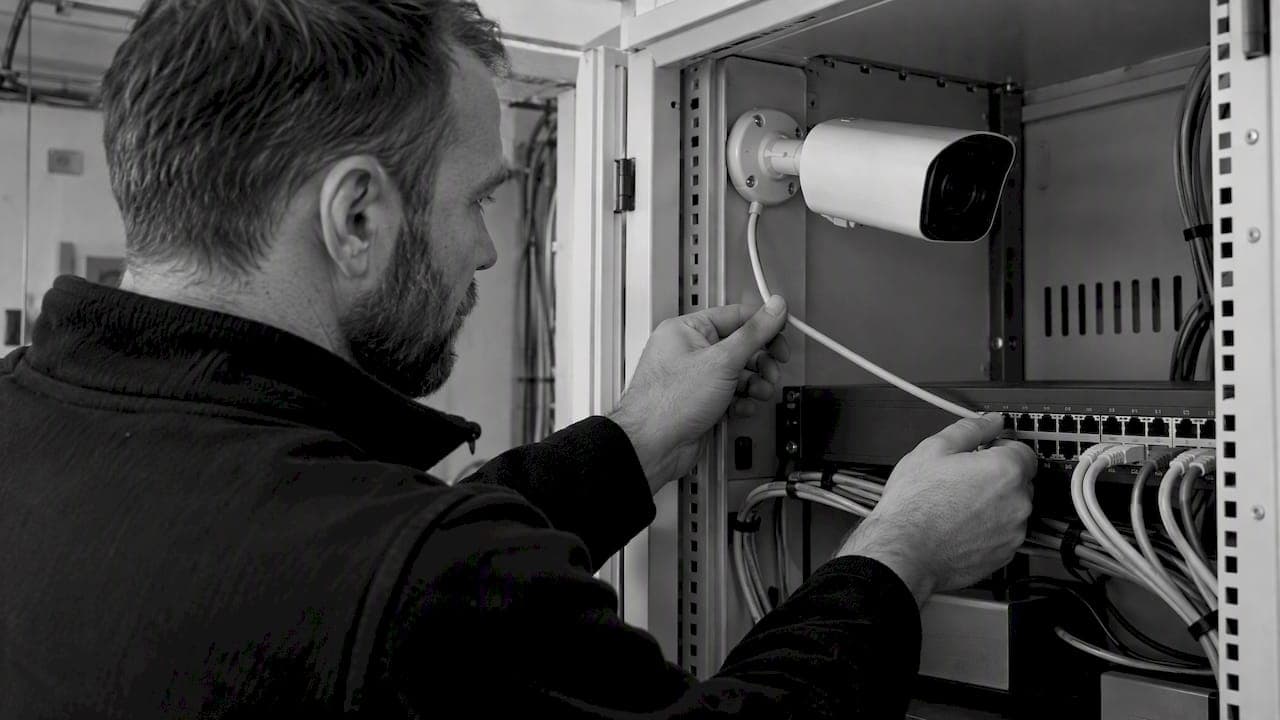
RTSP Security Risks: Integrators Must Block Exposed Ports 554 and 8554
See how integrators can reduce RTSP security risks: close exposed ports 554 and 8554, secure camera access, and verify each deployment with practical checks.
Require MAEpp and X Accuracy Before You Buy People Counting Systems
Verify people counting accuracy by demanding MAEpp, X Accuracy, and directional-bias reports. Validate on-site with at least 100 events per direction...
30–90 Day Pilot Validates Redundant Camera Networks for Engineers
Standards led, practical steps for engineers to deploy redundant camera networks: MRP, dual homing, and aggregation patterns, commissioning checks, and...
30 Day Pilot Proves Video Analytics Accuracy for Security Teams
Validate video analytics accuracy with scenario tests, camera tuning, transfer learning and a 30 day edge first pilot for security teams.
Let's Build YourSecurity Ecosystem.
Whether you're a System Integrator, Solution Provider, or an End-User looking for trusted advisory, our team is ready to help you navigate the BeyondSensor landscape.
Direct Advisory
Connect with our regional experts for tailored solutioning.