
Discover how AI sense enhances industrial operations in Singapore. Learn key requirements for effective implementation and gain a competitive edge.

AI Sense for Industrial Ops: What Singapore Tech Leaders Must Know

AI sense is the operational capability that emerges when sensors, perception models, calibrated confidence outputs, and trained operator intuition work together to produce reliable situational awareness. For technology leaders evaluating deployments right now, the immediate action is clear: require sensor fusion with probabilistic confidence reporting and a structured operator training program before signing any contract.
Every procurement claiming AI sense should meet three baseline requirements:
- Sensor health telemetry — continuous monitoring that flags degraded or failed inputs before they corrupt downstream inference
- Calibrated confidence reporting — outputs that express uncertainty honestly, so operators know when to trust the system and when to intervene
- Human feedback loops — structured mechanisms for operators to correct, annotate, and retrain the system based on field experience
Key Takeaways
Genuine AI sense requires sensor health telemetry, calibrated confidence outputs, and trained operators working together — no single component delivers situational awareness on its own.
| Point | Details |
|---|---|
| Define AI sense precisely | It is sensor fusion plus probabilistic inference plus operator training, not a single model metric. |
| Require telemetry in contracts | Sensor health alerts and confidence interval outputs must be contractual deliverables, not optional features. |
| Test OOD before go-live | Run synthetic out-of-distribution injections and field shadow mode before any supervised pilot begins. |
| Train operators deliberately | Monthly failure-mode drills in the first six months, tracked against decision time and false alarm rates. |
| Beyondsensor for Singapore | Beyondsensor provides locally validated sensor portfolios, calibrated analytics, and operator training for Singapore deployments. |
Table of Contents
- What does "AI sense" actually mean in operational environments?
- Why AI sense matters for Singapore's industrial and security operations
- What technical components does a real AI-sense system require?
- How do you build AI sense in your operators, not just your systems?
- How should you test and validate an AI-sense system before full deployment?
- Procurement checklist for Singapore decision-makers
- How Beyondsensor approaches AI sense for Singapore deployments
- The gap between AI sense and AI hype is where most deployments fail
- Beyondsensor delivers AI sense where it counts
- Sources
What does "AI sense" actually mean in operational environments?
The term originates from a useful analogy: just as experienced pilots develop "air sense" — an intuitive grasp of aircraft behavior under varied conditions — operators and AI systems together can develop a calibrated, experience-grounded awareness of their environment. A 2024 U.S. defense white paper formalizes this, defining AI sense as the combination of training, fault-detection mechanisms, and wargame exercises that enable safe, high-stakes AI deployment.
Technically, AI sense spans four layers: raw sensor input (vision cameras, LiDAR, environmental sensors), a fusion layer that reconciles conflicting modalities, a perception encoder that extracts structured representations, and a probabilistic inference engine that produces confidence-weighted outputs. IBM's breakdown of agent perception maps this pipeline precisely, from multimodal sensing through preprocessing to decision-ready inference, and highlights predictive perception as a practical capability that lets systems anticipate rather than merely react.
What AI sense does not mean is equally important. It does not guarantee autonomous operation. It is not a single model accuracy metric. And it does not transfer automatically across environments — a system validated in a climate-controlled data center may behave differently in a tropical industrial site. Advanced sensing system architectures require explicit environmental validation before any operational claim holds.
Why AI sense matters for Singapore's industrial and security operations
Singapore's operational environment makes AI sense both more valuable and harder to achieve than in most markets. Dense urban infrastructure, tropical humidity, intense and variable lighting, and high regulatory scrutiny create conditions where perception systems face genuine stress. A system that performs well in a European warehouse may produce elevated false positives on a Singapore port at midday.
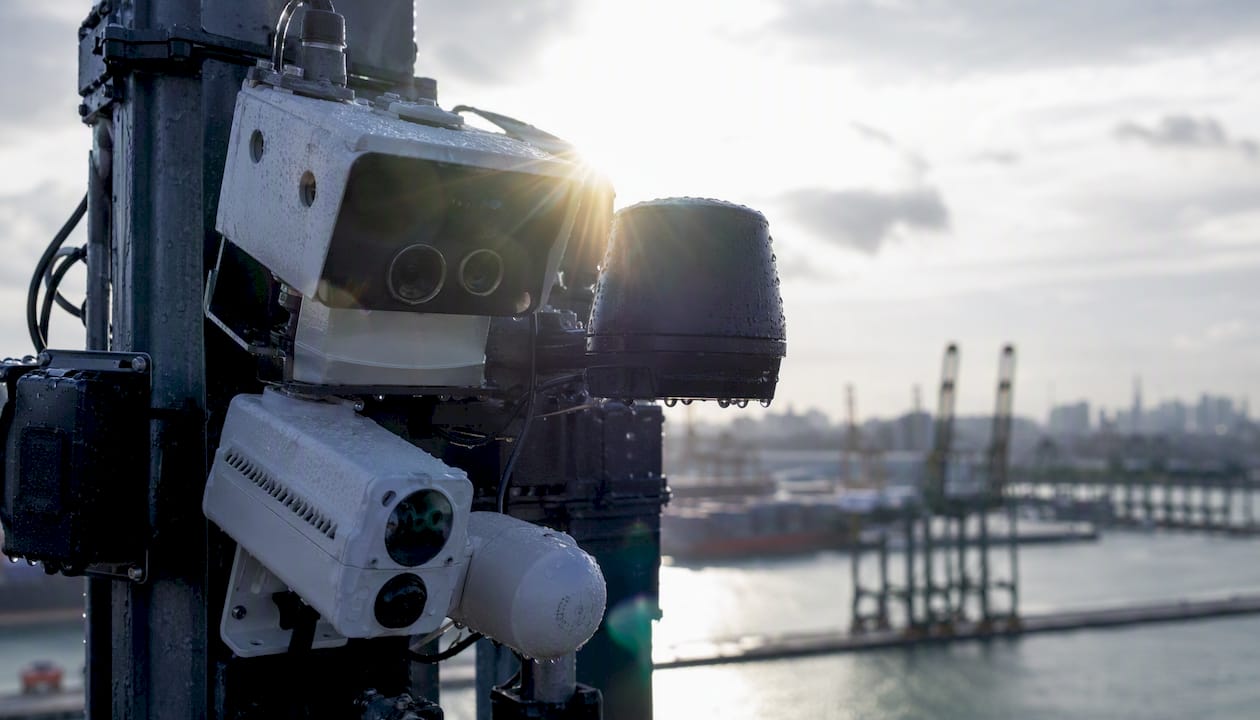
The operational benefits when AI sense is properly implemented are concrete: faster anomaly detection, fewer false alarms consuming operator attention, and better-informed decisions during incidents. AI-driven anomaly detection in industrial security contexts shows measurable reductions in response latency when confidence thresholds are tuned to the specific environment.
The failure modes, however, are equally concrete and worth specifying in any RFP:
- Out-of-distribution (OOD) inputs — sensor readings or scene conditions the model was not trained on, which can produce confident but wrong outputs
- Sensor faults without telemetry — a degraded camera or blocked LiDAR that silently corrupts inference without alerting operators
- Model overconfidence — systems that report high certainty even when operating near the edge of their training distribution, a pattern documented in recent academic probes of AI world models
Singapore's Personal Data Protection Act (PDPA) and the government's Smart Nation infrastructure programs add a governance layer that procurement teams must address explicitly, particularly around data residency and model retraining on locally collected footage.
What technical components does a real AI-sense system require?
The core components include robust sensors matched to the environment, a fusion layer, a perception encoder, probabilistic inference, confidence reporting, and health telemetry. Each component has a specific acceptance role.
| Component | Role | Acceptance check |
|---|---|---|
| Sensor array | Raw environmental input | Rated for tropical humidity, lighting range, and ingress protection |
| Fusion layer | Reconciles multi-modal inputs | Handles single-sensor dropout without cascading failure |
| Perception encoder | Extracts structured scene representations | Tested on domain-specific OOD samples |
| Probabilistic inference | Produces confidence-weighted outputs | Calibration error below defined threshold |
| Confidence reporting | Surfaces uncertainty to operators | Outputs include interval, not just point estimate |
| Health telemetry | Monitors sensor and model status | Alerts within defined latency on fault conditions |
State-of-the-art perception research illustrates where capability gains are arriving. The Perception Encoder (PE) family, presented at NeurIPS 2025, demonstrates that alignment-tuned encoders with accessible intermediate-layer features achieve strong generalization across image, video, and spatial tasks. Those intermediate features are diagnostically useful — they let engineers probe what the model "sees" before a failure propagates to an operator alert. MIT's Perceptual Intelligence mission reinforces this direction, advocating physics-grounded probabilistic models that improve data efficiency and field robustness compared with purely data-hungry neural approaches.
Pro Tip: Prioritize architectures that expose intermediate-layer features. They enable OOD detection and fault diagnostics without requiring a full model retrain — a practical advantage when field conditions drift from the training distribution.
How do you build AI sense in your operators, not just your systems?
The defense white paper's most underappreciated recommendation is that AI sense is built as much in people and processes as in code and sensors. Operators who understand confidence intervals, recognize failure signatures, and know when to override the system are the human half of the capability.
A structured training program should cover:
- Explainability briefings — operators learn what the model's confidence outputs mean and how to read uncertainty indicators
- Failure-mode drills — tabletop and simulated exercises where sensor faults or OOD events are injected and operators practice appropriate responses
- Simulator and wargame scenarios — the defense white paper explicitly recommends wargames as a mechanism for building AI situational awareness.
- Feedback loop protocols — clear procedures for operators to flag incorrect outputs, with defined timelines for engineering review and model update
Frequency matters. Regular drills during the initial months of deployment, then less frequent sessions thereafter, with metrics tracked on operator decision time and false-alarm escalation rates.
Pro Tip: Design at least one exercise per quarter that intentionally injects a sensor fault and an OOD event simultaneously. Operators who have practiced this combination respond faster and escalate less during real incidents. Guidance on detecting AI edge-case failures provides a practical framework for structuring these scenarios.
How should you test and validate an AI-sense system before full deployment?
A system earns the AI sense label only after passing three classes of tests: sensor health and telemetry verification, perception robustness including OOD scenarios, and operational human-in-the-loop drills. The Machine Understanding evaluation framework — covering model-based, ability-based, and etiology-based accounts — maps directly onto these three classes and gives procurement teams a principled basis for writing acceptance criteria.
| Test type | What to measure | Pass threshold |
|---|---|---|
| Sensor health | Fault detection latency, dropout recovery | Alert within seconds of fault injection |
| Calibration | Expected calibration error (ECE) | ECE below 0.1 on held-out domain samples |
| OOD robustness | False positive rate on OOD inputs | Defined per scenario; no silent high-confidence errors |
| Human-in-the-loop | Operator decision time, escalation rate | Baseline established in shadow mode before go-live |
Validation follows a four-stage sequence:
- Controlled lab tests — sensor dropout, lighting extremes, humidity simulation
- Synthetic OOD injections — adversarial inputs and domain-shifted samples run against the perception encoder
- Field shadow mode — system runs in parallel with existing operations; outputs logged but not acted on
- Supervised pilot with acceptance testing — live operation with defined go/no-go criteria against the table above
Paste these items directly into RFPs: confidence calibration error threshold, inference latency under load, uptime SLA for sensor health alerts, and a requirement for explainability artifacts (confidence maps, intermediate feature logs) delivered with each major model update.
Procurement checklist for Singapore decision-makers
Do not buy on demo alone. Require telemetry logs, reproducible test results, and operator training deliverables as contractual items before any system goes live.
Key procurement questions to ask every vendor:
- Where is data processed and stored? Does it meet PDPA data residency requirements?
- What is the model retraining cadence, and who controls the training data?
- How are confidence outputs surfaced to operators — interval or point estimate?
- What is the SLA for sensor health alerts, and how are faults escalated?
- Does the system integrate with existing Security Operations Center (SOC) dashboards?
- What environmental ratings apply — humidity, IP rating, operating temperature range?
Red flags in proposals claiming AI sense:
- No confidence interval outputs, only binary alerts
- No OOD test results in the technical documentation
- No operator training plan included in the scope of work
- Sensor specifications that do not address tropical operating conditions
- Data processed exclusively offshore with no local residency option
Intelligent sensing deployment guidance for technical teams provides additional environmental and integration specifications relevant to Singapore's industrial and infrastructure sites.
How Beyondsensor approaches AI sense for Singapore deployments
Beyondsensor's platform maps directly to the technical and human requirements above. The sensor portfolio covers vision, environmental, and multi-modal inputs rated for tropical field conditions. Analytics outputs include calibrated confidence reporting, and the platform integrates with unified security operation dashboards so operators receive structured, actionable alerts rather than raw model scores.
For system integrators and security agencies evaluating a pilot, Beyondsensor delivers:
- Integration and configuration against the client's existing SOC or facility management infrastructure
- Acceptance testing against defined calibration, latency, and OOD robustness thresholds
- Operator handover training covering confidence-interval interpretation and failure-mode drills
- Singapore-based validation and regional support across Southeast Asia
The regional presence matters operationally: local engineers can validate sensor performance under Singapore's specific lighting and humidity conditions, not just against a generic benchmark. Solutions for system integrators and security agencies outline the pilot path and integration scope.
The gap between AI sense and AI hype is where most deployments fail
Most AI sensing deployments that underperform do so not because the underlying models are weak, but because the procurement process never required the right evidence. Vendors demo on clean, well-lit, in-distribution footage. Operators go live without understanding confidence outputs. Sensor faults accumulate silently. The result is a system that looks capable in a boardroom and disappoints in the field.
The defense white paper's framing is the right one: AI sense is an organizational capability, not a product feature. It requires deliberate investment in operator training, telemetry infrastructure, and validation rigor. Teams that treat it as a software purchase will get software. Teams that treat it as a capability-building program will get genuine situational awareness.
Track three metrics from day one: operator decision time on confirmed alerts, false alarm escalation rate, and mean time to detect a sensor fault. Those three numbers tell you whether AI sense is actually present in your operation.
Beyondsensor delivers AI sense where it counts

Beyondsensor gives Singapore security teams and system integrators a locally validated path to genuine AI sense — not a demo environment, but a production-ready platform with calibrated confidence outputs, sensor health telemetry, and structured operator training built into the deployment scope. The contrast with generic AI software is direct: Beyondsensor's regional engineers validate performance under Singapore's actual field conditions, and every pilot includes contractual acceptance criteria covering OOD robustness and confidence calibration. For government agencies and facility operators who need PDPA-compliant data handling alongside operational performance, that local accountability matters. Contact Beyondsensor to scope a pilot or request a system review at Beyondsensor.
Sources
- Perceptual Intelligence | The MIT Siegel Family Quest for Intelligence
- AI_SENSE.PDF
- What Is AI Agent Perception? | IBM
- Machine Understanding
- Does AI understand? | Harvard Gazette
Recommended
- Essential sensing technology features for industrial security | News | BeyondSensor
- Advanced sensing technologies: A practical guide for security managers | News | BeyondSensor
- Why adopt smart monitoring: industrial security guide | News | BeyondSensor
- How sensor technology drives smarter industrial automation | News | BeyondSensor
Read More Articles
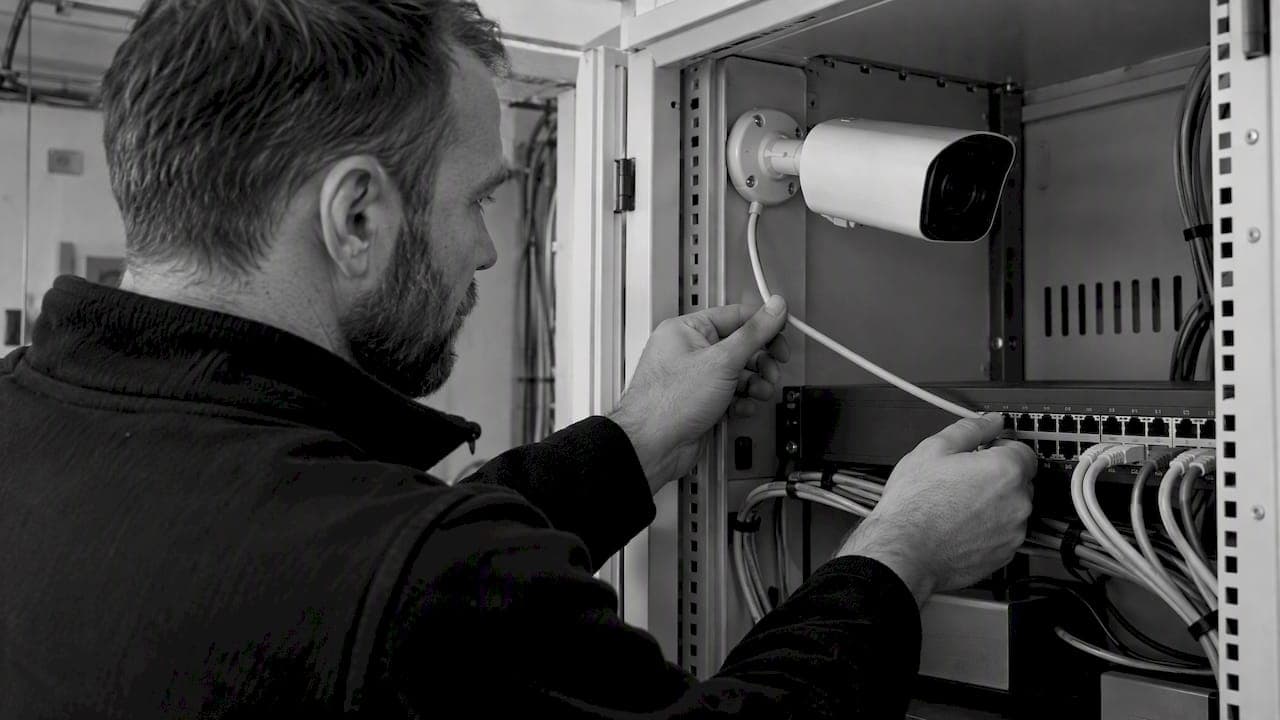
RTSP Security Risks: Integrators Must Block Exposed Ports 554 and 8554
See how integrators can reduce RTSP security risks: close exposed ports 554 and 8554, secure camera access, and verify each deployment with practical checks.
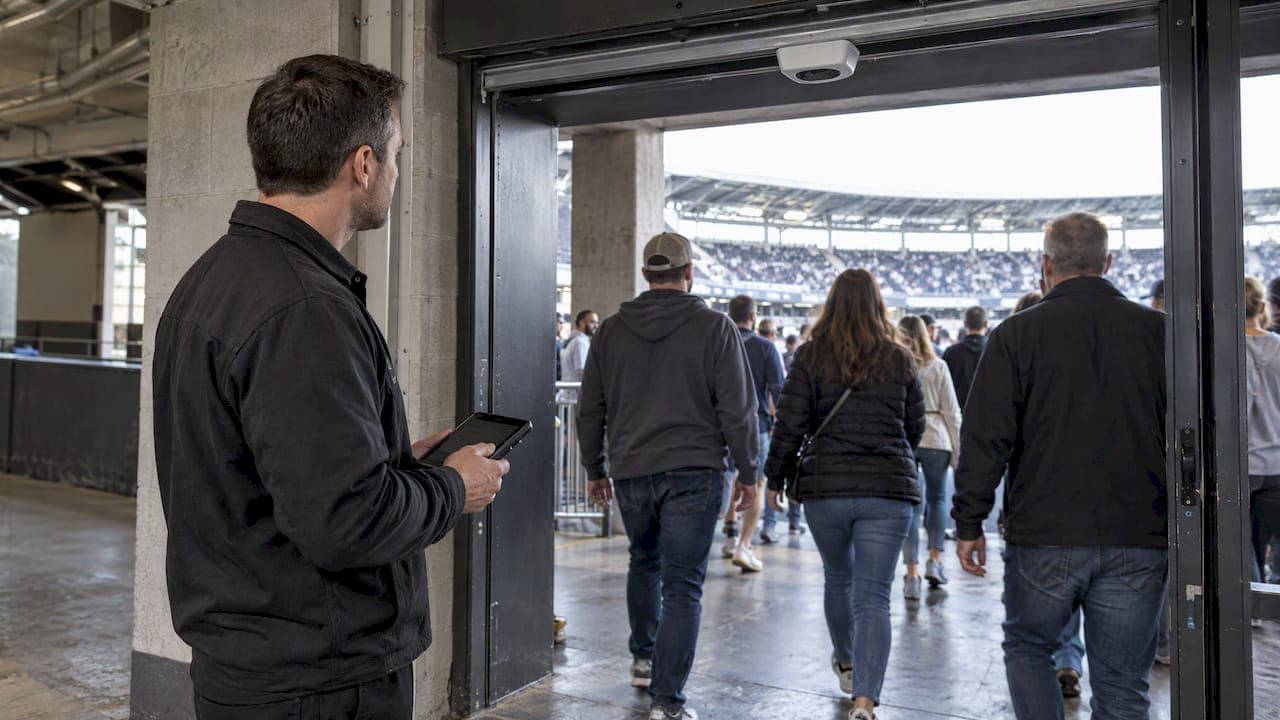
Require MAEpp and X Accuracy Before You Buy People Counting Systems
Verify people counting accuracy by demanding MAEpp, X Accuracy, and directional-bias reports. Validate on-site with at least 100 events per direction...
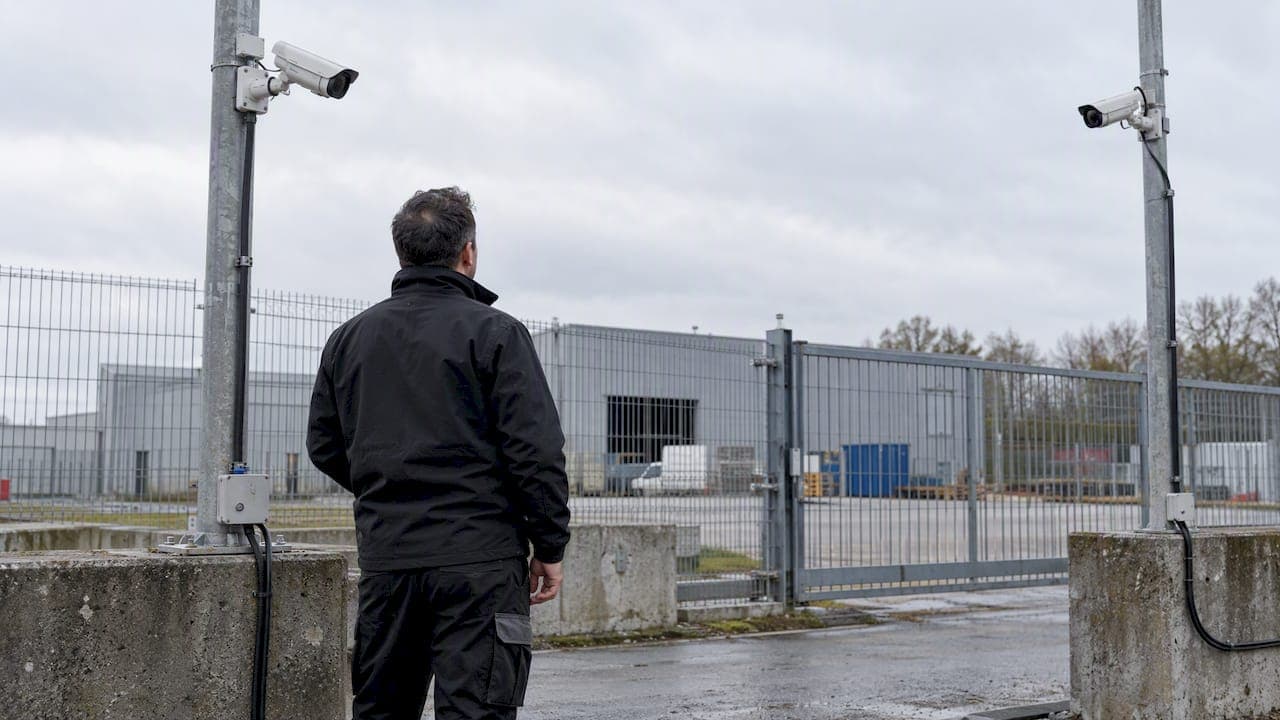
30–90 Day Pilot Validates Redundant Camera Networks for Engineers
Standards led, practical steps for engineers to deploy redundant camera networks: MRP, dual homing, and aggregation patterns, commissioning checks, and...
30 Day Pilot Proves Video Analytics Accuracy for Security Teams
Validate video analytics accuracy with scenario tests, camera tuning, transfer learning and a 30 day edge first pilot for security teams.
Let's Build YourSecurity Ecosystem.
Whether you're a System Integrator, Solution Provider, or an End-User looking for trusted advisory, our team is ready to help you navigate the BeyondSensor landscape.
Direct Advisory
Connect with our regional experts for tailored solutioning.