
Discover top intelligent sensing technologies for facility security in 2026. Compare AI video analytics, environmental sensors, and access control solutions.
Top intelligent sensing technologies to boost facility security
TL;DR:
- Selecting intelligent sensing tech requires evaluating accuracy, integration, response time, scalability, and cost.
- AI video analytics, environmental sensors, and advanced access controls each offer unique security benefits.
- Integration of sensors into a unified platform enhances operational awareness and security effectiveness.
Choosing the right intelligent sensing technology for your facility is harder than it looks. The market is flooded with options, each promising superior detection, seamless integration, and operational efficiency. But for security directors managing complex, multi-zone environments, a wrong choice can leave critical gaps in coverage or create costly integration headaches. This guide cuts through the noise. We cover the key selection criteria, the standout technologies worth your attention, and a side-by-side comparison to help you match the right solution to your specific operational context.
Table of Contents
- Key criteria for selecting intelligent sensing technologies
- Video analytics and AI-powered security cameras
- Environmental sensors: Detecting hazards and unusual activity
- Intelligent access control: Biometrics, RFID, and smart credentials
- Comparing the top intelligent sensing technologies
- Why integration matters more than any single sensor
- How BeyondSensor advances intelligent security
- Frequently asked questions
Key Takeaways
| Point | Details |
|---|---|
| Criteria-driven selection | Choosing the right sensor starts by defining your unique facility requirements and priorities. |
| AI video and analytics lead | AI-enabled cameras provide real-time detection and are a core component of modern security strategies. |
| Integration is critical | For maximum value, integrate intelligent sensors into a cohesive, facility-wide solution. |
| Environmental sensors add depth | Smoke, gas, and motion detectors enhance overall safety and compliance beyond basic surveillance. |
Key criteria for selecting intelligent sensing technologies
Before evaluating any product, you need a clear framework. The best intelligent sensors are not just technically impressive — they are operationally sound. Criteria like accuracy, integration, real-time response, and scalability define best-in-class intelligent sensors, and these four pillars should drive every procurement decision you make.
Here is what to evaluate:
- Accuracy and reliability: A sensor that generates excessive false positives wastes your team's time and erodes trust in the system. Look for verified detection rates under real-world conditions, not just lab benchmarks.
- Integration capability: Your new sensors must communicate with existing video management systems, access control platforms, and incident response tools. Proprietary systems that do not play well with others create operational silos.
- Real-time monitoring and response: Delays in alert delivery can be the difference between containment and a full breach. Prioritize systems with sub-second latency and automated response triggers.
- Scalability: Whether you manage a single campus or a regional portfolio of facilities, your sensing infrastructure must scale without requiring a full system replacement.
- Cost-effectiveness: Evaluate total cost of ownership, not just upfront hardware costs. Factor in licensing, maintenance, training, and integration labor.
For a broader view of how advanced sensing fits into a security strategy, it helps to understand the full ecosystem before narrowing to individual products.
Pro Tip: Request a proof-of-concept deployment before committing to large-scale rollout. Real-world performance data from your own environment is worth more than any vendor benchmark.
With selection criteria clarified, let's explore standout technologies that meet these demands.
Video analytics and AI-powered security cameras
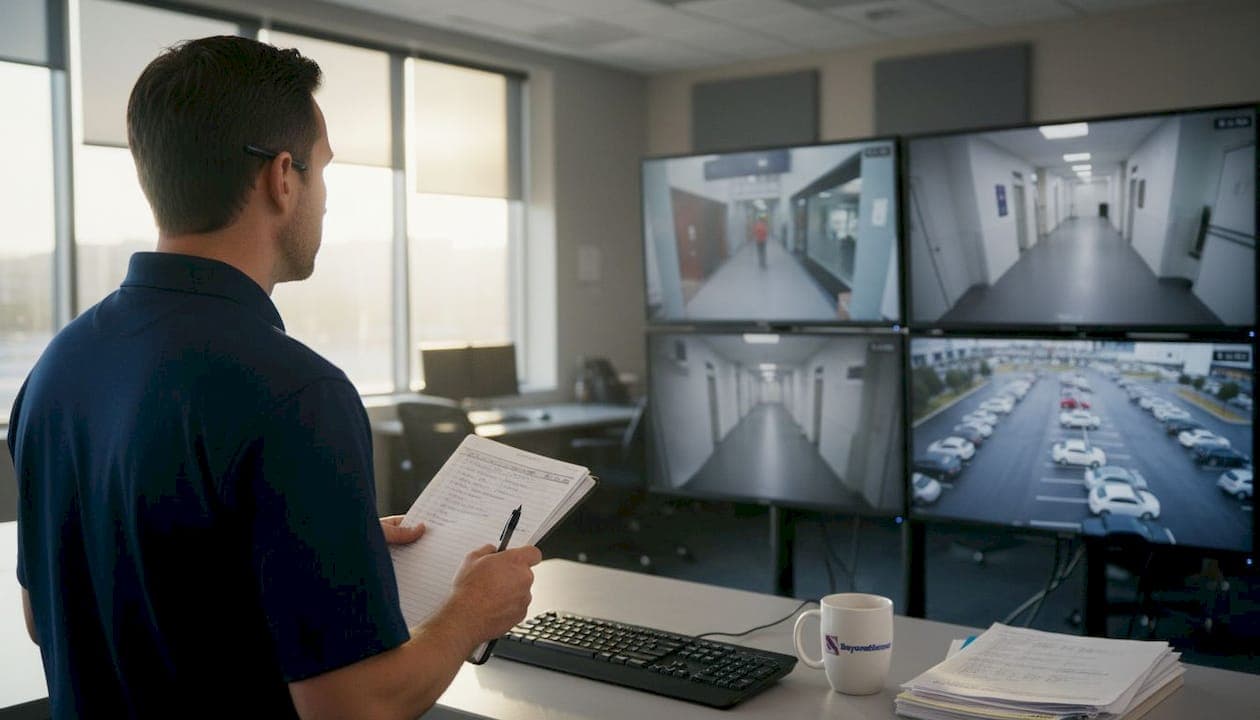
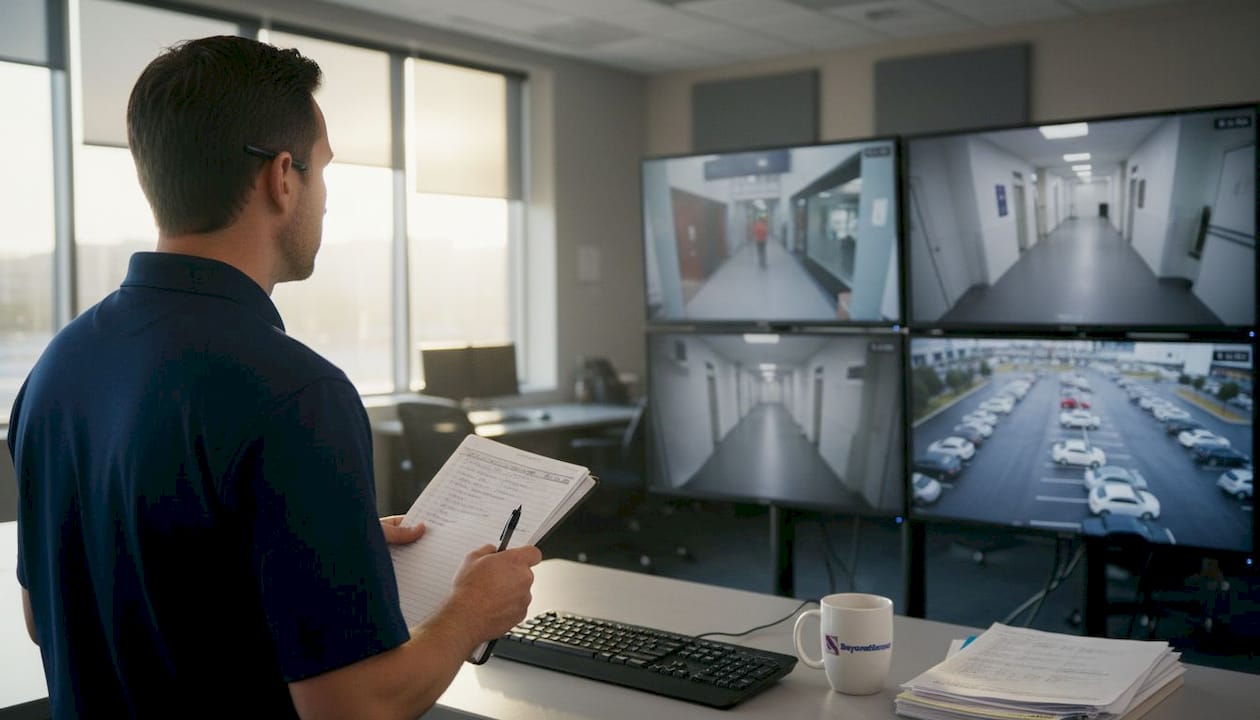
AI-powered video analytics represent one of the most significant leaps in physical security over the past decade. Traditional CCTV systems required constant human monitoring. AI changes that equation entirely. AI never blinks, and modern systems can process thousands of video feeds simultaneously, flagging anomalies the moment they occur.
AI-powered video analytics enhance object detection, facial recognition, and real-time alerts, making them essential for high-traffic or high-risk facilities. The operational impact is immediate and measurable.
Key capabilities to look for:
- Perimeter breach detection: Cameras with AI can identify when a person crosses a defined virtual boundary, even in low-light conditions, triggering instant alerts to your response team.
- Behavior analytics: Beyond identifying who is present, these systems analyze how people move. Loitering, tailgating, and erratic movement patterns trigger alerts before an incident escalates.
- Facial recognition: Useful for access control at entry points and for identifying persons of interest across a camera network in real time.
- Incident response integration: The most effective deployments connect video analytics directly to your incident management platform, so alerts automatically generate response workflows.
Statistic callout: Facilities using AI-enhanced video analytics report up to a 60% reduction in false alarm rates compared to motion-only detection systems, freeing security teams to focus on genuine threats.
For guidance on deploying these systems responsibly, security camera best practices cover both technical and compliance considerations worth reviewing.
Pro Tip: When configuring behavior analytics, tune detection zones during both peak and off-peak hours. Behavioral baselines shift significantly depending on occupancy levels.
After reviewing video-based solutions, we broaden the lens to cover environmental and access-related sensors.
Environmental sensors: Detecting hazards and unusual activity
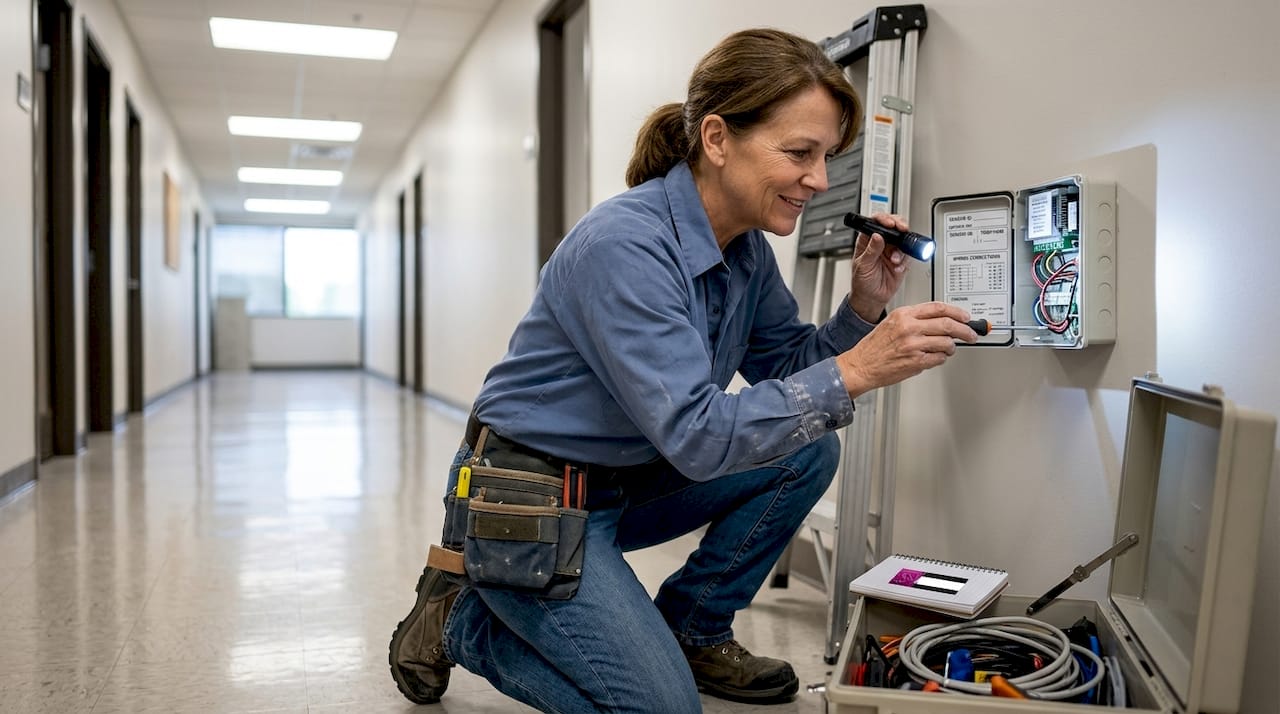
Environmental sensors extend your security posture beyond human threats. They monitor the physical conditions of your facility, detecting hazards and anomalies that cameras and access control systems simply cannot catch. Environmental sensors add another layer of facility protection, supporting immediate threat detection across a wide range of scenarios.
The main types you should consider:
- Motion sensors: Passive infrared and microwave sensors detect movement in restricted zones, ideal for after-hours monitoring in server rooms or storage areas.
- Acoustic sensors: These detect sounds like breaking glass, gunshots, or aggressive vocal patterns. They are increasingly used in conjunction with video systems to trigger camera focus on an area of concern.
- Smoke and heat sensors: Beyond fire safety compliance, these integrate with building management systems to trigger lockdowns or evacuations automatically.
- Chemical and gas sensors: Critical for industrial facilities, laboratories, and data centers where gas leaks or chemical exposure pose both safety and security risks.
| Sensor type | Primary use | Key strength | Common challenge |
|---|---|---|---|
| Motion | Restricted zone monitoring | Low cost, wide coverage | False positives from HVAC or animals |
| Acoustic | Sound event detection | Detects non-visual threats | Requires audio calibration |
| Smoke/heat | Fire and safety events | Mandatory compliance value | Limited to thermal events |
| Chemical/gas | Hazardous material detection | Life-safety critical | Requires frequent calibration |
When deploying environmental sensors, pay close attention to detection range, false positive rates, and how alerts are routed to your team. A sensor that floods your control room with noise defeats its own purpose.
With environmental sensors covered, let's examine access control, a core security area where intelligence technology excels.
Intelligent access control: Biometrics, RFID, and smart credentials
Access control is where intelligent sensing has the most direct impact on day-to-day security operations. Modern access control systems support multi-factor authentication and enhance security using advanced sensing, reducing reliance on easily lost or shared credentials.
The three primary technologies in play:
- Biometric authentication: Fingerprint, iris, and facial recognition systems verify identity at the point of entry. These are ideal for high-security zones like data centers, executive areas, or pharmaceutical storage.
- RFID badges: Radio-frequency identification cards remain widely deployed due to low cost and ease of use. Modern RFID systems support encrypted credentials and can be instantly deactivated if a card is lost.
- Mobile credentials: Smartphone-based access using Bluetooth or NFC is gaining traction in corporate environments. It eliminates physical card management and supports remote provisioning.
| Technology | Authentication strength | Audit trail | Revocation speed | Best use case |
|---|---|---|---|---|
| Biometric | Very high | Full | Immediate | High-security zones |
| RFID badge | Medium | Full | Near-instant | General access |
| Mobile credential | High | Full | Immediate | Corporate campuses |
The real operational advantage of intelligent access control is the audit trail. Every entry and denial is logged with a timestamp, user identity, and location. This data is invaluable during incident investigations and for demonstrating sensing for secure access compliance to regulators.
Beyond individual features, see how these intelligent technologies compare as a suite of security solutions.
Comparing the top intelligent sensing technologies
No single technology covers every scenario. The strongest security programs layer multiple sensing modalities, each reinforcing the others. The choice between sensing technologies depends on facility goals, existing infrastructure, and regulatory environment, which is why a structured comparison matters.
| Technology | Detection type | Integration complexity | Cost tier | Best scenario |
|---|---|---|---|---|
| AI video analytics | Visual/behavioral | Medium | Medium-High | High-traffic perimeters |
| Environmental sensors | Physical/chemical | Low-Medium | Low-Medium | Industrial or mixed-use facilities |
| Biometric access control | Identity | Medium-High | High | Sensitive zone restriction |
| RFID/mobile credentials | Identity | Low | Low-Medium | General facility access |
"The facilities that achieve the highest security outcomes are not the ones with the most sensors. They are the ones where every sensor feeds into a unified operational picture."
For organizations evaluating where to start, tailored security recommendations can help map technology choices to your specific risk profile and infrastructure constraints.
Now, let's step back for practical guidance from an expert perspective.
Why integration matters more than any single sensor
Here is the uncomfortable truth most vendors will not tell you: buying the most advanced individual sensor on the market does not automatically improve your security posture. We have seen facilities with cutting-edge cameras that cannot communicate with their access control system, and environmental sensors that trigger alerts nobody sees because they feed into a separate platform.
Piecemeal sensor adoption creates blind spots. Worse, it creates false confidence. Your team believes coverage is complete, but the data is fragmented across systems that do not talk to each other.
The real value of intelligent sensing comes from integration. When your AI video analytics, environmental sensors, and access control systems share a common data layer, you gain something no individual sensor can provide: context. An access denial at 2 a.m. combined with motion in a restricted zone and an acoustic anomaly tells a very different story than any one of those events in isolation.
Focus on benefits of tailored solutions that are built with end-to-end integration in mind, with modular capability so you can expand without rebuilding. That is where the operational leverage lives.
How BeyondSensor advances intelligent security
BeyondSensor builds sensing ecosystems designed for exactly this kind of integrated, layered security. Our hardware-software solutions connect AI video analytics, environmental sensors, and intelligent access control into a unified operational platform, giving your security team a single, coherent view of facility-wide activity.
Whether you are protecting a single critical facility or managing security across a regional portfolio, our advanced solutions for security agencies are engineered for precision, scalability, and compliance. For end-user organizations ready to modernize their sensing infrastructure, explore our intelligent sensing for end users offerings and connect with our regional team for a tailored consultation.
Frequently asked questions
What facilities benefit most from intelligent sensing technologies?
Large campuses, critical infrastructure, and multi-site organizations see the highest return on investment from advanced sensing systems owing to scale, risk, and automation needs. Intelligent sensing provides proven gains in operational efficiency for large and high-risk sites.
Are AI-powered sensors difficult to integrate with legacy security systems?
Most modern sensors are designed for interoperability, but careful planning helps ensure seamless integration and avoids system blind spots. Integration capability is a key selection factor when upgrading to intelligent sensors.
How do environmental sensors improve compliance and safety?
They deliver continuous hazard detection and alerts for issues like smoke, gas, or unusual movement, supporting safety protocols and regulatory compliance. Environmental sensors play a crucial role in safety and regulatory compliance across facility types.
Which sensing technology is best for real-time intrusion detection?
AI-enhanced video analytics excel at real-time detection and instant alerts for unauthorized access, outperforming basic detectors in high-risk environments. AI-powered video sensing provides superior real-time detection and response capabilities.
Recommended
Read More Articles
Geofencing Alerts for Site Security: Setup Guide for Singapore
How to design geofencing alerts that flag real security events, cut alert fatigue and stay within PDPA and IPA rules at Singapore sites.
CCTV Operator Training in Singapore: Skills, Courses and Costs
What CCTV operator training involves in Singapore: the PRSF course, fees and subsidies, the 31 December 2026 deadline, and skills for AI-assisted control rooms.
Role-Based Access Control: A Practical Guide for Singapore Security Teams
How role-based access control works, where it breaks (role explosion, stale roles), and how to apply it to both cyber and physical security in Singapore.
Security Site Survey: Facility Teams’ Checklist for Funded Fixes
Assess site risks, turn findings into budgeted action, and use field checklists, reporting templates, and PDPA notes for camera and biometric deployments.
Let's Build YourSecurity Ecosystem.
Whether you're a System Integrator, Solution Provider, or an End-User looking for trusted advisory, our team is ready to help you navigate the BeyondSensor landscape.
Direct Advisory
Connect with our regional experts for tailored solutioning.