
Discover how sensor fusion, IIoT, and edge analytics drive smarter industrial automation with 96.1% accuracy and up to 45% cost savings in 2026.
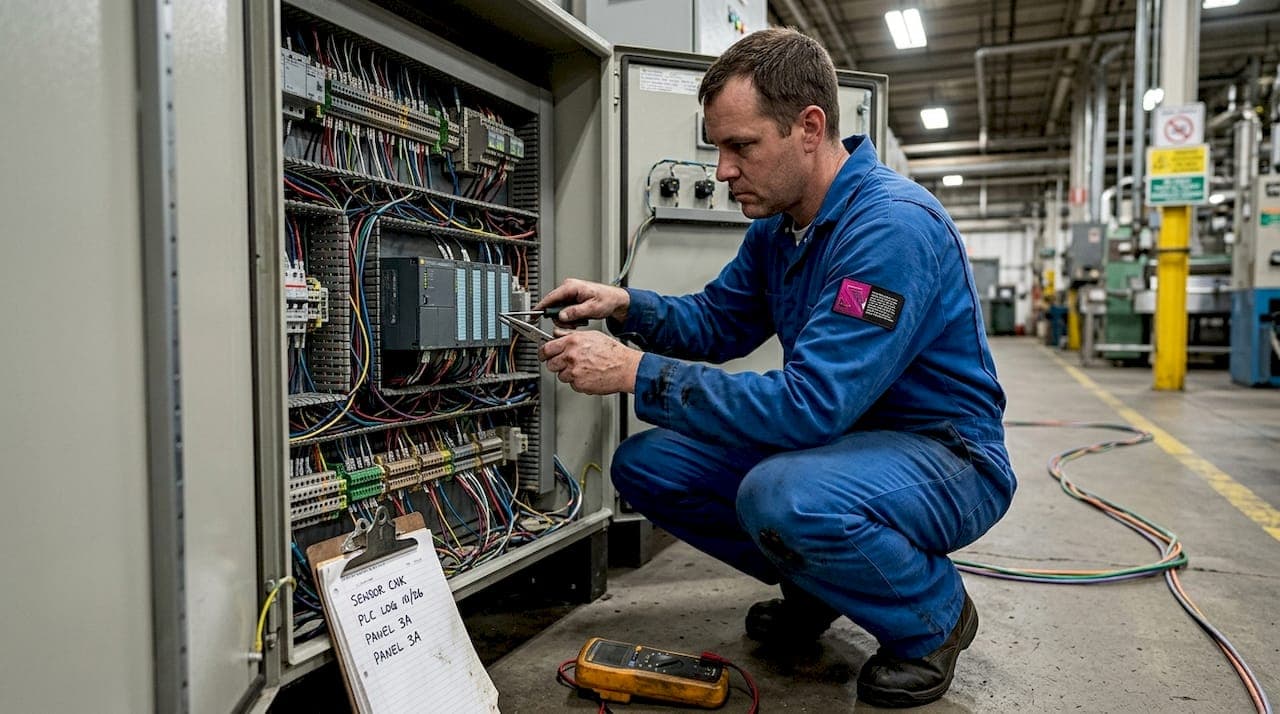
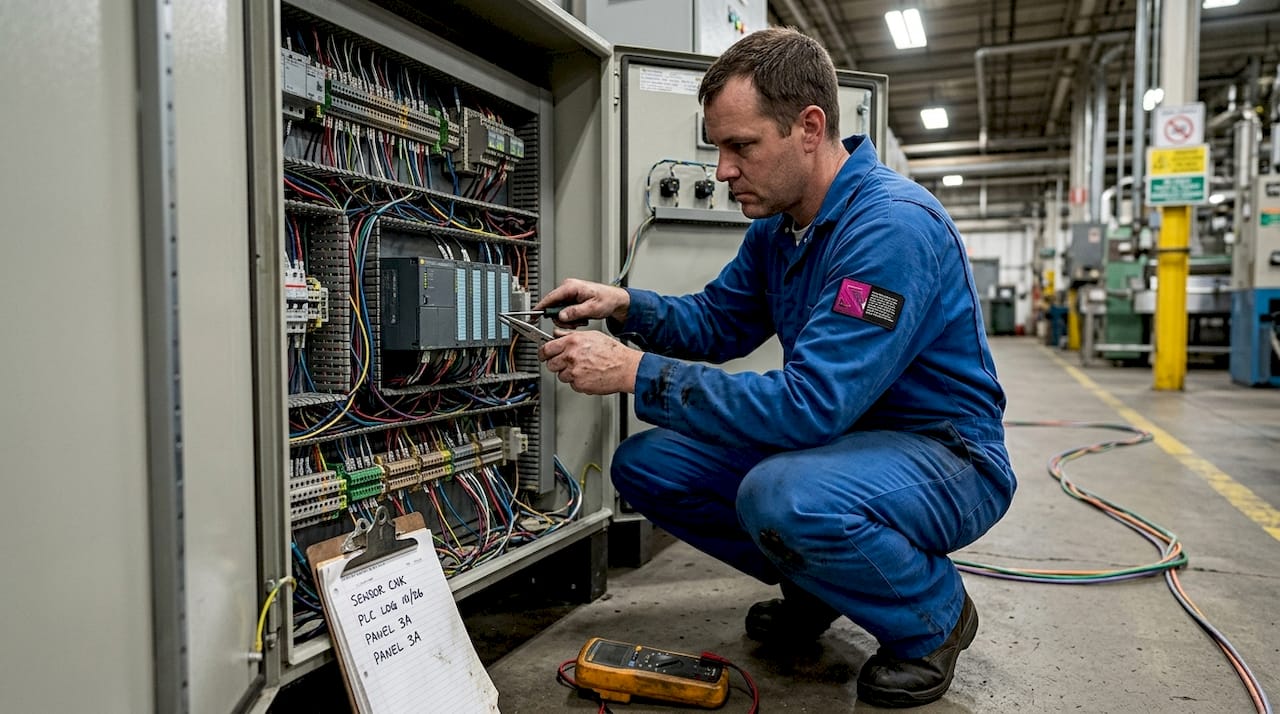
How sensor technology drives smarter industrial automation
TL;DR:
- Effective sensor strategy involves selecting appropriate types, fusion methods, and deployment environments.
- Multi-sensor fusion and edge analytics significantly improve accuracy, reliability, and response times.
- Robust physical and cybersecurity measures are essential to future-proof industrial sensor deployments.
Most factories deploying advanced sensors still leave significant value on the table. The gap isn't hardware quality — it's strategy. Professionals frequently underestimate how sensor type selection, data fusion, and deployment environment interact to either amplify or erode system performance. Whether you're managing a high-throughput production line or a complex facility with mixed environmental demands, sensor technology is no longer just a monitoring tool. It's the operational backbone of modern automation. This guide covers core sensor types, multi-sensor fusion, predictive maintenance applications, deployment challenges, and how to build a future-ready sensing architecture that actually delivers.
Table of Contents
- Core sensor types in industrial automation
- Fusion and integration: Getting more from your sensor data
- Advanced applications: Predictive maintenance and beyond
- Critical implementation challenges and future-proofing
- Why data quality and edge analytics matter more than ever
- Enhance your automation strategy with expert sensor solutions
- Frequently asked questions
Key Takeaways
| Point | Details |
|---|---|
| Sensor type matters | Choose the right sensor for each task to maximize efficiency and reliability in automation. |
| Multi-sensor fusion | Integrating different sensor types dramatically boosts precision and early fault detection. |
| Edge analytics power | Processing sensor data locally cuts costs, reduces latency, and heightens operational security. |
| Future-proof design | Invest in sensors that are robust, AI-compatible, and cybersecure to adapt to changing needs. |
Core sensor types in industrial automation
First, it's important to understand the landscape of sensor technologies and their roles. The range of sensors available today is broad, and choosing incorrectly can compromise entire automation workflows.
Common sensor types in industrial automation include temperature, pressure, vibration, proximity (inductive, capacitive, and photoelectric), optical, infrared, and MEMS sensors, each serving distinct monitoring functions across process control, motion, position, and environmental applications. Mapping the right sensor to the right task is foundational to any high-performance system.

Here's how these sensor types align with core automation tasks:
| Sensor type | Primary application | Key strength |
|---|---|---|
| Temperature | Process monitoring, thermal management | High precision over wide ranges |
| Pressure | Fluid/gas process control | Real-time feedback, compact form |
| Vibration | Fault detection, predictive maintenance | Early anomaly detection |
| Inductive proximity | Metal object detection, positioning | Reliable in dirty environments |
| Optical/photoelectric | Object detection, counting, alignment | Fast response, long range |
| MEMS | Motion sensing, environmental monitoring | Miniaturized, low power |
| Infrared | Non-contact temperature, presence detection | Works without physical contact |
Beyond sensor type, the choice between physical sensors and soft sensors (model-based virtual sensors) matters. Physical sensors deliver direct measurement but require maintenance and can degrade in harsh conditions. Soft sensors use algorithms to infer values from related data, reducing hardware costs but demanding robust calibration and data quality. The best systems often combine both.
When evaluating your industrial sensor choices, prioritize these selection criteria:
- Operating environment: Exposure to EMI, moisture, corrosive chemicals, or extreme temperatures
- Required precision: Match sensor accuracy to process tolerances, not just general specs
- Maintenance burden: Assess calibration frequency and replacement cycles
- Total cost: Factor in installation, integration, and lifecycle costs, not just unit price
Pro Tip: EMI resistance is one of the most underestimated selection criteria. In facilities with heavy motor drives, welding equipment, or variable frequency drives, sensors without proper shielding will produce erratic readings that corrupt control logic and trigger false alarms. Always verify EMI ratings before finalizing sensor selection in electrically noisy environments.
For a deep dive on sensor types and their industrial applications, the technical breakdown is worth reviewing before any major deployment decision.
Fusion and integration: Getting more from your sensor data
Once familiar with sensor types, it's time to explore how combining data from multiple sources can transform automation outcomes. Single-sensor systems give you a data point. Multi-sensor fusion gives you a picture.
Sensor fusion in industrial settings integrates data from tactile, optical, laser, vibration, temperature, and acoustic sensors to improve precision in applications like coordinate measuring machines (CMMs), predictive maintenance, and quality inspection, enabling higher accuracy than any single sensor can achieve alone. The result is a system that sees more, misses less, and responds faster.
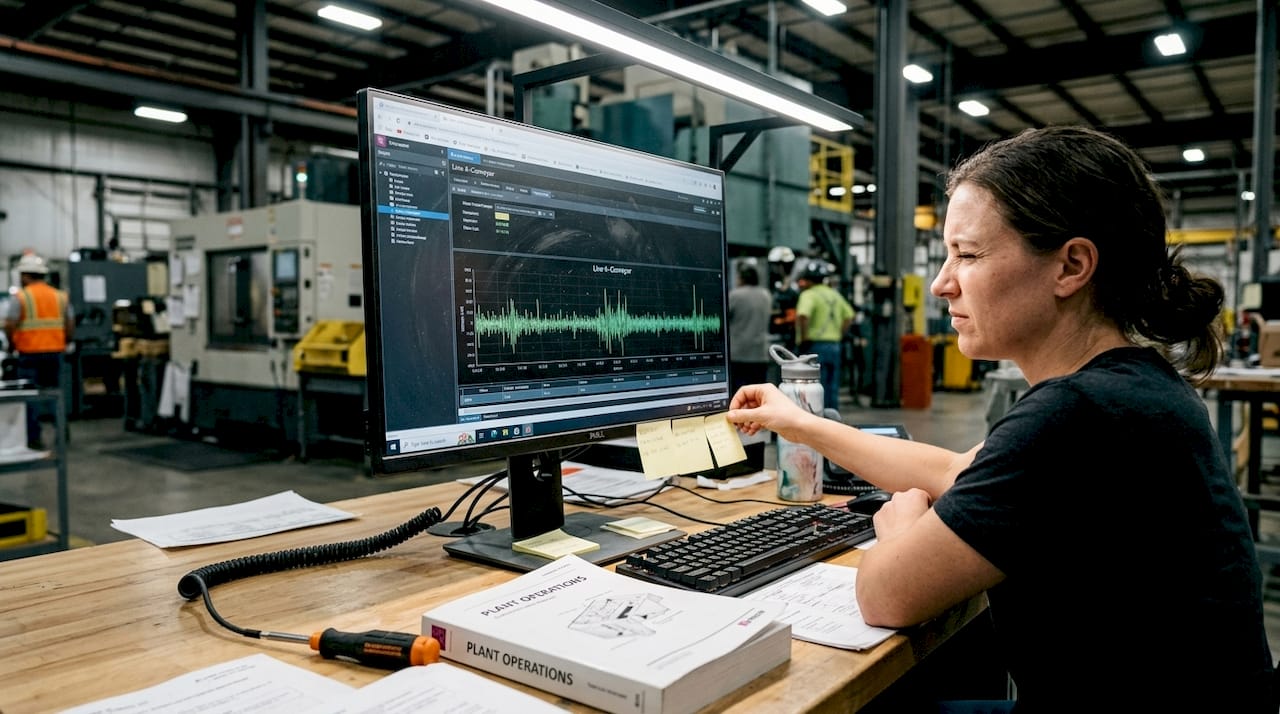
The accuracy gains are significant. A CNN-LSTM hybrid model achieves 96.1% accuracy in predictive maintenance tasks, outperforming conventional single-sensor approaches by a wide margin. Multimodal sorting systems reach 98.7% accuracy, a figure that standard single-channel approaches simply cannot match.
| Application | Single-sensor accuracy | Multi-sensor fusion accuracy |
|---|---|---|
| Predictive maintenance | 70-78% | 96.1% (CNN-LSTM hybrid) |
| Quality inspection | 80-85% | 95-98% |
| Multimodal sorting | ~82% | 98.7% |
| Mechanical fault detection | 60-70% | 70-85% detection rate |
Implementing sensor fusion effectively requires a structured approach. Here's a practical sequence:
- Audit existing sensors: Catalog current sensor types, data outputs, and communication protocols.
- Identify fusion candidates: Pinpoint processes where single-sensor data leaves gaps in accuracy or coverage.
- Select fusion architecture: Choose between centralized, distributed, or edge-based fusion depending on latency requirements.
- Standardize data formats: Ensure all sensor outputs are compatible before integration.
- Deploy and validate: Run parallel testing against baseline single-sensor performance before full rollout.
Edge-based analytics play a critical role here. Processing fusion data locally at the edge reduces latency, minimizes network dependency, and keeps sensitive operational data within the facility perimeter. For teams exploring sensor fusion for automation security, edge processing also limits exposure to external cyberattacks by reducing data transmission to cloud endpoints.
If you're developing tailored sensor data strategies for specific facility types, the fusion architecture you choose will define both your accuracy ceiling and your operational resilience.
Advanced applications: Predictive maintenance and beyond
With fusion techniques unlocking richer insights, let's see how advanced sensor strategies boost everyday facility performance and security. Predictive maintenance is where sensor technology delivers some of its most measurable returns.
IIoT sensors with edge processing enable predictive maintenance that achieves 30 to 45% cost reductions, 60 to 80% fewer unplanned failures, and a 95% reduction in data volume through local analytics. These aren't aspirational figures — they reflect deployments across manufacturing, utilities, and facility management sectors.
Key advanced use cases driving these results include:
- Remote asset health monitoring: Continuous vibration and temperature tracking on rotating equipment like pumps, motors, and compressors
- Environmental alarms: Real-time alerts for air quality, humidity, or gas concentration thresholds in sensitive production zones
- Automated quality inspection: Optical and laser sensors detecting surface defects or dimensional deviations without manual sampling
- Real-time security triggers: Sensor-driven alerts integrated with access control or surveillance systems for immediate response
- Energy consumption tracking: Power sensors identifying inefficiencies and enabling demand-side optimization
"Edge fusion reduces data latency by over 50% and slashes network strain, making local analytics the operational standard for high-uptime facilities."
Pro Tip: Local analytics don't just cut data transfer costs. They also reduce privacy exposure. When vibration or acoustic data from production equipment stays on-premise, you eliminate the risk of operational intelligence leaking through cloud pipelines. For facilities handling proprietary manufacturing processes, this is a security argument as much as a technical one.
A practical deployment example: installing triaxial vibration sensors on CNC spindles and conveyor drives, feeding data into an edge processor running anomaly detection algorithms. Baseline signatures are established over two to four weeks. Any deviation beyond defined thresholds triggers a maintenance alert before failure occurs. Teams managing virtual guard sensor deployments can integrate these same edge nodes into broader security architectures. For facilities navigating security compliance with sensors, predictive maintenance data also supports audit trails and regulatory documentation.
Critical implementation challenges and future-proofing
Modern applications demand that sensor deployment is robust to both physical and digital threats — here's how to address those requirements. Even well-designed sensor systems fail when deployment overlooks environmental and cybersecurity realities.
The most common challenges facing industrial sensor deployments include:
- Harsh physical environments: High temperatures, vibration, dust, moisture, and corrosive chemicals degrade sensor accuracy and lifespan
- Electromagnetic interference: Motor drives, welding arcs, and RF sources corrupt signal integrity in electrically dense facilities
- Cyberattack exposure: Network-connected sensors create attack surfaces if not properly segmented and encrypted
- Sensor drift: Gradual calibration shift over time introduces measurement error that compounds across systems
- Maintenance complexity: Large sensor networks require structured inspection and replacement schedules to avoid silent failures
Harsh industrial environments demand EMI protection, corrosion-resistant housings, and in extreme cases, silicon carbide (SiC) components for high-temperature operation. AI and ML integration enhances sensor intelligence but also requires cybersecurity controls to prevent adversarial manipulation of sensor outputs.
Defining your protection strategy means addressing four layers:
- Physical hardening: IP67 or IP68 rated enclosures, EMI shielded cabling, and corrosion-resistant materials
- Data integrity: End-to-end encryption for sensor communications and authenticated device enrollment
- Redundancy: Duplicate sensors on critical measurement points to catch drift or failure without operational disruption
- AI readiness: Select sensors with open protocols and edge-compatible outputs to support future ML model integration
Pro Tip: When specifying sensors for new deployments, prioritize AI-ready and edge-compatible models even if you're not deploying AI today. Retrofitting sensors later is expensive and disruptive. Modular, protocol-agnostic hardware protects your investment as automation architectures evolve.
For system integrators managing EMI protection across complex installations, the combination of physical hardening and network segmentation is non-negotiable. Future-proofing also means building sensor networks with modular expansion in mind, so adding new sensor types doesn't require rearchitecting the entire data pipeline. Balancing upfront cost against long-term adaptability is the defining challenge of every sensor deployment decision.
Why data quality and edge analytics matter more than ever
Solving technical challenges is only half the story. The bigger shift happening across industrial automation right now is a move away from sensor volume toward sensor intelligence. More sensors don't automatically mean better outcomes.
We've seen facilities with hundreds of connected sensors still making reactive maintenance decisions because the data pipeline prioritizes collection over analysis. The sensors are running. The dashboards are full. But actionable insight is missing. That's a data quality problem, not a hardware problem.
Sensor fusion and edge AI are what convert raw readings into decisions. Cloud infrastructure has its place for historical analysis and model training, but edge processing is critical for safety-critical and latency-sensitive applications. A conveyor fault that triggers in 200 milliseconds can't wait for a round-trip to a remote server.
"Future-ready automation hinges on agile analytics at the edge — not on chasing the latest sensor buzzword."
The obsession with big data in industrial settings often distracts from what actually drives reliability: clean calibration, appropriate sensor selection, and fast local response. Teams exploring AI-ready sensor innovations will find that the most impactful upgrades are rarely the most complex ones. Strategic integration of fewer, better-positioned sensors with strong edge analytics consistently outperforms sprawling networks with weak data governance.
Enhance your automation strategy with expert sensor solutions
Ready to implement these strategies? Here's where to find hands-on solutions and support.

BeyondSensor brings together AI-ready hardware, advanced integration frameworks, and regional expertise to help industrial automation professionals deploy sensor systems that perform under real-world conditions. Whether you're a system integrator building out a complex multi-site network or a facility team evaluating your first IIoT upgrade, the right tools and guidance make the difference. Explore sensor configuration tools designed for precision deployment, and review the latest automation innovations to identify where your next performance gain is waiting. The path from sensor data to operational intelligence starts with the right partner.
Frequently asked questions
What are the main benefits of sensor fusion in industrial automation?
Multi-sensor fusion detects 70 to 85% of mechanical failures and supports hybrid models achieving 96.1% predictive maintenance accuracy, delivering fault detection and decision quality that single sensors cannot match.
How do IIoT sensors help reduce maintenance costs?
IIoT sensors with edge processing achieve 30 to 45% maintenance cost reductions and 60 to 80% fewer unplanned failures by enabling condition-based interventions before equipment breaks down.
Why is electromagnetic interference (EMI) protection important for industrial sensors?
EMI protection prevents signal corruption in electrically dense environments, ensuring sensor readings remain accurate and control systems respond to real conditions rather than noise-induced false signals.
What makes edge analytics valuable in industrial sensor systems?
Edge analytics processes data locally, cutting latency by over 50% and reducing data volume by up to 95%, which is essential for safety-critical automation where response speed cannot be compromised.
Recommended
Read More Articles

Geofencing Alerts for Site Security: Setup Guide for Singapore
How to design geofencing alerts that flag real security events, cut alert fatigue and stay within PDPA and IPA rules at Singapore sites.

CCTV Operator Training in Singapore: Skills, Courses and Costs
What CCTV operator training involves in Singapore: the PRSF course, fees and subsidies, the 31 December 2026 deadline, and skills for AI-assisted control rooms.

Role-Based Access Control: A Practical Guide for Singapore Security Teams
How role-based access control works, where it breaks (role explosion, stale roles), and how to apply it to both cyber and physical security in Singapore.

Security Site Survey: Facility Teams’ Checklist for Funded Fixes
Assess site risks, turn findings into budgeted action, and use field checklists, reporting templates, and PDPA notes for camera and biometric deployments.
Let's Build YourSecurity Ecosystem.
Whether you're a System Integrator, Solution Provider, or an End-User looking for trusted advisory, our team is ready to help you navigate the BeyondSensor landscape.
Direct Advisory
Connect with our regional experts for tailored solutioning.