
Discover our essential sensor tech applications list to enhance facility safety and efficiency. Transform your operations today!

Sensor tech applications: Boost facility safety and efficiency

TL;DR:
- Proper sensor selection requires evaluating accuracy, integration, privacy, scalability, support, cost, and maintenance.
- Air quality and vape sensors offer privacy-friendly, cost-effective solutions for monitoring in sensitive environments.
- AI cameras enhance security with real-time identification and anomaly detection but necessitate careful integration and human oversight.
Choosing the right sensor technology for a facility in Southeast Asia is rarely straightforward. The market is crowded with competing platforms, overlapping feature sets, and vendors making bold promises about accuracy and ROI. Meanwhile, security managers and facility owners face a growing list of pressures: rising compliance demands, labor shortages in security operations, increasingly complex physical sites, and stakeholder expectations for smarter, more automated safety systems. This article cuts through the noise. You will find practical evaluation criteria, detailed breakdowns of the most effective sensor applications, a side-by-side comparison table, and tailored guidance for matching sensor tech to your specific facility type.
Table of Contents
- How to evaluate sensor technology: Core criteria
- Vape, air quality, and environmental sensors
- AI cameras for access control and anomaly detection
- Comparison table: Which sensor tech fits your operational needs?
- How to match sensor tech to your facility type
- Perspective: Why real-world integration and privacy still trump high-tech claims
- Explore advanced sensor solutions, tailored for your facility
- Frequently asked questions
Key Takeaways
| Point | Details |
|---|---|
| Prioritize integration | Choose sensor systems that align with your existing infrastructure to avoid costly upgrades later. |
| Balance privacy and detection | Air quality sensors linked with video surveillance provide safety without privacy concerns. |
| AI cameras add value | AI-enabled cameras combine security and operational insights, but require human oversight for best results. |
| Custom-fit your solution | Select sensor technologies that match your facility type and anticipated growth or regional challenges. |
How to evaluate sensor technology: Core criteria
Before diving into specific applications, clarify what you should look for when evaluating sensor tech for your facility. Not all sensors are created equal, and the wrong choice can cost more than just budget. It can also create integration friction, compliance exposure, or operational blind spots.
Start with these seven core criteria:
- Accuracy and detection reliability: False positives waste your team's time. False negatives create risk. Demand verified accuracy data from vendors under real-world, not laboratory, conditions.
- Integration with existing systems: Your new sensor must communicate cleanly with your current access control, video management, and building management systems. Poor integration is the most common cause of failed deployments.
- Privacy considerations: Southeast Asian regulations on data privacy are tightening. Sensors that collect biometric or behavioral data require clear legal frameworks and consent protocols.
- Scalability: If you manage one building today and five next year, your sensor platform needs to grow without a costly overhaul. Integrating sensor systems across multiple sites demands scalable architecture from day one.
- Vendor support and local presence: A vendor with no regional support team is a liability. Prioritize suppliers with offices or certified partners in your country.
- Cost-effectiveness: Total cost of ownership matters more than purchase price. Factor in installation, calibration, software licensing, and ongoing maintenance.
- Ease of maintenance: Sensors that require frequent recalibration or specialized technicians for basic upkeep increase operational overhead significantly.
Pro Tip: Prioritize open systems and modular architecture from the start. Vendor lock-in is one of the most underestimated risks in sensor deployments. Research confirms that sensors enable efficiency and safety gains, but integration complexity and lock-in concerns can erode that value quickly. Demand open APIs and documented integration standards before signing any contract.
Southeast Asian facilities present unique environmental challenges. High humidity, tropical temperatures, dense urban construction, and variable IT infrastructure all affect sensor performance. A device that performs flawlessly in a European climate-controlled environment may degrade rapidly in a Bangkok industrial park or a Manila hospital corridor. The advantages of sensing solutions are only realized when hardware is validated for regional conditions. Finally, never underestimate the importance of human verification. AI-based sensors generate alerts, but a trained human must always make the final judgment on enforcement or escalation.
Vape, air quality, and environmental sensors
With clear criteria in mind, look at one of the fastest-growing sensor tech applications for public and private facilities across Southeast Asia: vape detection and air quality monitoring.
These sensors detect specific chemical signatures in the air, including particulate matter, volatile organic compounds, temperature spikes, and humidity anomalies. When integrated with video surveillance, they create a powerful detection-response loop. The sensor triggers an alert, the camera confirms the event, and the security team receives a timestamped notification with visual evidence, all without placing a camera inside a restroom or other private space.
Vape and air quality sensors integrated with video surveillance can detect vaping, air quality issues, and temperature or humidity changes without any privacy invasion in sensitive areas like restrooms. This is a critical advantage in schools, hospitals, and corporate offices where privacy obligations are non-negotiable.
Key use cases in the Southeast Asian context include:
- Schools and universities: Vaping among students is a rising disciplinary and health issue across the region. These sensors allow administrators to detect incidents in restrooms and locker rooms without camera surveillance.
- Hospitals and healthcare facilities: Air quality monitoring ensures sterile environments are maintained, and early detection of temperature or humidity deviations protects medication storage and patient safety.
- Data centers: Temperature and humidity sensors provide early warning for equipment overheating before costly hardware failures occur.
- Corporate offices: Smoke and air quality sensors support smoke-free policies and can trigger HVAC adjustments automatically for occupant comfort and compliance.
The deployment advantages are considerable. These sensors are relatively low-cost, easy to install in existing ceiling or wall fixtures, and require minimal ongoing maintenance. Alerts are generated in real time, giving security teams seconds rather than minutes to respond. When paired with intelligent sensing technologies like integrated video management platforms, the entire alert-to-response workflow becomes tightly automated.
Key insight: The privacy-preserving design of vape and air quality sensors makes them uniquely effective in regulatory environments where camera placement is restricted. Facilities can maintain compliance while still achieving robust incident detection in every corner of the building.
AI cameras for access control and anomaly detection
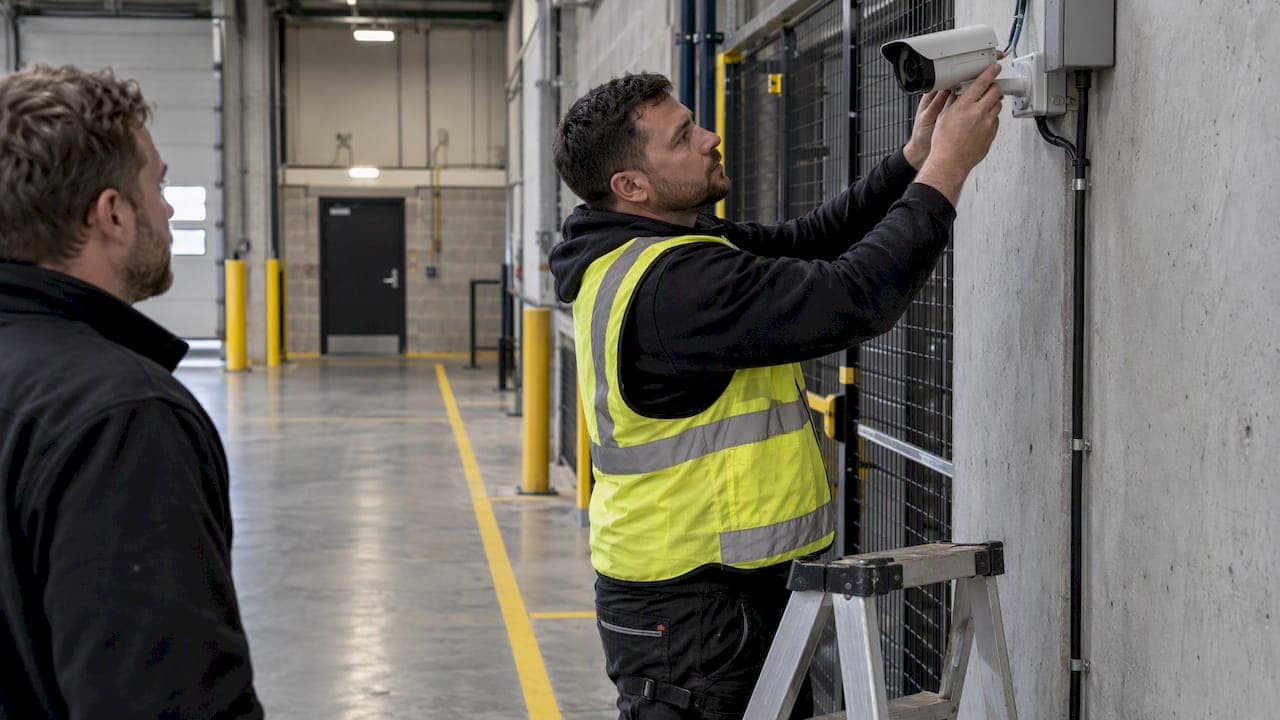
Beyond environmental sensing, AI-enabled cameras are powering the next leap in facility-wide safety and process oversight. These are not standard CCTV systems. They combine computer vision, machine learning, and edge processing to analyze live video feeds and generate actionable intelligence in real time.
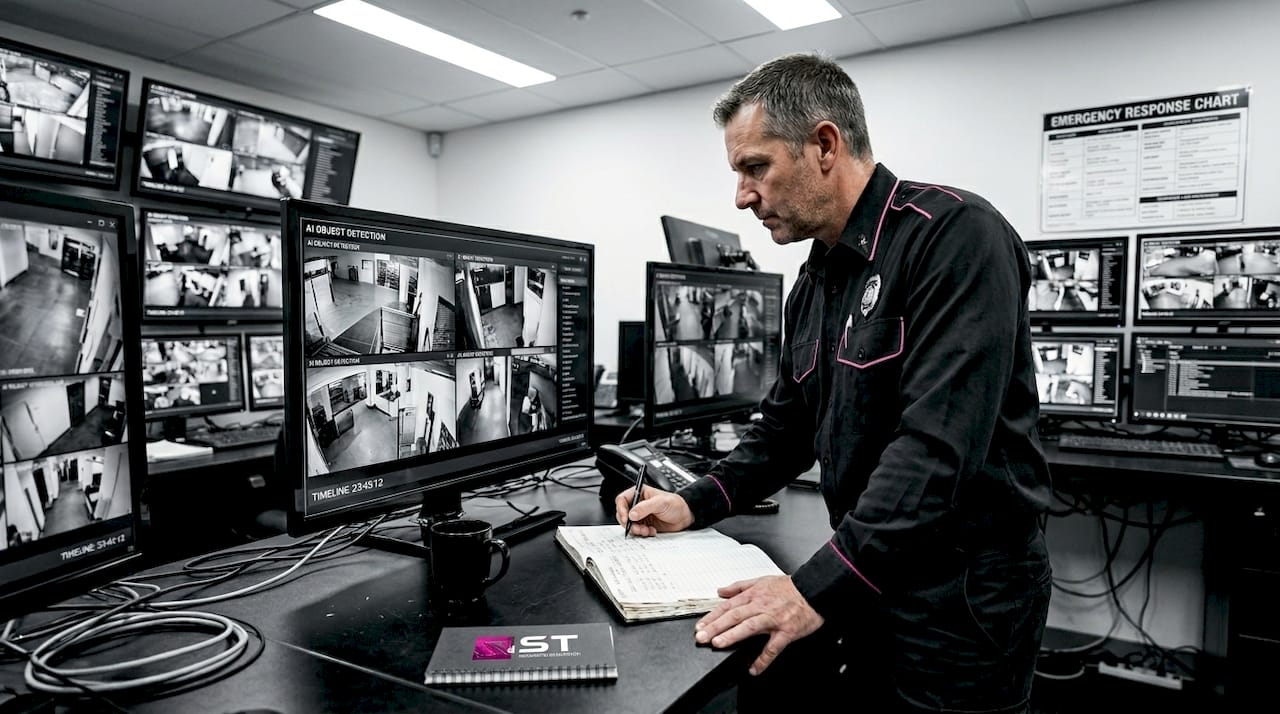
Here is how they work in practice. Facial recognition compares live video against an authorized personnel database to grant or deny access automatically. Behavior anomaly detection flags unusual activity such as loitering, perimeter breaches, crowd surges, or individuals moving against foot traffic flow. Some systems also provide early warning for fire, smoke, or gas leak events by analyzing visual cues before conventional detectors even register the threat.
The Dung Quat Refinery in Vietnam, one of Southeast Asia's largest industrial facilities, provides a compelling real-world example. AI cameras at Dung Quat are deployed for facial recognition-based access control, behavior anomaly detection, and continuous safety monitoring across a site that employs between 10,000 and 20,000 personnel at peak operations. Managing that volume of people through traditional guard-based verification would require a massive labor force. AI cameras handle routine identity checks automatically, freeing security staff to focus on investigation and response rather than gatekeeping.
Key advantages for access control and anomaly detection include:
- Speed and scale: AI cameras process thousands of identity verifications per hour with consistent accuracy, far beyond human capacity.
- Continuous monitoring: Unlike human guards, AI systems do not experience fatigue. They maintain the same detection sensitivity during a night shift as during peak daytime hours.
- Early threat warning: Behavior pattern analysis and environmental visual cues enable intervention before incidents escalate, reducing liability and damage.
- Operational intelligence: Beyond security, the movement data from AI cameras helps facility managers optimize staffing, identify bottleneck areas, and improve emergency evacuation planning.
Understanding advanced sensing for security in large industrial or commercial contexts means recognizing that these systems generate significant data volumes. Proper storage, processing infrastructure, and cybersecurity protocols must be in place before deployment. Securing facilities with sensors at this scale also requires close collaboration between IT, physical security, and operations teams.
Pro Tip: Always keep a human in the loop for critical alerts or enforcement actions. AI cameras flag anomalies with impressive accuracy, but final decisions on access denial, detention, or escalation must involve a trained human operator. Over-reliance on automated enforcement creates both legal exposure and operational risk.
Comparison table: Which sensor tech fits your operational needs?
Now that we have covered top sensor applications, see how they compare for specific operational challenges across Southeast Asia.
Real-time alerts and multi-sensor integration are central to modern security strategy. The table below helps you evaluate four major sensor categories against the criteria that matter most for regional facilities.
| Application | Main use | Privacy impact | Best-fit locations | Integration challenge | Relative cost | Compliance/support |
|---|---|---|---|---|---|---|
| Vape/air quality sensors | Air safety, policy enforcement | Very low | Schools, hospitals, offices, data centers | Low | Low to moderate | Strong in regulated sectors |
| AI cameras | Access control, anomaly detection | High (biometric data) | Industrial sites, large commercial, transport hubs | High | Moderate to high | Requires legal framework |
| Motion/PIR sensors | Perimeter security, occupancy | Low | Warehouses, parking, corridors | Low | Low | Widely supported |
| Gas/leak sensors | Industrial safety, early warning | Very low | Refineries, factories, labs | Moderate | Moderate | Critical for industrial compliance |
Reviewing this table through a Southeast Asian operational lens highlights several patterns. Vape and air quality sensors win on privacy and ease of deployment, making them the fastest path to measurable compliance improvement in regulated environments. AI cameras offer the highest security intelligence but carry the heaviest integration and legal burden. Motion and PIR sensors remain a cost-effective workaround for perimeter and occupancy monitoring. Gas and leak sensors are non-negotiable for industrial sites and chemical-handling environments.
Explore the full sensor tool types and uses guide to identify which categories are already common in your facility vertical and where gaps may exist.
How to match sensor tech to your facility type
To make the most practical choice, match sensor applications to your type of facility and the regional realities that shape how sensors perform and how they are regulated.
Sensor selection should balance automation, privacy, and the physical site challenges specific to the region. Here is a practical guide for four common facility archetypes in Southeast Asia:
- Commercial office buildings: Prioritize AI cameras for lobby access control and vape or air quality sensors for restrooms and common areas. Consider occupancy sensors linked to HVAC and lighting systems for energy efficiency gains that reduce operational cost.
- Schools and universities: Vape detection sensors are the immediate priority given regional trends. AI cameras can support perimeter security and visitor management but must comply with local student data privacy laws. Avoid facial recognition for minors without explicit legal clearance.
- Healthcare facilities: Air quality, temperature, and humidity sensors are essential for compliance with healthcare standards. Access control via AI cameras can secure medication storage, ICUs, and restricted zones. Integration with hospital management systems is complex but critical.
- Large industrial sites: Gas and leak sensors are the safety foundation. AI cameras with behavior anomaly detection manage large worker populations efficiently. Both sensor categories benefit from automation with sensor tech platforms that consolidate alerts into a single operations dashboard.
Beyond facility type, think about your growth trajectory. Pro Tip: If you plan to expand operations or upgrade your security infrastructure within two to three years, invest in scalable, cloud-compatible sensor platforms now. Retrofitting a rigid, proprietary system later is significantly more expensive than building scalability into the initial deployment.
Privacy and compliance concerns differ sharply by facility type. Schools and healthcare sites carry the highest regulatory burden around data collection. Industrial sites typically face fewer privacy restrictions but have stricter safety compliance requirements around gas detection and emergency response protocols. Review sensor security tips for compliance to understand the specific frameworks applicable to your facility category in your jurisdiction.
Perspective: Why real-world integration and privacy still trump high-tech claims
Here is an uncomfortable truth we see repeated across the region: facilities that chase the most advanced sensor specifications often end up with underperforming deployments, not because the technology failed, but because integration and operational readiness were underestimated.
Vendor lock-in, privacy exposure, and integration complexity are consistently underestimated when facilities are dazzled by feature-rich product demos. A sensor that generates real-time fire alerts is impressive. A sensor whose alerts never reach the right operator because it does not connect cleanly to your existing platform is a liability.
The facilities that get the best results from sensor technology share a few habits. They treat privacy assessments as part of the initial deployment plan, not a remediation step triggered by a complaint. They establish clear escalation protocols so every sensor alert type has a defined human response owner. And they resist the temptation to automate enforcement before the system has been validated against their actual facility conditions.
AI sensors need calibrated human oversight, full stop. Exception-based monitoring works well when operators understand what they are reviewing and why. Without that context, alert fatigue sets in quickly, and critical warnings start getting ignored. Building a culture of sensor literacy among your security and operations teams is just as important as the hardware selection itself.
Our recommendation: start with end-user needs and operational pain points, then work backward to the technology. The physical security sensor essentials that matter most are not always the ones with the longest spec sheet. They are the ones your team can act on, maintain, and trust.
Explore advanced sensor solutions, tailored for your facility
BeyondSensor specializes in exactly the kind of practical, integration-focused deployment that security managers and facility owners need. Whether you are running a hospital network in the Philippines, an industrial campus in Malaysia, or a commercial complex in Singapore, their platform is designed for the real operational complexity of Southeast Asian facilities.

BeyondSensor's sensor solution tools give you a clear starting point for evaluating and configuring the right sensor mix for your environment, with privacy-by-design principles built in from the ground up. If you are a property or campus operator, explore the tailored resources built specifically for facility owners. If you operate or manage a security team, the security agency solutions page outlines how BeyondSensor supports scalable, compliant deployments across multi-site operations. Human-centric support and regional validation mean you are not navigating this alone. Visit beyondsensor.com/tools to start building your sensor strategy today.
Frequently asked questions
Which sensor technology has the best balance of privacy and effectiveness?
Vape and air quality sensors integrated with video surveillance deliver strong incident detection while fully protecting privacy in sensitive spaces like restrooms, making them the top choice for privacy-conscious environments. They are also among the easiest and most cost-effective sensors to deploy and maintain.
How do AI cameras improve facility safety?
AI cameras use facial recognition and behavior anomaly detection to monitor access points, flag unusual activity, and generate early warnings for fires, gas leaks, and crowd surges. They significantly reduce the manual monitoring burden on security teams at large-scale facilities.
What is the biggest risk when choosing sensor tech?
Vendor lock-in and integration complexity consistently rank as the most damaging risks in sensor deployments, limiting future upgrades and inflating long-term costs. Choosing open, modular, and well-documented platforms at the outset is the most effective way to manage this risk.
How quickly can real-time sensor alerts improve emergency response?
Real-time sensor alerts combined with multi-sensor integration allow security teams to act within seconds of an incident, dramatically cutting response times for fires, chemical leaks, and air quality emergencies. The improvement in response speed directly reduces risk exposure and potential regulatory penalties.
Recommended
- Top intelligent sensing technologies to boost facility security | News | BeyondSensor
- How sensor technology drives smarter industrial automation | News | BeyondSensor
- How to Secure Facilities with Advanced Sensor Technology | News | BeyondSensor
- Understanding advanced sensing: boost security and efficiency | News | BeyondSensor
Read More Articles
RTSP Security Risks: Integrators Must Block Exposed Ports 554 and 8554
See how integrators can reduce RTSP security risks: close exposed ports 554 and 8554, secure camera access, and verify each deployment with practical checks.
Require MAEpp and X Accuracy Before You Buy People Counting Systems
Verify people counting accuracy by demanding MAEpp, X Accuracy, and directional-bias reports. Validate on-site with at least 100 events per direction...
30–90 Day Pilot Validates Redundant Camera Networks for Engineers
Standards led, practical steps for engineers to deploy redundant camera networks: MRP, dual homing, and aggregation patterns, commissioning checks, and...
30 Day Pilot Proves Video Analytics Accuracy for Security Teams
Validate video analytics accuracy with scenario tests, camera tuning, transfer learning and a 30 day edge first pilot for security teams.
Let's Build YourSecurity Ecosystem.
Whether you're a System Integrator, Solution Provider, or an End-User looking for trusted advisory, our team is ready to help you navigate the BeyondSensor landscape.
Direct Advisory
Connect with our regional experts for tailored solutioning.