
Discover why partner with system integrators for enhanced security. Leverage their expertise to align technology with your business goals.

Why Partner with System Integrators for Better Security

TL;DR:
- Partnering with system integrators provides unmatched cross-domain expertise and lifecycle management for complex deployments. They enhance operational efficiency, cybersecurity, and long-term technology alignment beyond simple vendor roles. Building clear governance and focusing on strategic advisory partnerships maximizes value from these collaborations.
System integrators are defined as specialized firms that combine mechanical, electrical, and software disciplines to design, deploy, and manage unified technology environments across an organization's full operational lifecycle. The case for why partner with system integrators is straightforward: no internal IT team can match the cross-domain expertise, vendor-neutral perspective, and lifecycle management that a dedicated integrator brings to complex security and operational deployments. Integrators do not just connect systems. They align technology with business objectives, enforce cybersecurity governance frameworks, and absorb the coordination burden that would otherwise fall on your staff. For executives managing physical security, industrial automation, or smart infrastructure, the integrator relationship is less a vendor contract and more a force multiplier.
Why partner with system integrators for security and efficiency?
Partnering with system integrators delivers measurable improvements in operational efficiency by automating workflows, reducing manual data entry, and enabling real-time visibility across your environment. Those returns appear quickly after implementation. The strategic benefits compound over time as integrators refine processes and expand platform coverage.

Workflow automation is the most immediate gain. When an integrator connects your access control, surveillance, and incident management platforms into a single data layer, your security team stops toggling between disconnected dashboards and starts acting on consolidated alerts. Staff attention shifts from data collection to decision-making.
Cybersecurity governance is the less visible but equally critical benefit. Integrators strengthen cybersecurity governance by centralizing access control and building audit trails that satisfy regulatory compliance requirements. In hybrid and multi-cloud environments, this centralization reduces the attack surface that fragmented infrastructure creates.
The specific operational gains executives should expect include:
- Real-time data integration that eliminates manual reporting cycles and accelerates incident response
- Unified audit trails that satisfy ISO 27001, SOC 2, and sector-specific compliance mandates
- Automated escalation workflows that reduce mean time to response for security events
- Legacy system modernization that extends the useful life of existing hardware while connecting it to modern platforms
- Multi-cloud coordination that prevents data silos from forming across distributed infrastructure
Pro Tip: Before your integrator engagement begins, document every manual process your security team performs weekly. That list becomes the baseline for measuring automation ROI within the first 90 days.
What factors should executives consider when choosing a system integrator?
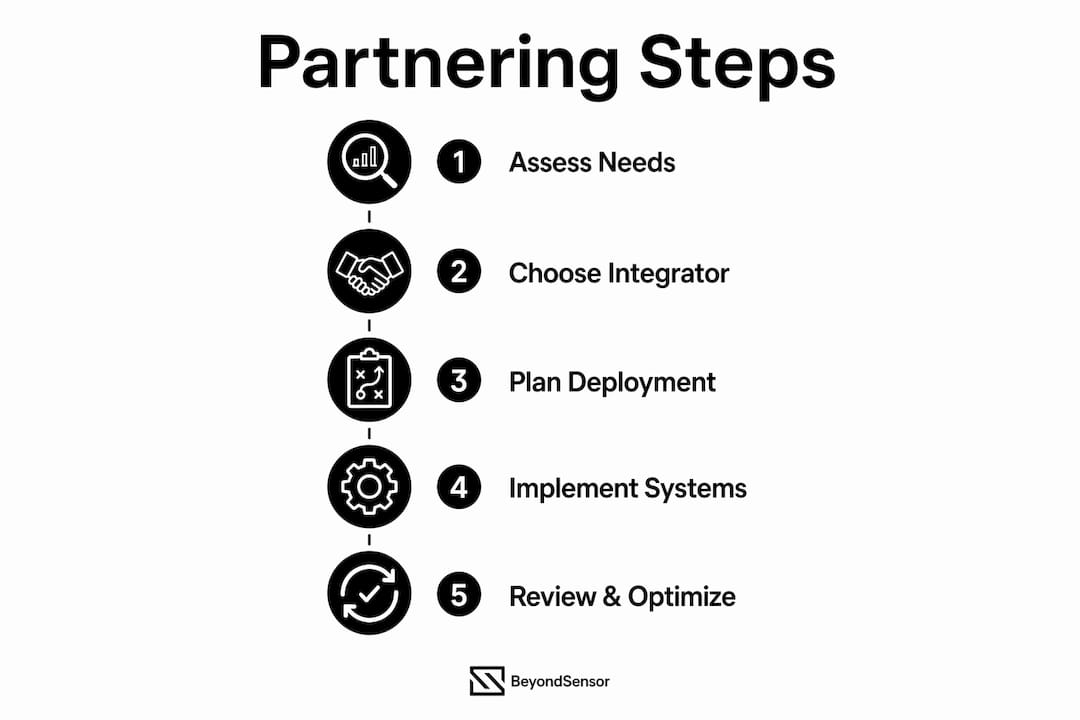
Choosing the right integrator tier depends on project complexity, internal capability, and risk tolerance. Tier 1 global firms carry broad technical depth and established methodologies, but their overhead costs and standardized delivery models can work against focused, single-region deployments. Mid-market specialists and boutique integrators frequently outperform Tier 1 firms on projects with a defined scope, delivering better cost efficiency and faster outcomes.
The matching logic is straightforward. A government agency deploying a national surveillance network across multiple provinces needs a Tier 1 firm with regulatory experience and geographic reach. A commercial property group integrating access control and environmental sensors across three buildings needs a regional specialist who understands local compliance requirements and can provide onsite support without a global overhead structure.
| Integrator type | Best fit | Key advantage | Watch for |
|---|---|---|---|
| Tier 1 global firm | Large, multi-region, complex programs | Broad methodology and vendor relationships | High overhead, slower response |
| Mid-market specialist | Single-platform or regional projects | Domain depth, cost efficiency | Narrower vendor ecosystem |
| Boutique integrator | Focused, time-sensitive deployments | Agility and direct senior access | Limited scalability for growth |
Domain expertise matters more than firm size. An integrator with a proven track record in physical security integration will identify failure points that a generalist firm misses entirely. Regional presence is equally critical. An integrator without local engineers cannot provide the onsite assessment and rapid response that security environments demand.
Pro Tip: Before signing any engagement, define the rules of engagement in writing. Specify which decisions require integrator sign-off, which remain internal, and how scope changes are priced. Ambiguity here is the single largest source of cost overruns.
Is partnering with integrators a strategic move beyond technology?
The most valuable integrators do not just execute technical tasks. High-value integrators act as strategic advisors, managing organizational change and aligning implementations with long-term business goals. That distinction separates a successful deployment from one that delivers infrastructure without adoption.
Consider what happens during a major security platform migration. The technology transition is the easy part. The hard part is getting facility managers, compliance officers, and operations staff to change their daily workflows. An integrator with change management capability handles stakeholder engagement, training design, and process documentation. A pure technology vendor does not.
Leading organizations are shifting from project-based engagements to managed services models with their integrators. That shift delivers predictable costs and continuous platform optimization rather than a series of one-time deployments followed by internal maintenance burdens.
The strategic contributions that define a high-value integrator partnership include:
- Governance and risk management — Integrators maintain cross-functional oversight, ensuring technology decisions align with enterprise risk frameworks rather than departmental preferences.
- Business process alignment — They map technology capabilities to operational workflows, not just technical specifications.
- Change management — Structured stakeholder engagement and training programs drive adoption and reduce resistance during transformation.
- Managed services and platform optimization — Ongoing monitoring, tuning, and roadmap planning replace the costly cycle of periodic re-implementation.
- Innovation enablement — Managed services models create the stable foundation needed to pilot generative AI, advanced analytics, and next-generation sensing technologies without disrupting live operations.
Integrators also fill a gap that software vendors cannot. System integrators provide local presence and long-term service capabilities that vendors lack, addressing operational realities across the full IT environment lifecycle. A vendor sells a product. An integrator owns the outcome.
How to build a successful system integrator partnership
Effective partnerships require deliberate structure from the first conversation. Clear rules of engagement that prevent vendor and integrator competition are critical to achieving long-term collaboration and mutual growth. Without that structure, misaligned incentives erode trust and stall joint sales efforts.
The actions that separate high-performing partnerships from transactional ones include:
- Define go-to-market alignment early. Agree on which customer segments each party owns, how leads are shared, and how joint proposals are structured before the first opportunity arises.
- Invest in partner education. Integrators who understand your technology at depth sell it more accurately and deploy it more reliably. Formal certification programs and regular product briefings pay for themselves in reduced rework.
- Commit to transparency. Share roadmaps, pricing logic, and support escalation paths openly. Integrators who feel informed become advocates. Those kept at arm's length become liabilities.
- Prioritize long-term commitment over transactional wins. A partner who has delivered three successful deployments for you will outperform a new partner on the fourth project every time. Relationship depth compounds.
- Collaborate within the broader vendor ecosystem. The best integrators maintain relationships across multiple technology vendors. Encourage that breadth. It gives them the perspective to recommend the right solution rather than the most familiar one.
For executives evaluating integrated security partnerships, the governance model matters as much as the technical capability. A partnership without clear accountability structures will underperform regardless of the integrator's technical credentials.
Key Takeaways
Partnering with system integrators delivers the most value when executives treat integrators as strategic advisors, not just technical vendors, and structure the relationship with clear governance, aligned incentives, and a long-term managed services commitment.
| Point | Details |
|---|---|
| Integrators accelerate efficiency | Automating workflows and unifying data reduces manual tasks and speeds security response. |
| Tier selection drives outcomes | Match integrator size and specialization to project scope, not brand recognition. |
| Strategic advisory role matters | High-value integrators manage change and align technology to business goals, not just specs. |
| Managed services beat project models | Ongoing optimization delivers predictable costs and enables innovation over time. |
| Partnership structure is non-negotiable | Clear rules of engagement prevent misalignment and protect mutual growth. |
The hidden cost executives consistently underestimate
Most executives I speak with frame the build-versus-buy question around headcount. They calculate the salary of a few integration engineers and conclude that internal teams are cheaper. That math is almost always wrong.
Building internal integration teams incurs hidden costs including talent acquisition, ongoing training, compliance overhead, and the opportunity cost of senior staff managing infrastructure instead of driving business outcomes. Specialized integrators provide better cost efficiency and faster delivery for complex, time-sensitive projects. I have watched organizations spend 18 months assembling an internal team only to hire an integrator anyway when the project scope expanded.
The more important misconception is treating integrators as a temporary resource. The organizations I have seen extract the most value from these partnerships are the ones who moved to managed services models early. They stopped thinking about integration as a project with an end date and started treating it as an ongoing operational capability. That shift changes everything, from how they budget to how they measure success.
Cross-functional coordination is where most partnerships quietly fail. Technology decisions made in isolation by IT teams create friction with operations, compliance, and finance. The integrator's job is to hold that coordination together. When executives empower integrators to engage directly with department heads rather than routing everything through a single IT contact, deployments move faster and adoption rates improve significantly.
— Eumir
Beyondsensor's approach to system integrator collaboration
Beyondsensor builds AI-driven workflow automation and real-time monitoring capabilities specifically designed for system integrators working in physical security and operational environments. The platform connects sensor data, surveillance feeds, and access control systems into a unified operational picture, reducing the manual oversight burden that slows security teams.

For integrators deploying security infrastructure across industrial, government, or smart infrastructure environments, Beyondsensor provides the technical depth and regional expertise to support every stage from design through managed operations. Explore Beyondsensor's integrator solutions to see how AI-powered sensing and monitoring tools can strengthen your next deployment. You can also review the full suite of technical tools built to support integrator workflows at scale.
FAQ
What is the primary role of a system integrator?
A system integrator combines mechanical, electrical, and software disciplines to design, deploy, and manage unified technology environments. They align those environments with business objectives and maintain them across the full operational lifecycle.
How do system integrators improve cybersecurity compliance?
Integrators centralize access control and build unified audit trails that satisfy frameworks like ISO 27001 and SOC 2. That centralization reduces the security vulnerabilities created by fragmented, multi-vendor infrastructure.
When should an executive choose a boutique integrator over a Tier 1 firm?
Boutique and mid-market integrators outperform Tier 1 firms on focused, single-platform, or single-region projects where domain depth and agility matter more than global reach.
What is a managed services model in system integration?
A managed services model replaces one-time project engagements with ongoing platform monitoring, optimization, and roadmap planning. It delivers predictable costs and creates the stable foundation needed to adopt emerging technologies like generative AI.
How do you avoid conflicts in a system integrator partnership?
Define clear rules of engagement before the first project begins. Specify decision rights, scope change pricing, and go-to-market boundaries in writing to prevent misaligned incentives from eroding the relationship.
Recommended
Read More Articles

Smart Facility Integration Ideas for Facility Managers
Discover smart facility integration ideas that enhance operational efficiency. Learn how unified systems can prevent failures and optimize management.

The Role of Digital Twins in Security: 2026 Guide
Discover the role of digital twins in security. Learn how these powerful tools enhance threat detection and improve defense strategies.

What Is Risk-Based Sensing for Security Pros
Discover what is risk-based sensing and how it optimizes sensor deployment. Enhance security efficiency and improve detection strategies today.

Key Features of Secure Sensors: 2026 Professional Guide
Discover the key features of secure sensors in our 2026 guide. Learn how encryption and authentication enhance safety and security for your systems.
Let's Build YourSecurity Ecosystem.
Whether you're a System Integrator, Solution Provider, or an End-User looking for trusted advisory, our team is ready to help you navigate the BeyondSensor landscape.
Direct Advisory
Connect with our regional experts for tailored solutioning.