
Discover the key features of secure sensors in our 2026 guide. Learn how encryption and authentication enhance safety and security for your systems.

Key Features of Secure Sensors: 2026 Professional Guide

TL;DR:
- Secure sensors feature cryptographic authentication, hardware-rooted identity, and quantum-resistant protocols to ensure tamper resistance. They use layered protections like encryption, integrity verification, and hardware-based security to defend against diverse attack vectors and physical tampering. These features collectively improve security, device longevity, and trustworthiness in critical infrastructure deployments.
Secure sensors are devices that detect specific physical or environmental conditions and transmit trustworthy, tamper-resistant alerts to control systems. The key features of secure sensors go far beyond simple detection. They include cryptographic authentication, hardware-rooted identity, adaptive security management, and quantum-resistant protocols. Security professionals deploying sensors across industrial control systems, smart infrastructure, or physical security environments need to understand these features to make defensible architecture decisions. This guide covers each critical capability with the technical depth that practitioners actually need.
1. What are the key features of secure sensors for encryption and authentication?

Encryption and authentication form the non-negotiable foundation of any secure sensor deployment. Without them, every sensor reading is a potential attack surface.
The most widely deployed approach uses AES-128 rolling codes to block replay and impersonation attacks. Rolling codes change with every transmission, so an attacker who captures one packet cannot reuse it. Two-way authentication goes further by requiring both the sensor and the controller to verify each other before any data exchange occurs.
Key authentication mechanisms in modern secure sensors include:
- AES-128 or stronger rolling code encryption preventing replay attacks by invalidating captured packets immediately
- Hash-based lightweight authentication using HMAC-SHA256 for low-power IoT sensors where full TLS is too resource-intensive
- Physical Unclonable Function (PUF) integration binding authentication credentials to unique hardware characteristics
- Paired device enforcement restricting valid message generation to registered sensor-controller pairs only
- Denial-of-service resistance through rate limiting and anomaly detection at the protocol layer
Encrypted sensor networks mandate that only paired devices can produce valid messages. This forces attackers to abandon encrypted targets and move toward unprotected systems, which raises the overall security posture of any protected environment.
Pro Tip: When specifying sensors for a new deployment, require vendors to document their key exchange protocol explicitly. "Encrypted" on a spec sheet without naming the algorithm and key length tells you nothing useful.
2. How do hardware features strengthen sensor tamper resistance?
Hardware-level protections address a class of attacks that software alone cannot stop. Physical access to a sensor creates opportunities for firmware modification, key extraction, and signal injection that cryptographic protocols cannot prevent without hardware support.
Physical Unclonable Functions represent the most significant advance in hardware-rooted sensor identity. PUFs leverage manufacturing variations at the nano-scale to create unique hardware fingerprints. No two chips produce identical PUF responses, and the key never exists in writable memory, which eliminates the most common firmware attack vector.
The distinction between Key Management Units and Secure Elements matters significantly for high-assurance deployments:
- Key Management Units (KMUs) are embedded components within standard microcontrollers that provide basic key storage and protection.
- Dedicated Secure Elements are separate, tamper-resistant chips, often Common Criteria certified, designed for applications like payment processing or digital identity.
- Hardware Root-of-Trust Entropy Sources feed unpredictable seed values into adaptive security management systems, enabling dynamic policy enforcement.
- Multi-stage integrity pipelines split sensor readings across independent network segments and verify each segment independently to detect tampering.
- Tamper-evident alerting generates machine-readable alerts when physical interference is detected, enabling automated incident response.
KMUs differ from dedicated Secure Elements in a critical way. KMUs offer adequate protection for most commercial applications, but high-assurance environments, including government facilities and critical infrastructure, require the stronger isolation that a certified Secure Element provides.
| Feature | Key Management Unit | Dedicated Secure Element |
|---|---|---|
| Physical isolation | Partial (within MCU) | Full (separate chip) |
| Certification level | Vendor-specific | Common Criteria EAL4+ |
| Best for | Commercial IoT sensors | Critical infrastructure |
| Key storage | Protected memory region | Tamper-resistant hardware |
3. What role do adaptive security frameworks play in sensor protection?
Static security configurations fail in dynamic environments. A sensor protecting a pipeline in a remote location faces different threat conditions at 2:00 AM than during a scheduled maintenance window. Adaptive security frameworks adjust protection parameters in real time based on context.
The BioEnS framework demonstrates what adaptive security achieves in practice. BioEnS achieves a near-zero Security Violation Rate of 0.02% while extending device lifetime by 0.69× compared to fixed high-security baselines. That lifetime extension matters enormously in deployments where battery replacement requires physical access to hazardous or remote locations.
Adaptive frameworks deliver several concrete operational benefits:
- Real-time parameter adjustment based on detected threat level, conserving power during low-risk periods
- Hardware entropy integration feeding unpredictable seed values into policy decisions with low latency
- False alarm reduction by correlating sensor context with alert thresholds, reducing operator fatigue
- Operational cost reduction through extended device lifetimes and fewer maintenance cycles
- Compliance-ready audit trails that log security parameter changes with timestamps for regulatory review
The importance of secure sensors in critical environments becomes clearest when you consider the cost of a single false negative. An adaptive framework that maintains near-zero violation rates while preserving battery life solves two problems that traditionally required a trade-off.
Pro Tip: When evaluating adaptive security platforms, ask vendors for their Security Violation Rate under simulated attack conditions, not just under normal operation. The gap between those two numbers tells you how the system actually performs under stress.
4. How do secure sensors prepare for quantum computing threats?
Quantum computing threatens every cryptographic system that relies on the difficulty of factoring large numbers. RSA and elliptic curve cryptography, which underpin most current sensor authentication protocols, become vulnerable once sufficiently powerful quantum processors exist. Security professionals specifying sensors today need to account for deployments that will still be operational when that threat materializes.
Lightweight quantum-resistant authentication using hash-based protocols combined with PUFs achieves 24.3 ms latency and 15.7 mJ per-authentication energy on constrained IoT devices. Those numbers confirm that post-quantum cryptography is no longer a theoretical exercise reserved for high-performance hardware.
Key properties that quantum-resistant sensor authentication must provide:
- Hash-based bidirectional authentication using algorithms that remain secure against quantum attacks, such as XMSS or SPHINCS+
- Conditional forward secrecy ensuring that compromise of current session keys does not expose past communications
- Unlinkability preventing an attacker from correlating multiple authentication events to the same device
- PUF-bound credentials tying quantum-resistant keys to hardware identity that cannot be cloned
- Feasibility on constrained hardware with energy budgets compatible with battery-powered field sensors
MIT researchers developed an ASIC chip for post-quantum cryptography that protects wireless biomedical devices while mitigating power side-channel attacks. The same architecture applies directly to industrial and infrastructure sensors. Power side-channel attacks extract cryptographic keys by analyzing a device's power consumption during computation, and hardware-level mitigation closes that attack vector without adding computational overhead.
5. How do integrity verification systems protect sensor data in critical infrastructure?
Sensor data integrity is the difference between a control system making correct decisions and a Stuxnet-style attack causing physical destruction. Integrity verification goes beyond encryption. It confirms that data has not been altered between the sensor and the control system, and that the sensor itself has not been substituted or compromised.
A four-stage integrity pipeline splits sensor readings across independent network segments, applies HMAC-SHA256 verification at each stage, and generates typed alerts when tampering or replay is detected in real time. This architecture prevents any single point of compromise from corrupting the data stream without detection.
Practical applications of integrity verification in critical environments include:
- ICS/SCADA protection where sensor spoofing can trigger destructive physical events in manufacturing or energy systems
- Pipeline monitoring where tampered pressure readings could mask dangerous conditions or trigger false shutdowns
- Public safety infrastructure where environmental sensors feed emergency response systems
- Manufacturing quality control where sensor integrity directly affects product safety and regulatory compliance
- Audit trail generation producing tamper-evident records that satisfy regulatory requirements in industries governed by standards like IEC 62443
Security professionals evaluating sensor network security for industrial environments should treat integrity verification as a separate requirement from encryption. A sensor can transmit encrypted data that has been correctly altered by a man-in-the-middle attack if the integrity layer is absent. Both protections are necessary, and neither substitutes for the other.
Understanding penetration testing for sensor infrastructure helps security teams validate that integrity pipelines hold under active attack conditions, not just theoretical analysis.
6. What are the benefits of secure sensors in real-world deployments?
The benefits of secure sensors become concrete when you examine specific deployment categories. Abstract security properties translate into measurable operational outcomes across industrial automation, environmental monitoring, and physical security.
In industrial automation, sensors with hardware-rooted identity and integrity verification prevent the class of attacks that caused the Stuxnet incident. Stuxnet succeeded because the control system trusted sensor readings that had been manipulated. A four-stage integrity pipeline with typed tamper alerts would have flagged the discrepancy before any physical damage occurred.
In environmental monitoring, adaptive security frameworks extend sensor lifetime in remote deployments where battery replacement is expensive and logistically difficult. A 0.69× lifetime extension translates directly into fewer maintenance cycles and lower total cost of ownership over a multi-year deployment.
In physical security, reliable sensor features like AES-128 encryption and PUF-based identity prevent the sensor spoofing and replay attacks that allow unauthorized access to secured facilities. Paired device enforcement means that even a physically captured sensor cannot be used to generate valid access credentials without the paired controller.
WebAssembly runtimes for sensor interfaces enable strict multi-tenant access control, significantly reducing the attack surface for network exploits. This matters in shared infrastructure environments where multiple tenants or agencies access the same sensor network. Portable, verifiable access control at the interface layer prevents privilege escalation between tenants.
The data security field guide for 2026 reinforces that sensor data protection requires layered controls. No single feature, whether encryption, hardware identity, or integrity verification, provides complete protection in isolation.
Key Takeaways
Secure sensor design requires layered protections: AES-128 encryption, PUF-based hardware identity, adaptive security management, integrity verification pipelines, and quantum-resistant authentication each address distinct attack vectors that the others cannot cover.
| Point | Details |
|---|---|
| Encryption alone is insufficient | Pair AES-128 rolling codes with two-way authentication to block both replay and impersonation attacks. |
| Hardware identity prevents cloning | PUFs generate unique device fingerprints from manufacturing variability without storing keys in vulnerable memory. |
| Adaptive frameworks extend device life | BioEnS achieves a 0.02% Security Violation Rate while extending sensor lifetime by 0.69× versus fixed high-security configurations. |
| Quantum threats require action now | Hash-based PUF authentication achieves 24.3 ms latency and 15.7 mJ per authentication, confirming feasibility on constrained devices. |
| Integrity verification is separate from encryption | A four-stage HMAC-SHA256 pipeline detects tampering and replay attacks that encrypted channels alone cannot prevent. |
The feature that most security teams underestimate
After working with sensor security deployments across industrial and infrastructure environments, the gap I see most consistently is not in encryption. Most teams get encryption right, or at least close enough. The gap is in integrity verification, and it is a serious one.
Security professionals tend to treat "encrypted" as synonymous with "secure." Those are different properties. Encryption protects confidentiality. Integrity verification confirms that data has not been altered in transit. A sophisticated attacker who cannot break AES-128 can still manipulate sensor readings at the physical layer, before encryption occurs, if there is no integrity pipeline to catch the discrepancy.
The second underestimated feature is adaptive security. Fixed security configurations are a liability in long-lifecycle deployments. A sensor specified today will still be operating in 2031 or 2032. The threat environment in 2031 will not look like 2026. Adaptive frameworks that adjust security parameters based on real-time context are not a luxury feature. They are a basic requirement for any deployment with a multi-year operational horizon.
My practical recommendation: require vendors to demonstrate their integrity verification architecture and their adaptive security parameters separately from their encryption specification. If a vendor cannot explain those two features clearly, the product is not ready for critical infrastructure.
— Eumir
Beyondsensor's approach to advanced sensor security
Beyondsensor builds sensor security solutions that implement the full stack of protections covered in this guide, from AES encryption and PUF-based hardware identity to adaptive security management and integrity verification for critical infrastructure.

Security professionals and system integrators working on industrial automation, smart infrastructure, or physical security deployments can explore Beyondsensor's secure sensor innovations to see how these features are implemented in production-ready hardware and software. For teams evaluating end-to-end solutions, the end-user solutions page outlines deployment options matched to specific operational environments. Beyondsensor operates across Singapore, Malaysia, the Philippines, and expanding into Thailand and Vietnam, providing regional validation and localized support for each market.
FAQ
What encryption standard do secure sensors use?
Secure sensors use AES-128 rolling code encryption as the baseline standard. Rolling codes invalidate each captured packet immediately, blocking replay attacks.
What is a Physical Unclonable Function in a sensor?
A PUF generates a unique hardware fingerprint from manufacturing variability without storing keys in memory. This prevents cloning and unauthorized firmware modification.
How secure are sensors against quantum computing attacks?
Hash-based authentication protocols combined with PUFs achieve 24.3 ms latency and 15.7 mJ per authentication on constrained IoT devices, confirming that quantum-resistant protection is deployable today.
What is the difference between a KMU and a Secure Element?
A Key Management Unit is embedded within a standard microcontroller and provides basic key protection. A dedicated Secure Element is a separate, tamper-resistant chip, often Common Criteria certified, required for high-assurance applications.
Why do secure sensors need integrity verification separate from encryption?
Encryption protects data confidentiality in transit. Integrity verification, using mechanisms like HMAC-SHA256 pipelines, confirms that data has not been altered at the source or in transit, which encryption alone cannot guarantee.
Recommended
- Top sensor security tips for safety & compliance 2026 | News | BeyondSensor
- How to Secure Sensor Networks: 2026 IT Guide | News | BeyondSensor
- Sensor Deployment Guide for Security Professionals 2026 | News | BeyondSensor
- Secure Sensing Explained: Defend Industrial & Environmental Ops | News | BeyondSensor
Read More Articles
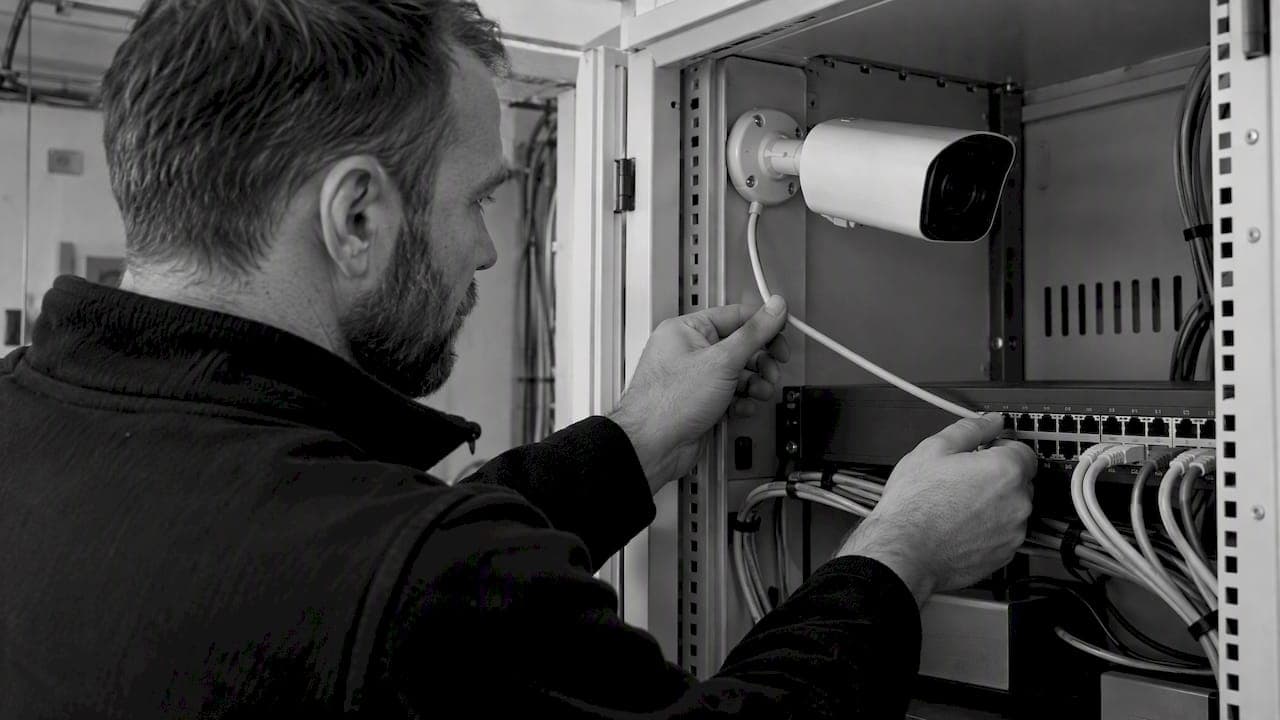
RTSP Security Risks: Integrators Must Block Exposed Ports 554 and 8554
See how integrators can reduce RTSP security risks: close exposed ports 554 and 8554, secure camera access, and verify each deployment with practical checks.

Require MAEpp and X Accuracy Before You Buy People Counting Systems
Verify people counting accuracy by demanding MAEpp, X Accuracy, and directional-bias reports. Validate on-site with at least 100 events per direction...
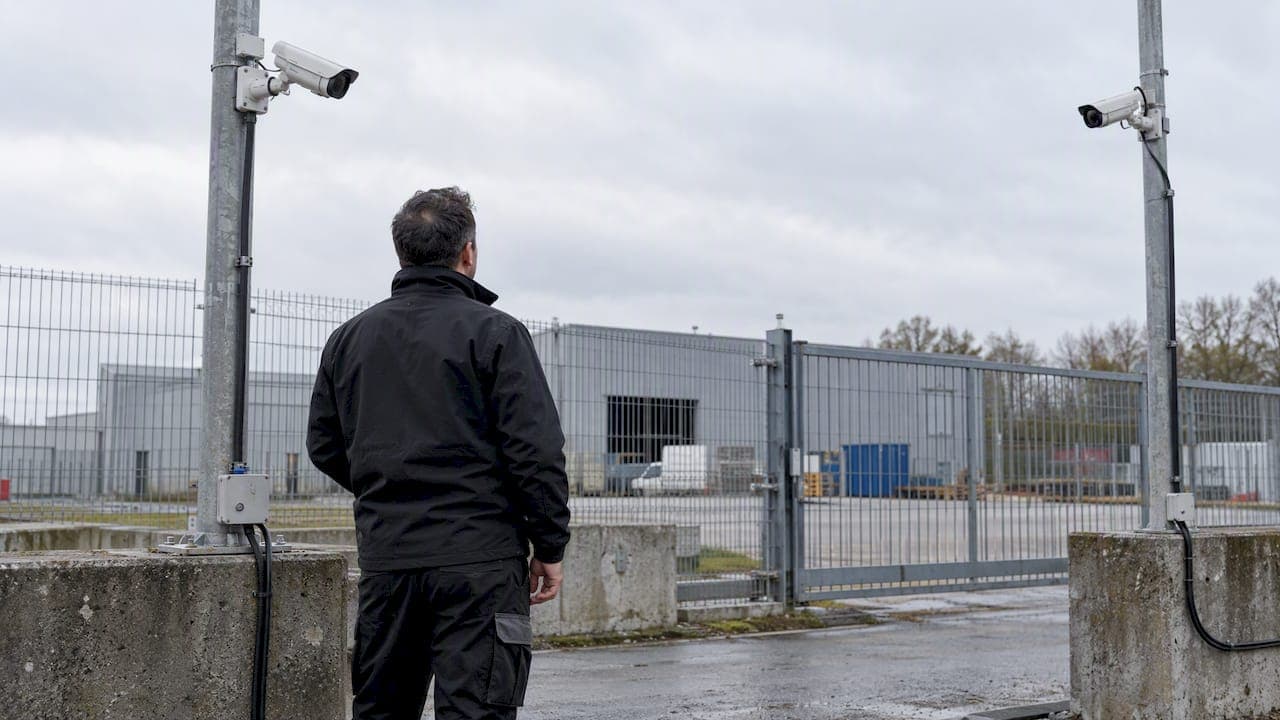
30–90 Day Pilot Validates Redundant Camera Networks for Engineers
Standards led, practical steps for engineers to deploy redundant camera networks: MRP, dual homing, and aggregation patterns, commissioning checks, and...

30 Day Pilot Proves Video Analytics Accuracy for Security Teams
Validate video analytics accuracy with scenario tests, camera tuning, transfer learning and a 30 day edge first pilot for security teams.
Let's Build YourSecurity Ecosystem.
Whether you're a System Integrator, Solution Provider, or an End-User looking for trusted advisory, our team is ready to help you navigate the BeyondSensor landscape.
Direct Advisory
Connect with our regional experts for tailored solutioning.