
Discover how emerging smart sensor applications in 2026 are revolutionizing industries with in-sensor intelligence for smarter decision-making.

Emerging Smart Sensor Applications for Industry in 2026

TL;DR:
- Emerging smart sensors integrate sensing, processing, and decision-making into compact systems, transforming industrial and security operations. Technologies like neuromorphic sensors and FMCW LiDAR enable real-time, autonomous responses with higher security and lower latency, while deployment readiness depends on manufacturing compatibility. Prioritizing open, modular, CMOS-compatible platforms ensures scalable, reliable adoption of these advanced sensing solutions.
Emerging smart sensor applications are defined by their ability to integrate sensing, processing, and decision-making into a single compact system, eliminating the gap between data capture and intelligent response. The industry term for this capability is "in-sensor intelligence," and it marks a fundamental departure from traditional sensors that simply report raw data to a central processor. Technologies like neuromorphic spatial-temporal image sensors, miniaturized hyperspectral imagers, and FMCW LiDAR-based 4D imaging are no longer laboratory concepts. They are production-ready tools reshaping how industrial facilities, security operations, and healthcare systems function in real time. For decision-makers evaluating where to invest in sensor infrastructure, understanding these technologies is not optional. It is the difference between reactive operations and autonomous, self-correcting systems.
1. Emerging smart sensor applications redefining industry in 2026
The most significant shift in advanced sensor technology is not raw performance. It is where processing happens. In-sensor processing reduces latency, enhances security, and lowers energy consumption by handling data at the extreme edge rather than routing it to cloud-based systems. This means a sensor monitoring a production line or a secure facility perimeter can act on what it detects in microseconds, without exposing sensitive data to transmission vulnerabilities.
Five sensor architectures are driving this shift in 2026:
-
Neuromorphic electronic-opto spatial-temporal image sensors: These sensors achieve 96.4% accuracy on MNIST benchmarks with integrated processing that reduces overall sensor volume. The architecture mimics biological neural pathways, enabling event-driven sensing that consumes far less power than frame-based cameras. For security monitoring, this translates to continuous, low-power threat detection without the processing overhead of conventional video analytics.
-
Miniaturized hyperspectral image sensors: These sensors deliver 1,280 x 1,024 spatial resolution with 1nm spectral resolution within a 15x15 micrometer pixel footprint. That level of spectral granularity, previously achievable only with bench-top laboratory instruments, now fits into deployable field hardware. Precision agriculture, pharmaceutical quality control, and environmental compliance monitoring are immediate beneficiaries.
-
Large-scale coherent 4D imaging sensors using FMCW LiDAR: These systems feature 352x176 pixel arrays with a monitoring range of 4 to 65 meters and frame rates of 3 to 15 fps. Unlike conventional LiDAR, FMCW simultaneously captures depth and velocity data per pixel, making it exceptionally effective for detecting moving threats in complex facility environments.
-
Integrated optomechanical ultrasonic sensors: These sensors achieve nano-Pascal-level sensitivity, with noise equivalent pressure of 218 nPa Hz⁻¹/² in air and 9.6 nPa Hz⁻¹/² in water. CMOS compatibility means they can be manufactured at scale using existing semiconductor fabrication lines, removing a major barrier to industrial deployment.
-
Stretchable high-fill-factor pixelated electronics: Using silicon and liquid metal architectures, these sensors achieve 81% fill factor with 100% biaxial stretchability. They conform to curved surfaces, enabling robotic skins and wearable diagnostics that rigid sensors cannot address.
Pro Tip: When evaluating neuromorphic or event-driven sensors for security applications, request benchmark data on both accuracy and power draw under continuous operation. A sensor that achieves 96% accuracy but drains power reserves within hours is not operationally viable for 24/7 facility monitoring.
2. How in-sensor intelligence transforms operational efficiency and security
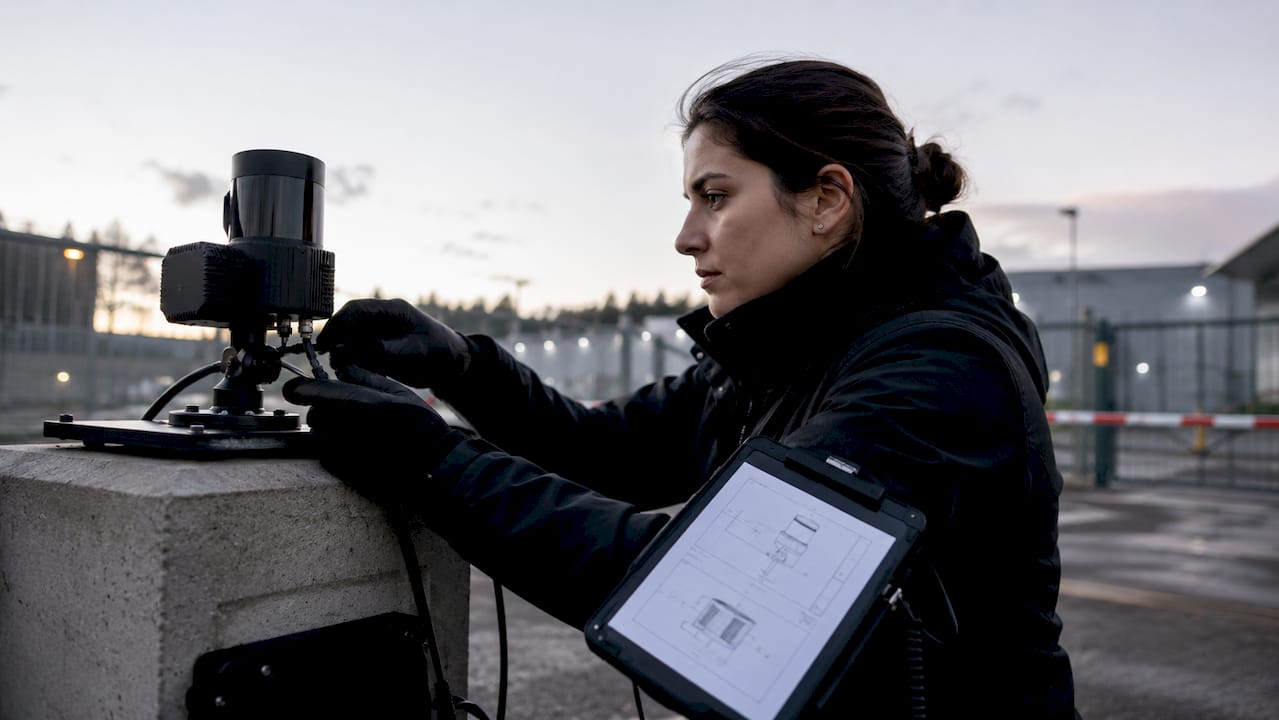
The paradigm shift from simple sensing to in-sensor understanding is the defining technical trend for next-generation industrial and security applications. Traditional sensors generate raw data streams that require external processors, network bandwidth, and cloud infrastructure to interpret. In-sensor intelligence inverts this model entirely.
Here is how this architectural change produces measurable operational gains:
-
Latency elimination: When a sensor processes its own data, response time drops from hundreds of milliseconds to single-digit milliseconds. For autonomous manufacturing lines or perimeter intrusion detection, that gap determines whether a system reacts in time or after the fact.
-
Security by design: MEMS sensors with on-chip AI reduce raw data transmission, which directly reduces the attack surface for interception or manipulation. Sensitive biometric or environmental data never leaves the sensor node in identifiable form.
-
Energy efficiency for continuous monitoring: Non-equilibrium materials enable adaptive feedback loops that allow real-time decision-making within closed-loop sensing systems. This means sensors can modulate their own power consumption based on detected activity levels, sustaining always-on monitoring without proportional energy costs.
-
Autonomous closed-loop control: In industrial process optimization, sensors that detect, interpret, and signal corrective action without human intervention reduce both error rates and labor overhead. A pressure sensor on a chemical processing line that autonomously adjusts valve positions based on nano-Pascal-level readings is a fundamentally different asset than one that simply logs data.
Pro Tip: Balancing local processing with power consumption is the central engineering challenge for edge-intelligent sensors. Before deployment, validate that the sensor's on-chip processing load does not create thermal issues in enclosed industrial enclosures, where heat dissipation is constrained.
3. Smart sensor use cases across industrial and security operations
Specific IoT sensor applications are where these technologies move from specification sheets to operational value. The following use cases represent the highest-impact deployments for industrial and security decision-makers.
-
Smart manufacturing and predictive maintenance: Integrated optomechanical ultrasonic sensors detect structural micro-fractures and material fatigue at sensitivities that conventional piezoelectric sensors cannot match. A single sensor node monitoring a rotating assembly can identify bearing degradation weeks before failure, converting unplanned downtime into scheduled maintenance windows.
-
Facility security and perimeter monitoring: FMCW LiDAR-based 4D imaging sensors provide simultaneous depth and velocity mapping across large areas. For high-value facilities, this means a single sensor array can distinguish between a person walking toward a restricted zone and a vehicle approaching at speed, triggering differentiated responses without human review. Paired with intelligent sensing technologies, these systems form a layered detection architecture that significantly reduces false alarm rates.
-
Healthcare and wearable biosensors: Stretchable pixelated electronics with integrated bio-recognition layers enable continuous, conformal diagnostics on curved body surfaces. Unlike rigid patch sensors that lose contact during movement, these devices maintain signal fidelity during physical activity, making them viable for both clinical monitoring and occupational health programs in high-risk industrial environments.
-
Environmental sensing and precision agriculture: Miniaturized hyperspectral sensors deployed on UAVs or fixed infrastructure can identify crop stress, soil composition anomalies, and atmospheric pollutants at 1nm spectral resolution. This level of specificity enables targeted intervention rather than blanket treatment, reducing chemical inputs and improving yield predictability.
-
Robotics and adaptive automation: Monolithic microfabrication on stretchable substrates enables high-density flexible sensor arrays for robotic grippers and adaptive skins. A robotic arm equipped with stretchable tactile sensors can modulate grip force in real time based on object compliance, a capability critical for handling fragile components in electronics assembly or pharmaceutical packaging.
4. How key sensor technologies compare on performance and deployment readiness
Not every sensor technology is equally ready for industrial deployment. The table below compares the five primary emerging sensor types on the metrics that matter most to operations and security teams.
| Sensor type | Spatial/spectral resolution | Sensitivity benchmark | CMOS compatibility | Deployment readiness |
|---|---|---|---|---|
| Neuromorphic spatial-temporal | Event-driven, not frame-based | 96.4% classification accuracy | Partial, advancing | High for security monitoring |
| Miniaturized hyperspectral | 1,280 x 1,024 / 1nm spectral | Detectivity >10¹³ Jones | Yes | High for field inspection |
| FMCW LiDAR 4D imaging | 352x176 pixels, 4-65m range | Simultaneous depth + velocity | Advancing | High for perimeter security |
| Optomechanical ultrasonic | Sub-millimeter spatial | 9.6 nPa Hz⁻¹/² in water | Yes | Medium, packaging challenges |
| Stretchable pixelated | 81% fill factor | 100% biaxial stretchability | Partial | Medium for robotics/wearables |
Transitioning sensors from lab to industry requires robust, CMOS-compatible packaging and on-chip integration to survive harsh environments. This is the primary constraint separating high-readiness technologies like hyperspectral imagers and FMCW LiDAR from promising but still-maturing platforms like stretchable electronics. Decision-makers should weight deployment readiness alongside raw performance when building sensor procurement roadmaps.
Open-source hardware platforms enable flexible multiplexed sensor inputs and accelerate development cycles, enhancing adaptability across security and operational applications. For organizations evaluating multiple sensor types simultaneously, open platforms reduce integration time and avoid proprietary lock-in that limits future upgrades. The sensor integration strategies that deliver the most durable results are those built on modular, standards-aligned architectures from the start.
Key takeaways
Smart sensor systems with integrated edge processing deliver the greatest operational and security gains because they eliminate latency, reduce data exposure, and enable autonomous response without cloud dependency.
| Point | Details |
|---|---|
| In-sensor intelligence is the core differentiator | Sensors that process data on-chip outperform cloud-dependent systems on latency, security, and energy efficiency. |
| FMCW LiDAR leads for facility security | 4D imaging with simultaneous depth and velocity data reduces false alarms and improves threat classification. |
| CMOS compatibility determines scale | Technologies compatible with existing semiconductor fabrication lines deploy faster and at lower cost. |
| Stretchable sensors unlock new form factors | 81% fill factor with full biaxial stretchability enables robotics and wearable applications that rigid sensors cannot serve. |
| Open platforms accelerate adoption | Modular, open hardware frameworks reduce integration complexity and protect against vendor lock-in. |
Where the future of smart sensors is actually heading
The conversation about the future of smart sensors tends to focus on specifications. Accuracy percentages, pixel counts, sensitivity benchmarks. Those numbers matter, but they are not where the real strategic decision lies.
What I have observed working across industrial automation and physical security deployments is that the organizations gaining the most from advanced sensor technology are not necessarily those with the highest-spec hardware. They are the ones that chose sensor systems with integrated processing from the start, even when those systems cost more upfront. The latency and security advantages compound over time. Every millisecond saved in threat detection or process correction accumulates into measurable operational outcomes.
The harder lesson is about environment robustness. A sensor that performs brilliantly in a controlled lab environment and fails within six months in a humid, vibration-heavy industrial facility is a liability, not an asset. CMOS-compatible packaging is not a marketing claim. It is the engineering prerequisite for field-level reliability. I would not deploy any high-sensitivity sensor, optomechanical or otherwise, without validating its packaging against the actual environmental conditions of the target site.
My strongest advice for decision-makers right now: prioritize open and modular sensor platforms. The sensor technology landscape is moving fast enough that a proprietary system you lock into today may be obsolete before its depreciation cycle ends. Open platforms for sensor innovation accelerate development and keep your options open as neuromorphic and hyperspectral technologies mature toward full industrial readiness.
The convergence of sensing, on-chip AI, and advanced materials science is producing systems that do not just observe. They understand, adapt, and act. That is not a distant prospect. It is the operational baseline that leading facilities are building toward right now.
— Eumir
How Beyondsensor helps you deploy advanced sensor systems
Beyondsensor specializes in integrating the sensor technologies described in this article into production-ready security and operational systems across Southeast Asia.

Whether you are deploying FMCW LiDAR for perimeter security, hyperspectral sensors for environmental compliance, or edge-intelligent MEMS arrays for predictive maintenance, Beyondsensor provides the system integration expertise, regional validation, and hardware-software alignment to move from specification to deployment. The Beyondsensor system integrators platform connects your team with AI-driven sensor integration solutions tailored to industrial automation, smart infrastructure, and physical security. Explore the full range of sensor tools and resources to accelerate your next deployment. For a broader view of what is reshaping the security sector, the emerging sensing innovations guide is a strong starting point.
FAQ
What are emerging smart sensor applications?
Emerging smart sensor applications are sensor systems that combine physical detection with on-chip processing and AI inference, enabling real-time, autonomous responses in industrial, security, healthcare, and environmental contexts. They differ from traditional sensors by eliminating the need for external processors to interpret data.
How do smart sensors improve facility security?
FMCW LiDAR-based 4D imaging sensors capture simultaneous depth and velocity data across ranges of 4 to 65 meters, enabling precise threat classification and reducing false alarm rates compared to conventional video or motion detection systems.
What is in-sensor processing and why does it matter?
In-sensor processing means data is analyzed directly at the sensor node rather than transmitted to a cloud or central server. This reduces latency to milliseconds, limits data exposure to interception, and enables continuous monitoring with lower energy consumption.
Which smart sensor technologies are closest to full industrial deployment?
Miniaturized hyperspectral sensors and FMCW LiDAR systems are the most deployment-ready, both offering CMOS compatibility or advancing toward it. Stretchable pixelated electronics and optomechanical ultrasonic sensors are maturing but still face packaging challenges for harsh industrial environments.
How do I choose between sensor types for my operation?
Prioritize CMOS-compatible sensors for large-scale deployments where manufacturing cost and field reliability are critical. For applications requiring spectral analysis or 4D spatial mapping, hyperspectral and LiDAR platforms offer the best combination of resolution, range, and production readiness in 2026.
Recommended
- How sensor technology drives smarter industrial automation | News | BeyondSensor
- Explore emerging security technology trends for 2026 | News | BeyondSensor
- Emerging sensing innovations guide for security leaders | News | BeyondSensor
- The Role of Sensors in Infrastructure: 2026 Guide | News | BeyondSensor
Read More Articles
RTSP Security Risks: Integrators Must Block Exposed Ports 554 and 8554
See how integrators can reduce RTSP security risks: close exposed ports 554 and 8554, secure camera access, and verify each deployment with practical checks.

Require MAEpp and X Accuracy Before You Buy People Counting Systems
Verify people counting accuracy by demanding MAEpp, X Accuracy, and directional-bias reports. Validate on-site with at least 100 events per direction...
30–90 Day Pilot Validates Redundant Camera Networks for Engineers
Standards led, practical steps for engineers to deploy redundant camera networks: MRP, dual homing, and aggregation patterns, commissioning checks, and...
30 Day Pilot Proves Video Analytics Accuracy for Security Teams
Validate video analytics accuracy with scenario tests, camera tuning, transfer learning and a 30 day edge first pilot for security teams.
Let's Build YourSecurity Ecosystem.
Whether you're a System Integrator, Solution Provider, or an End-User looking for trusted advisory, our team is ready to help you navigate the BeyondSensor landscape.
Direct Advisory
Connect with our regional experts for tailored solutioning.